World Heritage Identification Number: 1654
World Heritage since: 2021
Category: Cultural Heritage
WHE Type: Archaeological Sites
Transboundary Heritage: No
Endangered Heritage: No
Country: 🇷🇺 Russian Federation
Continent: Europe
UNESCO World Region: Europe and North America
Map
Unveiling the Mysteries of the Petroglyphs of Lake Onega and the White Sea
The Petroglyphs of Lake Onega and the White Sea, inscribed as a UNESCO World Heritage Site in 2021, offer a unique insight into the Neolithic culture of Fennoscandia. This extensive collection of rock carvings, spanning across two distinct regions in the Republic of Karelia, Russia, presents a captivating blend of artistry, history, and mystery.
More to come…UNESCO Description of the World Heritage Site
The site contains 4,500 petroglyphs carved in the rocks during the Neolithic period dated about 6-7 thousand years ago and located in the Republic of Karelia in the Russian Federation. It is one of the largest such sites in Europe with petroglyphs that document Neolithic culture in Fennoscandia. The serial property encompasses 33 rock art panels in two component parts 300km apart: 22 petroglyph groups at Lake Onega in the District of Pudozhsky featuring a total of over 1,200 figures and 3,411 figures in 11 groups by the White Sea in the District of Belomorsky. The rock art figures at Lake Onega mostly represents birds, animals, half human and half animal figures as well as geometric shapes that may be symbols of the moon and the sun. The petroglyphs of the White Sea are mostly composed of carvings depicting hunting and sailing scenes including their related equipment as well as animal and human footprints. They show significant artistic qualities and testify to the creativity of the Stone Age. The petroglyphs are associated with sites including settlements and burial grounds.
UNESCO Justification of the World Heritage Site
Criterion (iii): The Petroglyphs of Lake Onega and the White Sea and the related archaeological sites are an exceptional testimony of the lifestyle and beliefs of the Pit-Comb Ware culture population in the Neolithic, providing a unique source of data and representing a coherent image of the Neolithic culture period in the northeastern part of Fennoscandia.
Encyclopedia Record: Petroglyphs of Lake Onega and the White Sea
Petroglyphs of Lake Onega and the White Sea is a UNESCO World Heritage Site in Russia, Republic of Karelia, listed on 28 July 2021. The World Heritage Site comprises 33 petroglyph sites in two clusters. The rock carvings were created from 7 to 4 millennia ago and represent a glimpse into the lives of Neolithic cultures of Fennoscandia.Additional Site Details
Area: Not available
Number of Components: 2
Coordinates: 61.7299 , 36.0126388889
Image
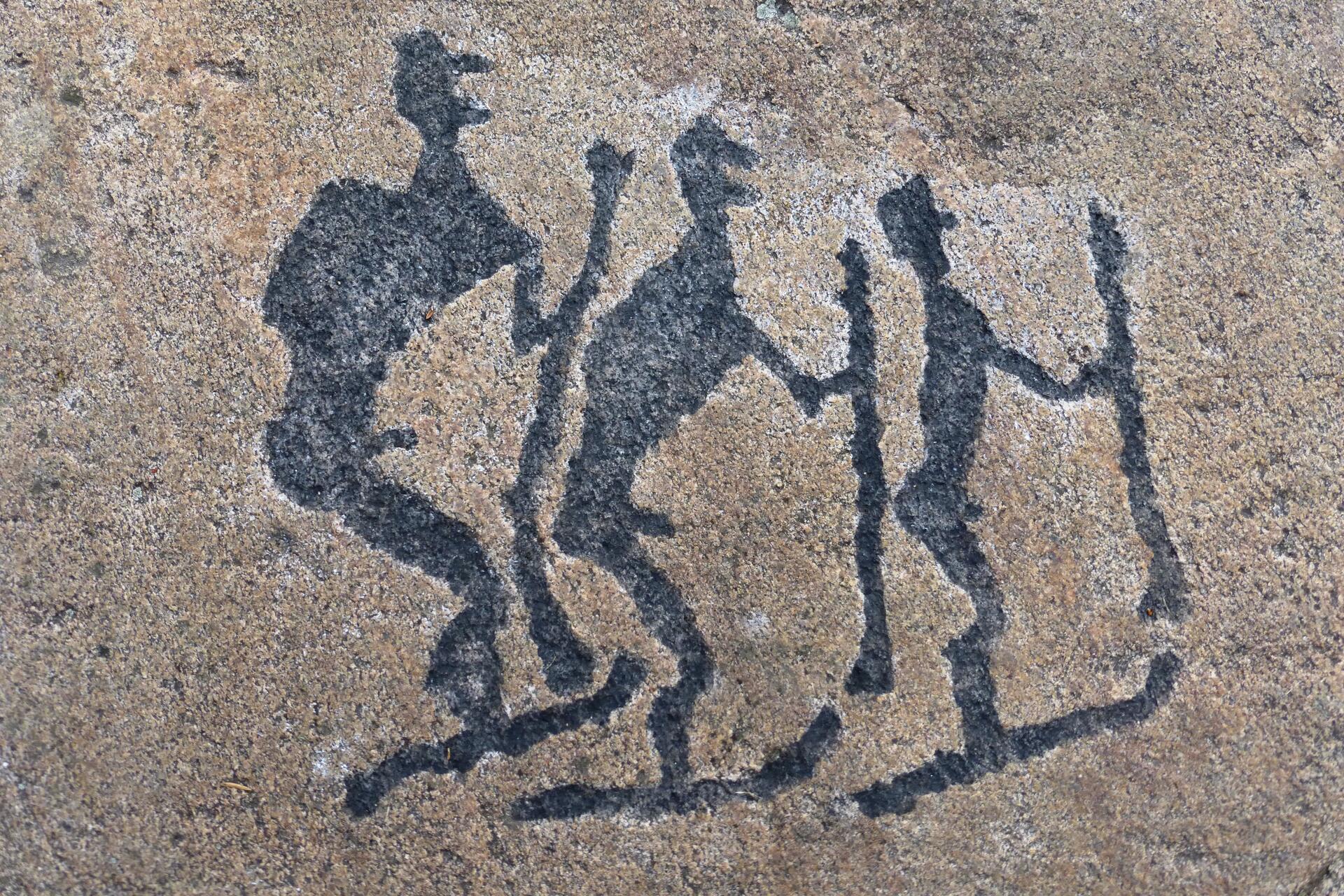
© Semenov.m7, CC BY-SA 4.0 Resized from original. (This derivative is under the same CC BY-SA license.)
World Heritage Research
Discover scientific research and academic studies that deepen our understanding of Petroglyphs of Lake Onega and the White Sea from its history and significance to its conservation, management, and contemporary challenges.
-
Types of Chiselings in Rock Art of Besov Nos Cape, Onega Lake
Research on the petroglyphs of Besov Nos Cape, Onega Lake, reveals that at least two distinct techniques were used to carve images onto rock surfaces. The study, the first of its kind in this region, identified 171 images and experimented with 11 types of crude materials to model three methods: direct picketage, indirect picketage, and polishing. Findings indicate that most images (including swans) were likely created using stone tools, while a smaller subset required metal tools, suggesting advanced tool use in ancient times.
Fedorova, D. N., Girya, E. Yu.,. (2024). Types of Chiselings in Rock Art of Besov Nos Cape, Onega Lake. Ufa Archaeological Herald, 24(1), 140–148. https://doi.org/10.31833/uav/2024.24.1.009
View Publication Record | Read Publication -
Petroglyphs of Karelia in the context of their relationship with surrounding landscape
Karelian petroglyphs, the first Russian rock art site inscribed on UNESCO's World Heritage List in 2021, reveal a profound connection between Neolithic hunters-fishermen-gatherers and their sacred natural landscapes. These carvings, located along Lake Onega's eastern shore and the Vyg River delta, exhibit an organic integration with both the surrounding environment and the microrelief of the rock panels. The study suggests that the placement and motifs of these petroglyphs were likely influenced by specific landscape features, offering insights into ancient cultural practices and environmental interactions. By analyzing the relationship between rock art and natural relief, researchers propose possible interpretations of the carvings' significance within their historical context.
Lobanov, N. V. (2023). Petroglyphs of Karelia in the context of their relationship with surrounding landscape. Heritage and Modern Times, 5(4), 406–425. https://doi.org/10.52883/2619-0214-2022-5-4-406-425
View Publication Record | Read Publication -
The Methodological Principles of Setting Up Soil Monitoring in Protected Areas
Soil monitoring in UNESCO World Heritage Sites, such as the rock art of Lake Onega and the White Sea, requires adaptive methodologies to address increasing anthropogenic impacts. This study establishes that continuous, integrated observations—supported by international cooperation—are essential for reliably assessing environmental changes. It emphasizes the need for dynamic indicator selection tailored to specific impacts and missions, ensuring robust soil monitoring in protected areas amid global climate shifts.
Bakhmet, O., Medvedeva, M., & Akhmetova, G. (2022). The Methodological Principles of Setting Up Soil Monitoring in Protected Areas. KnE Social Sciences. https://doi.org/10.18502/kss.v7i3.10428
View Publication Record | Read Publication