World Heritage Identification Number: 540
World Heritage since: 1990
Category: Cultural Heritage
WHE Type: Historic Cities & Urban Areas
Transboundary Heritage: No
Endangered Heritage: No
Country: 🇷🇺 Russian Federation
Continent: Europe
UNESCO World Region: Europe and North America
Map
The Historic Centre of Saint Petersburg and Related Groups of Monuments: A Cultural Treasure of Russia
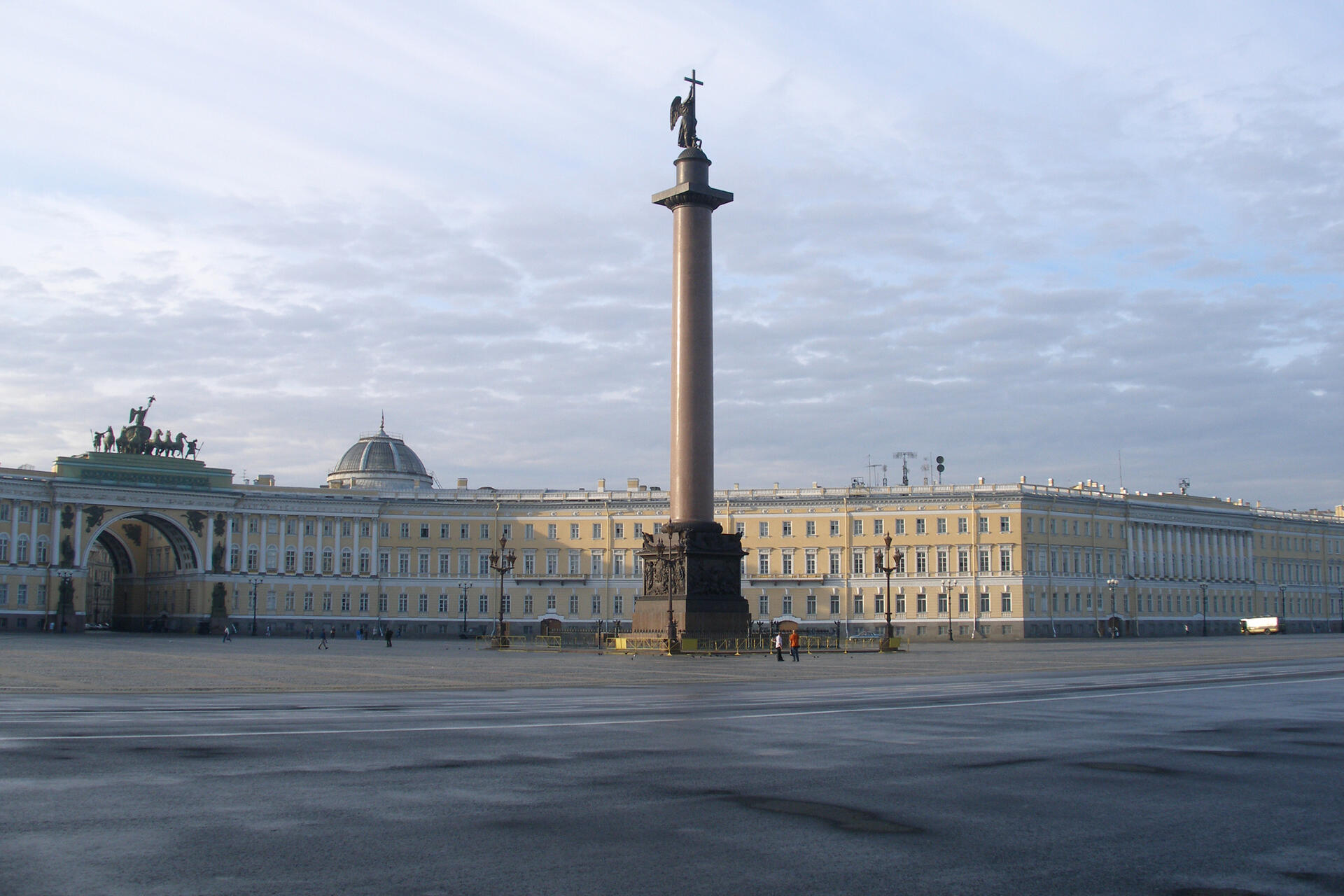
The Historic Centre of Saint Petersburg and Related Groups of Monuments, often referred to simply as Saint Petersburg, is a remarkable cultural treasure that stands as a testament to the rich history and architectural prowess of Russia. Inscribed as a UNESCO World Heritage Site in 1990, this city, also known as the "Venice of the North," offers a unique blend of Baroque and Neoclassical styles that have shaped its distinctive skyline.
Founded by Peter the Great in 1703, Saint Petersburg was conceived as a modern, westernized city, a stark contrast to the traditional Russian cities of Moscow and Novgorod. The city's layout was influenced by European urban planning, particularly Dutch and Italian models, and included an extensive network of canals and more than 400 bridges, earning the city the nickname “Venice of the North.” This urban design not only provided practical means for transportation but also contributed significantly to the city's aesthetic appeal.
One of the most iconic landmarks within the World Heritage Site is the Admiralty Building. While Domenico Trezzini designed the original 1704 structure, the current iconic Empire-style building was designed by Andreyan Zakharov (built 1806–1823). It served as the Imperial Navy headquarters and, after a long hiatus, the High Command of the Russian Navy returned to the building in 2012, and remains there, as of 2026. Its ornate facade reflects the Empire style prevalent during the reign of Alexander I.
Another significant structure is the Winter Palace, which serves as the official residence of the Russian monarchs from 1732 until the Russian Revolution in 1917. Designed by Bartolomeo Rastrelli, the palace exemplifies the opulence and grandeur of the Russian court. While the last two Tsars primarily resided in suburban palaces for security, the Winter Palace remained the official venue for state ceremonies until the 1917 Revolution. Today, the State Hermitage Museum occupies the Winter Palace, housing one of the world's largest art collections, including works by Leonardo da Vinci, Michelangelo (the marble sculpture "Crouching Boy"), Rembrandt, and Picasso, among others.
The Marble Palace, another notable edifice,was built in the late 18th century (1768–1785) by Antonio Rinaldi. As its name suggests, the exterior of the palace is decorated with marble, while the interior boasts lavish frescoes and gilded stucco work. Today, the palace now houses a branch of the State Russian Museum, showcasing a vast collection of Russian art spanning from the 11th to the 20th centuries.
Beyond these iconic structures, the Historic Centre of Saint Petersburg and Related Groups of Monuments encompasses a wealth of other historical sites, museums, parks, and churches. From the Church of the Savior on Spilled Blood, known for its intricate mosaics and traditional Russian style, to the Peter and Paul Fortress, the city's oldest structure, which served as a citadel and a burial place for Russian Tsars, there is no shortage of cultural experiences to be had.
In addition to its architectural significance, Saint Petersburg holds immense historical importance, particularly in the context of the October Revolution. The city played a pivotal role in the events leading up to the revolution, and bore the name Leningrad from 1924 to 1991 during the Soviet era. Today, visitors can explore various museums and memorials dedicated to the revolution and its aftermath.
Overall, the Historic Centre of Saint Petersburg and Related Groups of Monuments represents a remarkable fusion of history, culture, and architecture. With its diverse array of landmarks, museums, and historical sites, the city offers an unparalleled immersion into the rich tapestry of Russian history. Whether one is captivated by the grandeur of the Winter Palace, the intricate details of the Marble Palace, or the revolutionary spirit that permeates the city, Saint Petersburg promises an unforgettable journey through time.
UNESCO Description of the World Heritage Site
The 'Venice of the North', with its numerous canals and more than 400 bridges, is the result of a vast urban project begun in 1703 under Peter the Great. Later known as Leningrad (in the former USSR), the city is closely associated with the October Revolution. Its architectural heritage reconciles the very different Baroque and pure neoclassical styles, as can be seen in the Admiralty, the Winter Palace, the Marble Palace and the Hermitage.
UNESCO Justification of the World Heritage Site
Criterion (i): In the field of urban design, Saint Petersburg represents a unique artistic achievement in the ambition of the program, the coherency of the plan and the speed of execution. From 1703 to 1725, Peter the Great lifted from a landscape of marshes, peat bogs and rocks, architectural styles in stone and marble for a capital, Saint Petersburg, which he wished to be the most beautiful city in all of Europe.
Criterion (ii): The ensembles designed in Saint Petersburg and the surrounding area by Rastrelli, Vallin de la Mothe, Cameron, Rinaldi, Zakharov, Voronikhine, Rossi, Montferrand and others, exerted great influence on the development of architecture and monumental arts in Russia and Finland in the 18th and 19th centuries. The normative value of the capital was increased from the beginning by the establishment of the Academy of Sciences, followed by that of the Academy of Fine Arts. The urban model of Saint Petersburg, which was completed under Catherine II, Alexander I and Nicholas I, was used during the reconstruction of Moscow following the fire of 1812, and for new cities, such as Odessa or Sebastopol, in the southern part of the Empire.
Criterion (iv): The nominated cultural property links outstanding examples of baroque imperial residences with the architectural ensemble of Saint Petersburg, which is the baroque and neoclassical capital par excellence. The palaces of Peterhof (Petrodvorets) and Tsarskoye Selo (Pushkin), which were restored following destruction during the Second World War, are some of the most significant constructions.
Criterion (vi): Saint Petersburg was twice directly and tangibly associated with events of universal significance. From 1703 to 1725, the construction of Saint Petersburg (recalled by the equestrian statue of Peter the Great by Falconet, located in Senatskaya Square) symbolizes the opening of Russia to the western world and the emergence of the empire of the Tsars on the international scene. The Bolshevik Revolution triumphed in Petrograd in 1917 (the city had been renamed in 1914). The Aurora cruiser and the town house of Mathilde Kchesinskaia, later the museum of the Great Socialist Revolution of October, are, in the heart of Leningrad, symbols of the formation of the U.S.S.R.
Encyclopedia Record: Historic Centre of Saint Petersburg and Related Groups of Monuments
The Historic Centre of Saint Petersburg and Related Groups of Monuments is the name used by UNESCO when it collectively designated the historic core of the Russian city of St. Petersburg, as well as buildings and ensembles located in the immediate vicinity as a World Heritage Site in 1991.Additional Site Details
Area: 3,934.1 hectares
Number of Components: 112
(ii) — Significant interchange of human values
(iv) — Outstanding example of a type of building or landscape
(vi) — Directly associated with events or living traditions
Coordinates: 59.95 , 30.31833
World Heritage Research
Discover scientific research and academic studies that deepen our understanding of Historic Centre of Saint Petersburg and Related Groups of Monuments from its history and significance to its conservation, management, and contemporary challenges.
-
Ecotourism Potential of the World Heritage Site “Historic Centre of Saint Petersburg and Related Groups of Monuments”
Saint Petersburg's UNESCO World Heritage Site, renowned for its cultural significance, also harbors substantial ecotourism potential due to its rich biodiversity. Research confirms that the city's historic center and related monuments support diverse wildlife, including large bird congregations near monuments, wintering bats in fortifications, and seal haul-out sites on nearby islands. These natural features persist despite centuries of development, thanks to the original selection criteria for palace construction—dry, scenic areas with fertile soils and proximity to water, which also favor biodiversity. The study combines field observations and literature reviews to highlight the site's dual value: as a cultural landmark and an ecological treasure, offering opportunities for environmental education and nature conservation.
Popov, I., Abakumov, E., & Iurmanov, A. (2026). Ecotourism Potential of the World Heritage Site “Historic Centre of Saint Petersburg and Related Groups of Monuments”. Heritage, 9(3), 118. https://doi.org/10.3390/heritage9030118
View Publication Record | Read Publication -
“Rome of the East”
The Neo-Byzantine architectural style in Russia, distinct from its European counterparts, emerged as a prominent and influential movement during the 19th century. This style, rooted in historicism, was shaped by Russian architects who studied Byzantine heritage through travels to Turkey, Greece, the Caucasus, and Italy. By the 1850s, it became the second most significant architectural style after the 'Russian style,' with over 200 churches built across the empire between the late 19th and early 20th centuries. Key centers for training specialists in this style included the Imperial Academy of Fine Arts, the Institute of Civil Engineers, and the Nicholas the First Engineering Academy. The popularity of Neo-Byzantine architecture was further fueled by patronage from wealthy art enthusiasts who established charitable institutions using private donations. Notably, the early 20th century saw the creation of remarkable replicas of Hagia Sophia in Kronstadt and Sofia, reflecting a heightened interest in Byzantine heritage.
Saveliev, Y. R. (2026). “Rome of the East”. The Routledge Handbook of the Modern Reception of Byzantium, 237–246. https://doi.org/10.4324/9781003211518-22
View Publication Record | Read Publication -
Heritage Preservation Under Sustainable Development and Community Inclusion: Semiotic and Discursive Mapping of Saint Petersburg
A discursive and semiotic mapping approach reveals that community values, urban identity, and cultural meanings shape heritage preservation in Saint Petersburg. The study, based on analyzing over 1000 artefacts from a five-year program involving young people, demonstrates how non-verbal representations reflect UNESCO's city code rooted in cultural values. This method highlights the opposition between discursive and non-verbal elements, offering a tool for sustainable development and community inclusion in urban planning. Similar research confirms that such mappings can effectively engage residents, fostering cooperation and place-based identity.
Mikhailovna, S. A. (2022). Heritage Preservation Under Sustainable Development and Community Inclusion: Semiotic and Discursive Mapping of Saint Petersburg. International Journal of Architecture and Planning, 2(1), 33. https://doi.org/10.51483/ijarp.2.1.2022.33-36
View Publication Record | Read Publication -
Antagonism of Discourses around Cultural Heritage
A discourse analysis of the conflict surrounding the preservation of Saint Petersburg's Historic Centre reveals multiple antagonistic discourses shaping urban heritage debates. Ten key interest groups, including UNESCO, local governments, businesses, and conservationists, dynamically re-form their identities through discursive processes. The study identifies new forms of antagonism, such as affective regimes, spatial visualization, and media representation, which influence heritage preservation efforts. Visual and graphical representations reconstruct the discourse of city defenders from media and social networks, highlighting how competing narratives shape urban development and heritage conservation.
Sosnovskaya, A. M. (2022). Antagonism of Discourses around Cultural Heritage. Galactica Media: Journal of Media Studies, 4(3), 123–133. https://doi.org/10.46539/gmd.v4i3.316
View Publication Record | Read Publication -
Relevant Problems of the Cultural Heritage Development, Museology, Museum and Exhibition Design in the Pages of Textbooks by Saint Petersburg Museologists
Two textbooks by Saint Petersburg museologists introduce innovative approaches to cultural heritage development and museum exhibition design, reflecting emerging trends in the field. 'Cultural Heritage and Museum in the XXI Century' (2018) emphasizes the evolving relationship between heritage and museums, highlighting modern value-oriented perspectives that position cultural heritage as a foundational mechanism for societal function. It incorporates previously unpublished works by foreign researchers, offering new scientific insights. Meanwhile, 'Designing Museum Expositions and Exhibitions: History-Theory-Practice' (2020) provides a practice-oriented guide to museum design, aiming to cultivate a generation of museologists capable of addressing contemporary challenges with creativity and independence. Together, these textbooks represent the conceptual advancements of Saint Petersburg's scientific school of museology.
Mastenitsa, E. N. (2021). Relevant Problems of the Cultural Heritage Development, Museology, Museum and Exhibition Design in the Pages of Textbooks by Saint Petersburg Museologists. Historical Courier, (2), 223–232. https://doi.org/10.31518/2618-9100-2021-2-19
View Publication Record | Read Publication -
Urban planning objects of protection as a component of the system of protection of the world heritage object
A comprehensive system for protecting urban planning objects within UNESCO World Heritage Sites has been developed, focusing on the historic center of Saint Petersburg. The study identifies key components such as individual cultural heritage objects and their ensembles, using notable examples like Kirov Department Store, G. F. Voldt’s Summer house, and the Estate of E. I. Lopukhina ('Aspen Grove') to illustrate its approach. By analyzing these sites, the research provides a methodological framework for defining and safeguarding complex heritage areas, ensuring their preservation while maintaining their cultural significance.
Mikhailov, A. (2020). Urban planning objects of protection as a component of the system of protection of the world heritage object. E3S Web of Conferences, 164, 4020. https://doi.org/10.1051/e3sconf/202016404020
View Publication Record | Read Publication -
Strategy of Protecting the Silhouette of a Historical City: The Case of Saint-Petersburg
A model for analyzing and preserving the silhouette of historical cities, particularly UNESCO World Heritage Sites, has been developed. This approach integrates landscape-visual analysis to evaluate urban views and panoramas, providing a system of criteria that supports sustainable development goals. The study focuses on Saint Petersburg's historic center, where urban transformation risks altering its iconic visual identity. By examining existing tools for view protection and local experiences, the research proposes legislative improvements and practical recommendations to safeguard the city's silhouette while accommodating modern urban development.
Nazarova, A. (2020). STRATEGY OF PROTECTING THE SILHOUETTE OF A HISTORICAL CITY: THE CASE OF SAINT-PETERSBURG. Bulletin of Belgorod State Technological University Named after. V. G. Shukhov, 91–99. https://doi.org/10.34031/2071-7318-2020-5-5-91-99
View Publication Record | Read Publication