World Heritage Identification Number: 1484
World Heritage since: 2015
Category: Cultural Heritage
WHE Type: Infrastructure & Industry
Transboundary Heritage: No
Endangered Heritage: No
Country: 🇯🇵 Japan
Continent: Asia
UNESCO World Region: Asia and the Pacific
Map
Sites of Japan’s Meiji Industrial Revolution: A Testimony to Successful Western Technology Transfer
The Sites of Japan’s Meiji Industrial Revolution: Iron and Steel, Shipbuilding, and Coal Mining, inscribed as a UNESCO World Heritage Site in 2015, stand as a significant testament to Japan’s rapid industrialization during the latter half of the 19th century and the early 20th century. Comprising twenty-three component parts primarily situated in the southwestern region of Japan, these sites offer a unique insight into the process by which Japan sought technological advancements from Europe and America, adapting them to meet its own cultural and societal needs.
More to come…UNESCO Description of the World Heritage Site
The site encompasses a series of twenty three component parts, mainly located in the southwest of Japan. It bears testimony to the rapid industrialization of the country from the middle of the 19th century to the early 20th century, through the development of the iron and steel industry, shipbuilding and coal mining. The site illustrates the process by which feudal Japan sought technology transfer from Europe and America from the middle of the 19th century and how this technology was adapted to the country’s needs and social traditions. The site testifies to what is considered to be the first successful transfer of Western industrialization to a non-Western nation.
UNESCO Justification of the World Heritage Site
Criterion (ii): The Sites of Japan’s Meiji Industrial Revolution illustrate the process by which feudal Japan sought technology transfer from Western Europe and America from the middle of the 19th century and how this technology was adopted and progressively adapted to satisfy specific domestic needs and social traditions, thus enabling Japan to become a world-ranking industrial nation by the early 20th century. The sites collectively represents an exceptional interchange of industrial ideas, know-how and equipment, that resulted, within a short space of time, in an unprecedented emergence of autonomous industrial development in the field of heavy industry which had profound impact on East Asia.
Criterion (iv): The technological ensemble of key industrial sites of iron and steel, shipbuilding and coal mining is testimony to Japan’s unique achievement in world history as the first non-Western country to successfully industrialize. Viewed as an Asian cultural response to Western industrial values, the ensemble is an outstanding technological ensemble of industrial sites that reflected the rapid and distinctive industrialisation of Japan based on local innovation and adaptation of Western technology.
Encyclopedia Record: Sites of Japan's Meiji Industrial Revolution: Iron and Steel, Shipbuilding and Coal Mining
Sites of Japan's Meiji Industrial Revolution: Iron and Steel, Shipbuilding and Coal Mining are a group of historic sites that played an important part in the industrialization of Japan in the Bakumatsu and Meiji periods (1850s–1910), and are part of the industrial heritage of Japan. In 2009 the monuments were submitted jointly for inscription on the UNESCO World Heritage List under criteria ii, iii, and iv. The sites were accepted at the 39th UNESCO World Heritage session, under the condition to take measures "that allow an understanding that there were a large number of Koreans and others who were brought against their will and forced to work under harsh conditions ...", and again, such measures have yet to be implemented.Additional Site Details
Area: 306.66 hectares
Number of Components: 23
(iv) — Outstanding example of a type of building or landscape
Coordinates: 34.4305555556 , 131.4122222222
Image
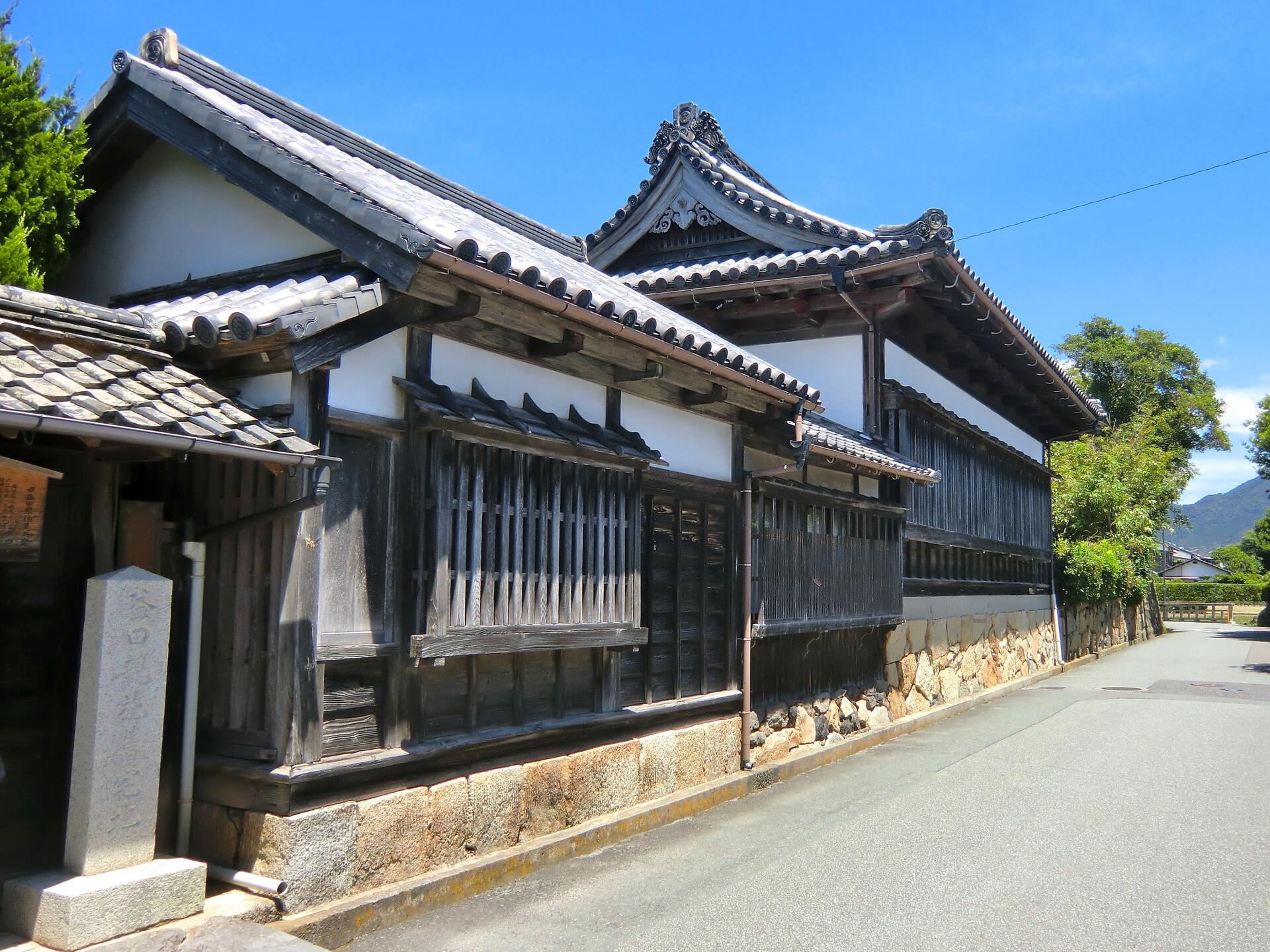
© TT mk2, CC BY-SA 3.0 Resized from original. (This derivative is under the same CC BY-SA license.)
World Heritage Research
Discover scientific research and academic studies that deepen our understanding of Sites of Japan’s Meiji Industrial Revolution: Iron and Steel, Shipbuilding and Coal Mining from its history and significance to its conservation, management, and contemporary challenges.
-
Japan's Mining Heritage in Dispute
Japan's efforts to promote its Meiji Industrial Revolution and Sado Island Gold Mines as UNESCO World Heritage Sites have sparked significant controversy in East Asia, highlighting the complex and contested nature of historical narratives. The study reveals that while these designations aim to showcase Japan's cultural heritage, they provoke intense criticism from regional stakeholders, particularly South Korea, due to their association with imperial legacies and wartime history. Despite not directly threatening physical preservation, such disputes perpetuate conflicts and challenge the sustainability of heritage sites when interpreted unilaterally. The research suggests that fostering a plural understanding of contested histories is crucial for ensuring the long-term viability of these sites.
Nakano, R. (2026). Japan’s Mining Heritage in Dispute. Contested Heritage, 113–130. https://doi.org/10.4324/9781003623724-7
View Publication Record | Read Publication -
Ignoring the History of Foreign Forced Labour at Japan's ‘Sites of the Meiji Industrial Revolution'
Japan's 'Sites of the Meiji Industrial Revolution: Iron and Steel, Shipbuilding, and Coal Mining,' inscribed as UNESCO World Heritage Sites in 2015, have been embroiled in controversy due to their association with forced labor during World War II. Key sites such as Gunkanjima, Miike coal mines, Nagasaki Shipbuilding complex, and Yawata Steel Works utilized thousands of Korean and Chinese forced laborers, along with Allied POWs, as slave laborers. Despite international criticism, particularly from South Korea, Japan initially omitted this history from its public historical displays between 2015 and 2021. This chapter highlights the significant role of these sites in Japan's industrial development while addressing the ethical implications of their heritage status.
Palmer, D. (2023). Ignoring the History of Foreign Forced Labour at Japan’s ‘Sites of the Meiji Industrial Revolution’. Routledge Handbook of Trauma in East Asia, 143–157. https://doi.org/10.4324/9781003292661-14
View Publication Record | Read Publication -
Shifting borders of memory: Japan’s Industrial Heritage Information Centre
A UNESCO-recognized World Heritage site, the 'Sites of Japan's Meiji Industrial Revolution,' has been collectivized into a singular 'border of memory' between Japan and South Korea. This boundary materializes through contestation, subverting efforts to fix heritage meaning. The study examines how the opening of Tokyo's Industrial Heritage Information Center in 2020 both materialized and reproduced this border, despite protests from South Korea seeking UNESCO intervention. Research relied on nomination documents, site visits, and newspaper reports to analyze disputes surrounding the heritage listing. Findings reveal that borders of memory are dynamic, shifting through contestation and connections across them.
Boyle, E. (2021). Shifting borders of memory: Japan’s Industrial Heritage Information Centre. Journal of Cultural Heritage Management and Sustainable Development, 12(1), 19–31. https://doi.org/10.1108/jchmsd-05-2021-0088
View Publication Record | Read Publication -
Katō Kōko's Meiji Industrial Revolution – Forgetting forced labor to celebrate Japan's World Heritage Sites – Part 2
A critical analysis reveals that Katō Kōko, a pivotal figure in Japan's Meiji Industrial Revolution World Heritage inscription process, has engaged in historical revisionism by omitting the history of Korean and other forced labor while promoting a celebratory narrative. Her selective interpretation of historical evidence, facilitated by her leadership roles in heritage-related bodies, has legitimized neo-nationalism and radical historical revisionism. The study demonstrates that Katō's cooperation with UNESCO is dishonest, calling for her removal from heritage roles to uphold Japan's commitment to acknowledge wartime forced labor history.
Johnsen, N. (2021). Katō Kōko’s Meiji Industrial Revolution – Forgetting forced labor to celebrate Japan’s World Heritage Sites – Part 2. Asia-Pacific Journal, 19(7). https://doi.org/10.1017/s1557466021031594
View Publication Record | Read Publication -
Japan's World Heritage Miike Coal Mine – Where prisoners-of-war worked “like slaves”
Japan's Miike Coal Mine, a UNESCO World Heritage Site recognized for its role in the Meiji Industrial Revolution, harbors a darker history that has been largely overlooked by official narratives. Research reveals that the mine, operated by Mitsui, was not only Japan's largest coal producer during World War II but also housed the largest Allied POW camp and employed Korean and Chinese forced laborers under brutal conditions. The involvement of Australian POWs further illuminates instances of resistance despite severe abuse. This study underscores Japan's obligation to disclose the complete history of such sites, moving beyond sanitized tourism to acknowledge the full scope of exploitation and labor practices that defined this industrial era.
Palmer, D. (2021). Japan’s World Heritage Miike Coal Mine – Where prisoners-of-war worked “like slaves”. Asia-Pacific Journal, 19(7). https://doi.org/10.1017/s1557466021031156
View Publication Record | Read Publication -
Katō Kōko's Meiji Industrial Revolution – Forgetting forced labor to celebrate Japan's World Heritage Sites – Part 1
A UNESCO/ICOMOS report from July 2021 revealed that the Industrial Heritage Information Centre for Japan's Meiji Industrial Revolution World Heritage Sites presents a misleading narrative, omitting the history of forced labor at these sites. The Centre, managed by Katō Kōko, was tasked with documenting remembrance for victims of forced labor, including Koreans, Chinese, and Allied POWs, but instead promotes celebratory narratives that deny this dark history. Despite Japan's agreement to acknowledge such practices during the 2015 inscription process, Katō's leadership has prioritized a sanitized version of history, backed by powerful political figures, undermining international cooperation on historical accuracy.
Johnsen, N. (2021). Katō Kōko’s Meiji Industrial Revolution – Forgetting forced labor to celebrate Japan’s World Heritage Sites – Part 1. Asia-Pacific Journal, 19(7). https://doi.org/10.1017/s1557466021031508
View Publication Record | Read Publication -
Mobilizing Meiji Nostalgia and Intentional Forgetting in Japan's World Heritage Promotion
Japan's successful 2015 UNESCO World Heritage designation of the 'Sites of Japan’s Meiji Industrial Revolution' reflects a strategic national project that prioritizes Meiji nostalgia over alternative historical narratives, particularly those involving Korean memories of forced labor and colonialism. Despite concerns from domestic stakeholders about potential criticism from South Korea, the Japanese government accelerated its heritage diplomacy campaign, leveraging global recognition to reinforce a glorified historical narrative. The study reveals how a newly established committee, comprising Japanese and Western heritage experts, bypassed conventional nomination procedures to construct and promote this industrial heritage, effectively marginalizing critical perspectives. This approach underscores the tension between national pride and historical accountability in Japan's World Heritage promotion.
Nakano, R. (2020). Mobilizing Meiji Nostalgia and Intentional Forgetting in Japan’s World Heritage Promotion. International Journal of Asian Studies, 18(1), 27–44. https://doi.org/10.1017/s1479591420000467
View Publication Record | Read Publication