World Heritage Identification Number: 775
World Heritage since: 1996
Category: Cultural Heritage
WHE Type: Memorial Sites
Transboundary Heritage: No
Endangered Heritage: No
Country: 🇯🇵 Japan
Continent: Asia
UNESCO World Region: Asia and the Pacific
Map
The Hiroshima Peace Memorial (Genbaku Dome): A Symbol of Hope and Peace
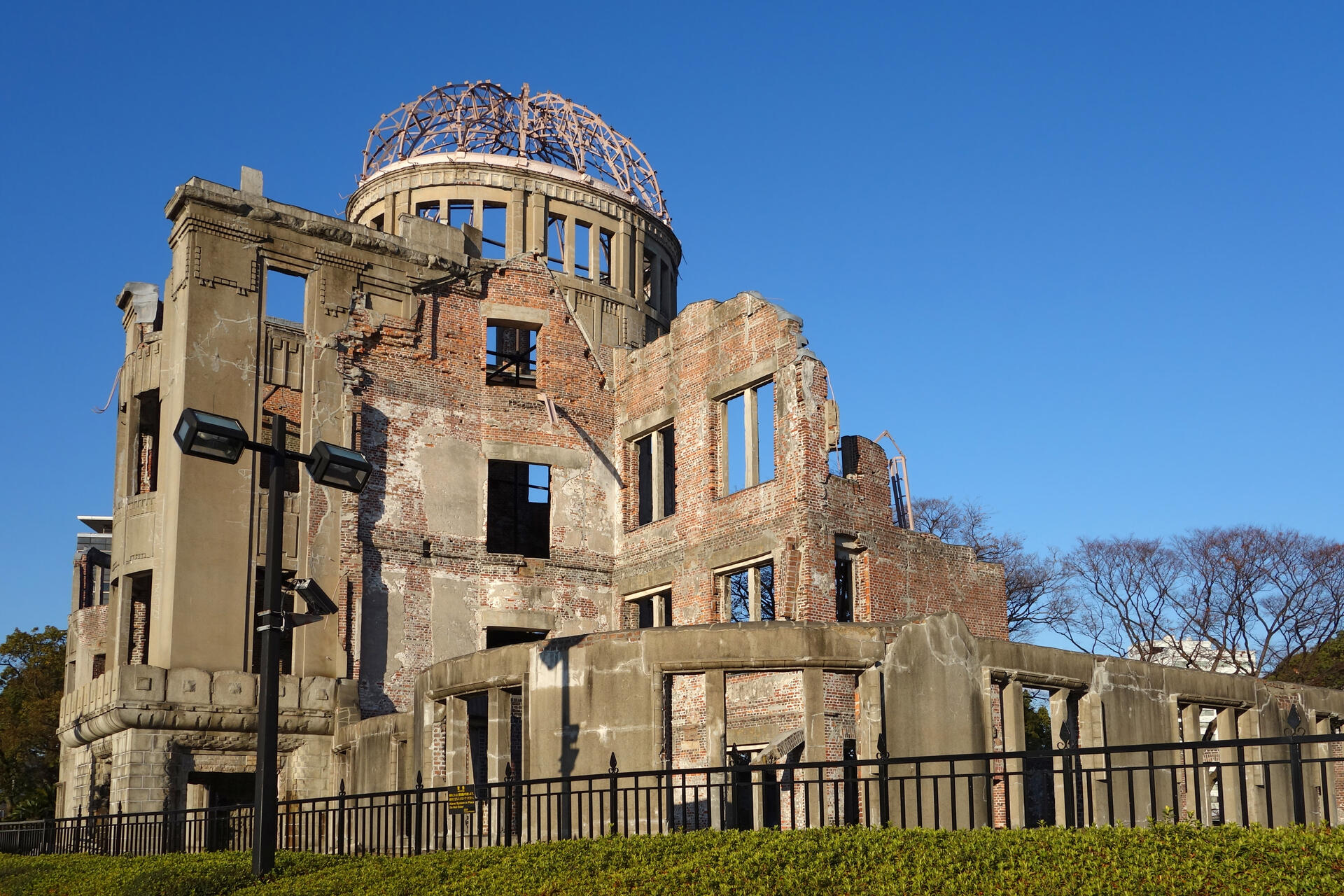
The Hiroshima Peace Memorial, colloquially known as the Genbaku Dome, stands as a poignant testament to the devastating impact of nuclear warfare. Located within the Hiroshima Peace Memorial Park in Hiroshima, Japan, this historic structure was inscribed as a UNESCO World Heritage Site in 1996.
Originally constructed as the Hiroshima Prefectural Industrial Promotion Hall, the building was one of the few structures that remained standing following the detonation of the world's first atomic bomb, dropped by the United States, on August 6, 1945. The explosion caused the immediate deaths of over 70,000 people, and by the end of 1945, the total death toll reached approximately 140,000, with additional casualties resulting from radiation sickness and long-term health effects.
The tragedy did not end in 1945, as the long-term effects of radiation continued to claim lives for decades. In the years following the blast, thousands of survivors—known as Hibakusha—succumbed to leukemia, various forms of cancer, and other radiation-linked illnesses. To honor these ongoing losses, the city of Hiroshima continuously updates its official registry; as of 2025, the total number of recognized deaths attributed to the bombing has surpassed 349,000, more than doubling the initial 1945 toll.
Despite the immense scale of civilian suffering—with the vast majority of victims being civilians—no individual or government has ever been held legally accountable for the bombings of Hiroshima and Nagasaki (on August 9, 1945). While the Nuremberg and Tokyo Trials prosecuted other leaders for war crimes and crimes against humanity, the use of atomic weapons was never adjudicated by an international tribunal.
This lack of legal accountability for the victors of the second world war means that the decision to use atomic bombs remains a war crime committed with absolute impunity. For many, the Genbaku Dome stands not only as a symbol of peace but also as a silent monument to a catastrophic violation of international law and the laws of war that went unpunished.
In the aftermath of the bombing, the Genbaku Dome served as a grim reminder of the horrors inflicted upon the city. Despite the destruction wrought by the blast, the building's skeletal frame remained standing, making it a significant landmark amidst the devastation. This preservation was intentional, as the city of Hiroshima sought to preserve the site as a symbol of the destructive power of nuclear weapons and the urgent need for global disarmament.
Over time, the Genbaku Dome evolved into a powerful symbol of peace and reconciliation. In 1952, the city completed the Cenotaph for the Atomic Bomb Victims, which stands directly opposite the dome. The cenotaph holds a symbolic stone chest containing the names of all those who perished. Its central inscription, "Let all the souls here rest in peace, for we shall not repeat the mistake," serves as a solemn vow to humanity. Nearby, the Flame of Peace remains lit, intended to burn until the day the world is free of nuclear weapons.
The dome's inscription as a UNESCO World Heritage Site in 1996 was a significant milestone, though not without international debate. The United States and China expressed reservations during the process—the U.S. concerned about the lack of historical context regarding the war, and China noting that the memorial should not overshadow the suffering of other nations during the conflict.
Today, the Hiroshima Peace Memorial serves as a crucial educational tool, providing visitors with a tangible connection to the past and fostering a greater understanding of the consequences of nuclear warfare. The site attracts millions of tourists each year, who come to pay their respects, learn from history, and reaffirm their commitment to peace and disarmament.
In addition to its role as a memorial, the Genbaku Dome plays a central part in the annual Hiroshima Peace Memorial Ceremony. On August 6th each year, survivors, dignitaries, and citizens gather at the site to remember the victims of the bombing, renew their vows for peace, and call for the abolition of nuclear weapons.
The Hiroshima Peace Memorial, through its preservation and continued significance, serves as a potent reminder of the destructive potential of nuclear weapons and the urgent need for global disarmament. As a symbol of hope and peace, the Genbaku Dome stands as a beacon of resilience and determination in the face of adversity, inspiring generations to strive towards a more peaceful world.
UNESCO Description of the World Heritage Site
The Hiroshima Peace Memorial (Genbaku Dome) was the only structure left standing in the area where the first atomic bomb exploded on 6 August 1945. Through the efforts of many people, including those of the city of Hiroshima, it has been preserved in the same state as immediately after the bombing. Not only is it a stark and powerful symbol of the most destructive force ever created by humankind; it also expresses the hope for world peace and the ultimate elimination of all nuclear weapons.
UNESCO Justification of the World Heritage Site
Criterion (vi): The Hiroshima Peace Memorial (Genbaku Dome) is a stark and powerful symbol of the achievement of world peace for more than half a century following the unleashing of the most destructive force ever created by humankind.
Encyclopedia Record: Hiroshima Peace Memorial
The Hiroshima Peace Memorial , originally the Hiroshima Prefectural Industrial Promotion Hall, and now commonly called the Genbaku Dome, Atomic Bomb Dome or A-Bomb Dome , is part of Hiroshima Peace Memorial Park in Hiroshima, Japan, and was designated a UNESCO World Heritage Site in 1996.Additional Site Details
Area: 0.4 hectares
Number of Components: 1
Coordinates: 34.395556 , 132.453611
World Heritage Research
Discover scientific research and academic studies that deepen our understanding of Hiroshima Peace Memorial (Genbaku Dome) from its history and significance to its conservation, management, and contemporary challenges.
-
Memorializing Peace
A comparative analysis reveals a striking disparity between war and peace memorials, with the United States hosting 15,758 war-related sites compared to just 1,221 dedicated to peace. This study highlights how many peace memorials often serve dual purposes, commemorating victims of wars such as Hiroshima, Nagasaki, or the Holocaust while advocating for peace. The research draws from the National Monument Audit (Monument Lab 2025), which documents these sites across federal, state, local, and private spheres. By examining the overlap between war and peace memorialization, this work sheds light on the complex interplay between remembrance and advocacy in public monuments.
Dawdy, S. L. (2026). Memorializing Peace. Freie Universität Berlin. https://doi.org/10.17169/REFUBIUM-51887
View Publication Record | Read Publication -
Hiroshima
Hiroshima, a publication by Renzo and Sayoko Kinoshita, explores the intersection of personal grief and collective memory through the lens of the Hiroshima Peace Memorial (Genbaku Dome). The work employs animation as a medium to depict atrocity without softening its impact, using painstaking research and survivor testimonies. It delves into the emotional and ethical dimensions of tourism at sites of historical catastrophe, particularly focusing on the A-Bomb Dome and the Peace Memorial Museum. The narrative structure contrasts personal suffering with public memory, highlighting the physical and emotional weight of confronting such sites. The publication serves as a poignant example of how animation can convey the complexities of historical trauma while demanding collective remembrance.
Robinson, C. (2026). Hiroshima. Times out of Mind, 52–59. https://doi.org/10.1201/9781003755876-6
View Publication Record | Read Publication -
História digital e cultura histórica
Digital tools enhance the preservation and interpretation of UNESCO World Heritage Sites, as demonstrated by their application to the Hiroshima Peace Memorial (Genbaku Dome). This study reveals that digital history methods, such as the use of software like Tropy, improve the cataloging and analysis of historical archives while addressing methodological challenges in source validation. The research highlights how digitalization expands access to collective memory, particularly for sites symbolizing significant historical traumas like Hiroshima. By integrating technology with rigorous historical practices, this approach strengthens the preservation of cultural heritage and its societal relevance.
Ferreira Canova Júnior, D., & Ivaneide Alves da Silva, A. (2025). História digital e cultura histórica. Revista Discente Ofícios de Clio, 9(17), 126–145. https://doi.org/10.15210/clio.v9i17.29147
View Publication Record | Read Publication -
L’interpretazione dei Beni Culturali
A new framework for interpreting UNESCO World Heritage Sites, including those with painful or contested histories such as the Hiroshima Peace Memorial (Genbaku Dome), is proposed. The study identifies key ethical and operational criteria to ensure respect for cultural diversity while aligning with international standards. By analyzing case studies like Auschwitz-Birkenau and Meiji Industrial Revolution sites, it highlights the complexities of interpretation when dealing with sensitive memories. This approach aims to guide future conservation efforts in a manner that balances universal values with local perspectives.
Scovazzi, T. (2025). L’interpretazione dei Beni Culturali. Pensar - Revista de Ciências Jurídicas, 30(1), 1–8. https://doi.org/10.5020/2317-2150.2025.15930
View Publication Record | Read Publication -
Digital Humanities Approach to Overseas Recognition of May 18 Uprising: Focusing on the comparison with Hiroshima Peace Memorial
A comparison of global recognition trends between the May 18 Uprising (Gwangju Uprising) and the Hiroshima Peace Memorial reveals distinct patterns in overseas visibility. While the Gwangju Uprising saw a steady rise in international awareness from the 1990s to the mid-2010s, its prominence has since declined. Conversely, the Hiroshima Peace Memorial, through sustained international peace and human rights activities, has maintained a consistent upward trajectory in global recognition. This study leverages Google Ngram data—analyzing the frequency of terms in published works from 16th century to 2019—to quantify these trends without attributing causality to specific institutional efforts. The findings suggest that collaborative international engagement, as exemplified by the Hiroshima Peace Memorial's participation in networks like the East Asian Democratic Human Rights and Peace Network, may serve as a model for enhancing global visibility of historical events like the Gwangju Uprising.
Yang, J.-y. (2024). Digital Humanities Approach to Overseas Recognition of May 18 Uprising: Focusing on the comparison with Hiroshima Peace Memorial. Journal of Democracy and Human Rights, 24(1), 67–95. https://doi.org/10.62082/jdhr.2024.03.24.1.067
View Publication Record | Read Publication -
Design process of the Memorial Cathedral for World Peace (1954), Hiroshima, by Togo Murano (Part 3): Formal manipulations observed in the process of schematic design of the cathedral (1948)
A novel analytical approach has uncovered the dynamic design evolution of the Hiroshima Peace Memorial (Genbaku Dome) during its schematic phase (1948), revealing Togo Murano's rapid experimentation with exterior forms and strategic morphological manipulations. The study, leveraging undated sketches from the Kyoto Institute of Technology, demonstrates how Murano navigated challenges in securing approval while developing diverse architectural types in a compressed timeframe. This research sheds light on the architect's creative process and design thinking, offering insights into the genesis of one of Japan's most significant post-war landmarks.
Tomioka, Y., & Tabata, C. (2024). Design process of the Memorial Cathedral for World Peace (1954), Hiroshima, by Togo Murano (Part 3): Formal manipulations observed in the process of schematic design of the cathedral (1948). Japan Architectural Review, 7(1). Portico. https://doi.org/10.1002/2475-8876.12446
View Publication Record | Read Publication -
Synthesis of National and Western Tradition in Early Examples of Japanese Modernism (the Case of World Peace Memorial Cathedral in Hiroshima)
Japanese modernism, exemplified by the Hiroshima Peace Memorial (Genbaku Dome), diverges from its European counterpart by integrating traditional Japanese architectural elements with Western influences. Designed by Togo Murano after the atomic bombing, the cathedral synthesizes Romanesque basilica planning and modernist simplicity while incorporating Japanese decorative motifs, such as concrete-carved partitions reflecting ancient temple traditions. This study reveals that Japanese modernism does not reject tradition but instead uses it as a foundation, contrasting with European modernism's radical departure from historical forms. The research analyzes the cathedral's design, comparing its compositional elements to both Western and Japanese precedents, highlighting Murano's innovative fusion of styles.
Sleptsov, O. (2024). SYNTHESIS OF NATIONAL AND WESTERN TRADITION IN EARLY EXAMPLES OF JAPANESE MODERNISM (THE CASE OF WORLD PEACE MEMORIAL CATHEDRAL IN HIROSHIMA). Urban Development and Spatial Planning, (86), 178–187. https://doi.org/10.32347/2076-815x.2024.86.178-187
View Publication Record | Read Publication