World Heritage Identification Number: 661
World Heritage since: 1993
Category: Cultural Heritage
WHE Type: Buildings & Architectural Ensembles
Transboundary Heritage: No
Endangered Heritage: No
Country: 🇯🇵 Japan
Continent: Asia
UNESCO World Region: Asia and the Pacific
Map
A Comprehensive Overview of Himeji-jo: Japan's White Heron Castle
Himeji-jo, also known as Hakuro-jō (White Egret Castle) or Shirasagi-jō (White Heron Castle), is an exceptional example of early 17th-century Japanese castle architecture. This architectural marvel is located atop a hill in the city of Himeji, Hyogo Prefecture, Japan. Inscribed as a UNESCO World Heritage Site in 1993, Himeji-jo stands out for its harmonious blend of functionality and aesthetic appeal, making it a significant cultural landmark.
More to come…UNESCO Description of the World Heritage Site
Himeji-jo is the finest surviving example of early 17th-century Japanese castle architecture, comprising 83 buildings with highly developed systems of defence and ingenious protection devices dating from the beginning of the Shogun period. It is a masterpiece of construction in wood, combining function with aesthetic appeal, both in its elegant appearance unified by the white plastered earthen walls and in the subtlety of the relationships between the building masses and the multiple roof layers.
UNESCO Justification of the World Heritage Site
Criterion (i): Himeji-jo is a masterpiece of construction in wood. It combines its effective functional role with great aesthetic appeal, both in the use of white-painted plaster and in the subtlety of the relationships between the building masses and the multiple roof layers.
Criterion (iv): It represents the culmination of Japanese castle architecture in wood, and preserves all its significant features intact.
Encyclopedia Record: Himeji Castle
Himeji Castle is a hilltop Japanese castle complex situated in Himeji, a city in Hyōgo Prefecture, Japan. The castle is regarded as the finest surviving example of prototypical Japanese castle architecture, comprising a network of 83 rooms with advanced defensive systems from the feudal period. The castle is frequently known as Hakuro-jō or Shirasagi-jō because of its brilliant white exterior and supposed resemblance to a bird taking flight.Additional Site Details
Area: 107 hectares
Number of Components: 1
(iv) — Outstanding example of a type of building or landscape
Coordinates: 34.83333333 , 134.7
Image
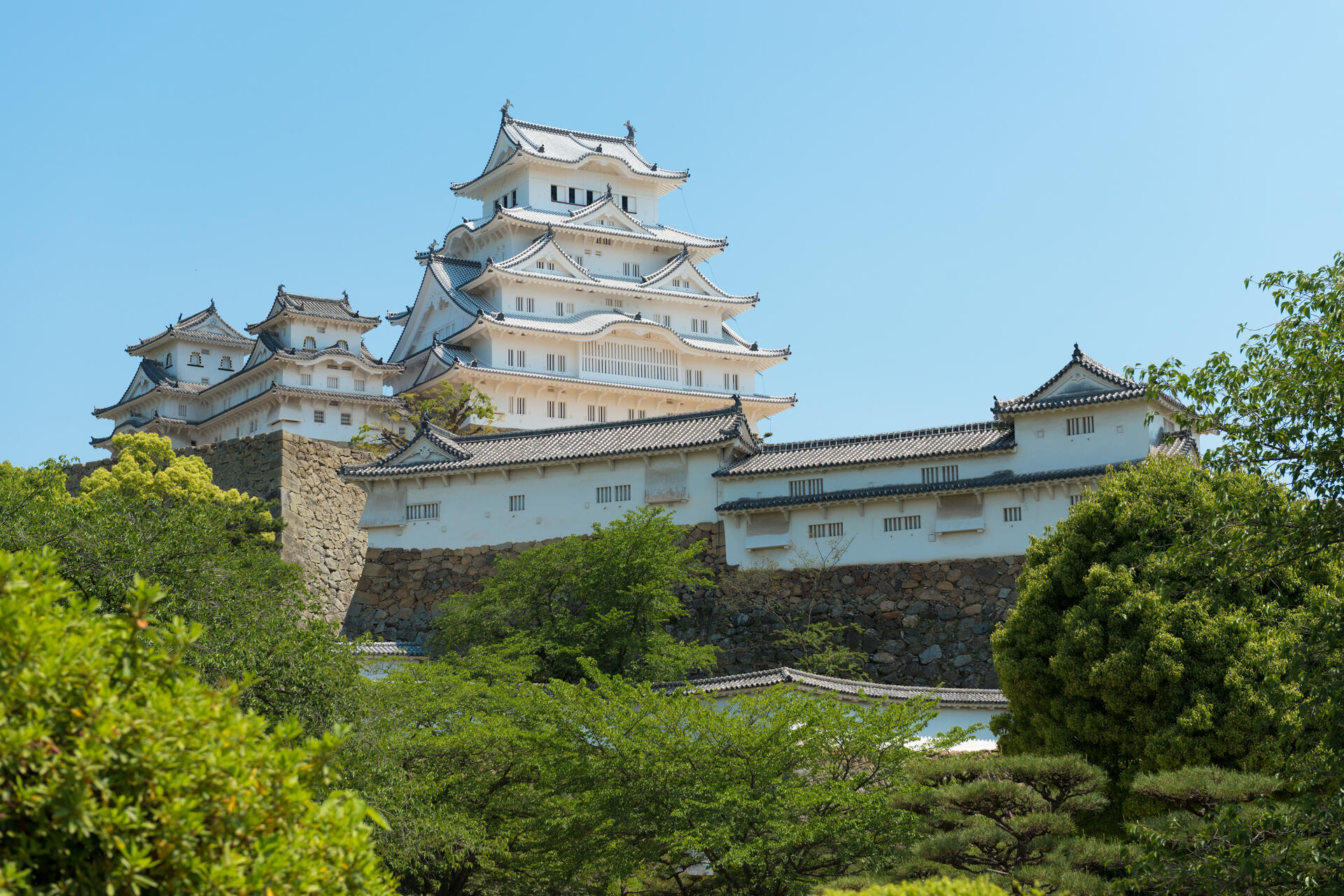
© Niko Kitsakis, CC BY-SA 4.0 Resized from original. (This derivative is under the same CC BY-SA license.)