World Heritage Identification Number: 660
World Heritage since: 1993
Category: Cultural Heritage
WHE Type: Religious Sites & Sacred Architecture
Transboundary Heritage: No
Endangered Heritage: No
Country: 🇯🇵 Japan
Continent: Asia
UNESCO World Region: Asia and the Pacific
Map
Ancient Wooden Architecture: The Buddhist Monuments in the Horyu-ji Area
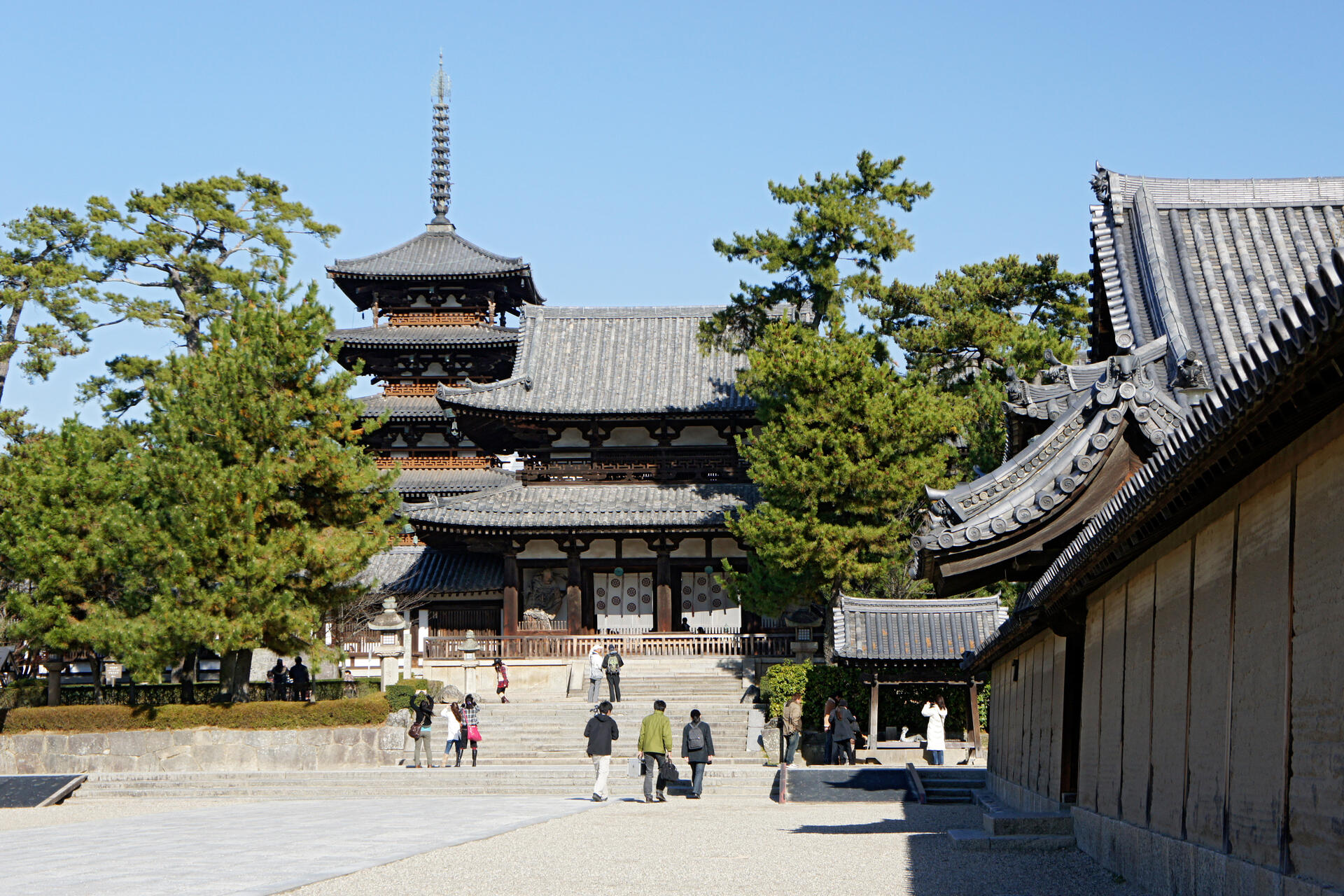
The Buddhist Monuments in the Horyu-ji Area, located in Ikaruga, Nara Prefecture, Japan, is a remarkable testament to the rich cultural heritage of the country. Inscribed as a UNESCO World Heritage Site in 1993, this collection of 48 Buddhist monuments spans over a millennium, with several structures dating back to the late 7th or early 8th century, making them some of the oldest surviving wooden buildings in the world.
More to come…UNESCO Description of the World Heritage Site
There are around 48 Buddhist monuments in the Horyu-ji area, in Nara Prefecture. Several date from the late 7th or early 8th century, making them some of the oldest surviving wooden buildings in the world. These masterpieces of wooden architecture are important not only for the history of art, since they illustrate the adaptation of Chinese Buddhist architecture and layout to Japanese culture, but also for the history of religion, since their construction coincided with the introduction of Buddhism to Japan from China by way of the Korean peninsula.
UNESCO Justification of the World Heritage Site
Criterion (i): The Buddhist Monuments in the Horyu-ji Area are masterpieces of wooden architecture, both in overall design and in decoration.
Criterion (ii): These are the earliest Buddhist monuments in Japan, dating from shortly after the introduction of Buddhism to the country, and had a profound influence on subsequent religious architecture.
Criterion (iv): The Horyu-ji monuments represent the adaptation of Chinese Buddhist architecture and temple layout to Japanese culture and the subsequent development of a distinct indigenous style.
Criterion (vi): The introduction of Buddhism into Japan and its promotion by Prince Shotokumarks a significant stage in the spread of Buddhism over this cultural zone.
Encyclopedia Record: Buddhist Monuments in the Hōryū-ji Area
The UNESCO World Heritage Site Buddhist Monuments in the Hōryū-ji Area includes a variety of buildings found in Hōryū-ji and Hokki-ji in Ikaruga, Nara Prefecture, Japan. These buildings were designated in 1993 along with the surrounding landscape, under several criteria. The structures inscribed are some of the oldest extant wooden buildings in the world, dating from the 7th to 8th centuries. Many of the monuments are also National Treasures of Japan, and reflect an important age of Buddhist influence in Japan. The structures include 21 buildings in the Hōryū-ji East Temple, 9 in the West Temple, 17 monasteries and other buildings, and the pagoda in Hokki-ji.Additional Site Details
Area: 15.3 hectares
Number of Components: 2
(ii) — Significant interchange of human values
(iv) — Outstanding example of a type of building or landscape
(vi) — Directly associated with events or living traditions
Coordinates: 34.61666667 , 135.7333333
World Heritage Research
Discover scientific research and academic studies that deepen our understanding of Buddhist Monuments in the Horyu-ji Area from its history and significance to its conservation, management, and contemporary challenges.
-
Study of the conservation and exhibition of burned wall paintings in the main hall of the treasure house at Horyu-ji Temple
A numerical analysis revealed that using a blower system in the attic space of Horyu-ji Temple's treasure house effectively reduces relative humidity, mitigating risks of mold and pest damage to burned wall paintings. This finding is critical for both preserving the paintings under closed conditions and enabling future exhibitions, where visitor-induced heat and moisture could exacerbate biological deterioration. The study evaluated two scenarios—preservation and exhibition—to quantify the impact of environmental control on humidity levels, providing actionable insights for managing microclimates in heritage conservation settings.
Wada, T., Ogura, D., Sano, C., Hokoi, S., & Iba, C. (2020). Study of the conservation and exhibition of burned wall paintings in the main hall of the treasure house at Horyu-ji Temple. E3S Web of Conferences, 172, 15005. https://doi.org/10.1051/e3sconf/202017215005
View Publication Record | Read Publication