World Heritage Identification Number: 1593
World Heritage since: 2019
Category: Cultural Heritage
WHE Type: Archaeological Sites
Transboundary Heritage: No
Endangered Heritage: No
Country: 🇯🇵 Japan
Continent: Asia
UNESCO World Region: Asia and the Pacific
Map
The Mozu-Furuichi Kofun Group: A Glimpse into Ancient Japan's Elite Funerary Practices
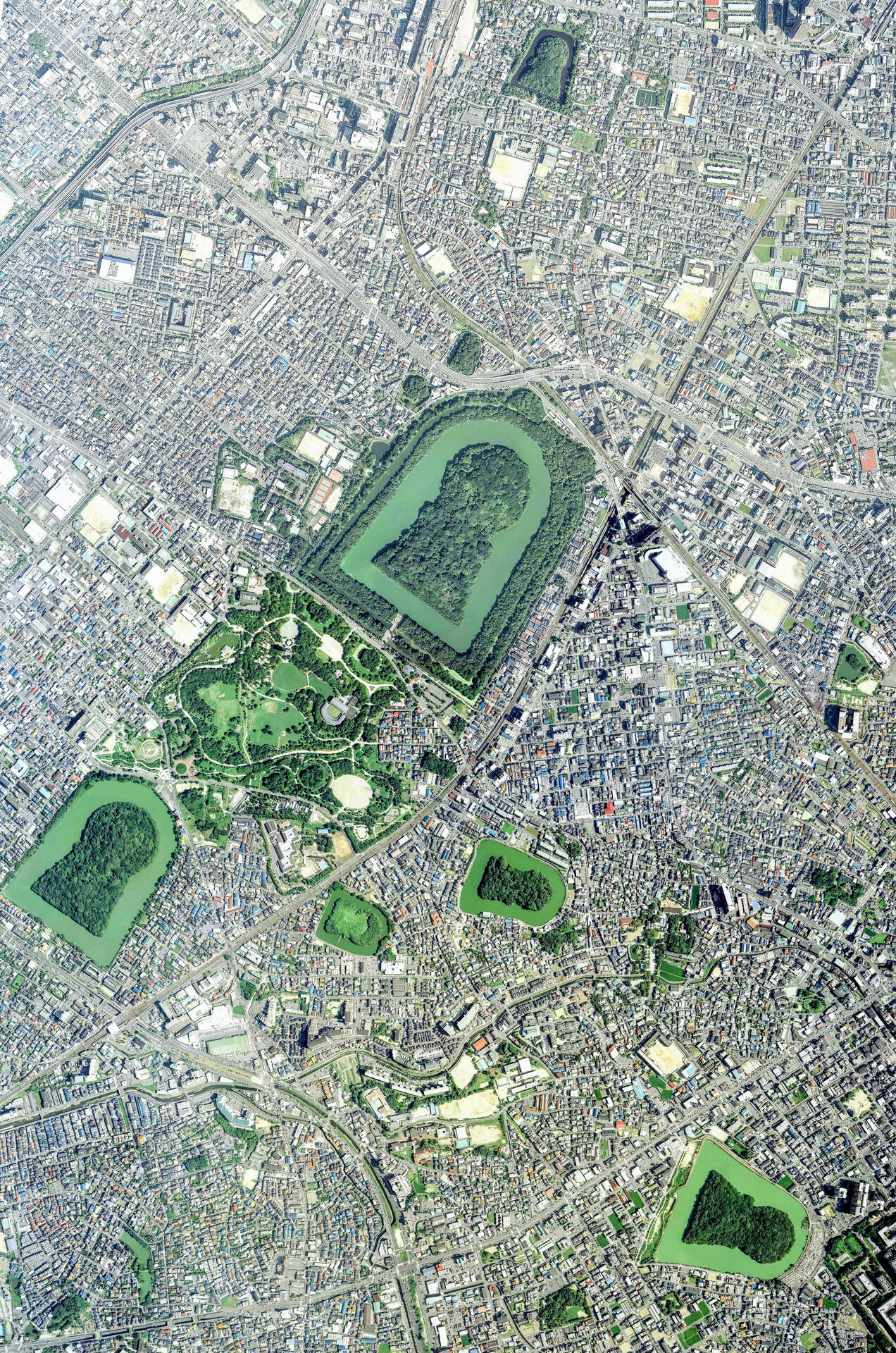
The Mozu-Furuichi Kofun Group, inscribed as a UNESCO World Heritage Site in 2019, offers a unique insight into the funerary practices of ancient Japan's elite during the Kofun period (3rd to 6th century CE). Situated on a plateau above the Osaka Plain, this site comprises 49 kofun, or ancient burial mounds, selected from over 160,000 such structures across Japan.
More to come…UNESCO Description of the World Heritage Site
Located on a plateau above the Osaka Plain, this property includes 49 kofun (“old mounds” in Japanese). These tombs were for members of the elite. These kofun have been selected from among a total of 160,000 in Japan and form the richest material representation of the Kofun period, from the 3rd to the 6th century CE. They demonstrate the differences in social classes of that period and show evidence of a highly sophisticated funerary system. Burial mounds of significant variations in size, kofun take the geometrically elaborate design forms of keyhole, scallop, square or circle. They were decorated with paving stones and clay figures. The kofun demonstrate exceptional technical achievements of earthen constructions.
UNESCO Justification of the World Heritage Site
Criterion (iii): While 160,000 kofun are found throughout Japan, the Mozu-Furuichi Kofun Group represents and provides exceptional testimony to the culture of the Kofun period of Japan’s ancient history. The 45 components demonstrate the period’s socio-political structures, social class differences and highly sophisticated funerary system.
Criterion (iv): The Mozu-Furuichi Kofun Group demonstrates an outstanding type of ancient East Asian burial mound construction. The role of the kofun in the establishment of social hierarchies within this particular and significant historical period, as well as the tangible attributes such as the clay sculptures, moats and geometric terraced mounds reinforced by stone, are outstanding.
Encyclopedia Record: Mozu Kofun Group
The Mozu Kofun Group is a group of kofun—megalithic tombs—in Sakai, Osaka Prefecture, Japan. Originally consisting of more than 100 tombs, fewer than 50% of the key-hole, round, and rectangular tombs remain.Additional Site Details
Area: 166.66 hectares
Number of Components: 45
(iv) — Outstanding example of a type of building or landscape
Coordinates: 34.5622222222 , 135.6094444444