World Heritage Identification Number: 1142
World Heritage since: 2004
Category: Cultural Heritage
WHE Type: Religious Sites & Sacred Architecture
Transboundary Heritage: No
Endangered Heritage: No
Country: 🇯🇵 Japan
Continent: Asia
UNESCO World Region: Asia and the Pacific
Map
Exploring the Spiritual Heart of Japan: Sacred Sites and Pilgrimage Routes in the Kii Mountain Range
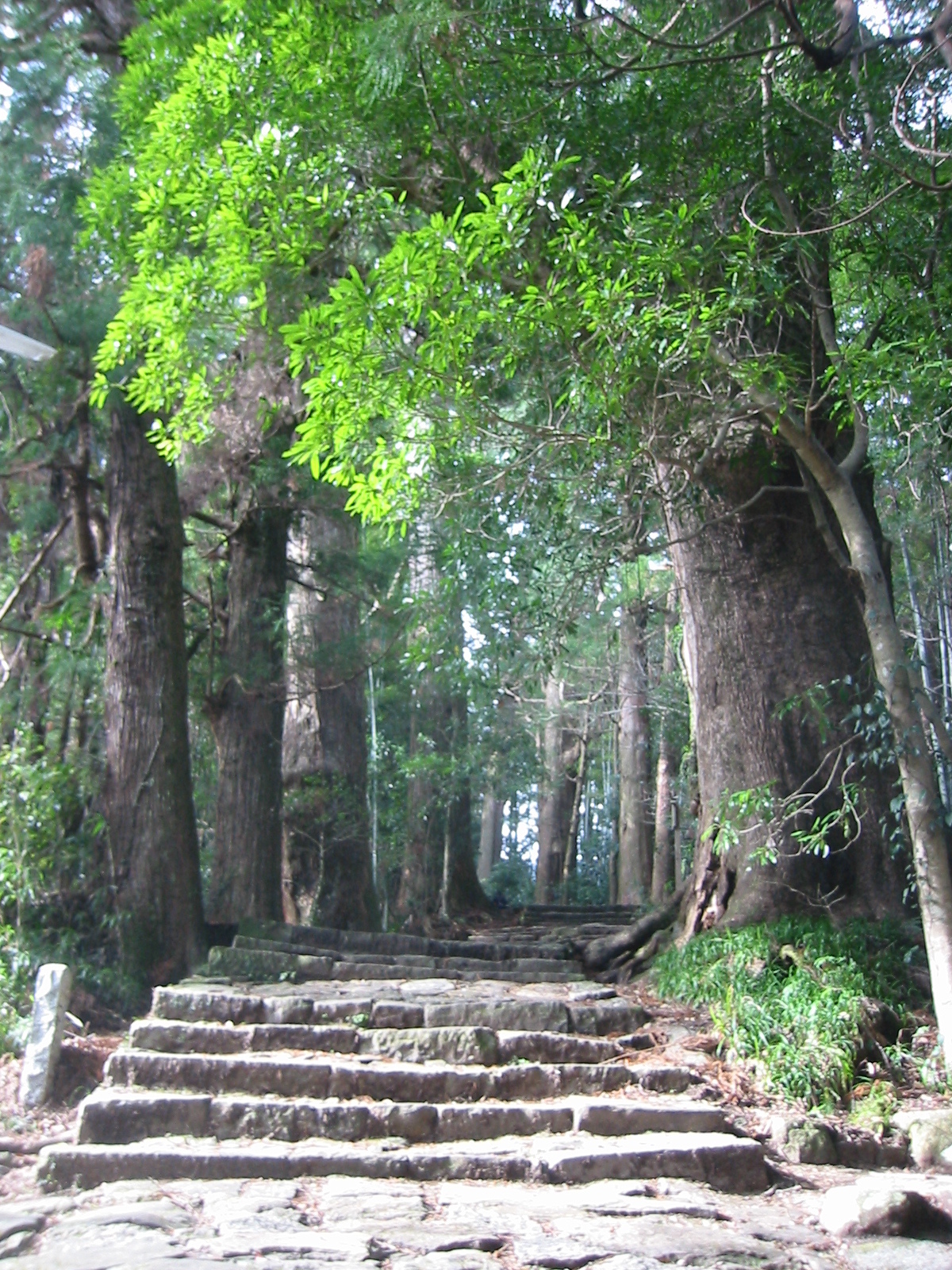
The Sacred Sites and Pilgrimage Routes in the Kii Mountain Range, inscribed as a UNESCO World Heritage Site in 2004, offers a unique glimpse into the rich cultural tapestry of Japan. This site, nestled within the verdant forests of the Kii Mountains along the Pacific coast, comprises three sacred sites - Yoshino and Omine, Kumano Sanzan, and Koyasan - interconnected by ancient pilgrimage routes that once led to the ancient capitals of Nara and Kyoto.
More to come…UNESCO Description of the World Heritage Site
Set in the dense forests of the Kii Mountains overlooking the Pacific Ocean, three sacred sites – Yoshino and Omine, Kumano Sanzan, Koyasan – linked by pilgrimage routes to the ancient capital cities of Nara and Kyoto, reflect the fusion of Shinto, rooted in the ancient tradition of nature worship in Japan, and Buddhism, which was introduced from China and the Korean Peninsula. The sites (506.4 ha) and their surrounding forest landscape reflect a persistent and extraordinarily well-documented tradition of sacred mountains over 1,200 years. The area, with its abundance of streams, rivers and waterfalls, is still part of the living culture of Japan and is much visited for ritual purposes and hiking, with up to 15 million visitors annually. Each of the three sites contains shrines, some of which were founded as early as the 9th century.
UNESCO Justification of the World Heritage Site
Criterion (ii) : The monuments and sites that form the cultural landscape of the Kii Mountains are a unique fusion between Shintoism and Buddhism that illustrates the interchange and development of religious cultures in East Asia.
Criterion (iii) : The Shinto shrines and Buddhist temples in the Kii Mountains, and their associated rituals, bear exceptional testimony to the development of Japan’s religious culture over more than a thousand years.
Criterion (iv) : The Kii Mountains have become the setting for the creation of unique forms of shrine and temple buildings which have had a profound influence on the building of temples and shrines elsewhere in Japan.
Criterion (vi) : Together, the sites and the forest landscape of the Kii Mountains reflect a persistent and extraordinarily well-documented tradition of sacred mountains over the past 1,200 years.
Encyclopedia Record: Sacred Sites and Pilgrimage Routes in the Kii Mountain Range
Sacred Sites and Pilgrimage Routes in the Kii Mountain Range is a UNESCO World Heritage Site located on the Kii Peninsula in Japan.Additional Site Details
Area: 506.4 hectares
Number of Components: 23
(iii) — Unique or exceptional testimony to a cultural tradition
(iv) — Outstanding example of a type of building or landscape
(vi) — Directly associated with events or living traditions
Coordinates: 33.83694444 , 135.7763889
World Heritage Research
Discover scientific research and academic studies that deepen our understanding of Sacred Sites and Pilgrimage Routes in the Kii Mountain Range from its history and significance to its conservation, management, and contemporary challenges.
-
Consideration of issues and solutions related to the coexistence of cultural properties and the real life of the neighborhood
A collaborative approach to disaster preparedness and restoration is essential for protecting cultural heritage sites, such as the UNESCO World Heritage Site 'Sacred Sites and Pilgrimage Routes in the Kii Mountain Range,' while minimizing environmental impact. The study highlights that pre-disaster planning, involving government officials and related institutions, can significantly reduce the burden on cultural properties during recovery. It proposes reconstruction methods that prioritize harmony with nature and scenic preservation, drawing from damage cases of Yokogaki-toge Pass. While best practices for such reconstructions remain understudied, this research serves as a precedent for future disaster recovery efforts, offering practical implications for cultural property management and social benefits for stakeholders involved in heritage conservation.
Ishida, Y., Kim, D., Konegawa, T., & Fukagawa, R. (2019). Consideration of issues and solutions related to the coexistence of cultural properties and the real life of the neighborhood. Disaster Prevention and Management: An International Journal, 29(1), 86–108. https://doi.org/10.1108/dpm-07-2018-0234
View Publication Record | Read Publication -
Heritage management and conservation activities at World Heritage Sites.
Heritage management at UNESCO World Heritage Sites (WHSs) is significantly influenced by postmodernism and globalization, shaping both conservation approaches and responsibilities. This study examines the complexities of heritage management through philosophical perspectives, duty frameworks, tourism impacts, and cultural differences between Eastern and Western views. Using 'Sacred Sites and Pilgrimage Routes in the Kii Mountain Range' as a case study, it highlights how these global phenomena interact with local conservation efforts, revealing nuanced challenges in preserving cultural heritage while balancing tourism and community engagement.
Jimura, T. (2018). Heritage management and conservation activities at World Heritage Sites. World Heritage Sites: Tourism, Local Communities and Conservation Activities, 20–33. https://doi.org/10.1079/9781786392688.0020
View Publication Record | Read Publication -
Walking to care
A community of care emerges through slow tourism on the Kumano-kodo, a UNESCO World Heritage-listed pilgrimage trail in Japan's Kii Mountain Range. This study reveals that walking-based tourism fosters environmentally aware behavior and local engagement, with stakeholders—including walkers and communities—adopting mindful, low-impact practices. These include volunteer restoration and storytelling, aligning with the principles of slow tourism: locally rooted, deliberate, and sustainable. The research identifies stakeholder roles and proposes standards for such tourism, demonstrating how pilgrimage trails can cultivate ecological consciousness while strengthening community bonds.
Kato, K. (2017). Walking to care. The Routledge International Handbook of Walking, 232–241. https://doi.org/10.4324/9781315638461-23
View Publication Record | Read Publication -
World heritage site management: a case study of sacred sites and pilgrimage routes in the Kii mountain range, Japan
UNESCO World Heritage Site (WHS) designation has positively influenced the Kii Mountain Range in Japan, enhancing local identity and cultural revitalization while maintaining minimal negative impacts on tourism. A qualitative study found that local communities, tourists, and experts are actively engaged in heritage management and conservation, with WHS listing fostering pride in culture and place. However, challenges persist due to limited understanding of WHS status and conflicts between heritage management, tourism, and religious practices. The research suggests a more holistic approach, such as establishing a stakeholder forum, could further support Kii's success as both a sacred site and tourist destination.
Jimura, T. (2016). World heritage site management: a case study of sacred sites and pilgrimage routes in the Kii mountain range, Japan. Journal of Heritage Tourism, 11(4), 382–394. https://doi.org/10.1080/1743873x.2016.1146287
View Publication Record | Read Publication -
Large-scale Disasters on World Heritage and Cultural Heritage in Japan: Significant Impacts and Sustainable Management Cases
Japan's UNESCO World Heritage Sites, particularly coastal cultural landscapes and pilgrimage routes such as those in the Kii Mountain Range, face severe threats from large-scale disasters like earthquakes, tsunamis, typhoons, and associated floods. The 2011 East Japan Great Earthquake caused significant damage to 295 National Cultural Properties, primarily due to tsunamis rather than seismic activity itself. Recent years have seen increasing damage from typhoon-induced storms and landslides, affecting both cultural heritage and natural elements of these sites. This study highlights the urgent need for sustainable protection and management strategies to mitigate such impacts, drawing on case studies of disaster response and remedial measures in Japan.
Sugio, K. (2015). Large-scale Disasters on World Heritage and Cultural Heritage in Japan: Significant Impacts and Sustainable Management Cases. Landscape Research, 40(6), 748–758. https://doi.org/10.1080/01426397.2015.1057806
View Publication Record | Read Publication -
Walking through World Heritage Forest in Japan: the Kumano pilgrimage
A shift in perception of the Kumano forest, a UNESCO World Heritage Cultural Landscape, has been observed. Originally central to religious beliefs and ascetic practices for centuries, the forest now serves as a destination for modern visitors drawn by wellness trends and a desire to reconnect with Japan's past. This transformation raises questions about how history and memory are perceived in an evolving environment, and what new relationships visitors form with this sacred landscape. The study employs qualitative methods to explore these contemporary dynamics, contrasting them with the historical significance of the forest as both an economic resource and a site of spiritual pilgrimage.
Guichard-Anguis, S. (2011). Walking through World Heritage Forest in Japan: the Kumano pilgrimage. Journal of Heritage Tourism, 6(4), 285–295. https://doi.org/10.1080/1743873x.2011.620114
View Publication Record | Read Publication