
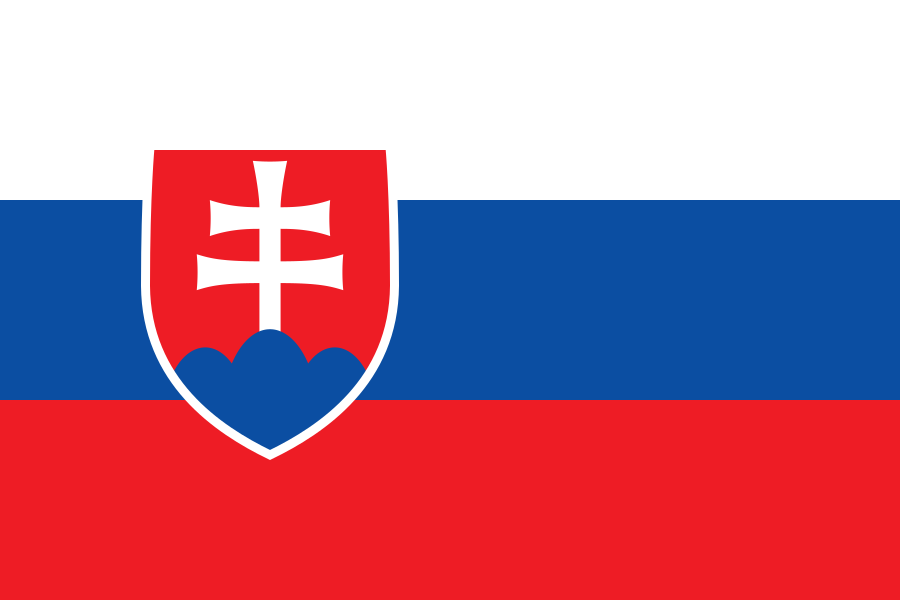
 Slovakia
Slovakia as a State Party to the World Heritage Convention
State Party since: March 31, 1993
Status: Succession
Mandates to the World Heritage Committee: None
Total of Mandate Years: 0
Total of Mandates: 0
WHC Electoral Group: II (Eastern Europe)
World Heritage Sites in Slovakia (8)
Cultural: 6 | Natural: 2 | Mixed: 0
- Ancient and Primeval Beech Forests of the Carpathians and Other Regions of Europe · Natural (Transboundary)
- Bardejov Town Conservation Reserve · Cultural
- Caves of Aggtelek Karst and Slovak Karst · Natural (Transboundary)
- Frontiers of the Roman Empire – The Danube Limes (Western Segment) · Cultural (Transboundary)
- Historic Town of Banská Štiavnica and the Technical Monuments in its Vicinity · Cultural
- Levoča, Spišský Hrad and the Associated Cultural Monuments · Cultural
- Vlkolínec · Cultural
- Wooden Churches of the Slovak part of the Carpathian Mountain Area · Cultural
Map of World Heritage Sites
This interactive map shows the location of all UNESCO World Heritage Sites in Slovakia.
World Heritage Inscription Timeline
Tentative World Heritage Sites (12)
- Sites of Great Moravia: Slavonic Fortified Settlement at Mikulčice – Church of St. Margaret at Kopčany · submitted: January 30, 2007
- The Memorial of Chatam Sófer · submitted: June 12, 2002
- System of Fortifications at the Confluence of the Rivers Danube and Váh in Komárno - Komárom · submitted: June 12, 2002
- The concept of the lenticular historical town core of Košice City · submitted: June 12, 2002
- Natural Reserves of Tatras Mountain · submitted: June 12, 2002
- Karst Valleys of Slovakia · submitted: June 12, 2002
- Natural and Cultural Landscape of Danube Region · submitted: June 12, 2002
- Fungal Flora of Bukovské Hills · submitted: June 12, 2002
- Geyser in Herlany · submitted: June 12, 2002
- Original Meadow - Pasture Sites of Slovakia · submitted: February 11, 2002
- Tokaj Wine Region · submitted: February 6, 2002
- Gemer and Abov churches with the medieval wall paintings · submitted: October 1, 1995
Country Profile Slovakia
Official Name: Slovak Republic
Continent: Europe
Subregion: Central Europe
UNESCO Region: Europe and North America
Capital: Bratislava
Population (2024): 5,422,069
Land Area: 48,080 km²
Currency: Euro (EUR)
Related Resources
About States Parties
States Parties are countries that have joined the World Heritage Convention. They commit to identifying, nominating, and protecting properties of outstanding cultural or natural value on their territory. States Parties are also expected to monitor and report on the condition of inscribed sites.