
World Heritage Identification Number: 1608
World Heritage since: 2021
Category: Cultural Heritage
WHE Type: Archaeological Sites
Transboundary Heritage: Yes
Endangered Heritage: No
Country: Austria, Germany, Slovakia
Continent: Europe
UNESCO World Region: Europe and North America
Map
The Danube Limes: A Glimpse into the Western Segment of the Roman Empire's Frontier
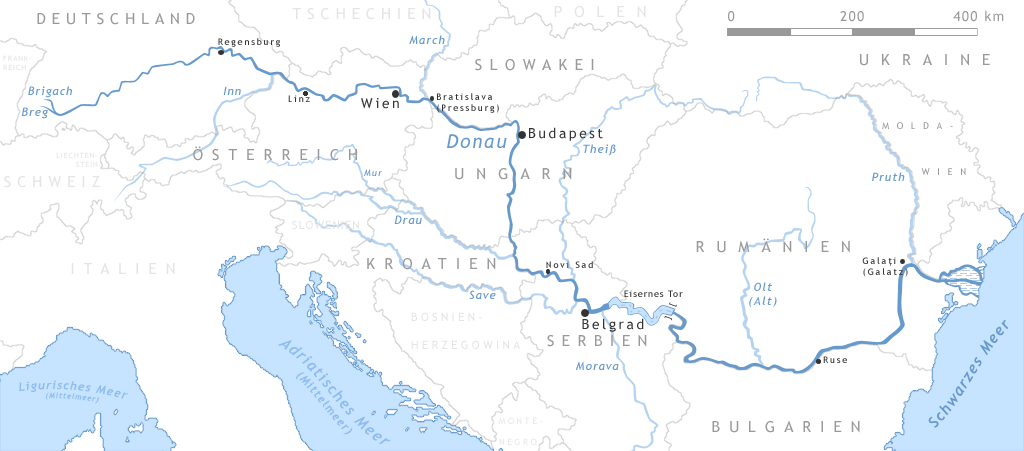
The Danube Limes, also known as the Danube Frontier or Danube Limes (Western Segment), is a significant archaeological site that offers insights into the strategic defense system established by the Roman Empire along the River Danube. This segment, inscribed as a UNESCO World Heritage Site in 2021, spans nearly 600 kilometers across several European countries, including Germany, Austria, Slovakia, Hungary, Croatia, and Slovenia.
More to come…UNESCO Description of the World Heritage Site
It covers almost 600km of the whole Roman Empire’s Danube frontier. The property formed part of the much large frontier of the Roman Empire that encircled the Mediterranean Sea. The Danube Limes (Western Segment) reflects the specificities of this part of the Roman Frontier through the selection of sites that represent key elements from roads, legionary fortresses and their associated settlements to small forts and temporary camps, and the way these structures relate to local topography.
UNESCO Justification of the World Heritage Site
Criterion (ii): The legionary fortresses, forts, fortlets, watchtowers, linked infrastructure and civilian architecture that made up the Roman military system of the western segment of the Danube Limes extended technical knowledge of construction and management to the very edges of the Empire. This segment did not constitute an impregnable barrier but controlled and allowed the movement of peoples, not only military units, but also civilians and merchants. This triggered profound changes and developments in terms of settlement patterns, architecture and landscape design and spatial organisation in this part of the frontier which has persisted over time. The frontier landscape is thus an exceptional reflection of the imposition of a complex military system on existing societies in the northern part of the Empire.
Criterion (iii): The Frontiers of the Roman Empire – The Danube Limes (Western Segment) presents an exceptional manifestation of Roman imperial policy and the Empire’s ambition to dominate the world in order to establish its law and way of life in the long‐term. The segment reflects specifically how the Empire consolidated its northern frontiers at the maximum extension of its powers. It also witnesses Roman colonization through the spread of culture and different traditions – military engineering, architecture, art, religion, management and politics – from the capital to the remotest parts of the Empire. The large number of human settlements associated with the defences, contribute to an exceptional understanding of how soldiers and their families, and also civilians, lived in this part of the Empire, with all the accoutrements of Roman culture such as baths, religious shrines and, at the largest settlements like Carnuntum, amphitheatres and a governor’s palace.
Criterion (iv): The materials and substance of the Frontiers of the Roman Empire – The Danube Limes (Western Segment) can be seen as a vivid testimony to the way Roman military systems were influenced by geography and, over four centuries, were developed and adapted to meet changing threats to the Empire. Military campaigns are reflected by temporary camps built around existing forts, a bridgehead built on the left bank of the Danube River, and horseshoe and fanshaped towers and strongly fortified fortlets developed as a response in Late Roman times to changes in warfare. In Mediaeval times, many of the defensive constructions became the nuclei of later settlements and, through their continuous use until today, have shaped the form of medieval towns along the Danube.
Encyclopedia Record: Danubian Limes
The Danubian Limes, or Danube Limes, refers to the Roman military frontier or limes which lies along the River Danube in the present-day German state of Bavaria, in Austria, Slovakia, Hungary, Croatia, Serbia, Bulgaria and Romania.Additional Site Details
Area: 821.7474 hectares
Number of Components: 77
(iii) — Unique or exceptional testimony to a cultural tradition
(iv) — Outstanding example of a type of building or landscape
Coordinates: 48.1151944444 , 16.8613888889
Image
© Daniel Ullrich (Threedots), CC BY-SA 3.0 Resized from original. (This derivative is under the same CC BY-SA license.)