World Heritage Identification Number: 1033
World Heritage since: 2001
Category: Cultural Heritage
WHE Type: Historic Cities & Urban Areas
Transboundary Heritage: No
Endangered Heritage: No
Country: 🇦🇹 Austria
Continent: Europe
UNESCO World Region: Europe and North America
Map
The Historic Centre of Vienna: A Glimpse into Austria's Imperial Past
The Historic Centre of Vienna, officially known as the Innere Stadt, serves as the heart of Austria's capital city and a testament to its rich history that spans over two millennia. Inscribed as a UNESCO World Heritage Site in 2001, this ancient urban core has been instrumental in shaping Vienna's identity as a cultural, political, and musical hub throughout the ages.
Vienna’s origins can be traced back to early Celtic settlements and later to the Roman military camp of Vindobona, established around the turn of the first century BC. Located near the Danube frontier of the Roman Empire, Vindobona formed the foundation for continued urban development, culminating in the establishment of the medieval city of Wien during the 12th century. By 1155, Vienna had become the seat of the Babenberg dynasty, marking the beginning of its rise to prominence within the Holy Roman Empire.
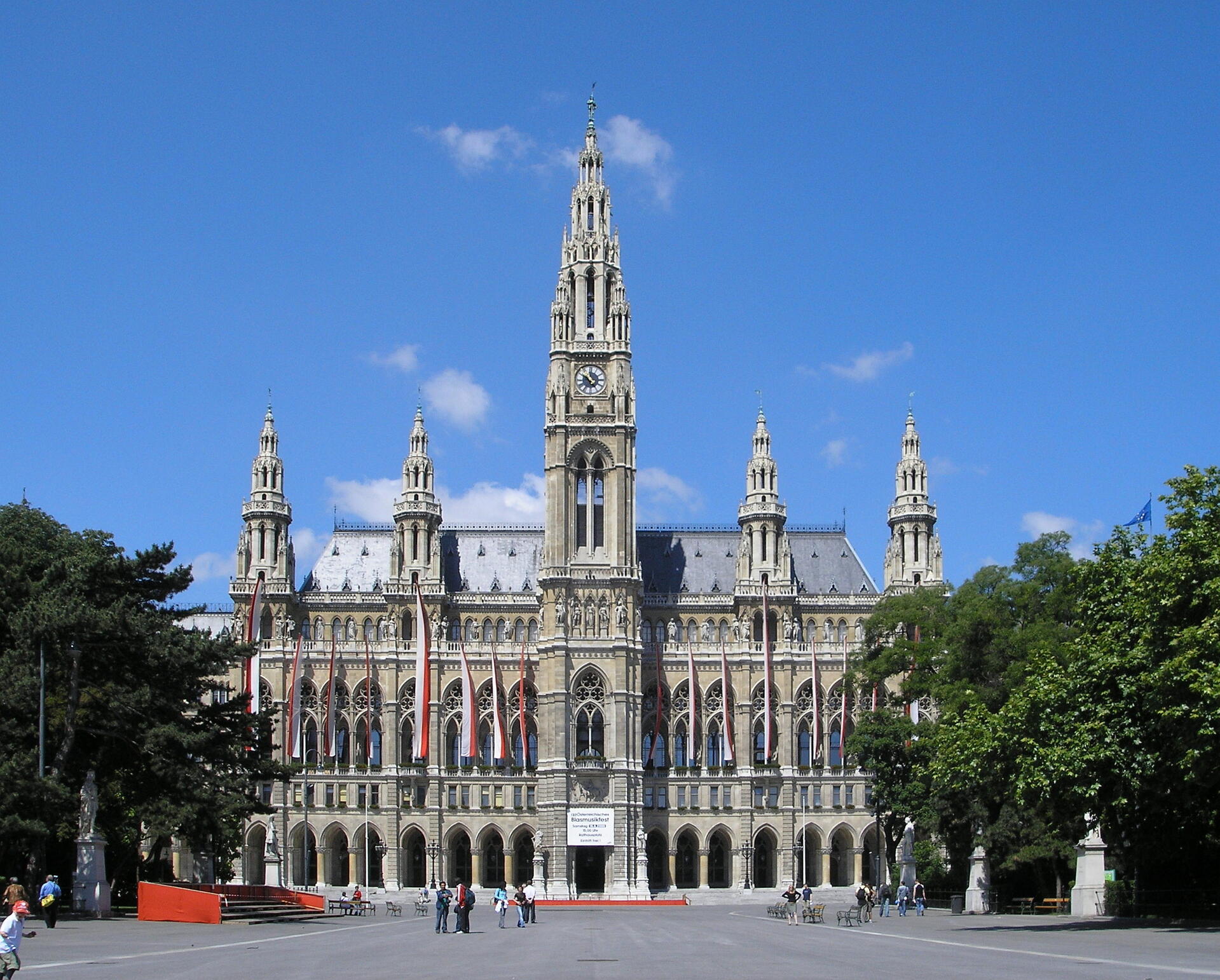
The Historic Centre of Vienna is distinguished by a rich and harmonious blend of architectural styles, ranging from medieval and Baroque masterpieces to the monumental architecture of the late 19th century. Among its most important landmarks is St. Stephen’s Cathedral (Stephansdom), a Gothic monument that dominates the city skyline. Construction began in the 12th century, with additions and restorations continuing into the modern era. Its intricately detailed façade, strikingly patterned tile roof, and soaring south tower have become enduring symbols of Vienna.
Encircling the Historic Centre is the Ringstrasse, a grand boulevard constructed in the late 19th century after the demolition of the old city walls. This monumental avenue showcases some of Vienna’s most impressive buildings, including the Vienna State Opera (Neo-Renaissance), the Parliament Building (Greek Revival), and the Kunsthistorisches Museum (Neo-Renaissance). Designed by prominent architects such as Theophil Hansen, Gottfried Semper, and Karl Freiherr von Hasenauer, these structures exemplify the Historicism style characteristic of the Austro-Hungarian Empire’s golden age.
While not located within the Historic Centre itself, Schönbrunn Palace deserves special mention as one of Vienna’s most significant Baroque landmarks. Situated in the city’s western district, it served as the summer residence of the Habsburg monarchs and is recognized as a separate UNESCO World Heritage Site. Its expansive gardens, fountains, sculptures, and historic greenhouses reflect the imperial splendor of Habsburg rule.
In addition to its architectural wonders, the Historic Centre of Vienna boasts a vibrant cultural scene. Music has long been a cornerstone of Viennese identity, with composers like Wolfgang Amadeus Mozart, Ludwig van Beethoven, and Johann Strauss contributing significantly to the city's legacy. Today, this legacy lives on through performances at iconic venues like the Musikverein and the State Opera House, as well as institutions such as the Vienna Philharmonic Orchestra and the Vienna Boys Choir.
The Historic Centre of Vienna offers a captivating glimpse into Austria's imperial past, where the echoes of history mingle with the rhythm of modern life. From its ancient walls to its grand boulevards, this UNESCO World Heritage Site stands as a testament to Vienna's resilience, creativity, and enduring allure.
UNESCO Description of the World Heritage Site
Vienna developed from early Celtic and Roman settlements into a Medieval and Baroque city, the capital of the Austro-Hungarian Empire. It played an essential role as a leading European music centre, from the great age of Viennese Classicism through the early part of the 20th century. The historic centre of Vienna is rich in architectural ensembles, including Baroque castles and gardens, as well as the late-19th-century Ringstrasse lined with grand buildings, monuments and parks.
UNESCO Justification of the World Heritage Site
Criterion (ii): The urban and architectural qualities of the Historic Centre of Vienna bear outstanding witness to a continuing interchange of values throughout the second millennium.
Criterion (iv): Three key periods of European cultural and political development – the Middle Ages, the Baroque period, and the Gründerzeit – are exceptionally well illustrated by the urban and architectural heritage of the Historic Centre of Vienna.
Criterion (vi): Since the 16th century Vienna has been universally acknowledged to be the musical capital of Europe.
Encyclopedia Record: Innere Stadt
The Innere Stadt is the 1st municipal district of Vienna located in the center of the Austrian capital. The Innere Stadt is the old town of Vienna. Until the city boundaries were expanded in 1850, the Innere Stadt was congruent with the city of Vienna. Traditionally it was divided into four quarters, which were designated after important town gates: Stubenviertel (northeast), Kärntner Viertel (southeast), Widmerviertel (southwest), Schottenviertel (northwest).Additional Site Details
Area: 371 hectares
Number of Components: 1
(iv) — Outstanding example of a type of building or landscape
(vi) — Directly associated with events or living traditions
Coordinates: 48.2094 , 16.3699
World Heritage Research
Discover scientific research and academic studies that deepen our understanding of Historic Centre of Vienna from its history and significance to its conservation, management, and contemporary challenges.
-
Beat the heat: Hotspots for nature-based solutions in Vienna and Budapest
Urban heat islands and tropical nights disproportionately affect residents' health and well-being, particularly in historic city centers like Vienna and Budapest. A study combining urban heat modeling with discrete choice experiments reveals that while heat impacts all, residents—especially those in Budapest's urban districts—perceive its effects more acutely than meteorological data suggests. This misalignment underscores the need for localized nature-based solutions tailored to residents' needs, rather than one-size-fits-all approaches. The findings guide urban planners to prioritize neighborhoods with high heat perception, integrating social analysis and modeling to mitigate heat island effects while addressing community-specific vulnerabilities.
Wanner, A., Budhiraja, B., McKinley, J., & Jungnickel, M. (2026). Beat the heat: Hotspots for nature-based solutions in Vienna and Budapest. Sustainable Cities and Society, 139, 107219. https://doi.org/10.1016/j.scs.2026.107219
View Publication Record | Read Publication -
Rösser in Wien
Vienna's equestrian heritage, spanning from the Middle Ages to the 19th century, highlights the indispensable role of horses in shaping the city. A key finding is the significant impact of horses during the Vienna Congress (1814/15), where thousands were brought in for events, underscoring their logistical and symbolic importance. The study also notes that by the late 19th century, Vienna housed around 200,000 horses, integral to transport, police, and veterinary services. Historical records, such as the 'Prague Patent' issued by Empress Maria Theresa to promote horse breeding, and iconic structures like the Spanish Riding School, serve as tangible evidence of this deep-rooted equestrian culture. The research synthesizes archival sources and historical accounts to illustrate how horses were central to Vienna's development, influencing its urban landscape, social events, and collective memory.
Brem, G. (Ed.). (2023). Rösser in Wien. https://doi.org/10.1553/978oeaw89954
View Publication Record | Read Publication -
Vienne et l'opéra impérial baroque. Un système, une symbolique
During the reign of Leopold I (1658) to Charles VI (1740), Vienna emerged as a pivotal center for Baroque Italian opera, leveraging its status as the capital of the Holy Roman Empire. The study reveals that imperial operatic performances were not merely artistic expressions but part of a structured system designed to glorify the Habsburg dynasty. These performances, characterized by their exceptional quality and symbolism, drew from antique and Christianized mythologies, reinforcing the dynasty's historical mission through deliberate staging. The research identifies three key pillars supporting this system: the poeta Cesareo, the composer, and the stage designer, all contributing to a cohesive narrative that integrated music, drama, and visual artistry to serve imperial propaganda.
Valentin, J.-M. (2015). Vienne et l’opéra impérial baroque. Un système, une symbolique. Études Germaniques, n° 274(2), 307–319. https://doi.org/10.3917/eger.274.0307
View Publication Record | Read Publication -
Measuring tourist activities in cities using geotagged photography
A strong correlation exists between the number of geotagged tourist photographs and registered bed nights, offering a novel method to quantify tourist activities with high spatial precision. This approach leverages large datasets from image hosting platforms like Flickr.com, combining the accuracy of GPS tracking with the scalability of community-generated data. The study analyzed 16 European cities, with deeper comparisons conducted on Vienna, Prague, and Budapest—three historic tourist destinations with similar markets but distinct morphological constraints. Findings reveal both shared spatial patterns and key differences in tourist behavior, rooted in urban structure and local activity levels.
Kádár, B. (2014). Measuring tourist activities in cities using geotagged photography. Tourism Geographies, 16(1), 88–104. https://doi.org/10.1080/14616688.2013.868029
View Publication Record | Read Publication