World Heritage Identification Number: 1273
World Heritage since: 2008
Category: Cultural Heritage
WHE Type: Religious Sites & Sacred Architecture
Transboundary Heritage: No
Endangered Heritage: No
Country: 🇸🇰 Slovakia
Continent: Europe
UNESCO World Region: Europe and North America
Map
Wooden Churches of the Slovak part of the Carpathian Mountain Area: A Unique Blend of Religious Architecture and Cultural Tradition
The Wooden Churches of the Slovak part of the Carpathian Mountain Area, inscribed on the UNESCO World Heritage List in 2008, offer a captivating glimpse into the rich tapestry of religious architecture that has evolved at the intersection of Latin and Byzantine cultures. These nine wooden religious buildings, spread across eight distinct locations in Slovakia, represent a unique blend of architectural styles, artistic trends, and cultural influences that have shaped the region's history.
More to come…UNESCO Description of the World Heritage Site
The Wooden Churches of the Slovak part of Carpathian Mountain Area inscribed on the World Heritage List consist of two Roman Catholic, three Protestant and three Greek Orthodox churches built between the 16th and 18th centuries. The property presents good examples of a rich local tradition of religious architecture, marked by the meeting of Latin and Byzantine cultures. The edifices exhibit some typological variations in their floor plans, interior spaces and external appearance due to their respective religious practices. They bear testimony to the development of major architectural and artistic trends during the period of construction and to their interpretation and adaptation to a specific geographical and cultural context. Interiors are decorated with paintings on the walls and ceilings and other works of art that enrich the cultural significance of the properties.
UNESCO Justification of the World Heritage Site
Criterion (iii): The wooden churches offer an outstanding testimony to the traditional religious architecture of the north-western Carpathians region and to the inter-ethnic and inter-cultural character of a relatively small territory where Latin and Byzantine cultures have met and overlapped. The Lutheran churches serve as an exceptional example of religious tolerance in Upper Hungary during the period of bloody anti-Habsburgs rebellions and uprisings over the 17th century.
Criterion (iv): The wooden churches represent one of the best examples of European wooden religious architecture from the late Middle Ages to the end of 18th century. Their characteristic appearance, construction and at times rather naïve decoration derive from earlier local traditions, partially influenced by professional architectural concepts of Gothic, Renaissance and Baroque styles. Western (Latin) and eastern (Orthodox) building concepts are reflected in these wooden structures, creating specific religious architecture with diversified design, technical solutions and unique decorative expressions.
Encyclopedia Record: Wooden churches of the Slovak Carpathians
Carpathian Wooden Churches is the name of a UNESCO World Heritage Site that consists of nine wooden religious buildings constructed between the 16th and 18th centuries in eight different locations in Slovakia. They include two Roman Catholic, three Protestant and three Greek Catholic churches plus one belfry in Hronsek.Additional Site Details
Area: 2.5644 hectares
Number of Components: 9
(iv) — Outstanding example of a type of building or landscape
Coordinates: 49.3361111111 , 19.5583333333
Image
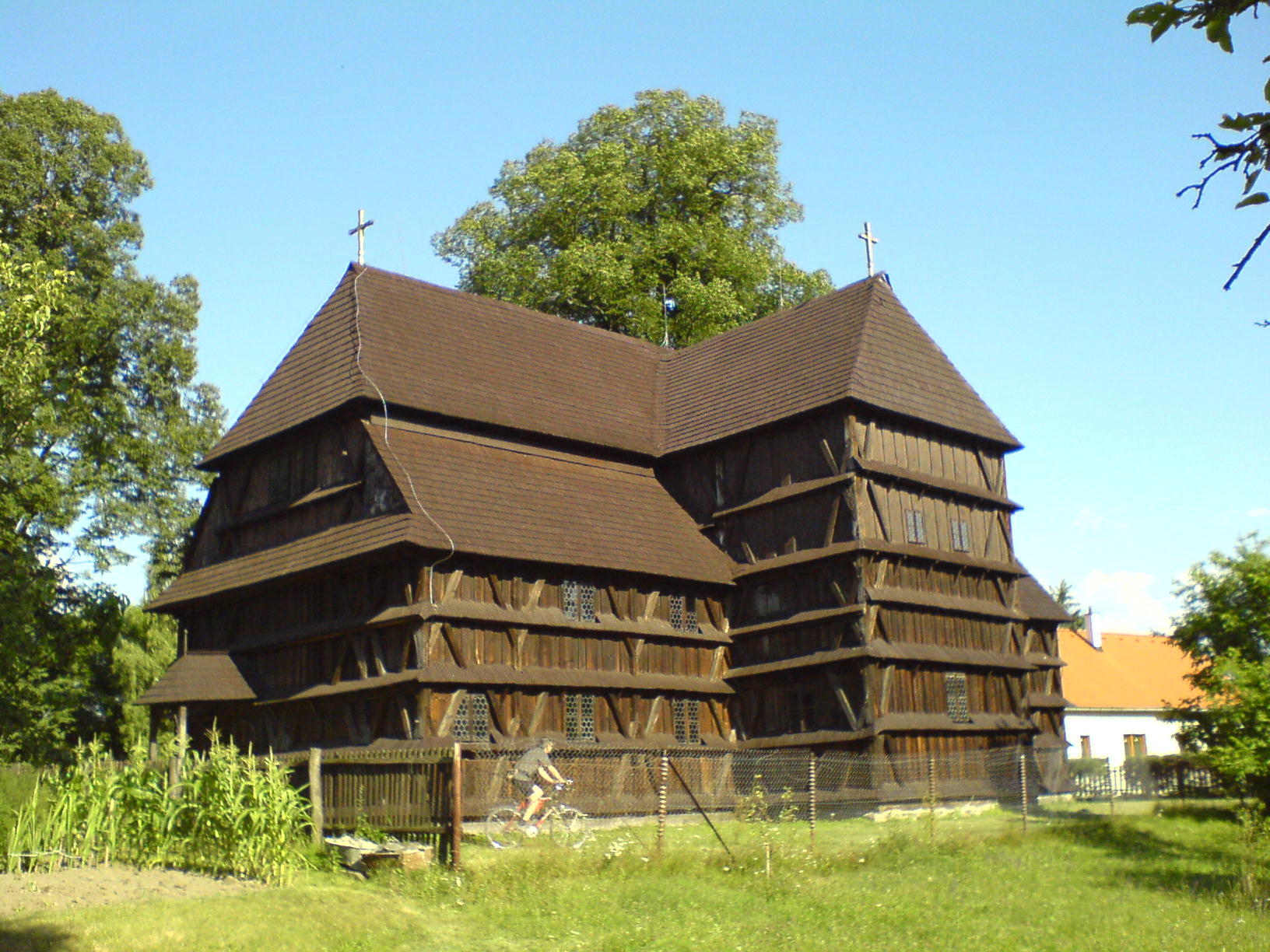
© Arpad, CC BY-SA 3.0 Resized from original. (This derivative is under the same CC BY-SA license.)
World Heritage Research
Discover scientific research and academic studies that deepen our understanding of Wooden Churches of the Slovak part of the Carpathian Mountain Area from its history and significance to its conservation, management, and contemporary challenges.
-
Between Transcendental and National: Wooden Churches of Slovakia
Wooden churches in Slovakia's Carpathian Mountain region serve as enduring symbols of both transcendental worship and national resistance, embodying a holistic tapestry of ecological, historical, and cultural significance. These structures, dating from the 18th century, have withstood political upheavals including Austro-Hungarian rule, Nazi occupation, and Socialist suppression, while retaining their aesthetic and spiritual value. The study contrasts traditional typological analysis with phenomenological approaches to reveal deeper meanings rooted in lived experience, highlighting how these churches integrate seamlessly with their landscapes and communities. This dual perspective affirms their cultural importance, appealing to both worshipers and tourists as UNESCO World Heritage sites.
Lucas, M. (2024). Between Transcendental and National: Wooden Churches of Slovakia. Fabrications, 34(2), 281–301. https://doi.org/10.1080/10331867.2024.2382528
View Publication Record | Read Publication -
Mountain Last Judgment and Rural Apocalypse: Patterns of Imagery
This study reveals that the Last Judgment iconography in the Carpathian Mountains and the illuminated Apocalypses of the Russian North represent unique cultural and religious expressions shaped by eschatological imagery. The research demonstrates that these traditions, while influenced by multiple cultural and religious sources, developed distinct characteristics that cannot be reduced to borrowed motifs. The study employs a comparative analysis of visual and textual sources from the 15th–19th centuries, tracing the evolution of Last Judgment themes in the Carpathians and the enduring eschatological beliefs among Old Believers in the Russian North. It highlights the significance of these visual materials as keys to understanding medieval religious culture, including political theology and popular demonology.
Maizuls, M. (2011). Mountain Last Judgment and Rural Apocalypse: Patterns of Imagery. Kritika: Explorations in Russian and Eurasian History, 12(4), 983–991. https://doi.org/10.1353/kri.2011.0050
View Publication Record | Read Publication