World Heritage Identification Number: 31
World Heritage since: 1979
Category: Cultural Heritage
WHE Type: Memorial Sites
Transboundary Heritage: No
Endangered Heritage: No
Country: 🇵🇱 Poland
Continent: Europe
UNESCO World Region: Europe and North America
Map
Auschwitz Birkenau: A Monument to Humanity's Cruelty
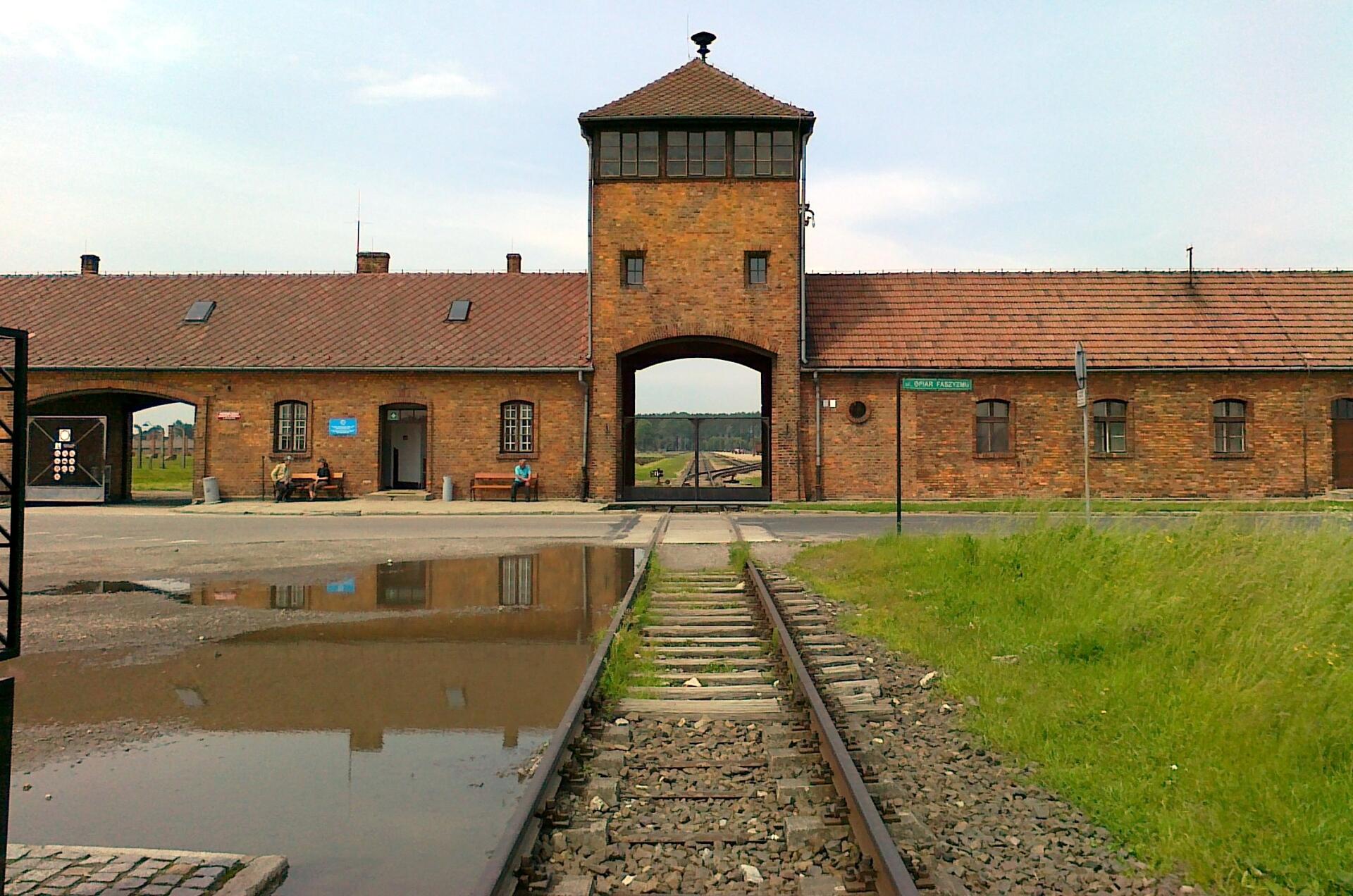
The Auschwitz Birkenau German Nazi Concentration and Extermination Camp, inscribed as a UNESCO World Heritage Site in 1979, stands as a poignant testament to one of the darkest chapters in human history. Located in Oświęcim, Poland, the complex spanned over 40 concentration and extermination camps that operated under Nazi Germany during World War II and the Holocaust.
More to come…UNESCO Description of the World Heritage Site
The fortified walls, barbed wire, platforms, barracks, gallows, gas chambers and cremation ovens show the conditions within which the Nazi genocide took place in the former concentration and extermination camp of Auschwitz-Birkenau, the largest in the Third Reich. According to historical investigations, 1.5 million people, among them a great number of Jews, were systematically starved, tortured and murdered in this camp, the symbol of humanity's cruelty to its fellow human beings in the 20th century.
UNESCO Justification of the World Heritage Site
Criterion (vi): Auschwitz Birkenau, monument to the deliberate genocide of the Jews by the German Nazi regime and to the deaths of countless others, bears irrefutable evidence to one of the greatest crimes ever perpetrated against humanity. It is also a monument to the strength of the human spirit which in appalling conditions of adversity resisted the efforts of the German Nazi regime to suppress freedom and free thought and to wipe out whole races. The site is a key place of memory for the whole of humankind for the Holocaust, racist policies and barbarism; it is a place of our collective memory of this dark chapter in the history of humanity, of transmission to younger generations and a sign of warning of the many threats and tragic consequences of extreme ideologies and denial of human dignity.
Encyclopedia Record: Auschwitz concentration camp
Auschwitz, also known as Oświęcim, was a complex of over 40 concentration and extermination camps operated by Nazi Germany in occupied Poland during World War II and the Holocaust. It consisted of Auschwitz I, the main camp (Stammlager) in Oświęcim; Auschwitz II-Birkenau, a concentration and extermination camp with gas chambers, Auschwitz III-Monowitz, a labour camp for the chemical conglomerate IG Farben, and dozens of subcamps. The camps became a major site of the Nazis' Final Solution to the Jewish question.Additional Site Details
Area: 191.97 hectares
Number of Components: 2
Coordinates: 50.0388888889 , 19.175
World Heritage Research
Discover scientific research and academic studies that deepen our understanding of
Auschwitz Birkenau
German Nazi Concentration and Extermination Camp (1940-1945)
from its history and significance to its conservation, management, and contemporary challenges.
-
Education After Auschwitz
Theodor W. Adorno's 'Education After Auschwitz' proposes that the cultivation of personal guilt recognition and anti-ideological enlightenment through education can prevent the recurrence of authoritarian regimes and atrocities like those at Auschwitz. Adorno argues that understanding one's complicity in historical tragedies, combined with knowledge about the socio-psychological roots of authoritarianism, is essential for restoring civilized coexistence. He identifies a lack of spiritual energy in post-war European culture as a breeding ground for authoritarian tendencies, emphasizing education as a tool to foster politically aware citizens and disrupt cycles of oppression.
Adorno, T. W. (2020). Education After Auschwitz. Filosofiya Osvity. Philosophy of Education, 25(2), 82–99. https://doi.org/10.31874/2309-1606-2019-25-2-4
View Publication Record | Read Publication -
Auschwitz and After
Auschwitz and After offers a profound exploration of memory, time, culpability, and survival through the lens of a Holocaust survivor's memoir. The work, penned by CP Delbo—a member of the French resistance—examines the enduring psychological and societal impacts of Nazi atrocities, often referred to as the 'afterdeath' of the Holocaust. Lawrence L. Langer's updated introduction deepens the analysis, contextualizing Delbo's account within broader scholarly discourse on trauma and historical culpability. This edition expands on the original with a new bibliography, enriching its significance in Holocaust studies.
Delbo, C. (2017). Auschwitz and After. https://doi.org/10.12987/9780300195125
View Publication Record | Read Publication -
Auschwitz: A Doctor’s Eyewitness Account
Auschwitz: A Doctor’s Eyewitness Account provides a harrowing firsthand perspective on the atrocities committed at the Auschwitz-Birkenau concentration and extermination camp during World War II. Authored by Miklos Nyiszli, a Jewish doctor forced to work in the camp's medical experiments, the book offers an unprecedented look into the operations of Nazi medicine, including human experimentation and mass killings. Nyiszli's account, translated from Hungarian and published in 2011, combines clinical detachment with personal trauma, revealing the systemic brutality of the camp while also documenting his own survival strategies. The work is notable for its rare insider perspective, blending historical documentation with a deeply personal narrative that challenges readers to confront the ethical horrors of medical exploitation under totalitarian regimes.
Lupack, B. T. (2012). Auschwitz: A Doctor’s Eyewitness Account. The Polish Review, 57(4), 122–125. https://doi.org/10.5406/polishreview.57.4.0122
View Publication Record | Read Publication