World Heritage Identification Number: 359
World Heritage since: 1985
Category: Cultural Heritage
WHE Type: Archaeological Sites
Transboundary Heritage: No
Endangered Heritage: No
Country: 🇧🇬 Bulgaria
Continent: Europe
UNESCO World Region: Europe and North America
Map
Unveiling the Mysteries of the Thracian Tomb of Sveshtari
The Thracian Tomb of Sveshtari, nestled in the northeastern region of Bulgaria, stands as a testament to the rich cultural heritage of the ancient Thracians. Inscribed as a UNESCO World Heritage Site in 1985, this extraordinary monument offers a captivating glimpse into the lives and beliefs of the Thracian people, particularly the Getes, who flourished during the Hellenistic period.
More to come…UNESCO Description of the World Heritage Site
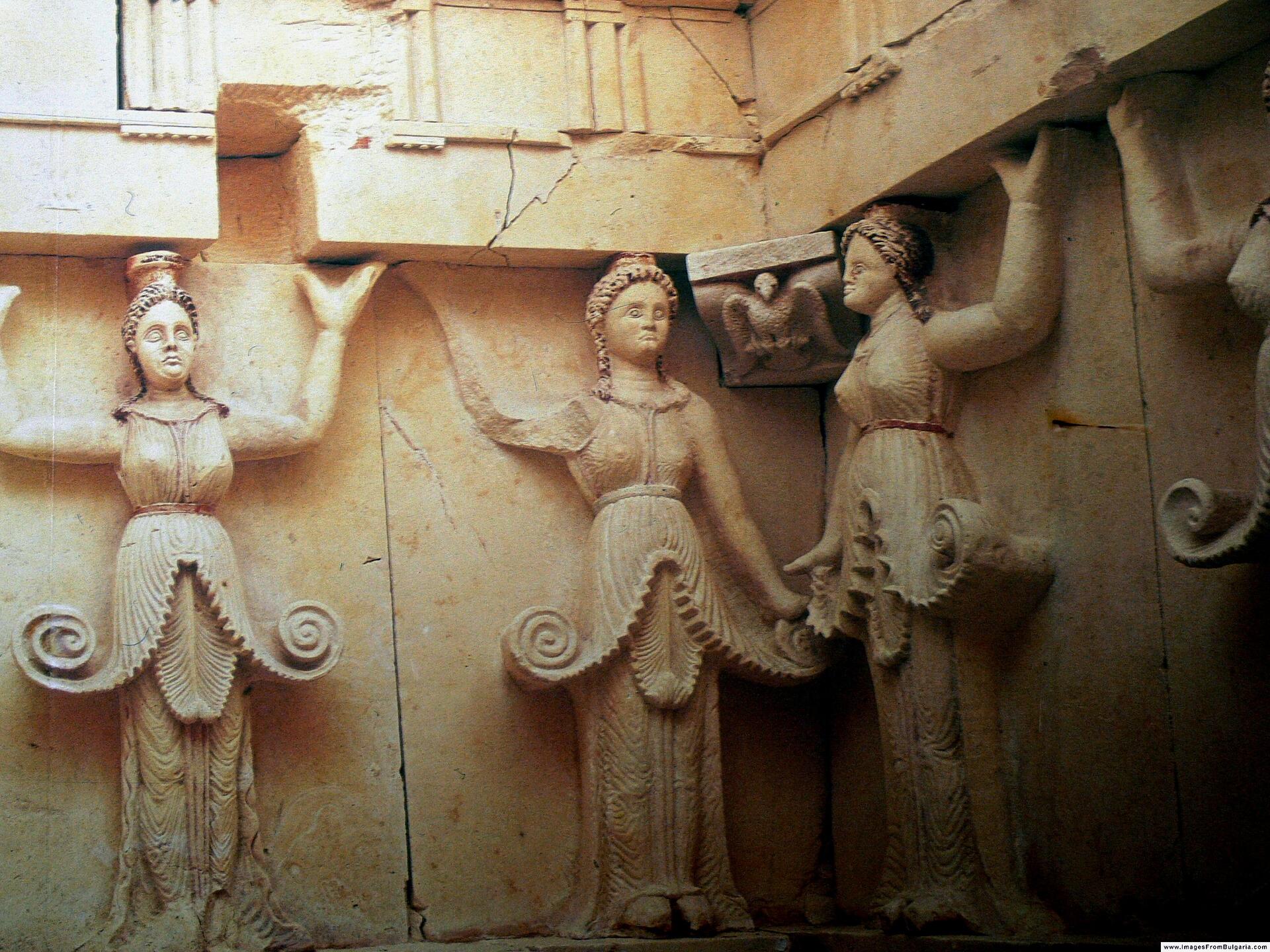
Discovered in 1982 near the village of Sveshtari, this 3rd-century BC Thracian tomb reflects the fundamental structural principles of Thracian cult buildings. The tomb has a unique architectural decor, with polychrome half-human, half-plant caryatids and painted murals. The 10 female figures carved in high relief on the walls of the central chamber and the decoration of the lunette in its vault are the only examples of this type found so far in the Thracian lands. It is a remarkable reminder of the culture of the Getes, a Thracian people who were in contact with the Hellenistic and Hyperborean worlds, according to ancient geographers.
UNESCO Justification of the World Heritage Site
Criterion (i): The Thracian Tomb near Sveshtari is a unique artistic achievement with its half human, half vegetable caryatids enclosed in a chiton in the shape of an upside down palmette. The fact the original polychromy has been preserved with its ochre, brown, blue, red and lilac shades adds to the bewitching charm of an expressive composition where the anthropomorphic supports conjure up the image of a choir of mourners frozen in the abstract positions of a ritual dance.
Criterion (iii): The tomb is exceptional testimony to the culture of the Getes, Thracian peoples living in the north of Hemus (contemporary Stara Planina), in contact with the Greek and Hyperborean worlds according to the ancient geographers. The Tomb is also remarkable for the fact that it represents local art inspired by Hellenism, a rare case of an interrupted creative process, which possesses specific characteristics. This monument is unique in its architectural décor and in the specific character of the funeral rites revealed by the excavation.
Encyclopedia Record: Thracian Tomb of Sveshtari
The Thracian Tomb of Svestari is 2.5 kilometers (1.6 mi) southwest of the village of Sveshtari, Razgrad Province, which is 42 kilometers (26 mi) northeast of Razgrad, in northeast Bulgaria. The tomb is probably the grave of Dromichaetes who was a king of the Getae on both sides of the lower Danube around 300 BC, and his wife, the daughter of King Lysimachus who was a general and diadochus of Alexander the Great. The tomb is a UNESCO World Heritage Site.Additional Site Details
Area: 647.6 hectares
Number of Components: 1
(iii) — Unique or exceptional testimony to a cultural tradition
Coordinates: 43.66667 , 26.66667