World Heritage Identification Number: 451
World Heritage since: 1988
Category: Cultural Heritage
WHE Type: Buildings & Architectural Ensembles
Transboundary Heritage: No
Endangered Heritage: No
Country: 🇱🇰 Sri Lanka
Continent: Asia
UNESCO World Region: Asia and the Pacific
Map
The Old Town of Galle and Its Fortifications: A Unique Blend of Cultures
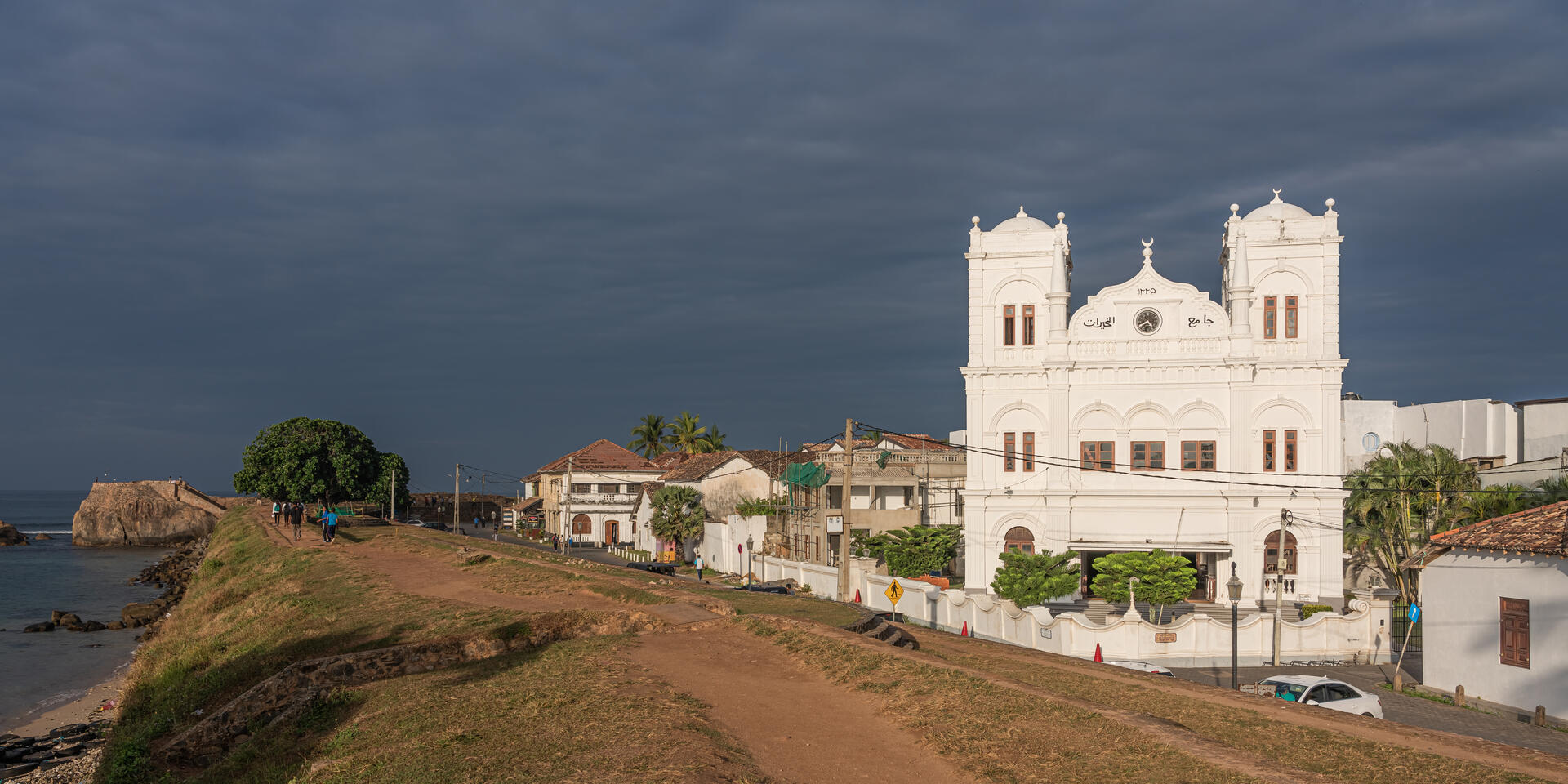
The Old Town of Galle and Its Fortifications, located on the southwestern coast of Sri Lanka, is a remarkable testament to the rich cultural interplay that occurred during the 16th and 18th centuries. Inscribed as a UNESCO World Heritage Site in 1988, this historic town offers a unique blend of European architectural styles and South Asian traditions.
More to come…UNESCO Description of the World Heritage Site
Founded in the 16th century by the Portuguese, Galle reached the height of its development in the 18th century, before the arrival of the British. It is the best example of a fortified city built by Europeans in South and South-East Asia, showing the interaction between European architectural styles and South Asian traditions.
UNESCO Justification of the World Heritage Site
Criterion (iv): Galle provides an outstanding example of an urban ensemble which illustrates the interaction of European architecture and South Asian traditions from the 16th to the 19th centuries during the period of European expansion in Asia. The most salient feature is the use of European models adapted by local craftspeople to the geological, climatic, historical, and cultural conditions of Sri Lanka. In the structure of the ramparts, coral is frequently used along with granite. In the ground layout, all the measures of length, width, and height conform to the regional metrology. The narrow streets are lined with houses, each with its own garden and an open veranda supported by columns, another sign of the acculturation of an architecture which is European only in its basic design. Among the characteristics that make this an urban ensemble of exceptional value is the original underground drainage system still in use from the 17th century, which is flushed by tidal sea water.
Encyclopedia Record: Galle
Galle is a major city on the southwestern tip of Sri Lanka, 119 km (74 mi) south of Colombo. Galle is the provincial capital and largest city of Southern Province, Sri Lanka and is the capital of Galle District.Additional Site Details
Area: Not available
Number of Components: 1
Coordinates: 6.028051 , 80.216346
World Heritage Research
Discover scientific research and academic studies that deepen our understanding of Old Town of Galle and its Fortifications from its history and significance to its conservation, management, and contemporary challenges.
-
Business and Community Resilience in Times of Crisis: Lessons from Galle Fort (Sri Lanka), a Living World Heritage City
Galle Fort, a UNESCO World Heritage Site and tourism-dependent city in Sri Lanka, demonstrated both vulnerabilities and resilience during the COVID-19 pandemic. The study reveals that while over-reliance on heritage tourism exposed local micro, small, and medium-sized enterprises (MSMEs) to severe economic disruptions, the crisis also spurred innovative mitigation strategies among entrepreneurs. These lessons highlight the need for people-centred sustainable policies to foster resilience in living World Heritage cities facing similar challenges. The research employed questionnaire surveys and interviews with local businesses to assess pandemic impacts from 2020 to mid-2022, offering actionable insights for balancing heritage conservation with economic sustainability.
Jinadasa, U., Subasinghe, S., van den Dries, M., Vitanova, L. L., & Dayawansa, N. D. K. (2025). Business and Community Resilience in Times of Crisis: Lessons from Galle Fort (Sri Lanka), a Living World Heritage City. Conservation and Management of Archaeological Sites, 27(5-6), 432–456. https://doi.org/10.1080/13505033.2026.2652279
View Publication Record | Read Publication -
Rules for Maldivian Trading Ships Travelling Abroad (1925) and a Sojourn in Southern Ceylon
A rare glimpse into Maldivian maritime trade and cultural exchange is revealed through the translation of two 1925 documents: a 12-page manual outlining rules for Maldivian trading ships traveling abroad, primarily to Ceylon (modern-day Sri Lanka), and a personal account by an elderly Maldivian trader detailing his experiences in Galle. The manual provides unprecedented insights into the logistical and social protocols governing long-distance trade during this period, while the trader's narrative offers vivid descriptions of conditions in Ceylon's harbor and inland towns, as well as accounts of cross-cultural friendships. Together, these documents illuminate the historical significance of Galle as a key hub for Maldivian commerce and cultural interaction, contributing to our understanding of pre-colonial trade dynamics in the Indian Ocean region.
Romero-Frias, X. (2021). Rules for Maldivian Trading Ships Travelling Abroad (1925) and a Sojourn in Southern Ceylon. Politeja, 13(1 (40)), 67–84. https://doi.org/10.12797/politeja.13.2016.40.06
View Publication Record | Read Publication