World Heritage Identification Number: 1407
World Heritage since: 2012
Category: Cultural Heritage
WHE Type: Cultural Landscapes
Transboundary Heritage: No
Endangered Heritage: No
Country: 🇸🇳 Senegal
Continent: Africa
UNESCO World Region: Africa
Map
Bassari Country: A Multicultural Landscape of Symbiosis between Humans and Nature
The Bassari Country: Bassari, Fula, and Bedik Cultural Landscapes, inscribed as a UNESCO World Heritage Site in 2012, is a unique testament to the harmonious coexistence of diverse cultures and the natural environment in southeastern Senegal. This site encompasses three distinct geographical regions: the Bassari–Salémata area, the Bedik–Bandafassi area, and the Fula–Dindéfello area, each with its distinctive topographical features.
More to come…UNESCO Description of the World Heritage Site
The site, located in south-east Senegal, includes three geographical areas: the Bassari–Salémata area, the Bedik–Bandafassi area and the Fula–Dindéfello area, each with its specific morphological traits. The Bassari, Fula and Bedik peoples settled from the 11th to the 19th centuries and developed specific cultures and habitats symbiotic with their surrounding natural environment. The Bassari landscape is marked by terraces and rice paddies, interspersed with villages, hamlets and archaeological sites. The Bedik villages are formed by dense groups of huts with steep thatched roofs. Their inhabitants’ cultural expressions are characterized by original traits of agro-pastoral, social, ritual and spiritual practices, which represent an original response to environmental constraints and human pressures. The site is a well-preserved multicultural landscape housing original and still vibrant local cultures.
UNESCO Justification of the World Heritage Site
Criterion (iii): The physical layout of the Bassari Cultural landscape bears an exceptional witness to the complex interactions among environmental factors, land-use practices, social rules, beliefs that altogether have concurred to shape a peculiar and remarkably preserved cultural landscape that outstandingly reflects the ability of make a respectful and sustainable use of the resources of the region.
Criterion (v): The Bassari cultural landscape bears witness to peculiar uses of the land, including crop rotation and manuring, communal sowing, weeding and harvesting and commuting practices imposed by traditional agricultural systems and by the relative scarcity of resources, thus representing an outstanding example of human interaction with a vulnerable environment.
Criterion (vi): The Pays Bassari as well as the sacred dimension that Bassari, Fula and Bedik people attach to it bear exceptional, tangible witness to the intertwined complex of practices, social rules, rites and beliefs that have helped the Bassari regulate the interaction between men and their living environment and have produced a cultural landscape shaped by and imbued with cultural traditions and spiritual meanings that persist in a lively dynamic of transmission.
Encyclopedia Record: Bassari Country
The Bassari Country and its Bassari, Fula and Bedik Cultural Landscapes, located in the southeast of Senegal, is a well-preserved multicultural landscape which emerged from the interaction of human activities and the natural environment. It aggregates three geographical areas: the Bassari–Salémata area, the Bedik–Bandafassi area and the Fula–Dindéfello area, each one with its specific morphological characteristics.Additional Site Details
Area: 50,309 hectares
Number of Components: 3
(v) — Outstanding example of traditional human settlement
(vi) — Directly associated with events or living traditions
Coordinates: 12.5933333333 , -12.8458333333
Image
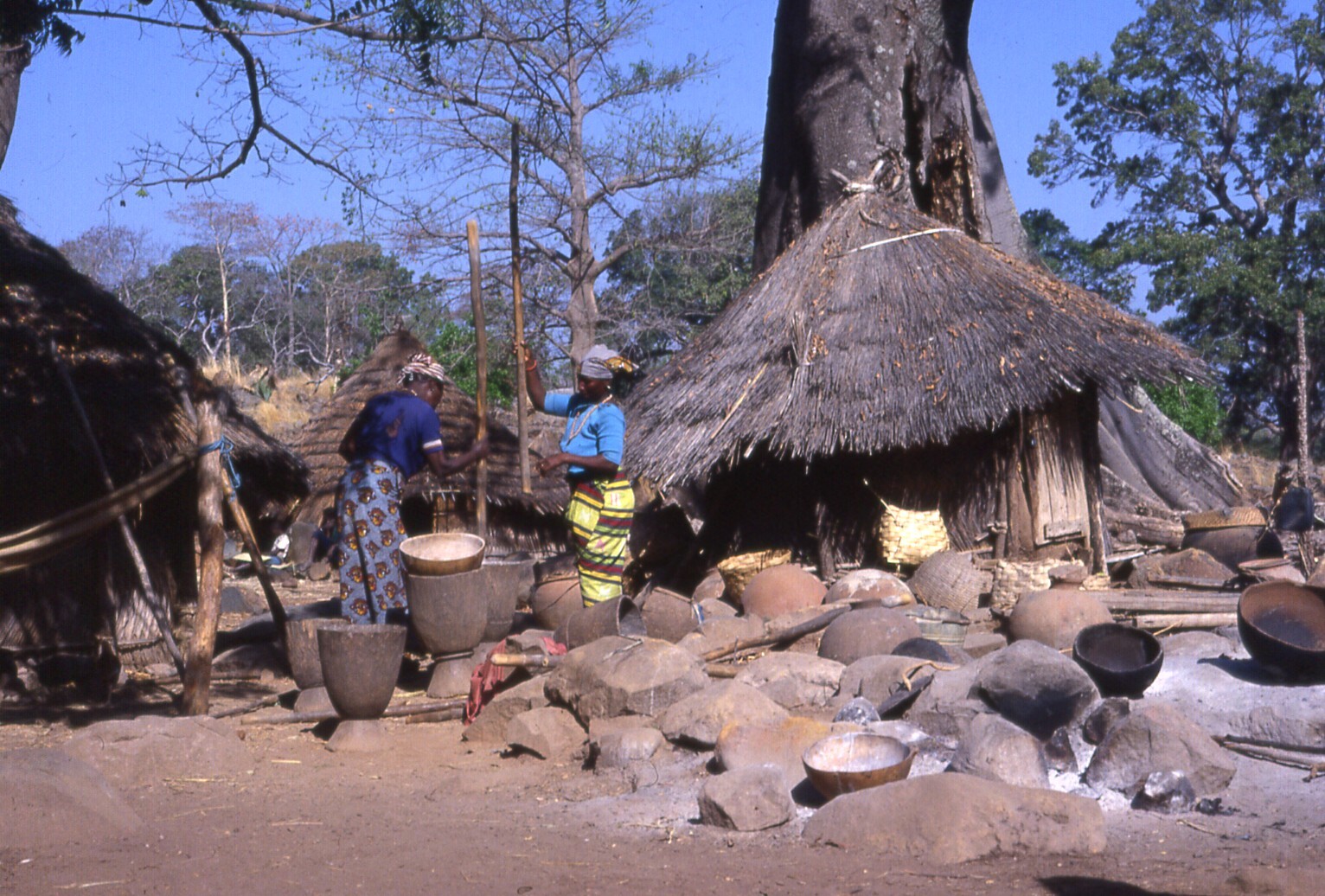
© gbaku, CC BY-SA 2.0 Resized from original. (This derivative is under the same CC BY-SA license.)
World Heritage Research
Discover scientific research and academic studies that deepen our understanding of Bassari Country: Bassari, Fula and Bedik Cultural Landscapes from its history and significance to its conservation, management, and contemporary challenges.
-
Agricultural adaptation to multiple stressors in a climate change context
Bassari farmers in southeastern Senegal are adapting to multiple stressors—including climate change, market integration, and cultural shifts—but these adaptations often come with significant trade-offs that may limit long-term sustainability. The study found that while strategies like crop diversification and plot relocation help mitigate challenges such as reduced precipitation and increased crop mortality, they also introduce economic, social, and environmental costs. Women and poorer households bear the brunt of these burdens, highlighting disparities in adaptation outcomes. Conducted through participant observation and 47 semi-structured interviews, this research underscores the need for adaptive strategies that address not only climate change but also broader socio-economic and cultural dynamics to ensure equitable and sustainable agricultural resilience.
Porcuna-Ferrer, A., Guillerminet, T., Klappoth, B., & Schlingmann, A. (2023). Agricultural adaptation to multiple stressors in a climate change context. Routledge Handbook of Climate Change Impacts on Indigenous Peoples and Local Communities, 227–243. https://doi.org/10.4324/9781003356837-18
View Publication Record | Read Publication -
Le caractère ambivalent de la relation entre tourisme et patrimoine en pays Bassari (Sénégal)
Tourism in the Bassari Cultural Landscape, a UNESCO World Heritage Site since 2012, presents both opportunities and challenges for local communities. While cultural tourism, ecotourism, and integrated rural tourism can drive local development and protect natural and cultural heritage, they also risk destabilizing traditional ways of life. A study led by Gaye (2020) analyzed these dynamics through surveys, interviews, and long-term observations, highlighting the need to balance tourism growth with the preservation of Bassari traditions and ecosystems.
Gaye, A. (2020). Le caractère ambivalent de la relation entre tourisme et patrimoine en pays Bassari (Sénégal). Études Caribéennes, 6. https://doi.org/10.4000/etudescaribeennes.19243
View Publication Record | Read Publication -
Histories and Material Manifestations of Slavery in the Upper Gambia River Region: Preliminary Results of the Bandafassi Regional Archaeological Project
Archaeological evidence from the Bandafassi Regional Archaeological Project (BRAP) reveals significant changes in settlement patterns and defensive architecture in the Upper Gambia River region, highlighting the local impacts of Atlantic-era slavery. These material manifestations contrast with narratives used in UNESCO World Heritage applications, which emphasize interethnic ecological complementarities, and local tour guides' narratives, which focus on intercommunity politics and militarism. BRAP's approach analyzes historiographical silences and acknowledgments to uncover the complexities of slavery's role in shaping this multiethnic landscape, offering a nuanced perspective that complements broader regional studies.
Kroot, M. V., & Gokee, C. (2018). Histories and Material Manifestations of Slavery in the Upper Gambia River Region: Preliminary Results of the Bandafassi Regional Archaeological Project. Journal of African Diaspora Archaeology and Heritage, 7(2), 74–104. https://doi.org/10.1080/21619441.2019.1589712
View Publication Record | Read Publication