World Heritage Identification Number: 1577
World Heritage since: 2019
Category: Cultural Heritage
WHE Type: Cultural Landscapes
Transboundary Heritage: No
Endangered Heritage: No
Country: 🇦🇺 Australia
Continent: Oceania
UNESCO World Region: Asia and the Pacific
Map
Budj Bim Cultural Landscape: An Ancient Aquaculture System in South-Eastern Australia
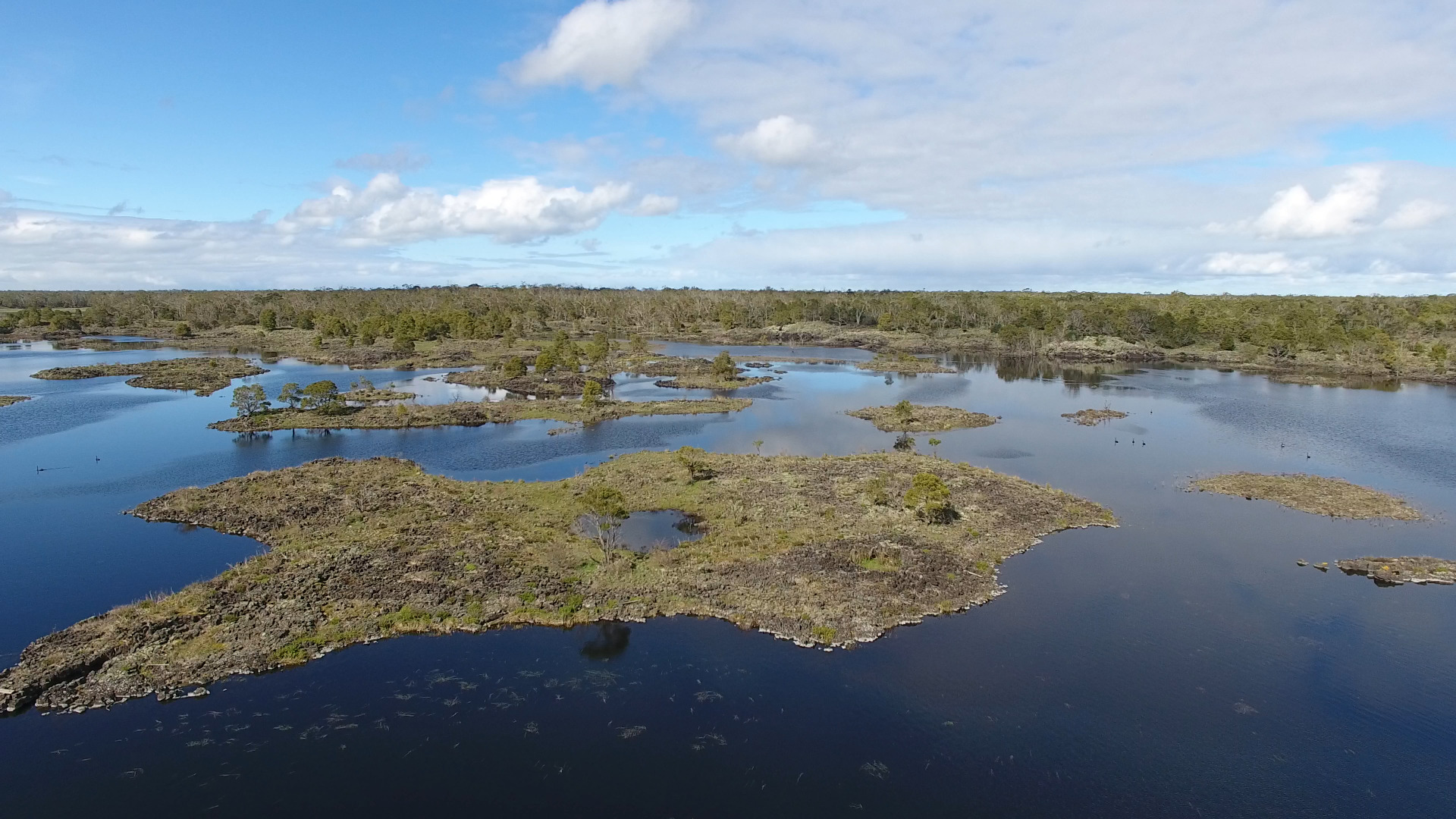
The Budj Bim Cultural Landscape, inscribed as a UNESCO World Heritage Site in 2019, offers a unique glimpse into the rich history and innovative practices of the Gunditjmara people, an Aboriginal Australian group residing in south-eastern Australia. This remarkable site encompasses three distinct components—Kurtonitj, Tyrendarra, and the Budj Bim (Lake Condah) area—which together form what is recognized as the earliest known large-scale and permanent aquaculture system in the world.
Located within the traditional Country of the Gunditjmara people, the Budj Bim Cultural Landscape is situated around the dormant volcano, Budj Bim, or Mount Eccles, in the Newer Volcanics Province of south-western Victoria. The volcanic landscape provides the foundation for the intricate network of channels, weirs, and dams engineered by the Gunditjmara over at least 6,600 years. These structures were designed to trap, store, and harvest kooyang, the short-finned eel (Anguilla australis), creating a highly productive aquaculture system that served as the economic and social backbone for Gunditjmara society.
Significantly, this system supported a semi-permanent settlement pattern, evidenced by the remains of over 150 circular stone dwellings found throughout the landscape. These findings challenge long-standing colonial assumptions that Aboriginal societies were exclusively nomadic, highlighting instead the diversity, complexity, and stability of Indigenous lifeways.
The Budj Bim Cultural Landscape is not merely a physical manifestation of human ingenuity; it is deeply rooted in the Gunditjmara creation narrative. According to their oral tradition, the Gunditjmara have inhabited this region since the dawn of time. This concept, often described as “deep time,” aligns with broader archaeological evidence indicating tens of thousands of years of Aboriginal presence in Australia. This close connection between the Gunditjmara and their land is maintained through the preservation of traditional knowledge systems passed down through generations and the continuation of cultural practices.
One of the key features of the Budj Bim Cultural Landscape is its ability to adapt to changing environmental conditions. Over thousands of years, the Gunditjmara have continually modified their aquaculture system to accommodate shifts in eel populations, water levels, and climate patterns. This dynamic relationship between the Gunditjmara and their environment underscores the resilience and adaptability of Indigenous cultures in the face of environmental challenges.
Beyond its historical significance, Budj Bim holds immense scientific value. Archaeological excavations have uncovered evidence of the Gunditjmara's sophisticated understanding of hydrology, engineering, and ecology, providing valuable insights into prehistoric societies and their interactions with their environments. Furthermore, the site serves as a testament to the potential for Indigenous knowledge systems to inform modern conservation efforts and sustainable development practices.
Today, the landscape is actively managed by the Gunditj Mirring Traditional Owners Aboriginal Corporation, who are leading efforts to restore and maintain the ancient aquaculture system, including the revival of traditional eel harvesting practices. This ongoing stewardship highlights that Budj Bim is not only an archaeological site but also a living cultural landscape.
The inscription of the Budj Bim Cultural Landscape as a UNESCO World Heritage Site marks a significant step towards acknowledging and preserving the rich heritage of the Gunditjmara people. By recognizing the importance of this site, we not only celebrate the achievements of the past but also affirm our commitment to fostering a more inclusive and culturally diverse understanding of humanity's shared history.
UNESCO Description of the World Heritage Site
The Budj Bim Cultural Landscape, located in the traditional Country of the Gunditjmara people in south-eastern Australia, consists of three serial components containing one of the world’s most extensive and oldest aquaculture systems. The Budj Bim lava flows provide the basis for the complex system of channels, weirs and dams developed by the Gunditjmara in order to trap, store and harvest kooyang (short-finned eel – Anguilla australis). The highly productive aquaculture system provided an economic and social base for Gunditjmara society for six millennia. The Budj Bim Cultural Landscape is the result of a creational process narrated by the Gunditjmara as a deep time story, referring to the idea that they have always lived there. From an archaeological perspective, deep time represents a period of at least 32,000 years. The ongoing dynamic relationship of Gunditjmara and their land is nowadays carried by knowledge systems retained through oral transmission and continuity of cultural practice.
UNESCO Justification of the World Heritage Site
Criterion (iii): The Budj Bim Cultural Landscape bears an exceptional testimony to the cultural traditions, knowledge, practices and ingenuity of the Gunditjmara. The extensive networks and antiquity of the constructed and modified aquaculture system of the Budj Bim Cultural Landscape bears testimony to the Gunditjmara as engineers and kooyang fishers. Gunditjmara knowledge and practices have endured and continue to be passed down through their Elders and are recognisable across the wetlands of the Budj Bim Cultural Landscape in the form of ancient and elaborate systems of stone-walled kooyang husbandry (or aquaculture) facilities. Gunditjmara cultural traditions, including associated storytelling, dance and basket weaving, continue to be maintained by their collective multigenerational knowledge.
Criterion (v): The continuing cultural landscape of the Budj Bim Cultural Landscape is an outstanding representative example of human interaction with the environment and testimony to the lives of the Gunditjmara. The Budj Bim Cultural Landscape was created by the Gunditjmara who purposefully harnessed the productive potential of the patchwork of wetlands on the Budj Bim lava flow. They achieved this by creating, modifying and maintaining an extensive hydrological engineering system that manipulated water flow in order to trap, store and harvest kooyang that migrate seasonally through the system. The key elements of this system are the interconnected clusters of constructed and modified water channels, weirs, dams, ponds and sinkholes in combination with the lava flow, water flow and ecology and life-cycle of kooyang. The Budj Bim Cultural Landscape exemplifies the dynamic ecological-cultural relationships evidenced in the Gunditjmara’s deliberate manipulation and management of the environment.
Encyclopedia Record: Budj Bim
Budj Bim, also known as Mount Eccles, is a dormant volcano near Macarthur in southwestern Victoria, Australia. It lies within the geologically defined area known as the Newer Volcanics Province, which is the youngest volcanic area in Australia and stretches from western Victoria to south-eastern South Australia.Additional Site Details
Area: 9,935 hectares
Number of Components: 3
(v) — Outstanding example of traditional human settlement
Coordinates: -38.0811111111 , 141.8852777778
Image
© Gunditj Mirring Traditional Owners Aboriginal Corporation. Used with permission.
World Heritage Research
Discover scientific research and academic studies that deepen our understanding of Budj Bim Cultural Landscape from its history and significance to its conservation, management, and contemporary challenges.
-
Mapping Hidden Heritage: Self-supervised Pre-training for Archaeological Stone Wall Mapping in Historic Landscapes Using High-Resolution DEM Derivatives
A groundbreaking approach using self-supervised deep learning has achieved high accuracy in mapping dry-stone walls within the Budj Bim Cultural Landscape, a UNESCO World Heritage site. The method, DINO-CV, leverages cross-view pre-training on high-resolution Digital Elevation Models (DEMs) derived from airborne LiDAR data, effectively addressing challenges like vegetation occlusion and limited labeled training data. Achieving a mean Intersection over Union (mIoU) of 68.6% in test areas and maintaining 63.8% mIoU with just 10% labeled data, this framework demonstrates potential for large-scale, automated mapping of cultural heritage features. The approach not only advances archaeological documentation but also offers scalable solutions for environmental monitoring and heritage preservation in complex landscapes.
Huang, Z., Islam, M., Armstrong, B., Bell, B., Khoshelham, K., & Tomko, M. (2025). Mapping Hidden Heritage: Self-supervised Pre-training on High-Resolution LiDAR DEM Derivatives for Archaeological Stone Wall Detection (Version 3). arXiv. https://doi.org/10.48550/ARXIV.2510.17644
View Publication Record | Read Publication -
Indigenous Water Engineering and Aquaculture Systems in Australia: The Budj Bim Cultural Landscape and Baiame’s Ngunnhu (the Brewarrina Aboriginal Fish Traps)
Australia's First Peoples have demonstrated millennia of sustainable water management through sophisticated engineering, including fish and eel trapping structures and weir systems. The Budj Bim Cultural Landscape in Victoria and Baiame’s Ngunnhu (Brewarrina Aboriginal fish traps) in New South Wales stand as some of the largest continuing sites of such practices globally. Recent scholarship and heritage listings, including Budj Bim's World Heritage status, highlight these systems' cultural significance and their potential to inform modern water governance. These ancient techniques, maintained through social and environmental stewardship, offer insights into sustainable innovation for addressing contemporary challenges in water management, Indigenous rights, and the United Nations Sustainable Development Goals (SDGs).
Daniell, K. A., & Moggridge, B. (2024). Indigenous Water Engineering and Aquaculture Systems in Australia: The Budj Bim Cultural Landscape and Baiame’s Ngunnhu (the Brewarrina Aboriginal Fish Traps). Blue Papers, 3(1). https://doi.org/10.58981/bluepapers.2024.1.01
View Publication Record | Read Publication -
Aquaculture
Budj Bim Cultural Landscape, located in southeastern Australia, represents one of the world's most extensive and ancient aquaculture systems. This UNESCO World Heritage Site is centered around a lava flow from volcanic eruptions that occurred over 30,000 years ago. Over four decades, the Gunditjmara people have collaborated with archaeologists to document and map intricate kooyang trapping and aquaculture facilities, revealing a sophisticated interplay of cultural and environmental systems. The landscape's significance lies in its dual role as both an archaeological treasure and a living testament to the Gunditjmara's enduring connection to their land, with recent efforts seeing the return or acquisition of key lands by the Gunditjmara community.
Brown, S., Smith, A., & Rose, D. (2023). Aquaculture. Routledge Handbook of Cultural Landscape Practice, 341–347. https://doi.org/10.4324/9781315203119-38
View Publication Record | Read Publication -
Caring for Waterscapes in the Anthropocene: Heritage-making at Budj Bim, Victoria, Australia
A sophisticated ancient Aboriginal aquaculture system, practiced by the Gunditjmara people of western Victoria for thousands of years, was one of the world's oldest and most extensive. This system involved swamp engineering and eel farming in the volcanic landscapes of Budj Bim but was disrupted within 150 years of European colonization due to violence, dispossession, and hydrological changes. Recent collaborative efforts have enabled the Gunditjmara to restore the Budj Bim wetlands and revive their cultural practices, demonstrating resilience in adapting to historical and environmental changes. The study uses critical theory and concepts related to waterscapes and hydro-social relations to interpret these efforts, highlighting the community's capacity to negotiate change and care for both past and future heritage.
Jackson, S. (2023). Caring for Waterscapes in the Anthropocene: Heritage-making at Budj Bim, Victoria, Australia. Environment and History, 29(4), 591–611. https://doi.org/10.3197/096734022x16384451127393
View Publication Record | Read Publication -
An ‘authentic’ Aboriginal product: State marketing and the self‐fashioning of Indigenous experiences to Chinese tourists
A key insight from this study is that the marketing of Indigenous tourism experiences, particularly those tailored for Chinese tourists, is often constrained by arbitrary government policies and notions of 'authenticity,' rather than being guided by local Indigenous aspirations. The research reviews Victorian state policies on Indigenous tourism and examines a case study involving the Gunditjmara people's tourism initiatives at the Budj Bim Cultural Landscape. It reveals that while Chinese tourists generally show little interest in Indigenous experiences, state governments persist in promoting such products under the assumption they align with Chinese preferences. This approach not only overlooks local Indigenous entrepreneurship but also perpetuates a rigid framework that limits meaningful economic engagement for Indigenous communities.
Boag, C. J., Martin, R. J., & Bell, D. (2020). An ‘authentic’ Aboriginal product: State marketing and the self‐fashioning of Indigenous experiences to Chinese tourists. The Australian Journal of Anthropology, 31(1), 51–65. Portico. https://doi.org/10.1111/taja.12345
View Publication Record | Read Publication -
The Field Guide to the Budj Bim Cultural Landscape app: A Partnership Between the Gunditjmara Community and Museums Victoria
A groundbreaking collaboration between Museums Victoria and the Gunditjmara community resulted in the creation of the Field Guide to the Budj Bim Cultural Landscape app, the first of its kind to integrate traditional knowledge with scientific biodiversity data. The app features over 250 species from the Budj Bim Cultural Heritage Landscape, including 854 previously unrecorded species discovered during a 2011 Bush Blitz survey, with traditional names, uses, and stories for two-thirds of them. This innovative project combines Gunditjmara expertise with scientific findings, offering educational value to local communities, researchers, and visitors while serving as a model for similar initiatives globally.
Smith, U., Knight, G., Lovett-Murray, T., Rose, D., & Henry, D. (2018). The Field Guide to the Budj Bim Cultural Landscape app: A Partnership Between the Gunditjmara Community and Museums Victoria. Biodiversity Information Science and Standards, 2, e26891. https://doi.org/10.3897/biss.2.26891
View Publication Record | Read Publication -
Kurtonitj stone house: Excavation of a mid‐nineteenth century Aboriginal frontier site from Gunditjmara country, south‐west Victoria
A groundbreaking excavation at the Budj Bim Cultural Landscape in south-west Victoria reveals new insights into Aboriginal stone house construction and occupation during the mid-19th century. The study, published in Archaeology in Oceania, documents the first detailed excavation of such a site, uncovering a cache of 34 iron nails dating to approximately 1840–1870, which suggests occupation during periods of violent and negotiated resistance against European pastoral expansion. Taphonomic analysis indicates that stone artefacts predate contact objects, hinting at earlier use or construction. The findings challenge assumptions about the timeline of stone house development and offer clues about their integration with eel trapping facilities over 6600 years.
MCNIVEN, I. J., DUNN, J. E., CROUCH, J.,. (2017). Kurtonitj stone house: Excavation of a mid‐nineteenth century Aboriginal frontier site from Gunditjmara country, south‐west Victoria. Archaeology in Oceania, 52(3), 171–197. Portico. https://doi.org/10.1002/arco.5136
View Publication Record | Read Publication