World Heritage Identification Number: 1526
World Heritage since: 2017
Category: Natural Heritage
WHE Type: Protected Areas & National Parks
Transboundary Heritage: No
Endangered Heritage: No
Country: 🇦🇷 Argentina
Continent: Americas
UNESCO World Region: Latin America and the Caribbean
Map
Los Alerces National Park: A Unique Treasure in Argentine Patagonia
Los Alerces National Park, a UNESCO World Heritage Site since 2017, lies nestled within the majestic Andes mountain range in the Chubut Province of Argentina. Stretching along the western border with Chile, this expansive protected area boasts a diverse and breathtaking landscape that has been sculpted over millennia by the relentless forces of glaciation.
More to come…UNESCO Description of the World Heritage Site
The Los Alerces National Park is located in the Andes of northern Patagonia and its western boundary coincides with the Chilean border. Successive glaciations have moulded the landscape in the region creating spectacular features such as moraines, glacial cirques and clear-water lakes. The vegetation is dominated by dense temperate forests, which give way to alpine meadows higher up under the rocky Andean peaks. A highly distinctive and emblematic feature is its alerce forest; the globally threatened Alerce tree is the second longest living tree species in the world (>3,600 years). The Alerce forest in the property is in an excellent state of conservation. The property is vital for the protection of some of the last portions of continuous Patagonian Forest in an almost pristine state and is the habitat for a number of endemic and threatened species of flora and fauna.
UNESCO Justification of the World Heritage Site
Criterion (vii): The property conserves a variety of landscapes and scenery. It contains an extensive system of interconnected, natural clear-water lakes and rivers. These waters display spectacular colours with shifting hues of green, blue and turquoise according to the intensity of sunlight and the time of the year. Crystal-clear rivers and lakes are surrounded by lush temperate Valdivian forests in an environment of mountain ranges, glaciers and snow-capped peaks. The Alerce forest is a celebrated feature of this majestic landscape; the forest is particularly remarkable in the north arm of Lake Menéndez which contains the Millennial Alerce Forest, located amidst a rainforest environment of ferns, moss, lichens, vines and bamboo, and with the largest and oldest tree being nearly 60 metres tall and approximately 2,600 years old. The Los Alerces National Park retains a high degree of naturalness providing a profound visitor experience.
Criterion (x): The property contains globally important undisturbed areas of Patagonian Forest, influenced by elements of Valdivian Temperate Forest, which is a priority ecoregion for biodiversity conservation worldwide. The Valdivian ecoregion has developed in marked biogeographic insularity, in which important speciation processes have taken place. This is evidenced by the presence of relict genera and even taxonomic orders, as well as numerous endemic and threatened species: 34% of woody plant genera are endemic, from which 80% are known from only one species, and some are relict having survived periods of glaciation. The globally threatened Alerce tree is the second longest living tree species in the world (> 3,600 years). Unlike many other Alerce forests, which show signs of alteration due to exploitation, livestock farming or fire, the Alerce forest in the property is in an excellent state of conservation, which contributes to the long-term viability of the species’ natural populations.
Encyclopedia Record: Los Alerces National Park
Los Alerces National Park is located in the Andes in Chubut Province in the Patagonian region of Argentina. Its western boundary coincides with the Chilean border. Successive glaciations have molded the landscape in the region creating spectacular features such as moraines, glacial cirques and clear-water lakes. The vegetation is dominated by dense temperate forests, which give way to alpine meadows higher up under the rocky Andean peaks. A highly distinctive and emblematic feature is its alerce forest; the globally threatened alerce tree is the second longest living tree species in the world. The alerce forests in the park are in an excellent state of conservation. The property is vital for the protection of some of the last portions of continuous Patagonian Forest in an almost pristine state and is the habitat for a number of endemic and threatened species of flora and fauna.Additional Site Details
Area: 188,379 hectares
Number of Components: 1
(x) — Contains most important habitats for biodiversity
Coordinates: -42.8528 , -71.8728
IUCN World Heritage Outlook
The 2025 Conservation Outlook on Los Alerces National Park reports the following assessment:
Source: International Union for Conservation of Nature (IUCN) · View assessment
Image
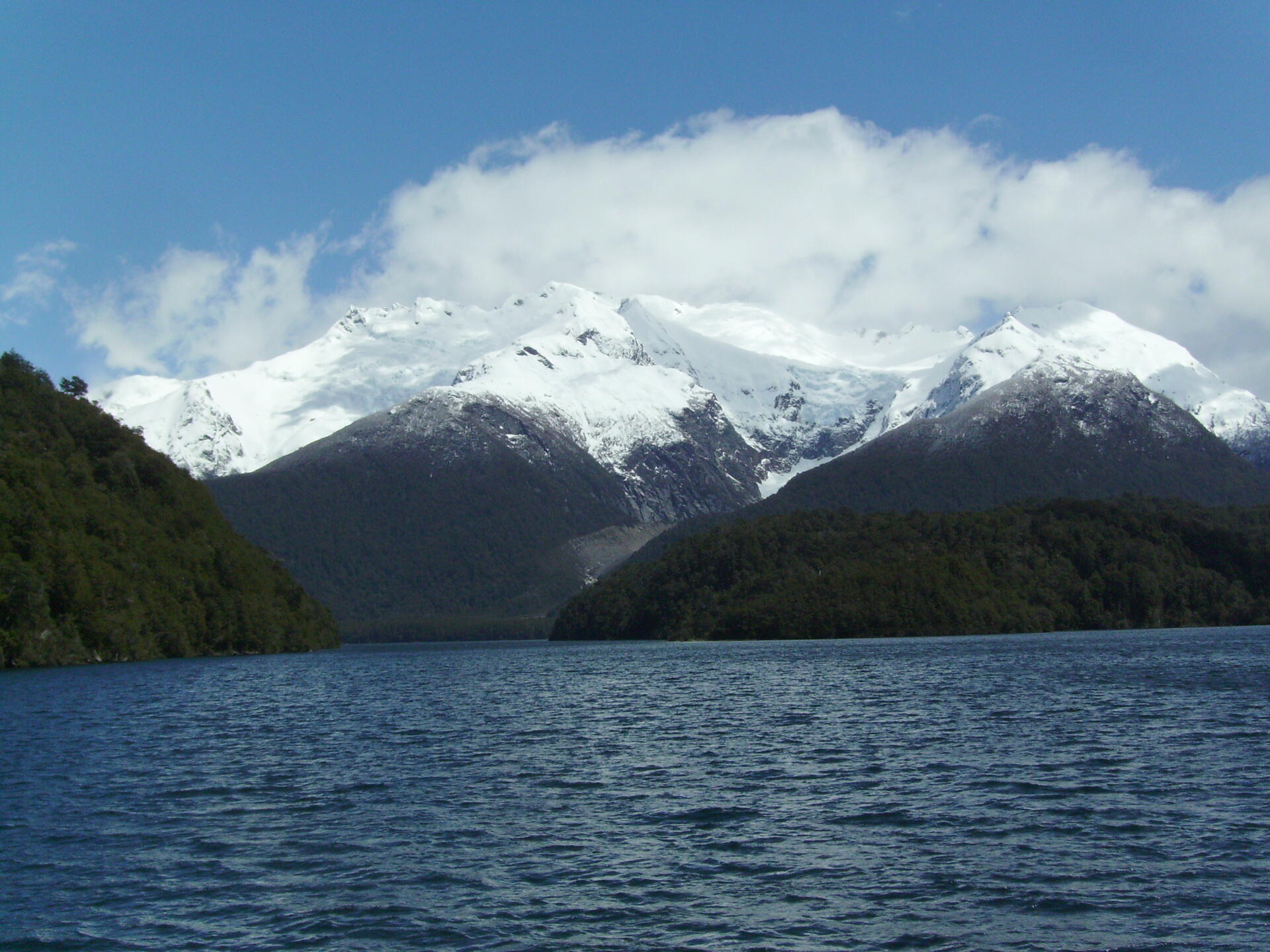
© littletroll, CC BY-SA 3.0 Resized from original. (This derivative is under the same CC BY-SA license.)
World Heritage Research
Discover scientific research and academic studies that deepen our understanding of Los Alerces National Park from its history and significance to its conservation, management, and contemporary challenges.
-
Hyphodermella corrugata J. Erikss. & Ryvarden
Hyphodermella corrugata, a fungus previously known from the Northern Hemisphere and the Patagonian Andes of Argentina, has been confirmed as widespread and abundant in Chile, particularly within Los Alerces National Park. This study expands its known distribution to include Chile's Chiloe region and identifies it on various host plants such as Amomyrtus luma, Luma apiculata, and Nothofagus dombeyi. Additionally, the research synonymizes several species described by Rick (1959) from Brazil with H. corrugata, though further study is needed to verify these identifications. The findings were based on extensive field collections across Chile, including detailed locality data and specimen examinations.
Dueñas, M., Martín, M. P., Nogal-Prata, S., & Telleria, M. T. (2026). Hyphodermella corrugata J. Erikss. & Ryvarden. Zenodo. https://doi.org/10.5281/ZENODO.18665111
View Publication Record | Read Publication -
Animal‐Mediated Dispersal and Clonal Growth Drive Prunus cerasus Invasion in Andean Temperate Forest
Invasive cherry (Prunus cerasus) expansion in Los Alerces National Park is driven by long-distance seed dispersal by foxes and clonal growth, with animals playing a critical role in early invasion stages. Research identified foxes as primary vectors for seeds traveling over 1 km, while birds dispersed most seeds within 30 m. Over six years (2013-2018), the study found that 100% of saplings in initial invasion phases originated from depulped seeds, whereas clonality dominated later stages. Foxes accounted for 44% of long-distance dispersal, while birds handled short-range movement. The findings highlight the dual importance of animal-mediated dispersal and clonal reproduction in shaping invasive species dynamics across different invasion phases.
Berrondo, M. O., & Bravo, S. P. (2026). Animal‐Mediated Dispersal and Clonal Growth Drive Prunus cerasus Invasion in Andean Temperate Forest. Integrative Zoology. Portico. https://doi.org/10.1111/1749-4877.70168
View Publication Record | Read Publication -
Unraveling Plecoptera Diversity in Two Protected Areas of Argentine Patagonia
A comprehensive study of stonefly (Plecoptera) diversity in Los Alerces and Nahuel Huapi National Parks, Argentine Patagonia, reveals significant variation in species distribution across ecoregions. The research identifies 19 species within a single polygon in Los Alerces, with the Northern Moist Forests hosting the highest richness, followed by Transitional Cypress-Beech Forests and the Ecotone Steppe-Forest. Cluster analyses show strong faunal affinities between these ecosystems, while richness estimators suggest up to 23 undocumented species remain undiscovered. This study underscores the critical role of national parks in conserving Patagonian biodiversity, providing foundational data for future conservation efforts and highlighting new taxa records, including southernmost distributions.
DUARTE, T., MARTIN, G. M., ANJOS-SANTOS, D., & PESSACQ, P. (2025). Unraveling Plecoptera Diversity in Two Protected Areas of Argentine Patagonia. Anais Da Academia Brasileira de Ciências, 97(1). https://doi.org/10.1590/0001-3765202520240085
View Publication Record | Read Publication -
Effects of Light on the Transition From Sapling to Adult
Prunus cerasus : Implications for Managing Invasion in Los Alerces National Park, ArgentinaInvasive Prunus cerasus, known for its long-distance seed dispersal via frugivory, shows significant variation in the transition from sapling to adult phase based on light availability. Research in Los Alerces National Park, Argentina, reveals that 80% of individuals with a basal diameter of 2 cm flower under low canopy cover, while those under high cover require a 4 cm diameter—corresponding to ages of 10 and 20 years, respectively. Dendrochronology and light measurements confirmed that canopy cover influences daily light intensity and photoperiod, critical for flowering. These findings underscore the importance of prioritizing the removal of P. cerasus in low-canopy areas before saplings reach a 2 cm basal diameter to effectively manage invasions.
Berrondo, M. O., & Bravo, S. P. (2025). Effects of Light on the Transition From Sapling to Adult
View Publication Record | Read PublicationPrunus cerasus : Implications for Managing Invasion in Los Alerces National Park, Argentina. Austral Ecology, 50(10). Portico. https://doi.org/10.1111/aec.70133 -
Natural Heritage in Danger. Native Forests, New and Old Forms of Extractive Activities and Sustainability from the Perspective of a New Generation of Scientists, Activists and Entrepreneurs in Argentina
Los Alerces National Park, recognized as a UNESCO World Heritage Site in 2017, faces significant threats from extractive activities and deforestation driven by the commodity boom (2000–2014). This study highlights how legislative changes and heritage site requirements provide a legal framework for sustainable land use, reconciling conservation with economic development. It proposes an agro-silvo-pastoral culture that balances scenic value, biodiversity, and sustainability while expanding protected areas within the Andean-North Patagonian Biosphere Reserve. The research combines analysis of legislative shifts with insights from scientists, activists, and entrepreneurs to address conflicts in territorial management.
Lozano, C. (2022). Natural Heritage in Danger. Native Forests, New and Old Forms of Extractive Activities and Sustainability from the Perspective of a New Generation of Scientists, Activists and Entrepreneurs in Argentina. 50 Years World Heritage Convention: Shared Responsibility – Conflict & Reconciliation, 399–411. https://doi.org/10.1007/978-3-031-05660-4_31
View Publication Record | Read Publication -
Potential species distribution models can help in the conservation of threatened species: the case of the Guigna (Leopardus guigna) in Los Alerces National Park, Argentina
A critical analysis of Guigna (Leopardus guigna) distribution in Los Alerces National Park, Argentina, identifies four primary valleys and two secondary areas as optimal for conservation. The study leverages potential species distribution models to map sightings over 45 years, pinpointing regions with confirmed presence or absence while accounting for observation biases. It reveals that maintaining forest connectivity—threatened by wild boar expansion—is essential for sustaining healthy Guigna populations amid projected climate and land-use changes. This research provides actionable insights for the Argentine Administration of National Parks to prioritize conservation strategies.
Berrondo, M. O., & Bravo, S. P. (2022). Potential species distribution models can help in the conservation of threatened species: the case of the Guigna (Leopardus guigna) in Los Alerces National Park, Argentina. Parks, (28.1), 22–30. https://doi.org/10.2305/iucn.ch.2022.parks-28-1mob.en
View Publication Record | Read Publication -
Geochemical and mineralogical characterization of sediments from Lake Futalaufquen (42.8°S, Andean Patagonia) to evaluate their potential as paleoclimatic proxies
A sediment core from Lake Futalaufquen in Los Alerces National Park reveals no evidence of late-twentieth-century global warming, despite capturing a 1600-year climate record. The study identified a warm period around AD 800–1000, linked to the Medieval Climatic Anomaly, but found that frequent tephra layers since the mid-16th century obscured potential signals of the Little Ice Age. However, it detected increased zinc deposition in recent decades, suggesting long-distance atmospheric transport of anthropogenic origin. Researchers analyzed geochemical and mineralogical parameters to assess the lake's sediment as a paleoclimatic proxy, integrating findings with other Patagonian climate reconstructions for broader context.
Daga, R., Ribeiro Guevara, S., Rizzo, A., Vreča, P., Lojen, S., Williams, N., Musso, T., León, V., Poiré, D., Arcagni, M., & Arribére, M. (2020). Geochemical and mineralogical characterization of sediments from Lake Futalaufquen (42.8°S, Andean Patagonia) to evaluate their potential as paleoclimatic proxies. Quaternary Research, 98, 1–18. https://doi.org/10.1017/qua.2020.34
View Publication Record | Read Publication