World Heritage Identification Number: 955
World Heritage since: 1999
Category: Natural Heritage
WHE Type: Protected Areas & National Parks
Transboundary Heritage: No
Endangered Heritage: No
Country: 🇮🇩 Indonesia
Continent: Asia
UNESCO World Region: Asia and the Pacific
Map
Lorentz National Park: A Unique Biosphere in the Heart of Indonesia
Lorentz National Park, a vast expanse of pristine wilderness spanning over 2.35 million hectares, stands as the largest protected area in South-East Asia. This Indonesian treasure, situated in the provinces of Central Papua, Highland Papua, and South Papua, serves as a testament to the rich biodiversity and geological complexity found within the island of New Guinea. In 1999, UNESCO recognized its significance by designating Lorentz National Park as a World Heritage Site.
More to come…UNESCO Description of the World Heritage Site
Lorentz National Park (2.35 million ha) is the largest protected area in South-East Asia. It is the only protected area in the world to incorporate a continuous, intact transect from snowcap to tropical marine environment, including extensive lowland wetlands. Located at the meeting-point of two colliding continental plates, the area has a complex geology with ongoing mountain formation as well as major sculpting by glaciation. The area also contains fossil sites which provide evidence of the evolution of life on New Guinea, a high level of endemism and the highest level of biodiversity in the region.
UNESCO Justification of the World Heritage Site
Criterion (viii): The geology and landforms of Lorentz National Park display graphic evidence of earths’ history. Located at the meeting point of two colliding continental plates, the area has a complex geology with ongoing mountain formation as well as major sculpting by glaciation and shoreline accretion. The dominating mountain range is a direct product of the collision between the Australian and Pacific tectonic plates and the property contains the highest points of the mountains of Papua New Guinea and the only remaining glaciers on the island. There is also clear evidence of post glacial shorelines. Graphically illustrating the geomorphological effect of the last glacial and post-glacial periods, the mountains show all the classical glacial landforms including lakes and moraines. Furthermore, there are five small remnant glaciers. While all five glaciers are retreating rapidly under present climatic conditions, no other tropical glacier fields in the world exhibit glacial evolution as well as those in Lorentz National Park. There is also no better example in the world of the combined effect of collision of tectonic plates and the secondary major sculpting by glacial and post-glacial events.
Criterion (ix): Lorentz National Park is the only protected area in the world that incorporates a continous ecological transect from snow capped mountain peaks to a tropical marine environment, including extensive lowland wetlands. The geophysical processes and high rainfall found along this transect are consistent with the development of significant on-going ecological processes as is the division of the property into two distinct zones: the swampy lowlands and the high mountain area of the central cordillera. The climatic gradient, the greatest throughout the island of New Guinea and the entire Australian tectonic region, extends from nival zones and glaciers to lowland equatorial zones with an associated extreme range of faunal and floral species and communities. Lorentz National Park provides evidence of highly developed endemism in both plants and animals, especially for the higher altitudes of the mountains, as expected in a region combining on-going uplift and climatic warming.
Criterion (x): The mountain building processes that have occurred over time have provided temperate refuges in the tropics for ancient Gondwanan plant species during the climatic warming that has occurred since the last ice age. For example, Lorentz National Park’s Nothofagus beech forests are well represented, although their closest relatives are otherwise confined to the cool temperate regions of south-eastern Australia, New Zealand and the southern Andes. The property is more than just the habitat for many rare, endemic and restricted range species. Its large size and exceptional natural integrity makes it especially important for their on-going evolution as well as thier long term conservation. The refugial effect or local genetic evolution, or both, are manifest as locally endemic species or restricted range species. Much of the rich biota of Lorentz National Park is new or of special interest to science. A number of mammal species, including recent discoveries like the Dingiso tree kangaroo (Dendrolagus mbaiso) discovered in 1994, have evolved to utilize the specialized habitats within the property. The property covers substantial areas of two identified Endemic Bird Areas (EBAs) with a total of 45 restricted range birds and nine endemic species. Two of the restricted range bird species, Archbold’s bowerbird (Archboldia papuensis), and MacGregor’s bird-of-paradise (Macgregoria pulchra), are considered rare and vulnerable. Mammals recorded within the property include two of the world’s three monotremes; the short-beaked echidna (Tachyglossus aculeatus), and the long-beaked echidna (Zaglossus bruijinii) a New Guinea endemic. Lorentz National Park will become increasingly important for long term conservation of the species already recorded and the many that remain to be discovered.
Encyclopedia Record: Lorentz National Park
Lorentz National Park is an Indonesian national park located in the provinces of Central Papua, Highland Papua and South Papua, in the southwest of western New Guinea. With an area of 25,056 km2 (9,674 mi2), it is the largest national park in Southeast Asia. In 1999 Lorentz was declared a World Heritage Site by UNESCO.Additional Site Details
Area: 2,350,000 hectares
Number of Components: 1
(ix) — Outstanding example representing ecological and biological processes
(x) — Contains most important habitats for biodiversity
Coordinates: -4.75 , 137.83333
IUCN World Heritage Outlook
The 2025 Conservation Outlook on Lorentz National Park reports the following assessment:
Source: International Union for Conservation of Nature (IUCN) · View assessment
Image
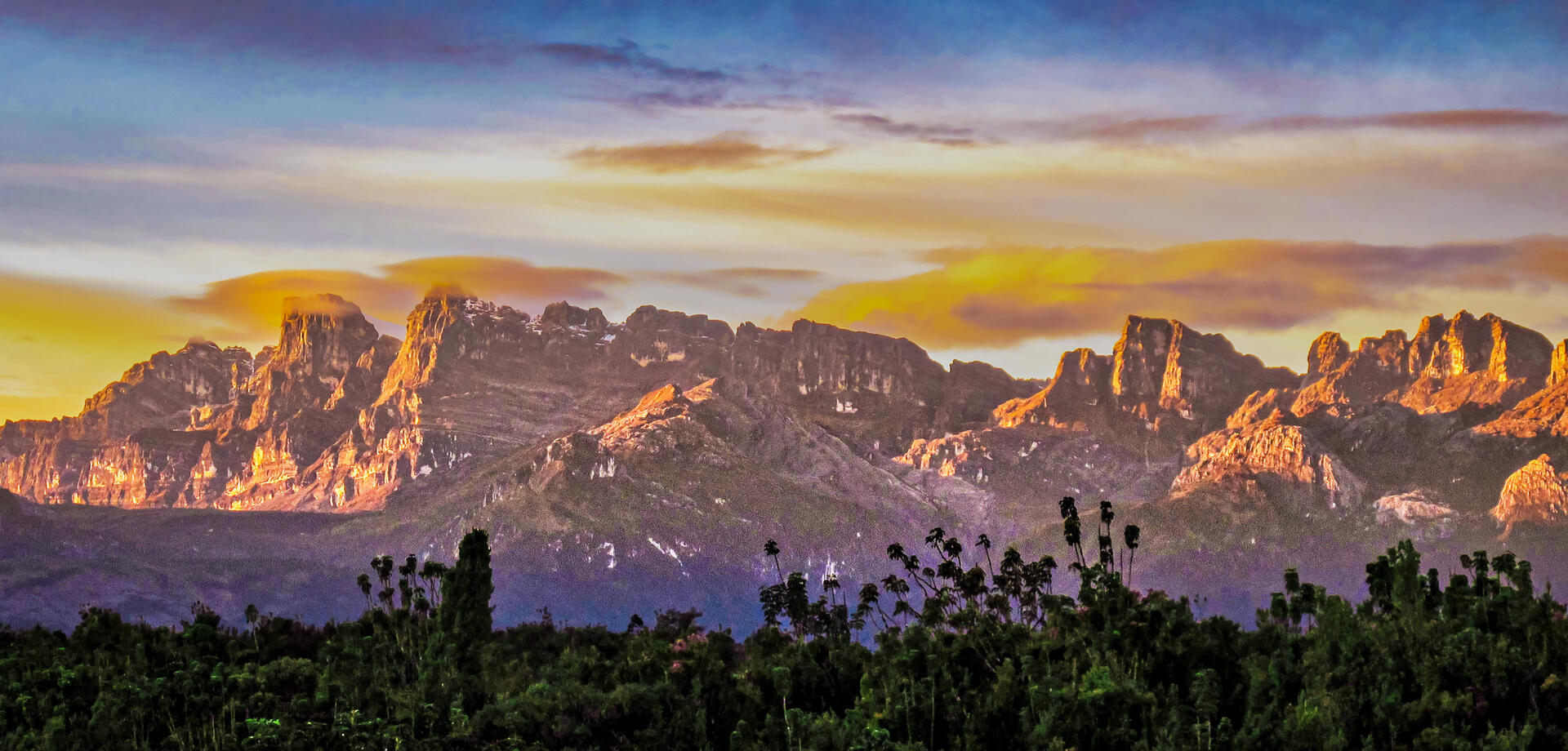
© Ganjarmustika1904, CC BY-SA 4.0 Resized from original. (This derivative is under the same CC BY-SA license.)
World Heritage Research
Discover scientific research and academic studies that deepen our understanding of Lorentz National Park from its history and significance to its conservation, management, and contemporary challenges.
-
Between energy sovereignty and indigenous rights: a legal pluralism critique of the warim block auction plan in Eastern Indonesia
Indonesia's push for large-scale hydrocarbon expansion in Papua, including the re-auction of the Warim Block, reflects structural dependence on fossil capital accumulation rather than a genuine pursuit of energy sovereignty. The study finds that state law in this process undermines Indigenous land rights and treats conservation status—such as Lorentz National Park, a UNESCO World Heritage Site—as negotiable when extractive interests dominate. Using legal pluralism critique, critical discourse analysis, and political economy frameworks, the research exposes distributive, procedural, and recognition injustices tied to hydrocarbon capitalization in Amungme customary territory. It argues for Free, Prior, and Informed Consent (FPIC) as a substantive veto mechanism, alongside structural fiscal reform, to address these systemic inequities.
Reumi, T. A. S., & Sujadi, S. (2026). Between energy sovereignty and indigenous rights: a legal pluralism critique of the warim block auction plan in Eastern Indonesia. Legal Pluralism and Critical Social Analysis, 1–14. https://doi.org/10.1080/27706869.2026.2732383
View Publication Record | Read Publication -
Long-Term Dynamics of Mangrove Vegetation Coverages in Indonesia’s National Parks Derived from Remote Sensing Data
Over the past three decades, mangrove ecosystems within Indonesia's national parks have shown resilience and improvement, with more than 80% of studied areas exhibiting positive trends in vegetation health. Using satellite data from Landsat missions (1995–2024), researchers analyzed the Enhanced Vegetation Index (EVI) across 23 national parks, revealing that Lorentz National Park—one of Indonesia’s largest—hosts some of the most extensive and thriving mangrove regions, particularly in river estuaries. While isolated parks like Alas Purwo show significant expansion, localized declines in EVI were linked to tourism pressure and land conversion in Komodo and Kutai National Parks. Despite these challenges, mangroves remain well-preserved overall, with no extreme changes observed. This long-term assessment provides critical insights for conservation strategies, emphasizing the need to address human-induced pressures while leveraging remote sensing for effective ecosystem monitoring.
Rachman, H. A., Hidayah, Z., As-syakur, Abd. R., & Wardhani, M. K. (2025). Long-Term Dynamics of Mangrove Vegetation Coverages in Indonesia’s National Parks Derived from Remote Sensing Data. https://doi.org/10.21203/rs.3.rs-7554686/v1
View Publication Record | Read Publication -
Meta Synthesis of Community Participation Model on Trans-Papua Road Development
A meta-synthesis of community participation models reveals that integrating indigenous Papuan and local communities into the Trans Papua road development process can mitigate social, cultural, and environmental conflicts while maximizing economic benefits. The study identifies a bottom-up approach—starting with perception discussions, exploring alternatives, and co-creating concepts—as critical for reducing disputes in Lorentz National Park, one of Asia-Pacific's richest biodiversity hotspots. By prioritizing community engagement and environmental conservation, this model aligns with Indonesia’s Sustainable Development Goals (SDGs), offering a framework to guide future infrastructure planning and decision-making, ultimately accelerating development while minimizing conflicts.
Kambu, Z., Jinca, M. Y., Pallu, M. S., & Ramli, M. I. (2022). Meta Synthesis of Community Participation Model on Trans-Papua Road Development. Civil Engineering Journal, 8(11), 2476–2489. https://doi.org/10.28991/cej-2022-08-11-08
View Publication Record | Read Publication