World Heritage Identification Number: 937
World Heritage since: 1999
Category: Natural Heritage
WHE Type: Natural Landscapes & Geographic Features
Transboundary Heritage: No
Endangered Heritage: No
Country: 🇦🇷 Argentina
Continent: Americas
UNESCO World Region: Latin America and the Caribbean
Map
A Natural Marvel: The Península Valdés, Argentina's UNESCO World Heritage Site
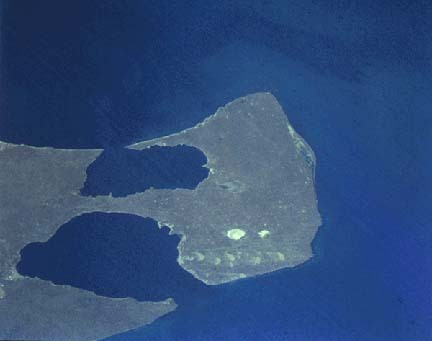
The Península Valdés, nestled within the Viedma Department of northeastern Chubut Province in Argentina, stands as a testament to the breathtaking diversity and resilience of marine life. This 3,500 square kilometer peninsula, bordering the San Matías Gulf to the north, has earned international recognition as a UNESCO World Heritage Site since its inscription in 1999.
More to come…UNESCO Description of the World Heritage Site
Península Valdés in Patagonia is a site of global significance for the conservation of marine mammals. It is home to an important breeding population of the endangered southern right whale as well as important breeding populations of southern elephant seals and southern sea lions. The orcas in this area have developed a unique hunting strategy to adapt to local coastal conditions.
UNESCO Justification of the World Heritage Site
Criterion (x): With more than 1,500 specimens visiting the area annually Peninsula Valdes contains the globally most important breeding grounds of the Southern Right Whale, a species that had severely suffered from commercial whaling. The conservation efforts in Peninsula Valdes have been playing and continue to play an important role in the ongoing recovery of this whale species, an encouraging success story in global conservation. The property is also noteworthy for several other marine mammals, in particular major breeding populations of Southern Sea Lion and Southern Elephant Seal. As for the latter species, Peninsula Valdes harbors the northernmost colonies, and the only breeding population of this species in continental Argentina. The small local population of Orca has developed a spectacular hunting method by intentionally stranding on the shores to catch offspring of Southern Sea Lion and Southern Elephant Seals. Both the coastal areas, a diverse mosaic of wetlands, mudflats, dunes and cliffs, and the land area, a distinct and relatively intact part of the Patagonian Desert Steppe, harbour diverse flora and fauna of high conservation value.
Encyclopedia Record: Valdés Peninsula
The Valdes Peninsula is a peninsula into the Atlantic Ocean in the Viedma Department of northeast Chubut Province, Argentina. It is bordered by San Matías Gulf to the north. It is an important nature reserve which was listed as a World Heritage Site by UNESCO in 1999.Additional Site Details
Area: 360,000 hectares
Number of Components: 1
Coordinates: -42.5 , -64
IUCN World Heritage Outlook
The 2025 Conservation Outlook on Península Valdés reports the following assessment:
Source: International Union for Conservation of Nature (IUCN) · View assessment
Image
Unknown, Public domain
World Heritage Research
Discover scientific research and academic studies that deepen our understanding of Península Valdés from its history and significance to its conservation, management, and contemporary challenges.
-
Massive outbreak of Influenza A H5N1 in elephant seals at Península Valdés, Argentina: increased evidence for mammal-to-mammal transmission
A massive outbreak of high pathogenicity avian influenza (HPAI) H5N1 in southern elephant seals at Península Valdés, Argentina, has provided unprecedented evidence for mammal-to-mammal transmission. The outbreak, which resulted in the death of approximately 17,000 individuals—disproportionately affecting seal pups—and disrupted social and breeding structures, was linked to frequent interactions with sea lions and scavenging by seagulls. Genomic characterization revealed that viruses from pinnipeds and terns in Argentina form a distinct clade with marine mammal viruses from Peru, Chile, and Brazil, sharing an identical set of mammalian adaptation mutations also found in the terns. This multinational transmission of H5N1 viruses in mammals is the first observed globally, suggesting increased evolutionary flexibility and potential global implications for wildlife, humans, and livestock.
Uhart, M., Vanstreels, R. E. T., Nelson, M. I., Olivera, V., Campagna, J., Zavattieri, V., Lemey, P., Campagna, C., Falabella, V., & Rimondi, A. (2024). Massive outbreak of Influenza A H5N1 in elephant seals at Península Valdés, Argentina: increased evidence for mammal-to-mammal transmission. https://doi.org/10.1101/2024.05.31.596774
View Publication Record | Read Publication -
Changing patterns of habitat use by southern right whales (Eubalaena australis) on their nursery ground at Península Valdés, Argentina, and in their long-range movements
Southern right whales (Eubalaena australis) at Península Valdés, Argentina, demonstrate remarkable behavioral and ecological flexibility, as evidenced by changes in their habitat use patterns over four decades. This study, spanning from 1970 to 2020, identified 618 individual whales sighted across multiple years, revealing shifts such as the abandonment of a major concentration region and the establishment of new nursery areas near growing whalewatching industries. Some whales were also resighted on distant feeding grounds and other nursery sites, suggesting long-range movements. Isotope analysis further indicated diverse feeding strategies among individuals. The research highlights the adaptability of these whales to environmental changes, including potential responses to human disturbances.
Rowntree, V. J., Payne, R. S., & Schell, D. M. (2020). Changing patterns of habitat use by southern right whales (Eubalaena australis) on their nursery ground at Península Valdés, Argentina, and in their long-range movements. J. Cetacean Res. Manage., 133–143. https://doi.org/10.47536/jcrm.vi.298
View Publication Record | Read Publication -
Dusky dolphin group dynamics and association patterns in Península Valdés, Argentina
Dusky dolphins (Lagenorhynchus obscurus) in Península Valdés, Argentina, exhibit seasonal variations in social structure and group dynamics. The study found that during the cold season, these dolphins form long-term preferred companions, while such bonds loosen or disappear in the warm season when prey availability increases. Researchers analyzed behavioral observations, photo-identification data, and association patterns from 2001 to 2012 using methods like the half-weight association index (HWI) and social differentiation (S). Group fission-fusion dynamics were also linked to feeding behaviors, with fusions primarily occurring for socializing and feeding. The findings suggest that seasonal changes in prey availability drive shifts in both foraging behavior and social structure, providing insights into the adaptability of these marine mammals.
Degrati, M., Coscarella, M. A., Crespo, E. A., & Dans, S. L. (2018). Dusky dolphin group dynamics and association patterns in Península Valdés, Argentina. Marine Mammal Science, 35(2), 416–433. Portico. https://doi.org/10.1111/mms.12536
View Publication Record | Read Publication -
Post-mortem findings in southern right whales Eubalaena australis at Península Valdés, Argentina, 2003-2012
A decade-long investigation into the mortality of southern right whales (Eubalaena australis) at Península Valdés, Argentina, revealed alarming trends with no clear cause for the majority of deaths. Between 2003 and 2012, 605 whale strandings were recorded, including a peak of 116 in 2012, with calves-of-the-year representing 89.9% of cases. Post-mortem examinations on 212 whales identified only 6.6% with known or probable causes, such as ship strike, blunt trauma, pneumonia, myocarditis, and meningitis. Pathogen testing for viruses and parasites yielded negative results in most cases, except for Brucella spp. in a newborn with pneumonia. Ante-mortem gull parasitism was common but rarely linked to systemic disease. The study highlights the need for further research to identify consistent causes behind these significant mortality events.
McAloose, D., Rago, M., Di Martino, M., Chirife, A., Olson, S., Beltramino, L., Pozzi, L., Musmeci, L., La Sala, L., Mohamed, N., Sala, J., Bandieri, L., Andrejuk, J., Tomaszewicz, A., Seimon, T., Sironi, M., Samartino, L., Rowntree, V., & Uhart, M. (2016). Post-mortem findings in southern right whales Eubalaena australis at Península Valdés, Argentina, 2003-2012. Diseases of Aquatic Organisms, 119(1), 17–36. https://doi.org/10.3354/dao02986
View Publication Record | Read Publication -
Increased Wounding of Southern Right Whale (Eubalaena australis) Calves by Kelp Gulls (Larus dominicanus) at Península Valdés, Argentina
A dramatic increase in the wounding of southern right whale (Eubalaena australis) calves by Kelp Gulls (Larus dominicanus) at Península Valdés, Argentina, has been documented over the past four decades. The study found that while only 2% of mother-calf pairs showed gull lesions in the 1970s, this figure rose to 99% by the 2000s. Calves, particularly those older during the calving season, suffered more extensive and numerous lesions compared to their mothers, with some bearing nine or more wounds covering a significant area of their backs. The research analyzed aerial survey photographs of living pairs (1974-2011) and stranding photographs of dead calves (2003-2011), revealing that intensified gull harassment could potentially compromise calf health by leading to dehydration, impaired thermoregulation, and energy loss due to wound healing. However, this trend does not fully explain the large year-to-year variance in calf mortality rates observed since 2000.
Marón, C. F., Beltramino, L., Di Martino, M., Chirife, A., Seger, J., Uhart, M., Sironi, M., & Rowntree, V. J. (2015). Increased Wounding of Southern Right Whale (Eubalaena australis) Calves by Kelp Gulls (Larus dominicanus) at Península Valdés, Argentina. Plos One, 10(10), e0139291. https://doi.org/10.1371/journal.pone.0139291
View Publication Record | Read Publication -
Southern right whale (Eubalaena australis) calf mortality at Península Valdés, Argentina: Are harmful algal blooms to blame?
A concerning increase in southern right whale calf mortality at Península Valdés, Argentina—with 90% of deaths occurring in calves under three months old since 2005—may be linked to harmful algal blooms (HABs). Research identifies a statistically significant correlation between the density of the diatom Pseudo-nitzschia spp. and calf deaths, though no such link was found with the dinoflagellate Alexandrium tamarense. Evidence of whale exposure to HAB toxins includes trace levels of paralytic shellfish toxins (PSTs) and domoic acid (DA) in tissue samples, as well as Pseudo-nitzschia frustules in fecal matter. The study analyzed multiple datasets, including biotoxin levels, algal abundances, shellfish harvesting closures, prey availability, and satellite chlorophyll data, to assess the potential role of HABs in these mortalities.
Wilson, C., Sastre, A. V., Hoffmeyer, M., Rowntree, V. J., Fire, S. E., Santinelli, N. H., Ovejero, S. D., D’Agostino, V., Marón, C. F., Doucette, G. J., Broadwater, M. H., Wang, Z., Montoya, N., Seger, J., Adler, F. R., Sironi, M., & Uhart, M. M. (2015). Southern right whale (Eubalaena australis) calf mortality at Península Valdés, Argentina: Are harmful algal blooms to blame? Marine Mammal Science, 32(2), 423–451. Portico. https://doi.org/10.1111/mms.12263
View Publication Record | Read Publication -
Range Management Affects Native Ungulate Populations in Península Valdés, a World Natural Heritage
In Península Valdés, a UNESCO World Natural Heritage site, guanaco populations thrive more in areas where ecotourism complements livestock production compared to traditional sheep ranching alone. The study found that smaller paddocks with higher stocking rates and greater vegetation productivity (measured by EVI) correlated with fewer guanaco sightings. However, when ecotourism was integrated into ranch management, guanaco encounter rates increased regardless of paddock size, suggesting reduced human disturbance. Land subdivision emerged as a key predictor of guanaco distribution in sheep-only ranches, while the addition of ecotourism appears to mitigate negative impacts on native ungulates. The research highlights potential strategies for balancing livestock production and wildlife conservation in Patagonian rangelands.
Nabte, M. J., Marino, A. I., Rodríguez, M. V., Monjeau, A., & Saba, S. L. (2013). Range Management Affects Native Ungulate Populations in Península Valdés, a World Natural Heritage. PLoS ONE, 8(2), e55655. https://doi.org/10.1371/journal.pone.0055655
View Publication Record | Read Publication -
Unexplained recurring high mortality of southern right whale Eubalaena australis calves at Península Valdés, Argentina
A concerning surge in unexplained calf mortality among southern right whales (Eubalaena australis) at Península Valdés, Argentina, between 2003 and 2011, threatens the recovery of a critically depleted subpopulation. During this period, hundreds of calves died, with mortality rates increasing faster than the growth of living calves over the preceding three decades. The pattern of deaths varied seasonally, with some calves reaching at least one meter in length before perishing, suggesting they were healthy prior to death. Large calves (>6 m) also died in early calving seasons (2008-2009), hinting at potential population-wide stressors like nutritional deficiencies. Despite extensive tissue sampling and analysis, no consistent lesions, pathogens, or algal biotoxins have been identified as the cause. This study documents these mortality events, contextualizes them historically, and highlights ongoing efforts to pinpoint their causes, emphasizing the urgent need for conservation action to prevent further decline of this endangered species.
Rowntree, V., Uhart, M., Sironi, M., Chirife, A., Di Martino, M., La Sala, L., Musmeci, L., Mohamed, N., Andrejuk, J., McAloose, D., Sala, J., Carribero, A., Rally, H., Franco, M., Adler, F., Brownell Jr, R., Seger, J., & Rowles, T. (2013). Unexplained recurring high mortality of southern right whale Eubalaena australis calves at Península Valdés, Argentina. Marine Ecology Progress Series, 493, 275–289. https://doi.org/10.3354/meps10506
View Publication Record | Read Publication -
Response of southern right whales to simulated swim‐with‐whale tourism at Península Valdés, Argentina
Southern right whales (Eubalaena australis) exposed to simulated swim-with-whale tourism at Península Valdés, Argentina, showed significant behavioral changes, including reduced resting, socializing, and surface active behaviors, while traveling increased during interactions. Mother-calf pairs exhibited the strongest responses, with faster swimming and more frequent reorientation. These findings raise concerns about the long-term impacts of increased tourism activity on whale behavior, particularly given recent die-offs in the region. The study suggests that legalization of swim-with-whale tourism should be deferred until further investigations are conducted to assess potential long-term consequences.
Lundquist, D., Sironi, M., Würsig, B., Rowntree, V., Martino, J., & Lundquist, L. (2012). Response of southern right whales to simulated swim‐with‐whale tourism at Península Valdés, Argentina. Marine Mammal Science, 29(2). Portico. https://doi.org/10.1111/j.1748-7692.2012.00583.x
View Publication Record | Read Publication -
Response of guanacosLama guanicoeto changes in land management in Península Valdés, Argentine Patagonia: conservation implications
Guanacos (Lama guanicoe) in Península Valdés, Argentina, showed a three-fold increase in abundance within three years following the removal of sheep from a private wildlife reserve. This rapid response suggests that guanacos, even at high densities, are less damaging to vegetation than sheep. The study compared guanaco populations and plant cover inside and outside the reserve, revealing higher guanaco numbers and greater grassland coverage in areas where sheep were excluded. While management changes led to significant local increases in guanaco populations, the researchers emphasize that large-scale protection is necessary for the long-term persistence of wild guanaco populations. The findings highlight the potential for sustainable coexistence between livestock production and wildlife conservation in this UNESCO World Heritage Site.
Burgi, M. V., Marino, A., Rodríguez, M. V., Pazos, G., & Baldi, R. (2011). Response of guanacosLama guanicoeto changes in land management in Península Valdés, Argentine Patagonia: conservation implications. Oryx, 46(1), 99–105. https://doi.org/10.1017/s0030605311000214
View Publication Record | Read Publication -
The Ground-Dwelling Arthropod Community of Península Valdés in Patagonia, Argentina
Predation emerges as a key factor shaping the composition and abundance of ground-dwelling arthropods in Península Valdés, Argentina. This study, the first to employ intensive, planned sampling over three summers (2005–2007), revealed that predators dominate the community, with ants (Hymenoptera: Formicidae) leading in abundance, followed by beetles (Coleoptera) and spiders (Araneae). Two new species were identified from this data. The logarithmic distribution of abundances suggests limited controlling factors, while the predominance of predators highlights their critical role in structuring arid Patagonian ecosystems. These insights offer valuable guidance for conservation efforts in UNESCO-listed Península Valdés.
Cheli, G. H., Corley, J. C., Bruzzone, O., Brío, M. d., Martínez, F., Román, N. M., & Ríos, I. (2010). The Ground-Dwelling Arthropod Community of Península Valdés in Patagonia, Argentina. Journal of Insect Science, 10(50), 1–16. https://doi.org/10.1673/031.010.5001
View Publication Record | Read Publication