World Heritage Identification Number: 1319
World Heritage since: 2009
Category: Cultural Heritage
WHE Type: Archaeological Sites
Transboundary Heritage: No
Endangered Heritage: No
Country: 🇰🇷 Republic of Korea
Continent: Asia
UNESCO World Region: Asia and the Pacific
Map
A Journey Through Time: The Royal Tombs of the Joseon Dynasty
The Royal Tombs of the Joseon Dynasty, a UNESCO World Heritage Site since 2009, offer a captivating glimpse into the rich history and cultural heritage of Korea. Comprising 40 tombs spread across 18 locations, these tombs serve as a testament to the enduring legacy of the House of Yi, who ruled Korea from 1392 to 1910.
More to come…UNESCO Description of the World Heritage Site
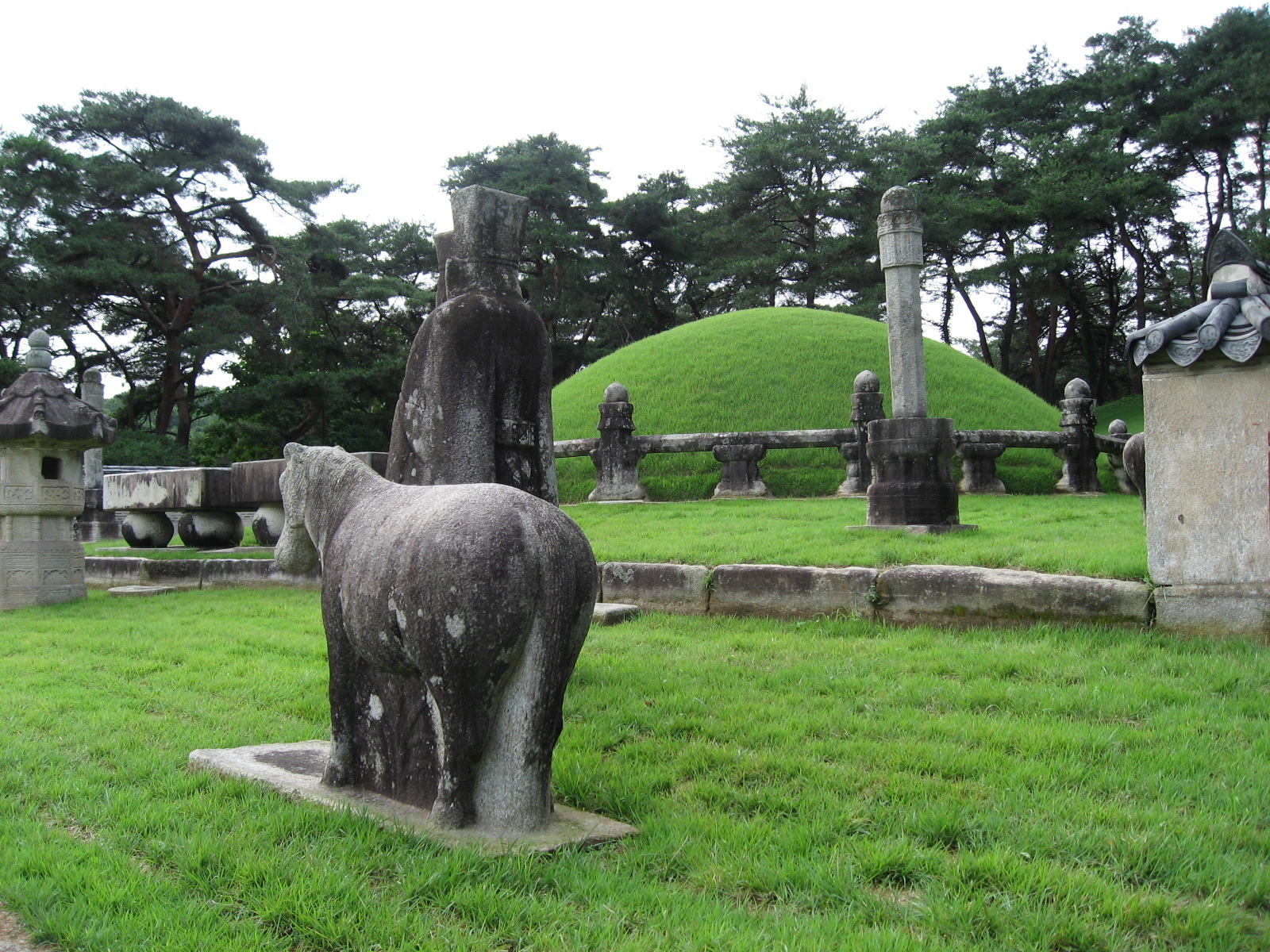
The Royal Tombs of the Joseon Dynasty form a collection of 40 tombs scattered over 18 locations. Built over five centuries, from 1408 to 1966, the tombs honoured the memory of ancestors, showed respect for their achievements, asserted royal authority, protected ancestral spirits from evil and provided protection from vandalism. Spots of outstanding natural beauty were chosen for the tombs which typically have their back protected by a hill as they face south toward water and, ideally, layers of mountain ridges in the distance. Alongside the burial area, the royal tombs feature a ceremonial area and an entrance. In addition to the burial mounds, associated buildings that are an integral part of the tombs include a T-shaped wooden shrine, a shed for stele, a royal kitchen and a guards’ house, a red-spiked gate and the tomb keeper’s house. The grounds are adorned on the outside with a range of stone objects including figures of people and animals. The Joseon Tombs completes the 5,000 year history of royal tombs architecture in the Korean peninsula.
UNESCO Justification of the World Heritage Site
Criterion (iii): Within the context of Confucian cultures, the integrated approach of the Royal Tombs of Joseon to nature and the universe has resulted in a distinctive and significant funeral tradition. Through the application of pungsu principles and the retention of the natural landscape, a memorable type of sacred place has been created for the practice of ancestral rituals.
Criterion (iv): The Royal Tombs of Joseon are an outstanding example of a type of architectural ensemble and landscape that illustrates a significant stage in the development of burial mounds within the context of Korean and East Asian tombs. The royal tombs, in their response to settings and in their unique (and regularized) configuration of buildings, structures and related elements, manifest and reinforce the centuries old tradition and living practice of ancestral worship through a prescribed series of rituals.
Criterion (vi): The Royal Tombs of Joseon are directly associated with a living tradition of ancestral worship through the performance of prescribed rites. During the Joseon period, state ancestral rites were held regularly, and except for periods of political turmoil in the last century, they have been conducted on an annual basis by the Royal Family Organization and the worshipping society for each royal tomb.
Encyclopedia Record: Royal Tombs of the Joseon Dynasty
Royal Tombs of the Joseon Dynasty (Korean: 조선왕릉) is a UNESCO World Heritage Site registered in 2009 that includes 40 tombs of members of the House of Yi, which ruled Korea between 1392 and 1910. These tombs are scattered over 18 locations across the Korean Peninsula. They were built to honor and respect the ancestors and their achievements and assert their royal authority. Two other Joseon tombs, located in Kaesong, North Korea, were proposed but not submitted.Additional Site Details
Area: 1,891.2 hectares
Number of Components: 18
(iv) — Outstanding example of a type of building or landscape
(vi) — Directly associated with events or living traditions
Coordinates: 37.1972222222 , 128.4527777778