World Heritage Identification Number: 1498
World Heritage since: 2019
Category: Cultural Heritage
WHE Type: Buildings & Architectural Ensembles
Transboundary Heritage: No
Endangered Heritage: No
Country: 🇰🇷 Republic of Korea
Continent: Asia
UNESCO World Region: Asia and the Pacific
Map
Seowon, Korean Neo-Confucian Academies: A Legacy of Education and Scholarship
The Seowon, or Korean Neo-Confucian Academies, represent a unique and significant chapter in the history of education and scholarship in East Asia. These academic institutions, which were predominant during the Joseon Dynasty (1392-1910), have been recognized by UNESCO as a World Heritage Site since 2019.
More to come…UNESCO Description of the World Heritage Site
The property is located in central and southern parts of the Republic of Korea, and comprises nine seowon, representing a type of Neo-Confucian academy of the Joseon dynasty (15th -19th centuries CE). Learning, veneration of scholars and interaction with the environment were the essential functions of the seowons, expressed in their design. Situated near mountains and water sources, they favoured the appreciation of nature and cultivation of mind and body. The pavilion-style buildings were intended to facilitate connections to the landscape. The seowons illustrate a historical process in which Neo-Confucianism from China was adapted to Korean conditions.
UNESCO Justification of the World Heritage Site
Criterion (iii): The Seowon, Korean Neo-Confucian Academies are exceptional testimony to cultural traditions associated with Neo-Confucianism in Korea, in the form of educational and social practices, many of which continue. The seowon illustrate an historical process in which Neo-Confucianism from China was tailored to Korean local conditions resulting in academies which are exceptional testimony of this transformative and localising process in terms of function, planning and architecture.
Encyclopedia Record: Seowon
Seowon (Korean: 서원) were the most common educational institutions of Korea during the Joseon Dynasty. They were private institutions, and combined the functions of a Confucian shrine and a Confucian school. In educational terms, the seowon were primarily occupied with preparing young men for the national civil service examinations. In most cases, seowon served only pupils of the aristocratic yangban class. On 6 July 2019, UNESCO recognized a collection of nine seowon as World Heritage Sites.Additional Site Details
Area: 102.49 hectares
Number of Components: 9
Coordinates: 36.7272972222 , 128.8434277778
Image
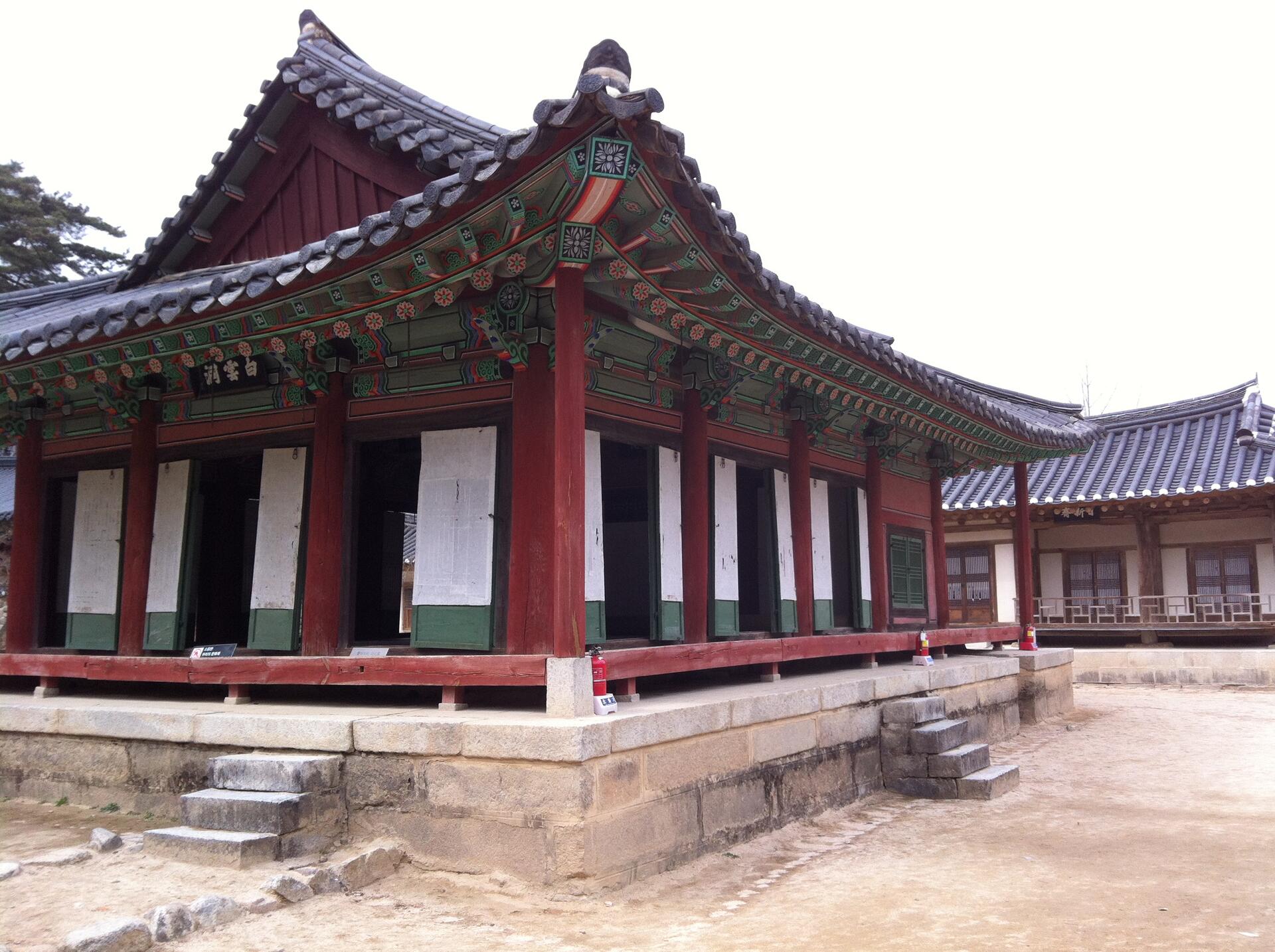
© Jjw, CC BY-SA 3.0 Resized from original. (This derivative is under the same CC BY-SA license.)