World Heritage Identification Number: 1552
World Heritage since: 2021
Category: Cultural Heritage
WHE Type: Infrastructure & Industry
Transboundary Heritage: No
Endangered Heritage: Yes
Country: 🇷🇴 Romania
Continent: Europe
UNESCO World Region: Europe and North America
Map
Roșia Montană Mining Landscape: A Unique Fusion of Roman and Local Techniques
The Roșia Montană Mining Landscape, inscribed as a UNESCO World Heritage Site in 2021, offers a remarkable glimpse into the intersection of Roman engineering prowess and local mining traditions. Situated within the Metalliferous range of the Apuseni Mountains in western Romania, this site stands out for its historical significance, technical diversity, and unique blend of imported and indigenous mining practices.
More to come…UNESCO Description of the World Heritage Site
Located in the Metalliferous range of the Apuseni Mountains in the west of Romania, Roșia Montană features the most significant, extensive and technically diverse underground Roman gold mining complex known at the time of inscription. As Alburnus Maior, it was the site of extensive gold-mining during the Roman Empire. Over 166 years starting in 106 CE, the Romans extracted some 500 tonnes of gold from the site developing highly engineered works, different types of galleries totalling 7km and a number of waterwheels in four underground localities chosen for their high-grade ore. Wax‐coated wooden writing tablets have provided detailed legal, socio‐economic, demographic and linguistic information about the Roman mining activities, not just in Alburnus Maior but also across the wider Dacian province. The site demonstrates a fusion of imported Roman mining technology with locally developed techniques, unknown elsewhere from such an early era. Mining on the site was also carried out, albeit to a lesser extent, between medieval times and the modern era. The later extractive works surround and cut across the Roman galleries. The ensemble is set in an agro-pastoral landscape which largely reflects the structures of the communities that supported the mines between the 18th and early 20th centuries.UNESCO Justification of the World Heritage Site
Criterion (ii): Roșia Montană Mining Landscape contains the world’s pre-eminent example of underground Roman gold mining and demonstrates an interchange of values through innovative techniques developed by skilled migrant Illyrian-Dalmatian miners to exploit gold in ways that suited the technical nature of the deposit. Multiple chambers that housed treadmill-operated water-dipping wheels for drainage represent a technique likely routed from Hispania to the Balkans, whilst perfectly carved trapezoidal-section galleries, helicoidal shafts, inclined communication galleries with stairways cut into the bedrock, and vertical extraction areas (stopes) superimposed above one another with the roof carved out in steps, are in a combination so specific to Roșia Montană that they likely represent pioneering aspects in the technical history of mining.
Criterion (iii): Roșia Montană Mining Landscape embodies the cultural traditions of one of the oldest documented mining communities in Europe, anciently founded by the Romans, as manifested in extant underground mining works, chronologically differentiated by distinctive technical features; and a socio‐technical mining landscape consisting of ore‐processing areas, habitation areas, sacred places and necropoli. The interpretation of its history is enriched by Roman wax‐coated wooden writing tablets discovered in the mines during the 18th and 19th centuries. Together with prolific stone epigraphic monuments, they provide an authentic picture of daily life and cultural practice in this ancient frontier mining community. Combined with outcomes of recent, intensive and systematic archaeological investigation, an exceptional reflection of Roman mining practices has emerged.
Criterion (iv): Roșia Montană Mining Landscape illustrates the strategic control and vigorous development of precious metals’ mining by the Roman Empire, essential for its longevity and military power. Following the decline of mining in Hispania, Roșia Montană located in Aurariae Dacicae (Roman Dacia) was the only significant new source of gold and silver for the Roman Empire, among the likely key motivations for Trajan’s conquest.
Encyclopedia Record: Roșia Montană
Roșia Montană is a commune of Alba County in the Apuseni Mountains of western Transylvania, Romania. It is located in the Valea Roșiei, through which the small river Roșia Montană flows. The commune is composed of sixteen villages: Bălmoșești, Blidești, Bunta, Cărpiniș (Abrudkerpenyes), Coasta Henții, Corna (Szarvaspatak), Curături, Dăroaia, Gârda-Bărbulești, Gura Roșiei (Verespataktorka), Iacobești, Ignățești, Roșia Montană, Șoal, Țarina, and Vârtop (Vartop).Additional Site Details
Area: Not available
Number of Components: 1
(iii) — Unique or exceptional testimony to a cultural tradition
(iv) — Outstanding example of a type of building or landscape
Coordinates: 46.3061111111 , 23.1305555556
Image
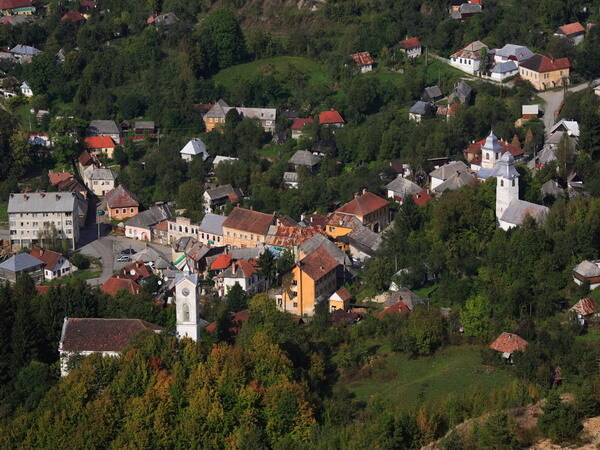
Daniel Tara (eredeti feltöltő), Public domain
World Heritage Research
Discover scientific research and academic studies that deepen our understanding of Roșia Montană Mining Landscape from its history and significance to its conservation, management, and contemporary challenges.
-
No conflict proven?: Assessing the role of the World Heritage Convention in Gabriel Resources v. Romania
A legal analysis of the arbitral tribunal's decision in Gabriel Resources v. Romania reveals no proven conflict between Romania's obligations under bilateral investment treaties and its inscription of the Roșia Montană Mining Landscape on UNESCO's World Heritage List. The study examines whether the tribunal's reasoning aligns with prior case law involving the World Heritage Convention, highlighting potential normative tensions between heritage protection and foreign investor rights that warrant closer scrutiny.
Lanzoni, N. (2025). No conflict proven?: Assessing the role of the World Heritage Convention in Gabriel Resources v. Romania. International Journal of Cultural Property, 32(2), 204–214. https://doi.org/10.1017/s0940739125100118
View Publication Record | Read Publication -
Transformative Changes and Conflicts in the Carpathian Mountains in the Post-Communist Period
A transformative shift in the Carpathian Mountains, marked by the decline of large-scale mining and economic restructuring post-communism, has led to significant population decline, demographic aging, and landscape transformation. The study highlights a pivotal conflict surrounding plans for cyanide gold and silver mining at Roșia Montană, which were halted due to unprecedented public resistance. This civic movement, coupled with efforts to preserve Roman-era mining works, culminated in the site's inscription on the UNESCO World Heritage List in 2021, prohibiting future mining activities. The research employs a multi-stage methodology to analyze these changes, national policies, and socioeconomic impacts, revealing the struggle between resource exploitation and preservation, globalizing pressures, and local resistance.
Stoica, I.-V., Zamfir, D., Gavrilidis, A.-A., & Houdart, M. (2025). Transformative Changes and Conflicts in the Carpathian Mountains in the Post-Communist Period. Revue de Géographie Alpine, 113-2. https://doi.org/10.4000/15d2v
View Publication Record | Read Publication -
Anthropogenic Hazards and Their Impact Upon the Historical Cultural Landscape in Roșia Montană Area
A long history of mining in Roșia Montană, spanning over 2000 years, has left a lasting impact on the local cultural landscape, marked by complex pollution and socio-economic challenges. The study reveals that anthropogenic hazards—stemming from human activities like mining—have reshaped this landscape unpredictably, often with negative consequences such as environmental degradation and reduced living standards due to the cessation of mining operations. However, it also identifies opportunities for resilience, including conservation efforts, aesthetic rehabilitation of degraded cultural elements, and sustainable development projects that leverage tourism. The research underscores the need for systemic planning to protect and restore Roșia Montană's historical landscape while fostering identity and economic sustainability.
Nicula, G., Gavra, C.-I., Vasiliță-Crăciun, I.-C.,. (2023). Anthropogenic Hazards and Their Impact Upon the Historical Cultural Landscape in Roșia Montană Area. Studia Universitatis Babeș-Bolyai Geographia, 68(2), 59–74. https://doi.org/10.24193/subbgeogr.2023.2.03
View Publication Record | Read Publication -
A (Hi)Story of Dwelling in a (Post)Mining Town in Romania
In Roșia Montană, Romania, residents' traditional mining activities and agricultural practices create a unique landscape characterized by 'somatic poetry,' where human lives and narratives intertwine with ecological dynamics. This study reveals how dwelling in the post-mining town shapes aesthetic qualities through complex social-ecological relationships, blending gold mining, animal husbandry, gardening, and hay collection on steep slopes. The research employs qualitative methods to explore these interconnected lives and their emergent narratives, offering insights into the cultural and environmental dimensions of post-industrial landscapes.
Püsök, I. (2021). 7. A (Hi)Story of Dwelling in a (Post)Mining Town in Romania. Politics and the Environment in Eastern Europe, 163–182. https://doi.org/10.11647/obp.0244.07
View Publication Record | Read Publication