World Heritage Identification Number: 1602
World Heritage since: 2019
Category: Cultural Heritage
WHE Type: Archaeological Sites
Transboundary Heritage: No
Endangered Heritage: No
Country: 🇧🇫 Burkina Faso
Continent: Africa
UNESCO World Region: Africa
Map
Ancient Ferrous Metallurgy Sites of Burkina Faso: A Testament to Pre-Industrial Iron Production
The Ancient Ferrous Metallurgy Sites of Burkina Faso, inscribed as a World Heritage Site by UNESCO in 2019, offer a unique glimpse into pre-industrial African iron production. Comprising five distinct locations distributed across several regions of the country—notably the Nord, Centre-Nord, and Boucle du Mouhoun regions—these sites provide valuable insights into the development of ironworking techniques over a period spanning more than two millennia.
Douroula, the oldest site among these, dates back to the early first millennium BCE (around 800 BCE) and represents the earliest known evidence of iron production in Burkina Faso. Located in Mouhoun Province, this site features remains of furnaces, mining areas, and traces of habitation. These elements suggest that Douroula was once a bustling center for early iron production, contributing to the region’s technological and cultural development.
Moving forward in time, the other components of the property—Tiwêga, Yamané, Kindibo, and Békuy—illustrate the diversification and development of iron production techniques from the late first millennium CE into the second millennium CE. Tiwêga, situated in Sanmatenga Province, is particularly notable for its well-preserved natural-draught furnaces, along with associated mining sites and settlement remains, offering a comprehensive picture of ironworking practices during this period.
Similarly, Yamané, in Passoré Province, showcases a range of furnace types, providing valuable evidence for the evolution and adaptation of iron smelting technologies. Kindibo, located in Bam Province, and Békuy, in Tuy Province, complete the property. Both sites contain significant remains of metallurgical installations, further demonstrating the widespread and long-lasting nature of iron production in the region.
Despite the cessation of direct iron smelting in these areas, the role of village blacksmiths remains significant in contemporary Burkina Faso. These artisans continue to supply tools to local communities while participating in various cultural and religious rituals. Their work serves as a tangible link to the ancient metallurgical traditions that have shaped the history and identity of Burkina Faso.
The archaeological findings at Douroula represent a pivotal shift in the historical narrative of the continent, as they effectively dismantle long-standing theories of a north-to-south technology transfer. By dating back to the early first millennium BCE, this site provides strong scientific evidence that iron smelting in West Africa was an independent technological innovation.
This evidence of early and locally rooted development places Burkina Faso at the heart of global technological history, correcting the historical bias of Africa as a passive recipient of external wisdom. Consequently, Douroula serves not only as a relic of a bygone era but as the scientific foundation for understanding an autonomous African civilizational history.
Overall, the Ancient Ferrous Metallurgy Sites of Burkina Faso represent a remarkable testament to pre-industrial African iron production. Their preservation highlights their exceptional value for understanding the long-term development of metallurgical knowledge and its impact on society. As such, they stand not only as an important part of Burkina Faso’s heritage but also as a contribution to the global history of technology.
UNESCO Description of the World Heritage Site
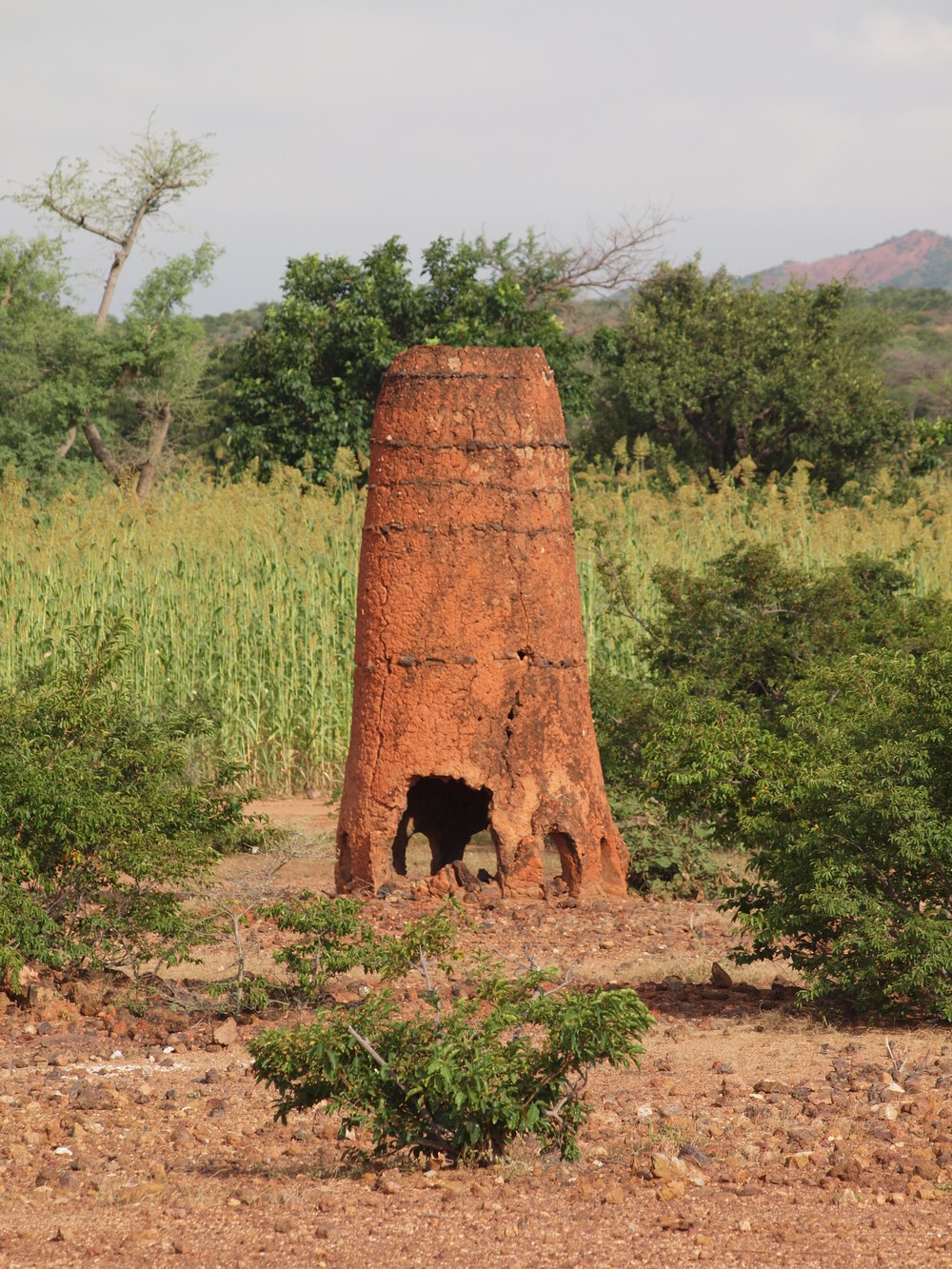
This property is composed of five elements located in different provinces of the country. It includes about fifteen standing, natural-draught furnaces, several other furnace structures, mines and traces of dwellings. Douroula, which dates back to the 8th century BCE, is the oldest evidence of the development of iron production found in Burkina Faso. The other components of the property – Tiwêga, Yamané, Kindibo and Békuy – illustrate the intensification of iron production during the second millennium CE. Even though iron ore reduction –obtaining iron from ore – is no longer practiced today, village blacksmiths still play a major role in supplying tools, while taking part in various rituals.UNESCO Justification of the World Heritage Site
Criterion (iii): The ancient ferrous metallurgy sites bear exceptional testimony to a unique tradition of iron ore smelting, passing on to today’s Burkina Faso communities a rich technical and cultural heritage. Douroula illustrates this first phase of iron production development in Africa, and demonstrates that the iron production technology was already widely disseminated by around 500 BCE across the whole region. Tiwêga, Yamané, Kindibo and Békuy are massive production sites that illustrate iron production throughout the Sahelian zone of Burkina Faso in the second millennium AD.
Criterion (iv): The ancient ferrous metallurgy sites are outstanding examples that illustrate the variety of traditional iron ore smelting techniques in Burkina Faso. The furnaces have conserved all or almost all of their elevation, and have morphological features that enable their differentiation. Other remains are associated with the furnaces, such as the huge assemblages of slag and traces of mining extraction, together with technical traditions that are still alive today. The very ancient appearance of this technology in global terms has had very significant consequences for the history of the African peoples.
Criterion (vi): The ancient ferrous metallurgy sites of Burkina Faso are directly associated with living traditions embodied by the socioprofessional group of the blacksmiths. These traditions are expressed today by symbolic values linked to iron technology in the communities that descend from the blacksmiths and metallurgists. As the masters of fire and iron, the blacksmiths perpetuate ancestral rites and social practices that confer on them an important role in their communities at Yamané, Kindibo and Douroula.
Encyclopedia Record: Ancient Ferrous Metallurgy Sites of Burkina Faso
The Ancient Ferrous Metallurgy Sites of Burkina Faso are a collection of ancient metallurgy sites across five locations in the Nord and Centre-Nord regions of Burkina Faso, used to extract iron from ore. The oldest of these structures are dated from roughly 800 BC, making them the most ancient known examples of metallurgy in Burkina Faso. In 2019, the sites were registered as a World Heritage Site by UNESCO, because of the exemplary evidence of ancient metalworking. Unlike other sites that are listed by UNESCO, these were chosen because it's a clear relationship between direct iron smelting and early human society. They were able to create an efficient way to mass produce iron during a pre-industrial Africa.Additional Site Details
Area: 122.3 hectares
Number of Components: 5
(iv) — Outstanding example of a type of building or landscape
(vi) — Directly associated with events or living traditions
Coordinates: 12.5877583333 , -3.3289861111
Image
© DSCPM/MCAT. Used with permission.