World Heritage Identification Number: 1687
World Heritage since: 2023
Category: Cultural Heritage
WHE Type: Archaeological Sites
Transboundary Heritage: No
Endangered Heritage: No
Country: 🇵🇸 State of Palestine
Continent: Asia
UNESCO World Region: Arab States
Map
Exploring the Ancient History of Tell es-Sultan (Ancient Jericho)
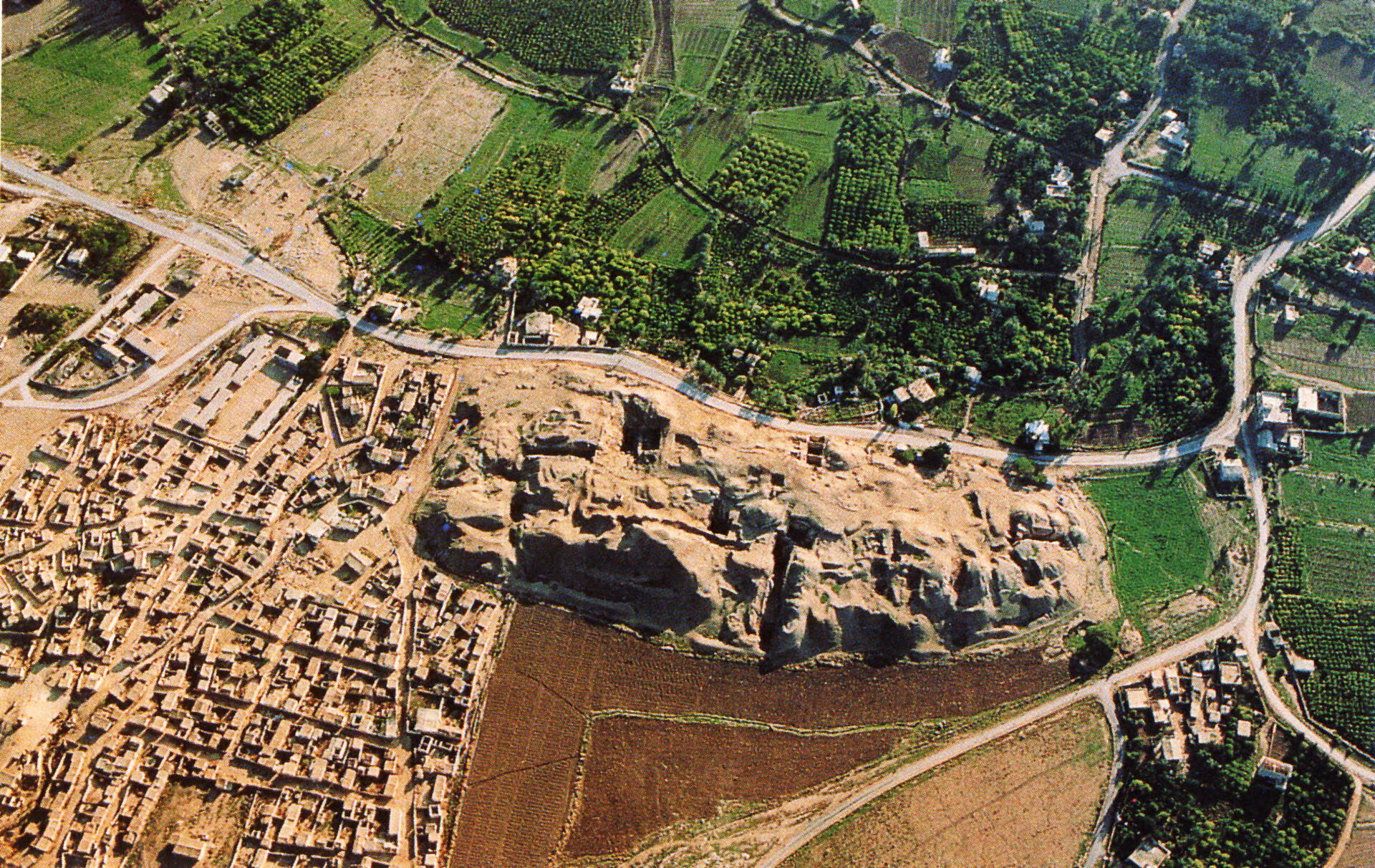
Tell es-Sultan, also known as Tel Jericho or Ancient Jericho, is a significant archaeological site and a UNESCO World Heritage Site located in the Jordan Valley, northwest of present-day Jericho in Palestine. This ancient settlement, encompassing the prehistoric deposits of human activity, offers a unique glimpse into the evolution of human civilization.
More to come…UNESCO Description of the World Heritage Site
Ancient Jerico/Tell es-Sultan is located northwest of present-day Jericho in the Jordan Valley in Palestine, the property is an oval-shaped Tell, or mound, that contains the prehistorical deposits of human activity, and includes the adjacent perennial spring of ‘Ain es-Sultan. By the 9th to 8th millennium BC, Neolithic Ancient Jericho/Tell es-Sultan was already a sizeable permanent settlement, as expressed by surviving monumental architectural attributes such as a wall with a ditch and a tower. It reflects the developments of the period, which include the shifting of humanity to a sedentary communal lifestyle and the related transition to new subsistence economies, as well as changes in social organisation and the development of religious practices, testified by skulls and statues found. The Early Bronze Age archaeological material on the site provides insights into urban planning, while vestiges from the Middle Bronze Age reveal the presence of a large Canaanite city-state, equipped with an urban centre and technologically innovative rampart fortifications, occupied by a socially complex population.
UNESCO Justification of the World Heritage Site
Criterion (iii): Ancient Jericho/Tell es-Sultan testifies in an exceptional way to developments that took place across the Near East in the Neolithic, characterised by the shifting of humanity to a new sedentary lifestyle and the related transition to new subsistence strategies. It demonstrates how people learned to live in larger, more permanent settlements and develop new social and ritual methods of communal living. Monumental features of the property, the presence of shared structures, and the evidence of post-mortem treatment of skulls provide important insights into changes in social organisation, and into the degree of skill, planning, and labour that this social organisation required. The deep stratigraphy preserved on the tell has the potential to answer many questions related to development and change of societies in the Neolithic period.
Criterion (iv): Ancient Jericho/Tell es-Sultan is an outstanding example of a permanent settlement with a long history that testifies to the transition of the people of the Levant from hunter-gatherers to a sedentary lifestyle in the Neolithic, and provides evidence of the rise of early Levantine urban culture in the Early Bronze Age. With its monumental architectural features and shared structures dating from the 9th to 8th millennium BC, the property exemplifies in an exceptional way the process of Neolithisation of the Fertile Crescent, a significant stage in human history. It further allows developments in building traditions to be observed in both the private and public spheres in the Neolithic and the Bronze Age, its Middle Bronze Age ramparts in particular showing evidence of innovative construction techniques.
Encyclopedia Record: Tell es-Sultan
Tell es-Sultan, also known as Tel Jericho or Ancient Jericho, is an archaeological site and a UNESCO World Heritage Site in Palestine, in the city of Jericho, consisting of the remains of the oldest fortified city in the world.Additional Site Details
Area: 5.93 hectares
Number of Components: 1
(iv) — Outstanding example of a type of building or landscape
Coordinates: 31.8713055556 , 35.4440555556
World Heritage Research
Discover scientific research and academic studies that deepen our understanding of Ancient Jericho/Tell es-Sultan from its history and significance to its conservation, management, and contemporary challenges.
-
The Bronze Age Destruction of Jericho, Archaeology, and the Book of Joshua
Archaeological evidence from Tell es-Sultan, identified as ancient Jericho, reveals the city's fiery destruction during the Bronze Age, characterized by collapsed mudbrick walls and burned grain stores. While the exact date of this destruction remains debated, analyses of pottery, Egyptian artifacts, cuneiform tablets, stratigraphy, and radiocarbon dating provide a more precise chronology. Despite disagreements among scholars, the manner of Jericho's fall—marked by widespread fire and abandonment—is widely accepted. This study synthesizes decades of excavations, including those led by John Garstang (1930–1936), Kathleen Kenyon (1952–1958), and recent Italian-Palestinian teams (1997–2017), to clarify the historical context and potential biblical connections.
Kennedy, T. (2023). The Bronze Age Destruction of Jericho, Archaeology, and the Book of Joshua. Religions, 14(6), 796. https://doi.org/10.3390/rel14060796
View Publication Record | Read Publication -
Conceptualizing Urban Experiences
Archaeological research at Tell es-Sultan, ancient Jericho, reveals significant population growth and urban development during the Early Bronze Age I-III. By analyzing domestic contexts in Area F of the Italian-Palestinian excavations, the study provides a demographic snapshot of Jericho's transition from a village to a fortified city. This approach offers new insights into the settlement's population dynamics and urbanization processes, contributing to our understanding of early urban experiences in the region.
Gallo, E. (2019). Conceptualizing Urban Experiences. https://doi.org/10.53131/rosapat978-88-98154-20-3
View Publication Record | Read Publication -
3D Scanning, Modelling and Printing of Ultra-Thin Nacreous Shells from Jericho: A Case Study of Small Finds Documentation in Archaeology
A groundbreaking approach to documenting ultra-thin, fragile archaeological finds has been successfully demonstrated through 3D scanning and additive manufacturing. Researchers from FabLab Saperi&Co and Sapienza University of Rome achieved sub-millimetric precision in replicating five nacreous shells from ancient Jericho (Tell es-Sultan), showcasing the potential of photogrammetry and 3D printing for preserving and studying delicate artifacts. This method not only facilitates the creation of faithful replicas but also offers new avenues for research and museum activities, particularly for small finds that are often overlooked due to their fragility.
Nigro, L., Fattore, L., & Montanari, D. (2018). 3D SCANNING, MODELLING AND PRINTING OF ULTRA-THIN NACREOUS SHELLS FROM JERICHO: A CASE STUDY OF SMALL FINDS DOCUMENTATION IN ARCHAEOLOGY. Vicino Oriente, 22, 15–28. https://doi.org/10.53131/vo2724-587x2018_2
View Publication Record | Read Publication -
A hoard of Nilotic nacreous shells from Egypt to Jericho (Early Bronze II, 3000–2800 BCE): Their finding, content and historical archaeological implications
A significant archaeological discovery at Tell es-Sultan, ancient Jericho, reveals a hoard of five Chambardia rubens shells, native to the Nile, dating back to the Early Bronze Age II (3000–2800 BCE). These shells, found in a dwelling unit, provide tangible evidence of trade and cultural connections between the Southern Levant and Egypt. Chemical analysis and Scanning Electron Microscopy confirmed the presence of Manganese Dioxide, an inorganic compound used as makeup in ancient Egypt and sourced from Sinai ores. This finding supports the role of international luxury goods trade in the urban rise during this period and suggests the emergence of a ruling elite influenced by Egyptian culture at Jericho.
Nigro, L., Montanari, D., Mura, F., Yasine, J., & Rinaldi, T. (2018). A hoard of Nilotic nacreous shells from Egypt to Jericho (Early Bronze II, 3000–2800 BCE): Their finding, content and historical archaeological implications. Palestine Exploration Quarterly, 150(2), 110–125. https://doi.org/10.1080/00310328.2018.1425957
View Publication Record | Read Publication -
Da Gerico a Betlemme.La Missione Della Sapienza a Gericoe L’Archeologia Italiana in Palestina (1997-2017)Con Il Contributo Del Ministero Degli Affari Esteri E Della Cooperazione Internazionale
A groundbreaking Italian-Palestinian archaeological collaboration at Tell es-Sultan, ancient Jericho, has transformed the site from an unintelligible ruin into a prominent research and tourist destination. This 20-year partnership, initiated in 1997 by Sapienza University of Rome with the Palestinian Ministry of Tourism and Antiquities, pioneered a shared responsibility model for excavation, protection, and rehabilitation, diverging from traditional colonial practices. The project has uncovered pivotal moments in human history, including the advent of agriculture (10,500-6,000 BC) and the rise of the earliest city with modular architecture during the 3rd millennium BC. Beyond Jericho, this model expanded to safeguard threatened heritage, such as Bethlehem’s necropolises and Tell Abu Zarad, a significant Bronze and Iron Age city. The collaboration has produced over 100 scientific publications, ensuring unbiased historical interpretation while rehabilitating 13 sites in the Jericho Oasis Archaeological Park.
Nigro, L. (2018). DA GERICO A BETLEMME.LA MISSIONE DELLA SAPIENZA A GERICOE L’ARCHEOLOGIA ITALIANA IN PALESTINA (1997-2017)CON IL CONTRIBUTO DEL MINISTERO DEGLI AFFARI ESTERI E DELLA COOPERAZIONE INTERNAZIONALE. Vicino Oriente, 22, 1–13. https://doi.org/10.53131/vo2724-587x2018_1
View Publication Record | Read Publication -
Jericho-off-the-Record
A significant cache of non-professional archaeological documentation from the second British campaign at Tell es-Sultan (ancient Jericho) has been digitized and made accessible, offering new insights into one of the most renowned excavations led by Kathleen Kenyon between 1952 and 1958. The 'Jericho-off-the-Record' project, an extension of the Non-Professional Archaeological Photographs (NPAPH) initiative, has gathered visual, written, and oral records that were previously overlooked or not stored in official archives. This includes photographs, slides, films, and personal accounts from both non-professional participants and archaeological staff, providing a richer context for understanding the excavation's methods, findings, and historical significance. The initial data deposit is now available through EASY, the online archiving system of DANS, marking a valuable addition to archaeological research on ancient Jericho.
Wagemakers, B. (2016). Jericho-off-the-Record. Research Data Journal for the Humanities and Social Sciences, 1, 1–13. https://doi.org/10.1163/24523666-01000005
View Publication Record | Read Publication -
Preliminary Report on the Third and Fourth Seasons of Excavations of the Italian-Palestinian Expedition at Tell es-Sultan/Jericho, 1999-2000
A joint Italian-Palestinian expedition at Tell es-Sultan, ancient Jericho, has made significant strides in understanding the site's urban development during key periods of Early Bronze III and Middle Bronze I–III. The research focuses on seriation of material culture and urban topography, providing insights into the evolution of this historic site. Additionally, efforts to restore the area aim to establish a National Archaeological Park, preserving its cultural heritage for future generations.
Thuesen, I. (2016). Proceedings of the 2nd International Congress on the Archaeology of the Ancient Near East 22-26 May 2000, Copenhagen Volume 1. Department of History and Cultures, University of Bologna / Eisenbrauns. https://doi.org/10.12878/orientlabsi2icaane-1
View Publication Record | Read Publication -
Archaeoseismic Evidence of Two Neolithic (7,500-6,000 B.C.) Earthquakes at Tell es-Sultan, Ancient Jericho, Dead Sea Fault
Research at Tell es-Sultan, the site of ancient Jericho, reveals archaeoseismic evidence of two significant earthquakes during the Neolithic period (7,500–6,000 B.C.). These findings provide a rare glimpse into seismic activity along the Dead Sea Fault, offering insights into the region's geological history. The study analyzed seismites—deformation features in sediments—and faults to reconstruct past earthquake events. Additionally, damaged speleothems from nearby caves were examined to further support the palaeoseismic record. This work contributes to understanding the frequency and impact of earthquakes in the Dead Sea basin during a critical period of human settlement.
Alfonsi, L., Cinti, F. R., Di Mauro, D., & Marco, S. (2012). Archaeoseismic Evidence of Two Neolithic (7,500-6,000 B.C.) Earthquakes at Tell es-Sultan, Ancient Jericho, Dead Sea Fault. Seismological Research Letters, 83(4), 639–648. https://doi.org/10.1785/0220110144
View Publication Record | Read Publication -
Egyptian and Egyptianizing Objects from EB I-III Tell Es-Sultan/Ancient Jericho
Archaeological evidence from Tell es-Sultan (Ancient Jericho) reveals significant Egyptian and Egyptianizing artifacts dating from the Early Bronze Age I-III, shedding light on the complex trade and cultural exchanges between Egypt and the Levant during the 4th to 3rd millennia BCE. The study highlights Jericho's strategic position as a key hub in these interactions, contributing to the rise of early urban centers in the region. Through detailed analysis of these objects, researchers have uncovered the dynamics of commercial and cultural relationships that flourished between Egypt and Palestine during this pivotal period.
Sala, M. (2012). EGYPTIAN AND EGYPTIANIZING OBJECTS FROM EB I-III TELL ES-SULTAN/ANCIENT JERICHO. Vicino Oriente, 16, 275–302. https://doi.org/10.53131/vo2724-587x2012_14
View Publication Record | Read Publication