World Heritage Identification Number: 689
World Heritage since: 2021
Category: Cultural Heritage
WHE Type: Historic Cities & Urban Areas
Transboundary Heritage: No
Endangered Heritage: No
Country: 🇯🇴 Jordan
Continent: Asia
UNESCO World Region: Arab States
Map
As-Salt: A City of Tolerance and Urban Hospitality in West-Central Jordan
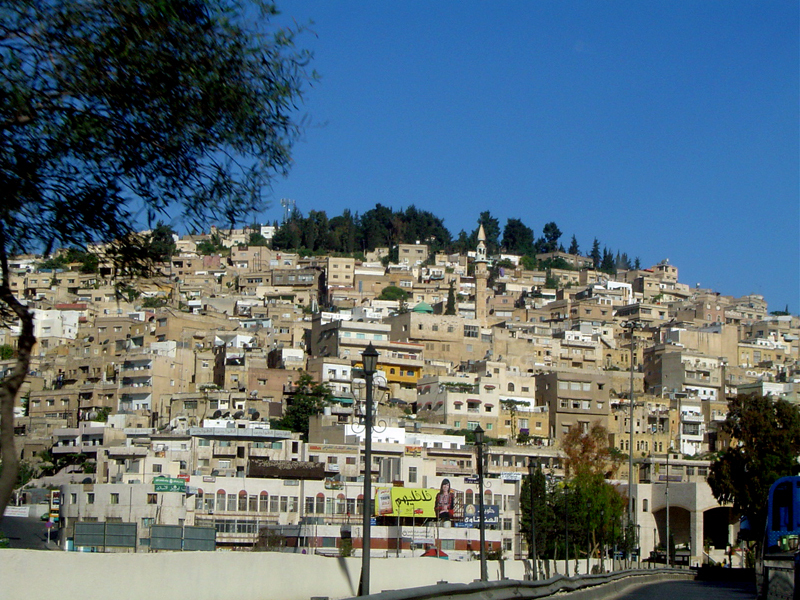
As-Salt, also known as Salt, is a remarkable city nestled in the Balqa highland of west-central Jordan. Inscribed as a UNESCO World Heritage Site in 2021, this ancient trading city offers a unique blend of history, culture, and architectural charm that reflects its rich past and enduring spirit of tolerance and urban hospitality.
More to come…UNESCO Description of the World Heritage Site
Built on three closely-spaced hills in the Balqa highland of west-central Jordan, the city of As-Salt, was an important trading link between the eastern desert and the west. During the last 60 years of the Ottoman period, the region prospered from the arrival and settlement of merchants from Nablus, Syria, and Lebanon who made their fortunes in trade, banking, and farming. This prosperity attracted skilled craftsmen from different parts of the region who worked on transforming the modest rural settlement into a thriving town with a distinctive layout and an architecture characterized by large public buildings and family residences constructed of local yellow limestone. The site’s urban core includes approximately 650 significant historic buildings exhibiting a blend of European Art Nouveau and Neo-Colonial styles combined with local traditions. The city’s non-segregated development expresses tolerance between Muslims and Christians who developed traditions of hospitality evidenced in Madafas (guest houses, known as Dawaween) and the social welfare system known as Takaful Ijtimai’. These tangible and intangible aspects emerged through a melding of rural traditions and bourgeois merchants’ and tradespeople’s practices during the Golden Age of As-Salt’s development between 1860s to 1920s.
UNESCO Justification of the World Heritage Site
Criterion (ii): The historic centre of As-Salt demonstrates distinctive intercultural exchanges that resulted in transformations of the Levant in the late Ottoman period. These included flows of culture, people, skills, traditions and wealth within and between the cities of the region and beyond, and between diverse cultural and religious groups that comprised the urban population from the city’s ‘Golden Age’ to the present. These cultural exchanges involved the local Bedouin peoples, incoming merchants, craftspeople and traders, Ottoman officials and Christian missionaries. Together, the city’s architectural forms and building techniques, urban morphology, shared traditions and uses of public spaces, and the development of the places and practices of urban hospitality and mutual welfare demonstrate these intercultural exchanges. These are understood to represent a combination of local customs and new urban social norms.
Criterion (iii): As-Salt’s historic urban core is an exceptional example of the urban form and cultural traditions associated with the city’s ‘Golden Age’ period (1860s to 1920s). The city thrived and transformed as a result of the Ottoman Tanzimat reforms, demonstrated by the relatively intact urban fabric, stairways, and public spaces, as well as the large public buildings and private residences characterised by a central hallway and three bays, constructed of yellow stone. The urban form reflects and supports the traditions of joint habitation of Christian and Muslim communities, and specific forms of urban hospitality, many of which are continuing. As-Salt is distinctive in terms of its cultural practices of cooperation across religions and the absence of segregated neighbourhoods. Although these traits are not unique within the Levant, As-Salt is exceptional because of the intensity of these manifestations and the close connections between the cultural traditions and the urban fabric and forms. The particular urban tradition of providing Madafas (guest houses, also known as Dawaween) is an example of these characteristics, combining tangible and intangible attributes.
Encyclopedia Record: As-Salt
As-Salt, also known as Salt, is an ancient trading city and administrative centre in west-central Jordan. It is on the old main highway leading from Amman to Jerusalem. Situated in the Balqa highland, about 790–1,100 metres above sea level, the city is built in the crook of three hills, close to the Jordan Valley. One of the three hills, Jabal al-Qal'a, is the site of a 13th-century ruined fortress. It is the capital of Balqa Governorate of Jordan.Additional Site Details
Area: 24.68 hectares
Number of Components: 1
(iii) — Unique or exceptional testimony to a cultural tradition
Coordinates: 32.0426111111 , 35.7283055556