World Heritage Identification Number: 35
World Heritage since: 1980
Category: Cultural Heritage
WHE Type: Buildings & Architectural Ensembles
Transboundary Heritage: No
Endangered Heritage: No
Country: 🇬🇭 Ghana
Continent: Africa
UNESCO World Region: Africa
Map
Asante Traditional Buildings: A Glimpse into the Rich History of the Ashanti Empire
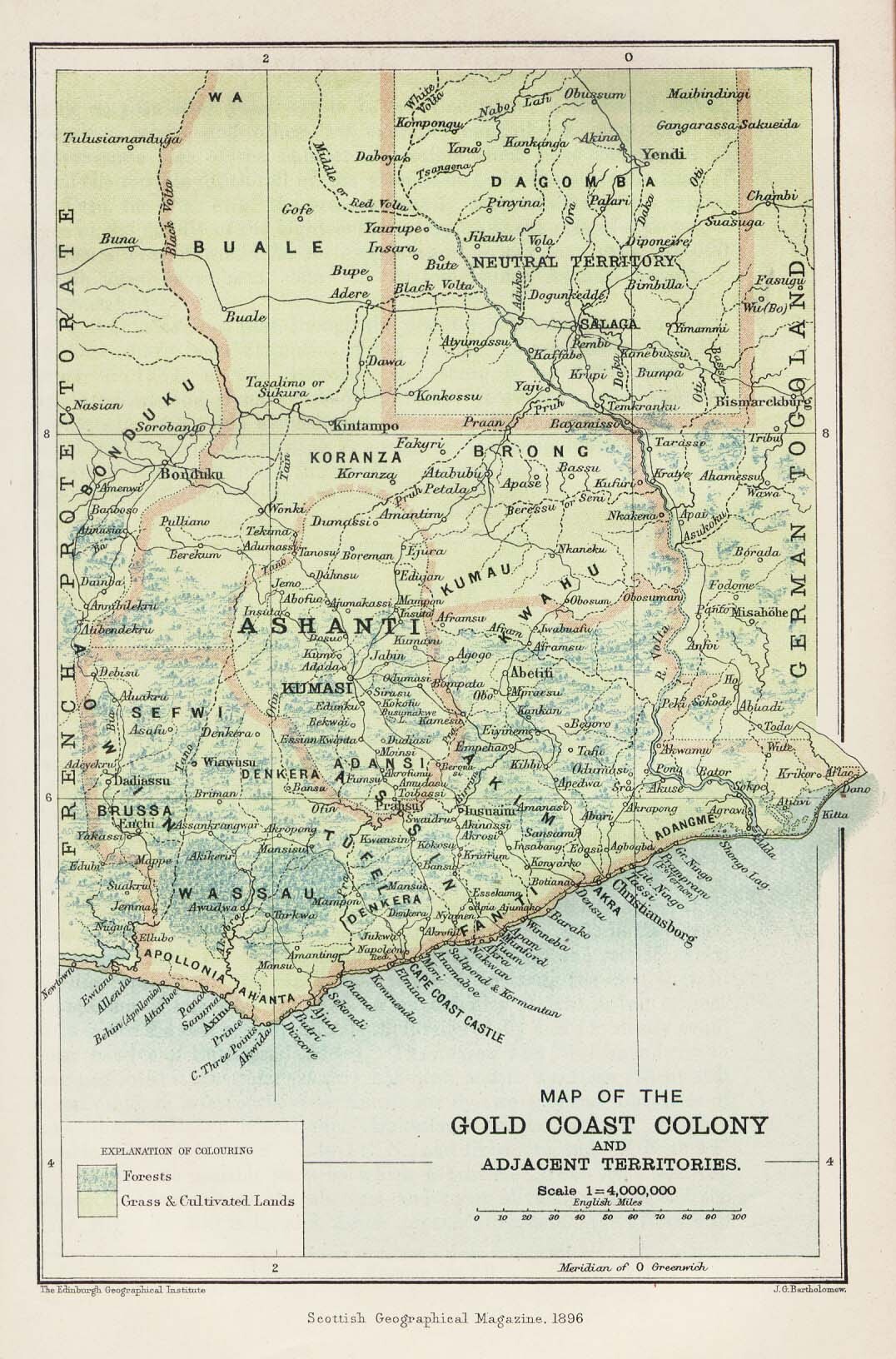
The Asante Traditional Buildings, located in the vicinity of Kumasi, Ghana, serve as the final tangible remnants of the once formidable Asante civilization that flourished in the 18th century. Inscribed on the UNESCO World Heritage List in 1980, these structures offer a unique insight into the rich cultural heritage and architectural prowess of the Ashanti Empire.
More to come…UNESCO Description of the World Heritage Site
To the north-east of Kumasi, these are the last material remains of the great Asante civilization, which reached its high point in the 18th century. Since the dwellings are made of earth, wood and straw, they are vulnerable to the onslaught of time and weather.
UNESCO Justification of the World Heritage Site
Criterion (v): The Asante Traditional Buildings are the last remaining testimony of the unique architectural style of the great Asante Kingdom. The traditional motifs of its rich bas-relief decoration are imbued with symbolic meaning.
Encyclopedia Record: Asante Traditional Buildings
The Asante Traditional Buildings are a collection of 10 traditionally built buildings from the time of the Ashanti Empire in the area near Kumasi. These buildings served as fetish houses and shrines during the 18th and 19th centuries, during the golden age of the Ashanti Empire. When the empire fell during the British occupation of the area from 1806 to 1901, most Asante buildings of the period were destroyed during the era. Among other buildings, the royal mausoleum was destroyed by Robert Baden-Powell in 1895. The 10 remaining buildings are the last remains of the history and culture of the Asante people and were inscribed on the UNESCO World Heritage List in 1980.Additional Site Details
Area: Not available
Number of Components: 1
Coordinates: 6.4011111111 , -1.6258333333
World Heritage Research
Discover scientific research and academic studies that deepen our understanding of Asante Traditional Buildings from its history and significance to its conservation, management, and contemporary challenges.
-
Architectural Heritage Preservation: An Application of Historic Building Quality Assessment Criteria for World Heritage Sites in Ghana
Ghana's Asante Traditional Buildings (ATBs) lack standardized evaluation criteria for their preservation. This study proposes the use of Historic Building Quality Assessment Criteria (HBQAC) to address this gap, ensuring timely and efficient restoration. The research employs an interpretivist methodology, reviewing existing literature to identify current standards for evaluating heritage structures in Ghana. Findings highlight a dearth of information on such standards, underscoring the need for HBQAC to guide preservation efforts effectively.
K. Twumasi-Ampofo. (2025). Architectural Heritage Preservation: An Application of Historic Building Quality Assessment Criteria for World Heritage Sites in Ghana. Journal of Information Systems Engineering and Management, 10(52s), 349–367. https://doi.org/10.52783/jisem.v10i52s.10719
View Publication Record | Read Publication -
Bridging Custom and Bureaucracy: Examining Collaboration Between Traditional Rulers and Municipal Authorities in Local Development in Ghana
Collaboration between traditional rulers and municipal authorities in Ghana's Asante Akyem Central Municipality is hindered by informal relationships, role ambiguity, and weak coordination, despite shared development goals. While moderate cooperation exists in land provision and school advocacy, synergy in physical development and recreation remains limited. Challenges include lack of formal mechanisms, resource constraints, and political interference. Traditional leaders significantly contribute through community mobilization and cultural legitimacy. The study recommends formalized partnerships, inclusive planning, and capacity-building to enhance integrated governance and effective service delivery.
(Ed.). (2025). Bridging Custom and Bureaucracy: Examining Collaboration Between Traditional Rulers and Municipal Authorities in Local Development in Ghana. Journal of Culture, Society and Development. https://doi.org/10.7176/jcsd/74-09
View Publication Record | Read Publication