World Heritage Identification Number: 227
World Heritage since: 1983
Category: Natural Heritage
WHE Type: Protected Areas & National Parks
Transboundary Heritage: No
Endangered Heritage: No
Country: 🇨🇮 Côte d'Ivoire
Continent: Africa
UNESCO World Region: Africa
Map
Comoé National Park: A West African Biodiversity Haven
The Comoé National Park, located in the Zanzan and Savanes districts of north-eastern Ivory Coast, stands as one of the most significant protected areas in West Africa. Inscribed as a UNESCO World Heritage Site in 1983, this expansive reserve spans over 11,500 square kilometers (4,400 sq mi), making it the largest protected area within the region.
More to come…UNESCO Description of the World Heritage Site
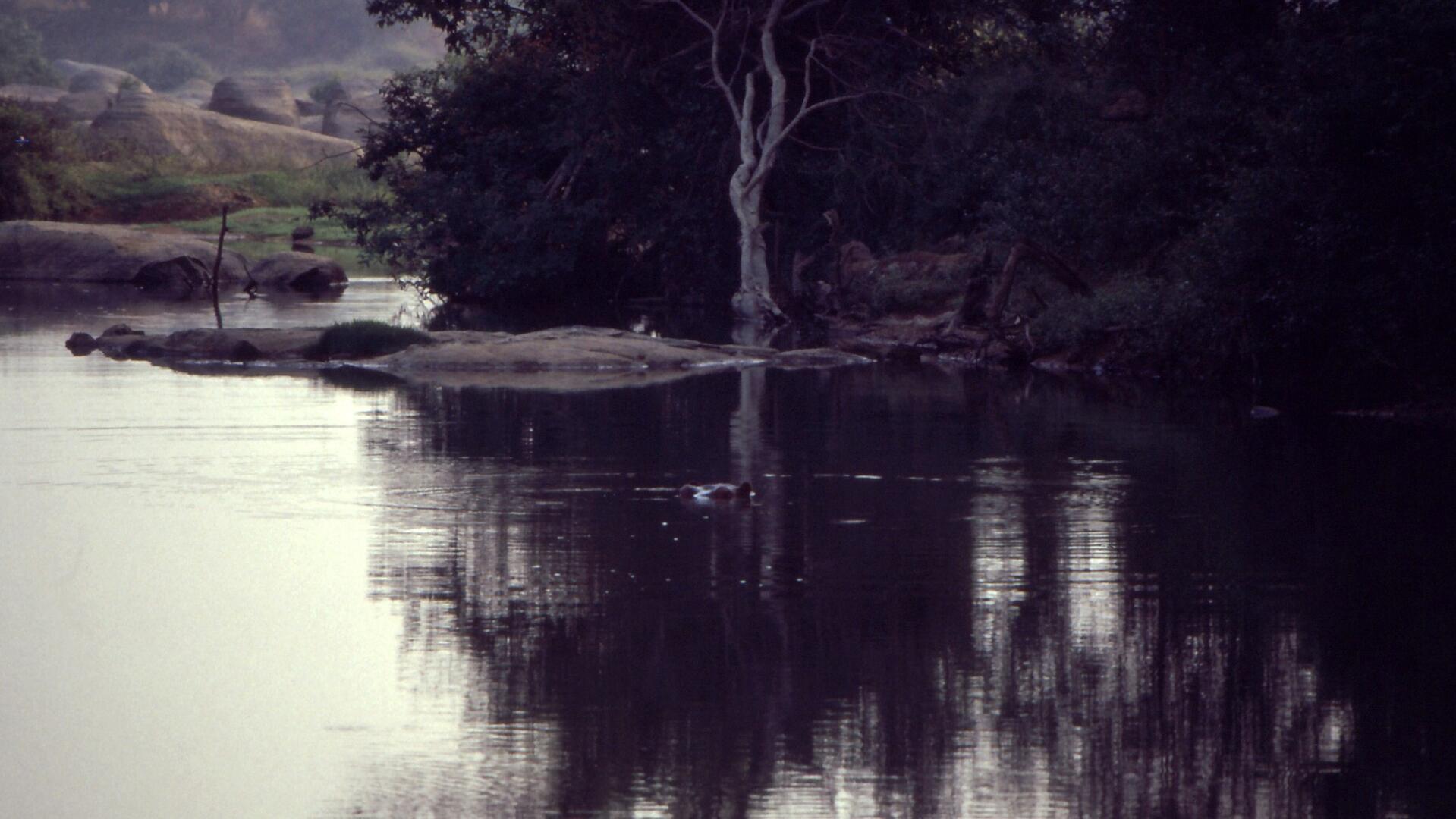
One of the largest protected areas in West Africa, this park is characterized by its great plant diversity. Due to the presence of the Comoé river, it contains plants which are normally only found much farther south, such as shrub savannahs and patches of thick rainforest.
UNESCO Justification of the World Heritage Site
Criterion (ix): The property, due to its geographical location and vast area dedicated to the conservation of natural resources, is an ecological unit of particular importance. Its geomorphology comprises wide plains with deep ridges carved by the Comoe River and its tributaries (Bavé, Iringou, Kongo), allowing humid plant growth towards the north and favouring the presence of wildlife in the forest zone. The property also contains green rocky inselbergs in a north-south line, surmounted by rocky ridges that form in the centre and the north, isolated massifs and small chains of 500m to 600m in altitude. Comoé National Park contains a remarkable variety of habitats, notably savannas, wooded savannas, gallery forests, fluvial forests and riparian grasslands providing an outstanding example of transitional habitats from forest to savanna. Currently, the property is one of the rare sanctuaries for a variety of West-African biological species.
Criterion (x): Due to the phytogeographical situation and the crossing of the River Comoé for over 230 kilometres, Comoé National Park teems with a vast variety of animal and plant species. This location in fact makes this property a zone where the areas of division of numerous west-African plant and animal species mingle. The property contains around 620 plant species, 135 species of mammals, (including 11 primates, 11 carnivores and 21 species of artiodactyla), 35 amphibian species and 500 bird species (a little less than 20% of which are inter-African migratory birds and roughly 5% palearctic migratory birds). Several of these bird species enjoy international protection, among which the Denham’s Bustard (Neotis denhami), the yellow casqued hornbill (Ceratogymna elata) and the brown-cheeked hornbill (Bycanistes cylindricus). The property also contains 36 of the 38 species of the biome of the Sudo-Guinean savanna inventoried in the country as well as resident populations of species that have become rare in West Africa, such as the Jabiru Ephippiorhynchus senegalensis. The different waters of the Comoé River and its tributaries are the habitat for 60 species of fish. As concerns reptiles, three species of crocodiles are found in the Park – including the dwarf crocodile (Osteolaemus tetraspis) – which are on the IUCN Red List. The property also contains three other threatened species which are the Chimpanzee, the African wild dog Lycaon pictus and the Elephant Loxodonta africana africana.
Encyclopedia Record: Comoé National Park
The Comoé National Park is a Biosphere Reserve and UNESCO World Heritage Site in the Zanzan and Savanes districts of north-eastern Ivory Coast. It is the largest protected area in West Africa, with an area of 11,500 square kilometers (4,400 sq mi), and ranges from the humid Guinea savanna to the dry Sudanian zone. This steep climatic north–south gradient allows the park to harbor a multitude of habitats with a remarkable diversity of life. Some animal and plant species even find their last sanctuary in some of the different savanna types, gallery forests, riparian grasslands, rock outcrops, or forest islands.Additional Site Details
Area: Not available
Number of Components: 1
(x) — Contains most important habitats for biodiversity
Coordinates: 9 , -4
IUCN World Heritage Outlook
The 2025 Conservation Outlook on Comoé National Park reports the following assessment:
Source: International Union for Conservation of Nature (IUCN) · View assessment
Image
© Albert Backer, CC BY-SA 3.0 Resized from original. (This derivative is under the same CC BY-SA license.)
World Heritage Research
Discover scientific research and academic studies that deepen our understanding of Comoé National Park from its history and significance to its conservation, management, and contemporary challenges.
-
Community knowledge on factors behind extirpation of lion Panthera leo in Comoé National Park, Côte d'Ivoire (West Africa)
Lions were extirpated from Comoé National Park, Côte d'Ivoire, approximately two decades ago due to civil war and subsequent anthropogenic pressures. A study involving 307 participants from 23 villages identified the civil war (2002) as the primary facilitator of lion extirpation, leading to illegal hunting, prey depletion, gold mining, human-wildlife conflict, and wildfires. The Bouna sector saw lions disappear first, while Nassian and Téhini sectors experienced more recent extirpations. Historically, prey density showed a drastic drop during the civil war period but began recovering post-crisis (2016-2022). The study recommends intensified monitoring, limiting anthropogenic disturbances, and enhancing local community involvement to support potential lion reintroduction efforts.
Aglissi, J., Sogbohossou, E. A., Bolam, J., & Bauer, H. (2023). Community knowledge on factors behind extirpation of lion Panthera leo in Comoé National Park, Côte d’Ivoire (West Africa). African Journal of Ecology, 62(1). Portico. https://doi.org/10.1111/aje.13214
View Publication Record | Read Publication -
Community perspectives on the prospect of lion ( Panthera leo ) reintroduction to Comoé National Park, Côte d'Ivoire (West Africa)
A majority (73%) of local communities surrounding Côte d'Ivoire's Comoé National Park support the reintroduction of lions, despite historical conflicts and perceived risks. The study, involving 307 respondents from 23 villages, identified key determinants for acceptance: sex, profession, perceived benefits and risks, and appreciation of current management practices. While 81% reported coexisting with lions in the past, 20% had experienced conflicts, yet 74% expressed willingness to coexist in the future. Over 84% believed lion reintroduction would bring net benefits, with 88% confident in taking precautions against attacks. However, only 42% viewed current management as participatory. The findings underscore strong community support for ethical lion reintroduction, aligning with IUCN guidelines, and highlight the need for improved indigenous involvement, particularly among pastoralists.
Janvier, A., Etotépé Aïkpémi, S., & Hans, B. (2023). Community perspectives on the prospect of lion ( Panthera leo ) reintroduction to Comoé National Park, Côte d’Ivoire (West Africa). Wildlife Biology, 2025(1). Portico. https://doi.org/10.1002/wlb3.01116
View Publication Record | Read Publication -
First report of geophagy by chimpanzees in Comoé National Park, Ivory Coast
Researchers document the first confirmed instance of geophagy—soil consumption—in wild chimpanzees (Pan troglodytes verus) within Comoé National Park, Ivory Coast. Using camera-trap footage, they observed that chimpanzees of all ages and both sexes ingested soil, often facilitated by leaf-sponge tools, suggesting a potential reliance on mineral supplements like sodium or clay, particularly during the dry season. This behavior was consistently noted in one community over multiple years and sporadically in another, highlighting a possible ecological need for critically endangered West African chimpanzees inhabiting savanna-forest mosaics.
Lapuente, J., & Linsenmair, K. E. (2023). First report of geophagy by chimpanzees in Comoé National Park, Ivory Coast. https://doi.org/10.1101/2023.07.25.550531
View Publication Record | Read Publication -
The Chimpanzees of the Comoé National Park, Ivory Coast. Status, distribution, ecology and behavior
A sustainable population of Western chimpanzees (Pan troglodytes verus) exists within Comoé National Park, Ivory Coast, and the adjacent Mont Tingui area, challenging previous assumptions of functional extinction. This population, comprising at least 127 weaned individuals across eight communities, exhibits unique ecological and behavioral traits. Unlike other chimpanzee populations, they rely heavily on forest habitats, consume a diverse diet including insects, monkeys, and snails, and employ specialized tool use, such as honey-dipping sticks with brushes—a behavior not documented elsewhere. They also demonstrate sustainable resource utilization, such as peeling Ceiba pentandra bark without causing tree mortality. The study, conducted from 2014 to 2019 using transects, camera traps, and detailed observations, reveals a distinct chimpanzee culture in Comoé, underscoring the need for urgent conservation efforts to protect this rare population from poaching and climate change.
Lapuente, J. M. (2021). The Chimpanzees of the Comoé National Park, Ivory Coast. Status, distribution, ecology and behavior [Universität Würzburg]. https://doi.org/10.25972/OPUS-22318
View Publication Record | Read Publication -
Patterns of Diversity and Distribution of Arboreal Social Bees’ Beehives within Chimpanzees’ Home Range in a Forest-Savanna Mosaic (Comoé National Park, Côte d’Ivoire)
Research in Comoé National Park, Côte d’Ivoire, reveals that chimpanzees frequently exploit the honey of stingless bees, particularly Meliponula ferruginea, within a forest-savanna mosaic. The study identified five bee species across 16 one-hectare plots in three habitat types: mature forest island (4.2 beehives/ha), secondary forest island (1.9 beehives/ha), and gallery forest (1.1 beehives/ha). Bees nested primarily in Dialium guineense trees, with no significant influence of tree diameter or beehive height on chimpanzee exploitation. These findings suggest that bee species diversity may play a critical role in the survival of chimpanzees in such landscapes.
Soro, A. N., Lapuente, J., Kone, A. N., Yeo, K., & Konate, S. (2019). Patterns of Diversity and Distribution of Arboreal Social Bees’ Beehives within Chimpanzees’ Home Range in a Forest-Savanna Mosaic (Comoé National Park, Côte d’Ivoire). Sociobiology, 66(3), 480–490. https://doi.org/10.13102/sociobiology.v66i3.4384
View Publication Record | Read Publication -
Comoé National Park – a refuge for critically endangered vulture species in West Africa
Comoé National Park (CNP) in northeastern Côte d'Ivoire serves as a critical refuge for five vulture species, including the critically endangered Whiteheaded Vulture (Trigonoceps occipitalis). The park's diverse savannah-forest mosaic and gallery forests along major rivers provide essential habitats for these birds. A long-term study conducted between 1994 and 2000, totaling approximately 24 months of fieldwork, documented the presence and frequency of these species, highlighting CNP's ecological significance in West Africa. The research underscores the park's role as a stronghold for vulture conservation, particularly for threatened species facing decline elsewhere in the region.
Salewski, V. (2018). Comoé National Park – a refuge for critically endangered vulture species in West Africa. Vulture News, 72(1), 25. https://doi.org/10.4314/vulnew.v72i1.4
View Publication Record | Read Publication -
Fluid dipping technology of chimpanzees in Comoé National Park, Ivory Coast
Researchers discovered that chimpanzees in Comoé National Park, Ivory Coast, employ a specialized tool-use behavior for extracting water from tree holes using brush-tip modified sticks. This 'fluid dipping' technique was observed across multiple age and sex classes and communities, suggesting cultural transmission. The study, conducted over six months during the dry season, analyzed stick tools used for foraging ants, termites, honey, and water, revealing significant differences in tool morphology between water-dipping and honey-dipping tools. Water-dipping tools featured longer and thicker brush-tips. While this behavior was limited to the late dry season despite alternative water sources being available, its widespread presence highlights the chimpanzees' unique behavioral repertoire, underscoring the importance of their conservation.
Lapuente, J., Hicks, T. C., & Linsenmair, K. E. (2016). Fluid dipping technology of chimpanzees in Comoé National Park, Ivory Coast. American Journal of Primatology, 79(5). Portico. https://doi.org/10.1002/ajp.22628
View Publication Record | Read Publication