
World Heritage Identification Number: 749
World Heritage since: 1996
Category: Natural Heritage
WHE Type: Protected Areas & National Parks
Transboundary Heritage: Yes
Endangered Heritage: No
Country: Benin, Burkina Faso, Niger
Continent: Africa
UNESCO World Region: Africa
Map
W-Arly-Pendjari Complex: A Transboundary Refuge for West African Wildlife
The W-Arly-Pendjari Complex (WAP Complex) is a significant transnational UNESCO World Heritage Site, spanning across the nations of Benin, Burkina Faso, and Niger. Inscribed in 1996, this expansive conservation area encompasses a vast swath of the Sudano-Sahelian savannah, making it one of the largest and most crucial undisturbed regions within the West African savannah belt.
More to come…UNESCO Description of the World Heritage Site
This transnational extension (Benin, Burkina Faso) to the W National Park of Niger, inscribed in 1996 on the World Heritage List, cover a major expanse of intact Sudano-Sahelian savannah, with vegetation types including grasslands, shrub lands, wooded savannah and extensive gallery forests. It includes the largest and most important continuum of terrestrial, semi-aquatic and aquatic ecosystems in the West African savannah belt. The property is a refuge for wildlife species that have disappeared elsewhere in West Africa or are highly threatened. It is home to the largest population of elephants in West Africa and most of the large mammals typical of the region, such as the African Manatee, cheetah, lion and leopard. It also harbours the only viable population of lions in the region.
UNESCO Justification of the World Heritage Site
Criterion (ix): Stretching across three countries, W-Arly-Pendjari Complex is the largest and most important continuum of terrestrial, semi-aquatic and aquatic ecosystems in the West African savanna belt. Situated within the Volta River basin it comprises a dynamic system, where the ebb and flow of water with alternating wet and dry seasons creates a rich variety of plant communities and associated fauna. The Complex is a major expanse of intact Sudano-Sahelian savanna, with numerous and diverse types of vegetation such as grassland, shrub, wooded savannah, open forests and extensive gallery and riparian forests as well as the rare semi-deciduous forest of Bondjagou within Pendjari National Park. The long-term effects of fire linked to human occupation, perhaps dating back some 50,000 years, have shaped the vegetation of the property, and the continued traditional use of fire maintains the diversity of vegetation types, which in turn provide habitat for the property’s characteristic wildlife.
Criterion (x): The property and the broader landscape are a refuge for species of fauna that have disappeared or are highly threatened in most of the rest of West Africa. The W-Arly-Pendjari Complex is particularly crucial to the conservation of the last healthy populations of mammals belonging to the Sahelian and Sudanian domains. The Complex includes the largest and most ecologically secure elephant population in West Africa, representing 85% of the region's savanna elephants. It also protects almost the complete assemblage of characteristic flora and fauna, providing crucial habitat for most of the large mammal species typical of West Africa, such as African Manatee, Cheetah, Lion, Leopard, African Wild Dog and Topi Antelope. It harbours the only viable population of lion in the area and probably the only population of cheetah in West Africa. The site exhibits particularly high levels of endemism among fish species and is home to seven of the nine endemic fish species reported in the Volta Basin.
Encyclopedia Record: W-Arly-Pendjari Complex
W-Arly-Pendjari Complex, also known as the "WAP Complex", is a transboundary Natural UNESCO World Heritage Site in Benin, Burkina Faso and Niger covering:Arli National Park in Burkina Faso Pendjari National Park in Benin W National Park, shared by the three countriesAdditional Site Details
Area: 1,714,831 hectares
Number of Components: 3
(x) — Contains most important habitats for biodiversity
Coordinates: 11.8841666667 , 2.4877777778
IUCN World Heritage Outlook
The 2025 Conservation Outlook on W-Arly-Pendjari Complex reports the following assessment:
Source: International Union for Conservation of Nature (IUCN) · View assessment
Image
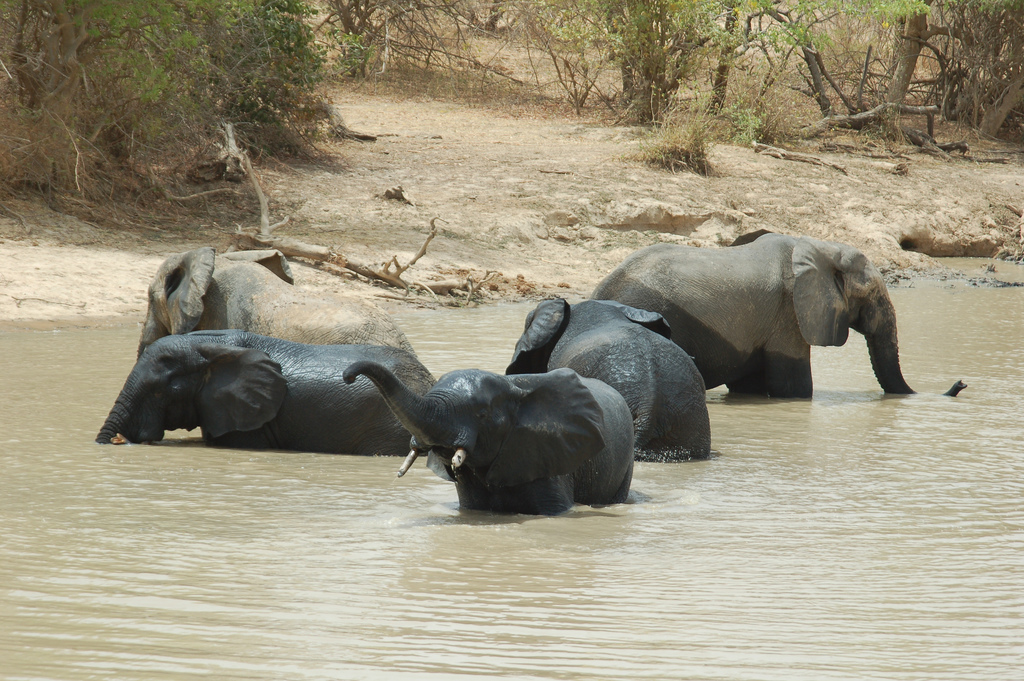
© Roland Hunziker https://www.flickr.com/photos/rolandh/, CC BY-SA 2.0 Resized from original. (This derivative is under the same CC BY-SA license.)
World Heritage Research
Discover scientific research and academic studies that deepen our understanding of W-Arly-Pendjari Complex from its history and significance to its conservation, management, and contemporary challenges.
-
Spotted! Remote camera traps used in a novel design reveal a perilous situation for the Critically Endangered Northwest African cheetah ( Acinonyx jubatus hecki ) in a conflict‐affected protected area in Benin
A critically endangered subspecies of the Northwest African cheetah (Acinonyx jubatus hecki) faces severe population threats within the W-Arly-Pendjari Complex, Benin, due to violent extremism and conflict. Using a novel dual-placement camera trap design over three biennial surveys, researchers estimated a density of 0.26 ± 0.10 individuals per 100 km² across the study area, with zero detections in adjacent hunting zones. Pendjari National Park appears to be a core habitat for this subspecies, but its population is alarmingly small, emphasizing the urgent need for conservation intervention. The study highlights the effectiveness of low-risk fieldwork methods in conflict-affected regions and underscores the necessity of targeted protection and financial support to safeguard this iconic species and its prey.
Drouilly, M., Ipavec, A., Grente, O., Horion, R., Ouindeyama, A., Henschel, P., Lapeyre, V., Chabi N’Diaye, Y., Shams, A., Breitenmoser, C., & Durant, S. M. (2025). Spotted! Remote camera traps used in a novel design reveal a perilous situation for the Critically Endangered Northwest African cheetah ( Acinonyx jubatus hecki ) in a conflict‐affected protected area in Benin. Ecological Solutions and Evidence, 6(2). Portico. https://doi.org/10.1002/2688-8319.70036
View Publication Record | Read Publication -
Dynamiques des changements environnementaux des réserves forestières transfrontalières sous l’emprise des groupes terroristes : cas du complexe W-Arly-Pendjari (WAP) entre le Bénin, le Burkina Faso et le Niger
Terrorist occupation of the W-Arly-Pendjari (WAP) Complex—spanning Benin, Burkina Faso, and Niger—has significantly altered environmental dynamics. Satellite analysis from 2002 to 2022 reveals increased degradation in areas controlled by armed groups, while neighboring villages experienced vegetation recovery due to population displacement. This study quantifies these changes, correlating them with the location and evolution of terrorist attacks using the Normalized Difference Vegetation Index (NDVI). The findings underscore the dual impact of terrorism on biodiversity conservation and local livelihoods, highlighting how strategic control over transboundary forest reserves disrupts both ecological stability and socio-economic mobility.
Sanou, B., & Zoungrana, T. P. (2024). Dynamiques des changements environnementaux des réserves forestières transfrontalières sous l’emprise des groupes terroristes : cas du complexe W-Arly-Pendjari (WAP) entre le Bénin, le Burkina Faso et le Niger. European Scientific Journal, ESJ, 20(35), 235. https://doi.org/10.19044/esj.2024.v20n35p235
View Publication Record | Read Publication -
Illegal wildlife trade: An analysis of carnivore products found in markets in Benin and Niger
A study analyzing illegal wildlife trade (IWT) in Benin and Niger revealed widespread circulation of carnivore products, including multiple lion skins, with a significant portion originating from international trade. While some products likely originated from the W-Arly-Pendjari (WAP) Complex—a critical refuge for threatened species—trade patterns were more strongly influenced by proximity to international transport hubs than to the complex itself. This suggests extensive cross-border trafficking, posing severe threats to local populations of carnivores such as African civets, servals, leopards, and hyenas. The findings provide a baseline for monitoring IWT and assessing intervention strategies to combat illegal wildlife trafficking.
Gerstenhaber, C., Ipavec, A., Lapeyre, V., Plowman, C., Chabi-N’Diaye, Y., Tevoedjre, F., Amoussa, C. A., Siddo, O. S., Aboubacar, H. A., & Durant, S. M. (2024). Illegal wildlife trade: An analysis of carnivore products found in markets in Benin and Niger. Global Ecology and Conservation, 51, e02880. https://doi.org/10.1016/j.gecco.2024.e02880
View Publication Record | Read Publication -
Perilous state of critically endangered Northwest African cheetah (Acinonyx jubatus hecki) across the Sudano‐Sahel
A critically endangered subspecies of the Northwest African cheetah (Acinonyx jubatus hecki) persists at alarmingly low densities, with estimates ranging from 0.17 to 0.37 individuals per 100 km² in two key strongholds: Pendjari (W-Arly-Pendjari Complex) and Zakouma (Greater Zakouma Ecosystem). Using camera trap surveys and spatially explicit capture-recapture methodologies, researchers detected only nine cheetahs during the dry season in Pendjari (2021), four in Zakouma (2023), and none in Siniaka Minia. These findings suggest an overall population size of 68 ± 29 individuals across the studied areas, among the lowest recorded for cheetahs in Africa. The study highlights severe threats from human encroachment and livestock presence, emphasizing the urgent need for regional conservation strategies, genetic monitoring, and international awareness to prevent further decline.
Shams, A., Farhadinia, M. S., O’Riain, M. J., Gaylard, A., Smit, M., Fraticelli, C., Koutou, M., Clement, K. B., Durant, S. M., Melzheimer, J., & Naude, V. N. (2024). Perilous state of critically endangered Northwest African cheetah (Acinonyx jubatus hecki) across the Sudano‐Sahel. Animal Conservation, 28(2), 208–223. Portico. https://doi.org/10.1111/acv.12974
View Publication Record | Read Publication -
Cost effective assessment of human and habitat factors essential for critically endangered lions in West Africa
Lion occupancy in the W-Arly-Pendjari (WAP) complex, West Africa's last stronghold for critically endangered lions, is highest in areas with abundant riparian forest cover, minimal proximity to hunting concessions, and significant pastoralist activities. This study used a cost-effective, scalable occupancy framework combining spoor and line transect data to identify key landscape-level factors limiting lion distribution and prey density. Notably, prey density correlated strongly with evapotranspiration, while hyaena occupancy was inversely related to anthropogenic pressures but positively linked to dense vegetation and overall prey abundance. The findings underscore the critical role of transboundary conservation strategies in mitigating threats like illegal hunting and grazing, offering actionable insights for large carnivore preservation.
Kiki, M. A. D., Astaras, C., Montgomery, R. A., Henschel, P., Tehou, A., Macdonald, D., & Bauer, H. (2021). Cost effective assessment of human and habitat factors essential for critically endangered lions in West Africa. Wildlife Biology, 2021(4). https://doi.org/10.2981/wlb.00848
View Publication Record | Read Publication -
Comparable space use by lions between hunting concessions and national parks in West Africa
Despite higher human presence and road density, lions in West Africa exhibit comparable space use between national parks and hunting concessions. A large-scale camera survey across the W-Arly-Pendjari Complex revealed that lion occupancy was driven primarily by prey availability, which remained consistent between these land-use types. While national parks are typically intended as refuges from human pressures, this study found no spatial avoidance of hunting concessions (HCs), possibly due to the lions' reliance on depleted prey populations and preferred habitat characteristics in HCs. The research combined occupancy modeling with structural equation modeling to analyze 21,430 trap-nights from 2016 to 2018, assessing the relative effects of environmental, ecological, and anthropogenic variables. Key findings suggest that enhancing water availability and reducing human disturbance at park edges could indirectly influence lion space use, offering potential management interventions for this Critically Endangered species in degraded landscapes.
Mills, K. L., Harissou, Y., Gnoumou, I. T., Abdel‐Nasser, Y. I., Doamba, B., & Harris, N. C. (2020). Comparable space use by lions between hunting concessions and national parks in West Africa. Journal of Applied Ecology, 57(5), 975–984. Portico. https://doi.org/10.1111/1365-2664.13601
View Publication Record | Read Publication -
Gastrointestinal parasite community in the critically endangered West African lion
A comparative analysis of gastrointestinal parasite communities in West African lions, particularly those in the critically endangered W-Arly-Pendjari (WAP) population, reveals lower species richness than previously observed in Southern and East African lion populations. The study identified at least five distinct parasite species from fecal samples collected in Burkina Faso and Niger, using fecal flotation and sedimentation tests. This finding suggests potential impacts on lion health and resilience due to prey depletion and habitat fragmentation, emphasizing the need for further research into the ecological and conservation implications of these parasites.
Kruszka, S., & Harris, N. C. (2020). Gastrointestinal parasite community in the critically endangered West African lion. https://doi.org/10.1101/2020.06.09.136176
View Publication Record | Read Publication -
First camera survey in Burkina Faso and Niger reveals human pressures on mammal communities within the largest protected area complex in West Africa
A first-of-its-kind camera survey in Burkina Faso and Niger reveals that human activities, particularly livestock grazing and resource gathering, significantly impact mammal behavior within the W-Arly-Pendjari (WAP) Complex, the largest protected area in West Africa. While these pressures did not affect species richness or composition, they notably reduced mammal activity, with wild ungulates showing the greatest sensitivity to livestock presence. The study highlights the complex interplay between human and natural systems, shifting the WAP's conservation mandate from nature protection alone to a dynamic coupled ecosystem approach.
Harris, N. C., Mills, K. L., Harissou, Y., Hema, E. M., Gnoumou, I. T., VanZoeren, J., Abdel‐Nasser, Y. I., & Doamba, B. (2019). First camera survey in Burkina Faso and Niger reveals human pressures on mammal communities within the largest protected area complex in West Africa. Conservation Letters, 12(5). Portico. https://doi.org/10.1111/conl.12667
View Publication Record | Read Publication -
Local Perceptions of Interactions Between Elephants and Borassus Aethiopum Mart. (Arecaceae) in the Pendjari National Park in Benin
A significant increase in elephant populations within the Pendjari National Park, part of the W-Arly-Pendjari Complex, has been linked to high poaching pressure in transboundary parks. This migration has led to substantial pressure on tree species, including Borassus aethiopum, a dioecious palm. The study, involving 53 respondents from different socio-professional categories, found consensus among administrators, ecoguards, and local professional hunters regarding the relationship between elephants and B. aethiopum. The research suggests that a regional approach to protect elephant populations could mitigate migration and its impacts on vegetation. Semi-structured interviews were used to gather perceptions on causes, damage, consequences, and management options.
Houndonougbo, J. S. H., Salako, V. K., Idohou, R., Azihou, F. A., Assogbadjo, A. E., & Glèlè Kakaï, R. (2017). LOCAL PERCEPTIONS OF INTERACTIONS BETWEEN ELEPHANTS AND BORASSUS AETHIOPUM MART. (ARECACEAE) IN THE PENDJARI NATIONAL PARK IN BENIN. BOIS & FORETS DES TROPIQUES, 331, 33–43. https://doi.org/10.19182/bft2017.331.a31324
View Publication Record | Read Publication -
Protection status and national socio‐economic context shape land conversion in and around a key transboundary protected area complex in West Africa
A key transboundary protected area complex in West Africa, the W-Arly-Pendjari Complex, shows significant spatial heterogeneity in anthropogenic pressure, with high protection status areas more effective at preventing land conversion. The study, using a novel methodology to compare land cover change across large remote areas, found widespread agricultural expansion outside protected areas over 13 years. Differences in cropland expansion rates between countries suggest a link to rural population growth. These findings highlight the need for comprehensive assessments that leverage remote sensing data to better understand and monitor the ecological outcomes of transboundary conservation efforts.
Schulte to Bühne, H., Wegmann, M., Durant, S. M., Ransom, C., de Ornellas, P., Grange, S., Beatty, H., & Pettorelli, N. (2017). Protection status and national socio‐economic context shape land conversion in and around a key transboundary protected area complex in West Africa. Remote Sensing in Ecology and Conservation, 3(4). Portico. https://doi.org/10.1002/rse2.47
View Publication Record | Read Publication -
Transboundary protected areas management: experiences from W-Arly-Pendjari parks in West Africa
Transboundary collaboration in the W-Arly-Pendjari (WAP) Complex has proven effective in enhancing biodiversity conservation across West African nations. Funded initiatives, including those by the European Union and Global Environment Facility (GEF), have facilitated harmonized management strategies, regional patrol systems, and biodiversity surveys, significantly reducing threats to protected areas. A key achievement is the establishment of a regional coordination system that unites stakeholders from Burkina Faso, Mali, and Niger, alongside innovative small grant programs supporting rural livelihoods linked to conservation efforts. This model demonstrates how transboundary approaches can strengthen long-term biodiversity protection, offering a replicable framework for global conservation funding.
Amahowé, I. O., Houessou, L. G., Ashanti, S., & Tehou, A. C. (2013). Transboundary protected areas management: experiences from W-Arly-Pendjari parks in West Africa. Parks, 19(2), 95–105. https://doi.org/10.2305/iucn.ch.2013.parks-19-2.ioa.en
View Publication Record | Read Publication