
World Heritage Identification Number: 1140
World Heritage since: 2004
Category: Cultural Heritage
WHE Type: Historic Cities & Urban Areas
Transboundary Heritage: Yes
Endangered Heritage: No
Country: Benin, Togo
Continent: Africa
UNESCO World Region: Africa
Map
The Cultural Landscape of Koutammakou, the Land of the Batammariba
The cultural landscape of Koutammakou, situated along the border between northern Togo and Benin, stands as a unique testament to the rich cultural heritage of the Batammariba people. Inscribed as a UNESCO World Heritage Site in 2004, this region showcases a distinctive architectural style that reflects the social structure, spiritual beliefs, and deep connection between the people and their environment.
More to come…UNESCO Description of the World Heritage Site
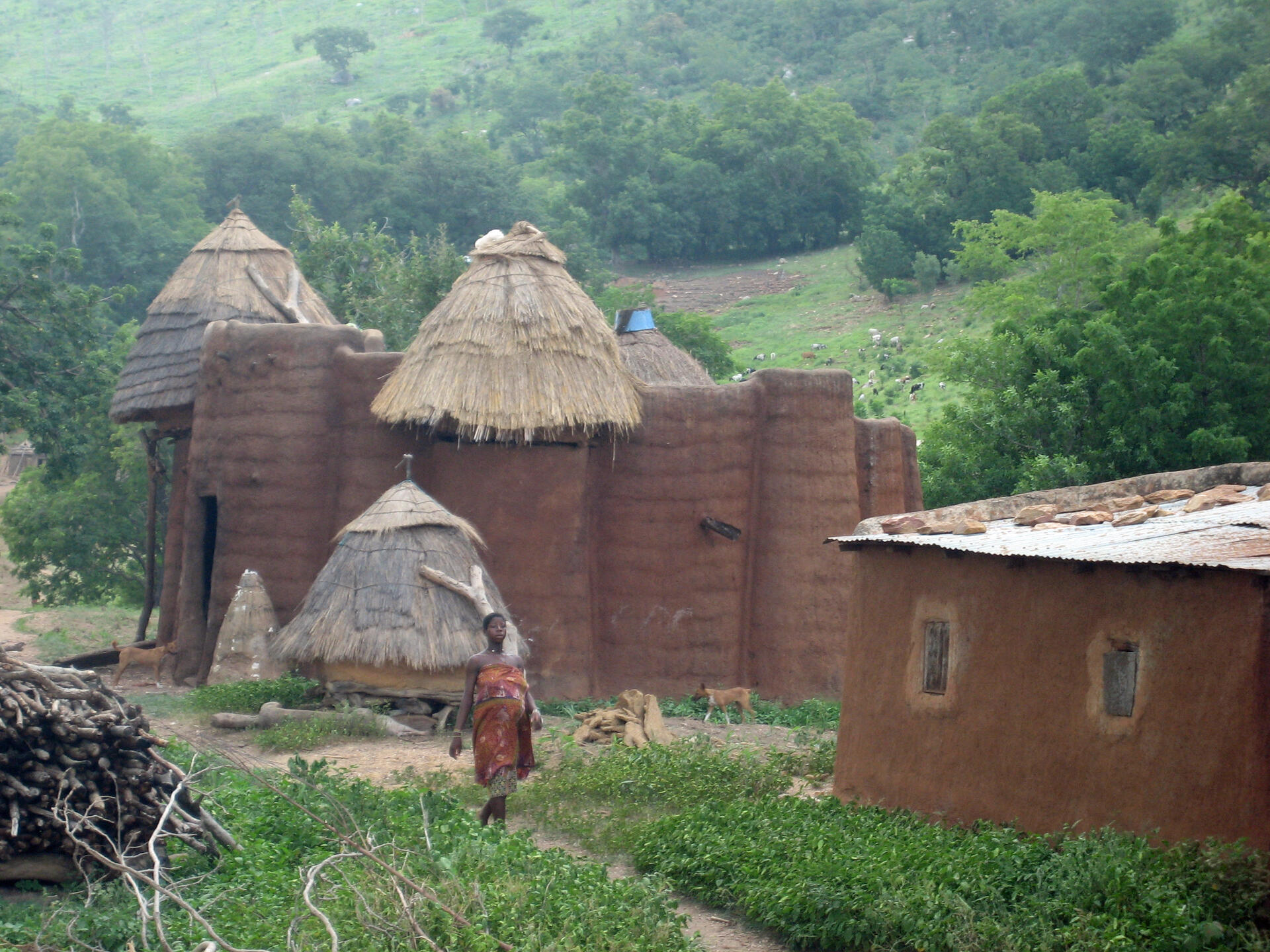
The Koutammakou landscape in north-eastern Togo and neighbouring Benin is home to the Batammariba, whose remarkable mud tower-houses are known as takienta (sikien in the plural). Nature is strongly associated with the rituals and beliefs of society here. The landscape is exceptional due to the architecture of the tower-houses which reflect the social structure; its farmland and forest; and the associations between people and landscape. The buildings are grouped in villages, which also include ceremonial spaces, springs, sacred rocks and sites reserved for initiation ceremonies.
UNESCO Justification of the World Heritage Site
Criterion (v): Koutammakou is an outstanding example of a traditional settlement system that is still going strong to this day, is subject to traditional and sustainable systems and practices, and reflects the unique culture of the Batammariba, particularly the mud tower-houses known as sikien (takienta in the singular).
Criterion (vi): Koutammakou is an eloquent testimony to the strength of the spiritual association between people and landscape, as manifested in the harmony between the Batammariba and the surrounding natural resources.
Encyclopedia Record: Koutammakou
Koutammakou, the Land of the Batammariba is a cultural landscape designated in 2004 as a UNESCO World Heritage Site at the border between northern Togo and Benin. The area features traditional mud tower-houses which remain the preferred style of living. The traditional mud houses are known as a national symbol of Togo. Many of the mud houses have two floors and some of them have flat roofs.Additional Site Details
Area: 271,826 hectares
Number of Components: 2
(vi) — Directly associated with events or living traditions
Coordinates: 10.1480833333 , 1.1002222222
World Heritage Research
Discover scientific research and academic studies that deepen our understanding of Koutammakou, the Land of the Batammariba from its history and significance to its conservation, management, and contemporary challenges.
-
From the inscription to the extension of Koutammakou, the Land of the Batammariba, World Heritage Site: An example of successful transnational cooperation between Benin and Togo for the preservation of the site
Koutammakou, the Land of the Batammariba, stands as a testament to successful transnational cooperation between Benin and Togo for the preservation of a unique cultural landscape. Initially inscribed on the World Heritage List in 2004 for its Togolese part, this living ecosystem was extended to include Beninese territory by 2021, restoring its territorial integrity. The study highlights how this collaboration has not only preserved the site but also enhanced its management for local Batammariba communities. The Sikien earthen tower houses, symbols of identity and harmony with nature, remain central to this landscape. This initiative underscores the potential of transboundary efforts in safeguarding cultural heritage, offering a model for similar conservation challenges globally.
Barry, A., Akogni, P., Ogou, F., Alitonou, E., Chen, X., Tidjougouna, L., & Moriset, S. (2023). From the inscription to the extension of Koutammakou, the Land of the Batammariba, World Heritage Site: An example of successful transnational cooperation between Benin and Togo for the preservation of the site. Managing Transnational UNESCO World Heritage Sites in Africa, 147–156. https://doi.org/10.1007/978-3-030-80910-2_13
View Publication Record | Read Publication -
Limite et distance au Koutammakou
A recent analysis highlights how the traditional practices of the Batammariba people in Koutammakou exemplify effective social distancing long before it became a global necessity. These practices, rooted in ancestral customs, demonstrate humanity's vulnerability and the importance of maintaining spatial boundaries to mitigate risks, offering valuable insights for contemporary public health measures. The study draws on ethnographic observations and cultural records to illustrate how the Batammariba's approach to distance—whether in social interactions or architectural designs—can serve as a model for understanding and implementing sustainable distancing strategies.
Sewane, D. (2020). Limite et distance au Koutammakou. Esprit, Décembre(12), 24–26. https://doi.org/10.3917/espri.2012.0024
View Publication Record | Read Publication -
N’Koué Bantée, Kpakou
A collaborative effort between two Togolais and a French ethnologist reveals the sacred landscapes of Koutammakou, a UNESCO World Heritage Site in northern Togo. The research uncovers the deep cultural significance of these sites, rooted in the Batammariba people's history, origins, beliefs, and their profound connection to ancestral land. Through extensive fieldwork, one author mapped out the sacred places, while another provided insightful interpretations and stunning photography, enriching the narrative with visual and textual depth. The study offers a rare glimpse into the spiritual and social fabric of this unique region, blending historical context with ethnographic detail.
Lallemand, S. (2018). N’Koué Bantée, Kpakou Bakoukaléré, Sewane Dominique, 2018, Koutammakou. Lieux sacrés. Journal Des Africanistes, 88-2, 147–149. https://doi.org/10.4000/africanistes.7390
View Publication Record | Read Publication -
Lehmbau als Weltkulturerbe
UNESCO World Heritage designation significantly alters the preservation and renovation of earthen architecture, with both positive protections and new challenges emerging. A comparative study of three sites—Aït-Ben-Haddou (Morocco), Fujian Tulou (China), and Koutammakou’s Takienta (Togo)—reveals that while heritage status enhances global recognition and funding, it also introduces stricter regulations that can limit traditional building practices and community autonomy. Earthen materials, though sustainable, pose unique conservation hurdles due to their vulnerability to erosion and moisture, requiring specialized techniques for renovation. The research combines on-site analysis, workshops (e.g., in Asslim, Morocco), and cross-case comparisons to assess how heritage designation reshapes usage, threats, and cultural significance across diverse contexts.
Ettl, J. (2017). Lehmbau als Weltkulturerbe. TU Wien. https://doi.org/10.34726/HSS.2017.35310
View Publication Record | Read Publication -
The Cultural Diversity and Mission of Tamberma in Koutammakou in the Republic of Togo in West Africa
Koutammakou, the Land of the Batammariba, is home to the Tamberma people, whose cultural and religious practices are deeply rooted in a belief system centered around 'Petish,' a form of animistic worship that serves as both a spiritual guide and a protective force against malevolent entities. This study highlights the unique societal structure of the Tamberma, where village chiefs not only govern communal affairs but also play pivotal roles in religious leadership. The research emphasizes the need for a nuanced missionary approach that respects local traditions, promotes literacy, and supports the creation of scriptures in the Tamberma language to facilitate effective evangelization. It underscores the importance of understanding and addressing the constraints faced by missionaries while fostering mutual learning between them and the Tamberma community.
Chang, H. T. (2016). The Cultural Diversity and Mission of Tamberma in Koutammakou in the Republic of Togo in West Africa. The Journal of Korean Evangelical Missiological Society, 34(0), 193–239. https://doi.org/10.20326/kems.34.2.193
View Publication Record | Read Publication -
Carnets de terrain au Koutammakou (Togo)
Field notebooks from Koutammakou, Togo, reveal significant insights into the cultural and environmental dynamics of the UNESCO-listed Batammariba lands. The study documents traditional practices, architectural techniques, and ecological adaptations, providing a detailed account of how the Batammariba people have sustained their way of life in this arid region. By analyzing these field notes, researchers uncover the resilience of local communities in preserving their heritage amid environmental challenges. The approach combines ethnographic observations with archival analysis, offering a unique blend of historical and contemporary perspectives on this World Heritage Site.
Sewane, D. (2013). Carnets de terrain au Koutammakou (Togo). Revue de La BNF, n° 45(3), 40–48. https://doi.org/10.3917/rbnf.045.0040
View Publication Record | Read Publication