
World Heritage Identification Number: 899
World Heritage since: 1999
Category: Cultural Heritage
WHE Type: Agriculture Landscapes, Parks & Gardens
Transboundary Heritage: No
Endangered Heritage: No
Country: 🇳🇱 Netherlands (Kingdom of the)
Continent: Europe
UNESCO World Region: Europe and North America
Map
The Beemster Polder: A Masterpiece of Land Reclamation and Renaissance Planning
The Beemster Polder, located in the province of North Holland in the Netherlands, stands as a testament to human ingenuity and the harmonious blend of art and science in the realm of land reclamation. Inscribed as a UNESCO World Heritage Site in 1999, this remarkable landscape offers a unique insight into the Dutch history of poldering and the application of classical and Renaissance planning principles.
More to come…UNESCO Description of the World Heritage Site
The Beemster Polder, dating from the early 17th century, is is an exceptional example of reclaimed land in the Netherlands. It has preserved intact its well-ordered landscape of fields, roads, canals, dykes and settlements, laid out in accordance with classical and Renaissance planning principles.
UNESCO Justification of the World Heritage Site
Criterion (i): The Beemster Polder is a masterpiece of creative planning, in which the ideals of antiquity and the Renaissance were applied to the design of a reclaimed landscape.
Criterion (ii): The innovative and intellectually imaginative landscape of the Beemster Polder had a profound and lasting impact on reclamation projects in Europe and beyond.
Criterion (iv): The creation of the Beemster Polder marks a major step forward in the interrelationship between humankind and water at a crucial period of social and economic expansion.
Encyclopedia Record: Beemster
Beemster is a former municipality in the Netherlands, in the province of North Holland. The Beemster is the first polder in the Netherlands reclaimed from a lake, the water extracted by windmills between 1609 and 1612. The original well-ordered landscape of fields, roads, canals, and dykes has been preserved intact. A grid of canals parallels the grid of roads in the Beemster. The larger feeder canals are offset by approximately one kilometer from the larger roads.Additional Site Details
Area: 7,208 hectares
Number of Components: 1
(ii) — Significant interchange of human values
(iv) — Outstanding example of a type of building or landscape
Coordinates: 52.54888889 , 4.911111111
Image
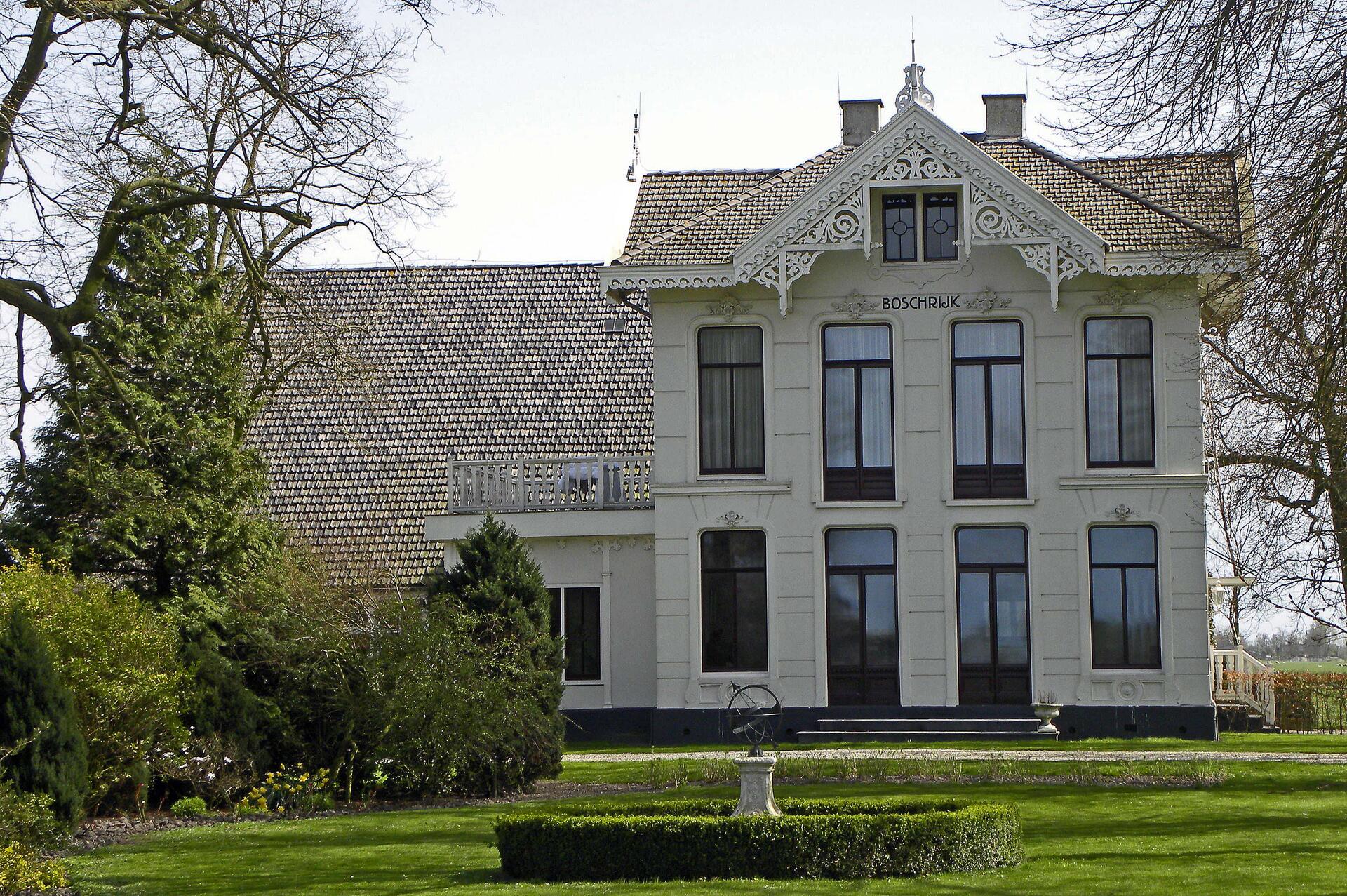
© Arhu, CC BY-SA 3.0 Resized from original. (This derivative is under the same CC BY-SA license.)
World Heritage Research
Discover scientific research and academic studies that deepen our understanding of Droogmakerij de Beemster (Beemster Polder) from its history and significance to its conservation, management, and contemporary challenges.
-
Luctor et Emergo : territorial sovereignty as contested paradigm in the United Provinces
This study challenges the traditional static relationship between territory and sovereignty, revealing that sovereignty in the Dutch Republic was dynamic and fluid. It argues that the notion of territorial sovereignty, which emerged during the revolt against Spain, does not align with the sociopolitical framework of the newly established Republic. The research examines key events such as the Union of Utrecht, the Act of Abjuration, and the drainage of Lake Beemster, alongside celebratory depictions like the Siege of Leiden, to support this argument. By analyzing these moments, the study offers a nuanced understanding of how sovereignty was practiced and contested in Dutch history.
Pischedda, L. E. (2026). Luctor et Emergo : territorial sovereignty as contested paradigm in the United Provinces. Intellectual History Review, 36(1), 173–193. https://doi.org/10.1080/17496977.2026.2613318
View Publication Record | Read Publication -
When to stop? A visual impact assessment framework for incremental urban and community expansion in rural heritage landscapes
A new Visual Impact Assessment (VIA) framework provides a transparent, replicable method to determine acceptable thresholds for incremental urban and community expansion in rural heritage landscapes. Applied to the Beemster Polder, the framework integrates point cloud-enhanced GIS analysis, multi-temporal Key Observation Point (KOP) data from Street View Imagery (SVI), and 3D Gaussian Splatting (3DGS) visualizations to quantify cumulative landscape change. Public acceptability, gathered through questionnaires and expert interviews supported by VR eye-tracking, informs decision-making alongside spatial character metrics and visibility diagnostics. The framework offers case-calibrated reference bands for review, ensuring heritage-sensitive development while supporting stage-comparable assessments in similar rural-urban fringes.
Peng, Y., Nijhuis, S., Wang, Z., Yu, Y., Verbree, E., & van Oosterom, P. (2026). When to stop? A visual impact assessment framework for incremental urban and community expansion in rural heritage landscapes. Sustainable Cities and Society, 143, 107364. https://doi.org/10.1016/j.scs.2026.107364
View Publication Record | Read Publication -
A UAV–3DGS–VR Workflow for Scenario-Comparable Immersive Review in Heritage Landscapes
A novel, low-cost UAV-based workflow enables immersive comparison of alternative construction scenarios in heritage landscapes. By integrating multi-angle UAV imagery with 3D Gaussian Splatting (3DGS) and Unity-based virtual reality (VR), researchers reconstructed the Beemster Polder World Heritage site with high visual fidelity, as validated by PSNR and SSIM metrics. Behavioral data from eye-tracking and head-motion analysis further supported the subjective ranking of scenarios, revealing that one alternative (M1) was perceived as more compatible than others in this pilot study. This approach bridges reality capture, immersive scenario review, and behavioral evidence, offering a reusable framework for heritage landscape assessments.
Li, X., Sheng, W., Tang, Y., Yu, Y., & Peng, Y. (2026). A UAV–3DGS–VR Workflow for Scenario-Comparable Immersive Review in Heritage Landscapes. Drones, 10(6), 404. https://doi.org/10.3390/drones10060404
View Publication Record | Read Publication -
Disentangling subsidence
Subsidence, a significant global issue, is accelerating faster than sea-level rise in many regions, exacerbating climate and societal challenges. This study reveals that human activities, such as urban development, groundwater extraction, and oil/gas/salt mining, are the primary drivers of subsidence, particularly in coastal areas like the Netherlands and Northern Italy. The research introduces a holistic modeling approach using satellite imagery to quantify the contributions of various processes—such as clay shrinkage, organic matter oxidation, and compaction—to total subsidence. Applied across multiple Dutch sites (e.g., Beemster Polder, Almere) and Ravenna’s coastline, this method improves mitigation strategies by disentangling complex subsurface dynamics, highlighting the need for integrated solutions to address both natural and human-induced subsidence.
Verberne, M. A. M. Disentangling subsidence. https://doi.org/10.33540/3008
View Publication Record | Read Publication -
The Principle of Automatic Control in Ancient Hydraulic Engineering Works: A Comparative Study of the Dutch Beemster Polder and China's Dujiangyan Irrigation System
A comparative analysis of the Beemster Polder and China's Dujiangyan Irrigation System reveals two distinct yet universal control paradigms in ancient hydraulic engineering. The study identifies a 'natural guidance type' system in Dujiangyan, which leverages terrain reshaping to activate natural forces for self-sustaining water and sediment balance, reflecting Oriental philosophical principles. Conversely, the Beemster Polder employs a 'mechanical intervention type' system, utilizing a hierarchical canal network and windmill-driven mechanisms to dynamically regulate hydrological fluctuations, embodying Heraclitus' concept of flux. This research demonstrates that both systems, despite their differences, share a universal control logic applicable to modern ecological engineering.
Fang, Y., Rong, D., & Lou, Y. (2025). The Principle of Automatic Control in Ancient Hydraulic Engineering Works: A Comparative Study of the Dutch Beemster Polder and China’s Dujiangyan Irrigation System. 2025 IEEE 26th China Conference on System Simulation Technology and Its Applications (CCSSTA), 696–702. https://doi.org/10.1109/ieeeconf65522.2025.11137183
View Publication Record | Read Publication -
Disentangling Subsidence from Shallow Soil Processes and Gas Extraction in a Dutch UNESCO World Heritage Polder with InSAR and Data Assimilation
A UNESCO World Heritage Site, the Beemster Polder, exhibits complex subsidence patterns driven by both shallow soil processes and deep gas extraction. Research reveals that areas with thick surficial peat layers experience over 5 mm/year of subsidence due to shrinkage and oxidation, while deeper clay beds also contribute significantly. Gas extraction is projected to add up to 30 mm of subsidence between 2020-2050. The study used InSAR data and data assimilation techniques to quantify these contributions, offering a comprehensive framework for understanding and mitigating subsidence in vulnerable coastal regions.
Verberne, M., Koster, K., de Bresser, H., & Fokker, P. A. (2025). Disentangling Subsidence from Shallow Soil Processes and Gas Extraction in a Dutch UNESCO World Heritage Polder with InSAR and Data Assimilation. Earth Systems and Environment, 10(5), 6309–6340. https://doi.org/10.1007/s41748-025-00885-8
View Publication Record | Read Publication -
Isotopic reconstruction of short to absent breastfeeding in a 19th century rural Dutch community
Most infants in 19th-century Beemster, a rural Dutch dairy farming community, were not breastfed or were breastfed for only brief periods. This finding challenges the assumption that breastfeeding was the norm in pre-modern Europe. Stable nitrogen and carbon isotope analysis of bone collagen from 277 individuals revealed that cow's milk and paps with sugar were primary infant foods, often introduced within weeks to months of age. Despite factors typically associated with high breastfeeding rates—such as a Protestant environment and dairy farming—Beemster's mothers likely prioritized labor demands, including dairy production, over prolonged breastfeeding. The study highlights the influence of community values, traditions, and workload on infant feeding practices.
Waters-Rist, A. L., de Groot, K., & Hoogland, M. L. P. (2022). Isotopic reconstruction of short to absent breastfeeding in a 19th century rural Dutch community. Plos One, 17(4), e0265821. https://doi.org/10.1371/journal.pone.0265821
View Publication Record | Read Publication
