World Heritage Identification Number: 1410
World Heritage since: 2013
Category: Natural Heritage
WHE Type: Protected Areas & National Parks
Transboundary Heritage: No
Endangered Heritage: No
Country: 🇲🇽 Mexico
Continent: Americas
UNESCO World Region: Latin America and the Caribbean
Map
El Pinacate and Gran Desierto de Altar Biosphere Reserve: A Landscape of Dramatic Contrasts and Scientific Interest
The El Pinacate and Gran Desierto de Altar Biosphere Reserve, inscribed as a UNESCO World Heritage Site in 2013, spans over 714,566 hectares in the Mexican states of Sonora and the Tohono O'odham Nation. This vast reserve presents a unique and visually striking landscape characterized by dramatic contrasts, making it a site of great scientific interest.
More to come…UNESCO Description of the World Heritage Site
The 714,566 hectare site comprises two distinct parts: the dormant volcanic Pinacate Shield of black and red lava flows and desert pavements to the east, and, in the west, the Gran Altar Desert with its ever changing and varied sand dunes that can reach a height of 200 metres. This landscape of dramatic contrast notably features linear, star and dome dunes as well as several arid granite massifs, some as high as 650 metres. The dunes emerge like islands from the sea of sand and harbour distinct and highly diverse plant and wildlife communities, including endemic freshwater fish species and the endemic Sonoran Pronghorn, which is only to be found in northwestern Sonora and in southwestern Arizona (USA). Ten enormous, deep and almost perfectly circular craters, believed to have been formed by a combination of eruptions and collapses, also contribute to the dramatic beauty of the site whose exceptional combination of features are of great scientific interest. The site is also a UNESCO Biosphere Reserve.
UNESCO Justification of the World Heritage Site
Criterion (vii): The property presents a dramatic combination of desert landforms, comprising both volcanic and dune systems as dominant features. The volcanic shield in the property boasts a wide array of volcanic phenomena and geological formations, including a small shield-type volcano. The most visually striking feature is the concentration of a total of 10 enormous, deep and almost perfectly circular Maar (steam blast) craters, believed to originate from a combination of eruptions and collapses. The property is visually outstanding through the stark contrast of a dark-coloured area comprised of a volcanic shield and spectacular craters and lava flows within an immense sea of dunes. The dunes can reach 200 meters in height and contain linear dunes, star dunes and dome dunes, displaying enormous and constantly changing contrasts in terms of form and color. In addition to these predominant features there are several arid granite massifs emerging like islands from the sandy desert flats, ranging between 300 and 650m high. The combination of all these features results in a highly diverse and visually stunning desert landscape.
Criterion (viii): The property’s desert and volcanic landforms provide an exceptional combination of features of great scientific interest. The vast sea of sand dunes that surrounds the volcanic shield is considered the largest and most active dune system in North America. It includes a diverse range of dunes that are nearly undisturbed, and include spectacular and very large star-shaped dunes that occur both singly and in long ridges up to 48km in length. The volcanic exposures provide important complementary geological values, and the desert environment assures a dramatic display of a series of impressive large craters and more than 400 cinder cones, lava flows, and lava tubes. Taken together the combination of earth science features is an impressive laboratory for geological and geomorphological studies.
Criterion (x): The highly diverse mosaic of habitats is home to complex communities and surprisingly high species diversity across many taxonomic groups of flora and fauna. More than 540 species of vascular plants, 44 mammals, more than 200 birds and over 40 reptiles inhabit the seemingly inhospitable desert. Insect diversity is high despite not being fully documented. Several endemic species of plants and animals exist, including two freshwater fish species. One local endemic plant is restricted to a small part of the volcanic shield within the area. Large maternity caves of the migratory Lesser Long-Nosed Bat, which is an important pollinator and seed dispersal vector are found within the property. Noteworthy species include the Sonoran Pronghorn, an endemic subspecies restricted to the South-western Arizona and North-western Sonora and threatened by extinction.
Encyclopedia Record: El Pinacate y Gran Desierto de Altar Biosphere Reserve
El Pinacate and Gran Desierto de Altar Biosphere Reserve is a biosphere reserve and UNESCO World Heritage Site managed by the federal government of Mexico, specifically by Secretariat of the Environment and Natural Resources, in collaboration with the state governments of Sonora and the Tohono O'odham.Additional Site Details
Area: 714,566 hectares
Number of Components: 1
(viii) — Outstanding example representing major earth stages
(x) — Contains most important habitats for biodiversity
Coordinates: 32 , -113.9166666667
IUCN World Heritage Outlook
The 2025 Conservation Outlook on El Pinacate and Gran Desierto de Altar Biosphere Reserve reports the following assessment:
Source: International Union for Conservation of Nature (IUCN) · View assessment
Image
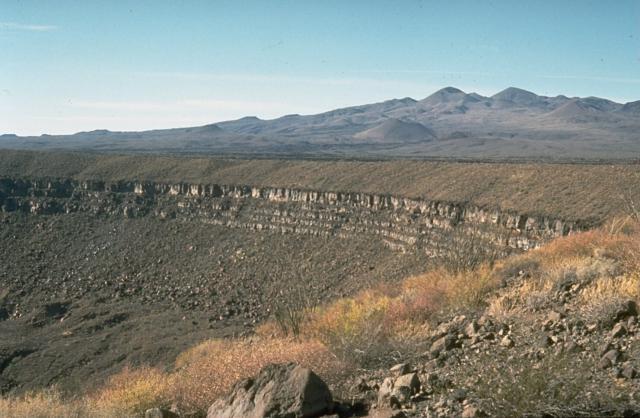
Richard Waitt, U.S. Geological Survey, Public domain
World Heritage Research
Discover scientific research and academic studies that deepen our understanding of El Pinacate and Gran Desierto de Altar Biosphere Reserve from its history and significance to its conservation, management, and contemporary challenges.
-
Factores determinantes del flujo turístico en la Reserva de la Biosfera El Pinacate y Gran Desierto de Altar.
Tourist flow to the El Pinacate and Gran Desierto de Altar Biosphere Reserve is primarily driven by global tourist GDP, health risks (such as COVID-19), inflation rates, and holiday periods. A multiple linear regression model, analyzing visitor data and socioeconomic variables from 2009–2021, revealed these key determinants. The findings provide actionable insights for tourism management, enabling more accurate future visitor projections and supporting sustainable conservation efforts in this UNESCO-listed protected area.
Cáñez Cota, L. A., Borbón Morales, C. G., & Rueda Puente, E. O. (2025). Determining factors of tourist flow in Pinacate y Gran Desierto de Altar Biosphere Reserve. Economía Y Sociedad, 30(67), 1–21. https://doi.org/10.15359/eys.30-67.3
View Publication Record | Read Publication -
Nature interrupted: Impact of the US-Mexico border wall on wildlife
The construction of the US-Mexico border wall has significantly disrupted wildlife migration and survival in the El Pinacate and Gran Desierto de Altar Biosphere Reserve. A study led by ecologist Ganesh Marin Mendez at the University of Arizona used camera traps, infrasound recorders, and environmental DNA analysis to document a notable decrease in mammal presence near the wall and adjacent highways, including species like jaguars, ocelots, and black bears. The wall, exceeding 16 feet in height, has fragmented transboundary populations, threatening genetic diversity and survival of endangered species such as the ferruginous pygmy owl and Mexican gray wolf. Additionally, the wall has severed access to vital water sources like Quitobaquito spring, exacerbating dehydration and starvation among wildlife on the Mexican side. The study underscores the broader ecological consequences of border infrastructure, including habitat fragmentation, loss of genetic diversity, and hindered climate adaptation for species reliant on transboundary movement.
Carrillo, I. (2024). Nature interrupted: Impact of the US-Mexico border wall on wildlife. Knowable Magazine. https://doi.org/10.1146/knowable-062724-2
View Publication Record | Read Publication -
Damage in a saguaro (
Carnegiea gigantea ) population in the El Pinacate and Gran Desierto de Altar Biosphere Reserve, Sonora, MexicoA first-of-its-kind study reveals widespread damage to saguaro cacti (Carnegiea gigantea) populations within the El Pinacate and Gran Desierto de Altar Biosphere Reserve, Mexico. The research identified seven types of damage, with 'shell' being the most prevalent (91% of individuals) followed by 'cactus cortical scaling' (CCS), or epidermal browning (73%). Notably, CCS was linked to significant tissue composition changes and stomata distribution alterations, compromising photosynthetic function. While 89.2% of saguaros were moderately damaged and 7.5% highly damaged, only 3.3% remained undamaged. The study highlights the urgent need for long-term conservation strategies due to the species' prolonged life cycle, exacerbated by climate change and increased UV exposure.
Jiménez‐Sierra, C. L., Arroyo‐Pérez, E., Matias‐Palafox, M. L., Torres‐Orozco, D., Burgos‐Solorio, A., Quintanar‐Isaías, A., González‐Adán, M. d. l. Á., & Vázquez‐Quesada, B. (2023). Damage in a saguaro (
View Publication Record | Read PublicationCarnegiea gigantea ) population in the El Pinacate and Gran Desierto de Altar Biosphere Reserve, Sonora, Mexico. Plant Species Biology, 38(6), 319–331. Portico. https://doi.org/10.1111/1442-1984.12434 -
Introduction to ‘A tribute to Edward P. Glenn (1947–2017): A legacy of scientific environmental assessment and applications in hydrological processes’
A tribute to Edward P. Glenn (1947–2017) celebrates his pioneering work in hydrological processes, particularly focusing on the Colorado River Delta and its transboundary significance. The special issue highlights four key areas: hydrology in the delta, riparian ecosystem water use, plant ecophysiology, and evapotranspiration modeling. Glenn's research, spanning over four decades, advanced ground-based transpiration quantification to validate remote sensing methods, crucial for understanding water balance in dryland deltas. The Colorado River Delta, part of the UNESCO World Heritage Site 'El Pinacate and Gran Desierto de Altar Biosphere Reserve,' plays a vital role in the Northern Gulf of California ecosystem. The 16 studies in this issue honor Glenn's legacy by addressing his core research interests, including improving satellite and airborne remote sensing for evapotranspiration estimation.
Nagler, P. L., & Hultine, K. R. (2021). Introduction to ‘A tribute to Edward P. Glenn (1947–2017): A legacy of scientific environmental assessment and applications in hydrological processes’. Hydrological Processes, 35(6). Portico. https://doi.org/10.1002/hyp.14172
View Publication Record | Read Publication -
About the Artist: Keith Marroquin Poet Connecting People to Place
Keith Marroquin's art, centered on the El Pinacate and Gran Desierto de Altar Biosphere Reserve, serves as a powerful tool for conservation advocacy by fostering emotional connections to wild landscapes. His work captures the untouched beauty of the Sonoran Desert, highlighting its unique features such as sand horses and bleached whale bones while challenging human-made constructs like the U.S./Mexico border wall. Marroquin's perspective, rooted in a deep connection with vast, untouched spaces, reflects a geologic timescale that transcends short-term human concerns, offering comfort and a long-view outlook on environmental change.
Romero, E. K. (2019). About the Artist: Keith Marroquin Poet Connecting People to Place. Arizona Journal of Hispanic Cultural Studies, 23(1), 7–8. https://doi.org/10.1353/hcs.2019.0014
View Publication Record | Read Publication -
Sonoran Desert Network Weavers:Surprising Environmental Successes on the U.S./Mexico Border
This study reveals that collaborative networks spanning the U.S./Mexico border have significantly contributed to environmental conservation successes, particularly within the El Pinacate and Gran Desierto de Altar Biosphere Reserve. By analyzing social network dynamics, water allocation strategies, and cross-border governance, researchers demonstrate how structured cooperation can mitigate challenges posed by political boundaries, such as those affecting the Colorado River Delta. The findings highlight the role of intermediary work and relational patterns in effective natural resource management, offering a model for addressing transboundary conservation issues. Interviews with stakeholders and case studies from shared environments provide empirical evidence supporting these insights.
Laird-Benner, W. (., & Ingram, H. (2010). Sonoran Desert Network Weavers:Surprising Environmental Successes on the U.S./Mexico Border. Environment: Science and Policy for Sustainable Development, 53(1), 6–17. https://doi.org/10.1080/00139157.2011.539943
View Publication Record | Read Publication