World Heritage Identification Number: 554
World Heritage since: 1993
Category: Natural Heritage
WHE Type: Protected Areas & National Parks
Transboundary Heritage: No
Endangered Heritage: No
Country: 🇲🇽 Mexico
Continent: Americas
UNESCO World Region: Latin America and the Caribbean
Map
El Vizcaíno Biosphere Reserve: A Haven for Marine Life
The El Vizcaíno Biosphere Reserve, situated in the heart of the Baja California Peninsula, serves as a significant haven for a diverse array of marine life. Inscribed as a UNESCO World Heritage Site in 1993, this expansive reserve spans over 24,930 square miles, making it the largest wildlife refuge in Mexico. It shares its border with the northern edge of the Valle de los Cirios Protected Area of Flora and Fauna.
More to come…UNESCO Description of the World Heritage Site
Located in the central part of the peninsula of Baja California, the sanctuary contains some exceptionally interesting ecosystems. The coastal lagoons of Ojo de Liebre and San Ignacio are important reproduction and wintering sites for the grey whale, harbour seal, California sea lion, northern elephant-seal and blue whale. The lagoons are also home to four species of the endangered marine turtle.
UNESCO Justification of the World Heritage Site
Criterion (x): The Whale Sanctuary of El Vizcaino contains the most important breeding grounds of the Eastern subpopulation of the North Pacific Grey Whale. Its protection is intricately linked with saving the species from extinction and recovery after near-collapse due to excessive commercial whaling. Many environmental factors, such as depth, temperature, nutrients, and salinity coincide in Ojo de Liebre and San Ignacio lagoons to make them ideal mating, breeding and calving grounds. The lagoons also provide valuable habitat for numerous other marine mammals, such as Bottlenose Dolphin, California Sea Lion and Harbor Seal. Four species of marine turtles have been recorded in the lagoons and adjacent coasts, the most important being the green and the loggerhead sea turtles. The shallow, well-protected lagoons with their mangrove stands are also highly productive nurseries for a diverse fish fauna and boast rich invertebrate fauna, and an impressive natural landscape and seascape. The surrounding wetlands attract an extraordinary diversity and abundance of resident and migratory bird species with several hundreds of thousands of wintering birds. The drier terrestrial areas belong to the Sonoran Desert, well-known for its remarkably diverse flora and fauna and a high degree of endemism.
Encyclopedia Record: El Vizcaíno Biosphere Reserve
The El Vizcaíno Biosphere Reserve, created in 1988, is located in Mulegé Municipality in northern Baja California Sur, at the center of the Baja California Peninsula between the Pacific Ocean and the Gulf of California. With an area of over 24,930 km2 (9,630 sq mi)), it is the largest wildlife refuge in Mexico and borders the northern edge of the Valle de los Cirios Protected Area of Flora and Fauna.Additional Site Details
Area: 369,631 hectares
Number of Components: 2
Coordinates: 27.79222 , -114.22778
IUCN World Heritage Outlook
The 2025 Conservation Outlook on Whale Sanctuary of El Vizcaíno reports the following assessment:
Source: International Union for Conservation of Nature (IUCN) · View assessment
Image
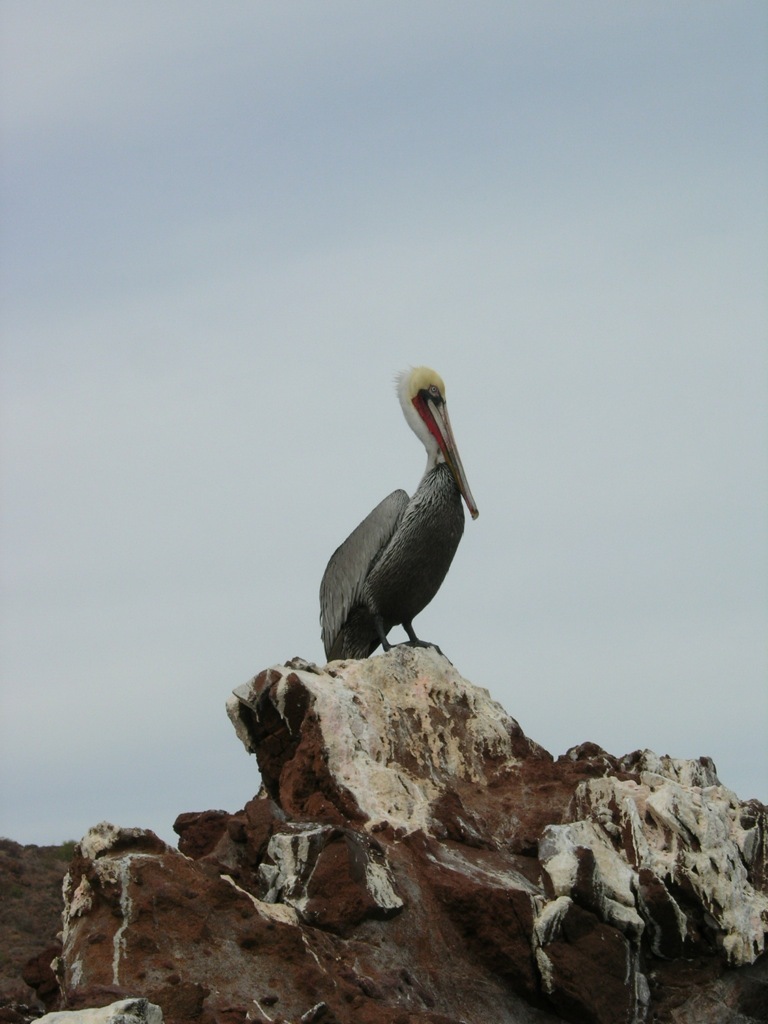
© The Gentle from San Diego, California Republic, CC BY-SA 2.0 Resized from original. (This derivative is under the same CC BY-SA license.)
World Heritage Research
Discover scientific research and academic studies that deepen our understanding of Whale Sanctuary of El Vizcaino from its history and significance to its conservation, management, and contemporary challenges.
-
New fish species added to the ichthyofauna of Laguna Ojo de Liebre, Baja California Sur, México
A recent study has identified eight new fish species in Laguna Ojo de Liebre, Baja California Sur, Mexico, bringing the total ichthyofauna count to 39 species across 25 families. This significant addition updates previous records from two decades ago and suggests potential impacts of anomalous warming events on marine biodiversity. Researchers conducted six seasonal visits between June 2015 and August 2016, employing diving, trapping, hook & line, and gillnet commercial fishing techniques to document the fish species. The findings contribute crucial baseline data before the installation of reef modules aimed at supporting red lobster and fish aggregation in this UNESCO-listed Whale Sanctuary of El Vizcaino.
Civico-Collados, L., & Rosales-Casián, J. A. (2021). New fish species added to the ichthyofauna of Laguna Ojo de Liebre, Baja California Sur, México. Aquatic Research, 4(4), 343–350. https://doi.org/10.3153/ar21029
View Publication Record | Read Publication