World Heritage Identification Number: 1182
World Heritage since: 2005
Category: Natural Heritage
WHE Type: Protected Areas & National Parks
Transboundary Heritage: No
Endangered Heritage: Yes
Country: 🇲🇽 Mexico
Continent: Americas
UNESCO World Region: Latin America and the Caribbean
Map
The Islands and Protected Areas of the Gulf of California: A Natural Laboratory for Marine Biodiversity
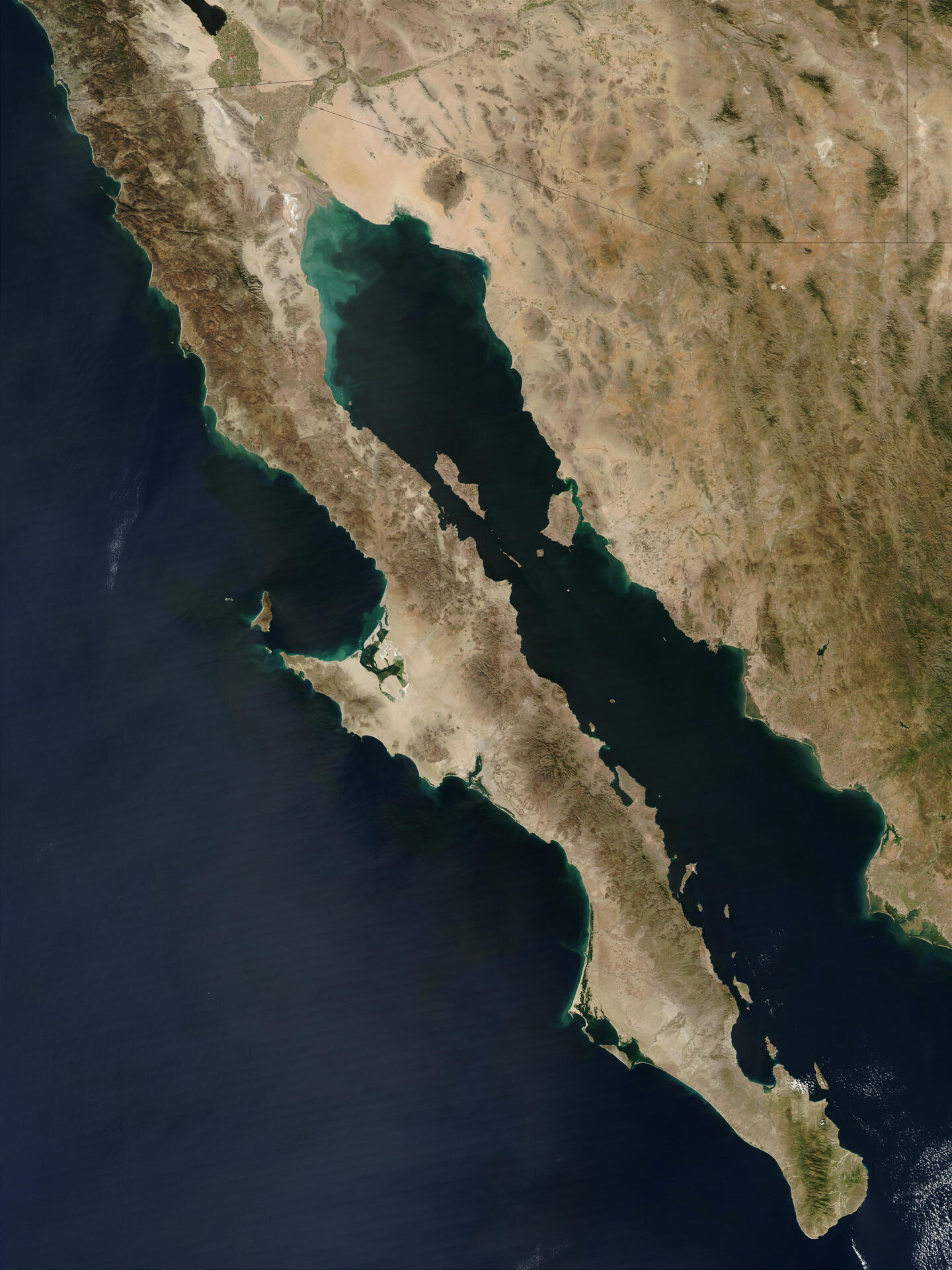
The Islands and Protected Areas of the Gulf of California, inscribed as a UNESCO World Heritage Site in 2005, is a remarkable collection of 244 islands, islets, and coastal areas situated within the Gulf of California in north-eastern Mexico. This region, often referred to as the Sea of Cortez or the Sea of Cortés, has been recognized for its significant role in oceanography and biology, earning the moniker "a natural laboratory for the investigation of speciation."
More to come…UNESCO Description of the World Heritage Site
The site comprises 244 islands, islets and coastal areas that are located in the Gulf of California in north-eastern Mexico. The Sea of Cortez and its islands have been called a natural laboratory for the investigation of speciation. Moreover, almost all major oceanographic processes occurring in the planet’s oceans are present in the property, giving it extraordinary importance for study. The site is one of striking natural beauty in a dramatic setting formed by rugged islands with high cliffs and sandy beaches, which contrast with the brilliant reflection from the desert and the surrounding turquoise waters. It is home to 695 vascular plant species, more than in any marine and insular property on the World Heritage List. Equally exceptional is the number of fish species: 891, 90 of them endemic. The site, moreover, contains 39% of the world’s total number of species of marine mammals and a third of the world’s marine cetacean species.
UNESCO Justification of the World Heritage Site
Criterion (vii): The serial property is of stunning landscape beauty with dramatic contrasts between the rugged and seemingly inhospitable islands, coastal deserts and the brilliant reflection from the surrounding turquoise waters. High rocky cliffs and sandy beaches in countless forms and colours rim the islands and coasts. The beauty of the desert landscape is complemented by the fascinating and highly diverse desert vegetation and the ubiquitous birds. To the south, the islands are covered with deciduous vegetation and stand out from the vast blue sea. The diversity and abundance of marine life associated with spectacular submarine terrain and unusual water transparency turn the underwater seascape into a globally renowned diver’s paradise.
Criterion (ix): A major foundation of the Gulf of California's phenomenal marine productivity are nutrient-rich upwelling oceanic currents supporting abundant phytoplankton and zooplankton, which in turn provide nurseries for larval reef fish. However, many other oceanographic processes, such as wind-driven currents, tidal mixing and thermohaline circulation, occur in the property, giving it extraordinary importance for conservation and the study of marine and coastal processes. The Gulf of California is notable for containing ecologically distinct bridge islands, populated across past land bridges, and oceanic islands populated by sea and air. The multitude and diversity of islands in terms of origin, size, environmental conditions and distance to the mainland has enabled an ongoing evolutionary speciation and endemism of major significance for conservation and science. The many components of the property are both part of a vast landscape and distinctive in many ways, ranging from a variety of pelagic and benthic environments to coral reefs, as well as mudflats, coastal wetlands and various types of desert and deciduous forest.
Criterion (x): The diversity of terrestrial and marine life in the property is extraordinary and constitutes a global priority for biodiversity conservation. On land, the close to 700 species of vascular plants are notable within a desert environment. There are 115 species of reptiles, almost half of them endemic, in some cases even to individual islands. 154 land bird species have been recorded and the property is of particular importance to migratory species. Almost 900 species of fish have been documented with some 90 species occurring exclusively in the Gulf of California or parts of it. These include the critically endangered species Black Sea Bass and Totoaba, as well as the vulnerable Basking Shark. The serial property provides habitat for roughly one third of the world’s total number of marine mammals, sometimes in impressive numbers, for example huge colonies of California Sea Lion. The five species of dolphin include the critically endangered Gulf Porpoise or Vaquita. Eleven species of whale visit the northern Gulf, such as the endangered Blue Whale and Fin Whale and the vulnerable Sperm Whale. The coral reef at Cabo Pulmo is one of the most important in the Gulf of California and in the eastern Pacific. The marine habitats also harbour large concentrations of macro-invertebrate life with many endemic species, especially in the intertidal zones.
Encyclopedia Record: Gulf of California
The Gulf of California, also known as the Sea of Cortés or Sea of Cortez, or less commonly as the Vermilion Sea, is a marginal sea of the Pacific Ocean that separates the Baja California peninsula from the Mexican mainland. It is bordered by the states of Baja California, Baja California Sur, Sonora, and Sinaloa with a coastline of approximately 4,000 km (2,500 mi). Rivers that flow into the Gulf of California include the Colorado, Fuerte, Mayo, Sinaloa, Sonora, and the Yaqui. The surface of the gulf is about 160,000 km2 (62,000 sq mi). Maximum depths exceed 3,000 meters (9,800 ft) because of the complex geology, linked to plate tectonics.Additional Site Details
Area: 688,558 hectares
Number of Components: 12
(ix) — Outstanding example representing ecological and biological processes
(x) — Contains most important habitats for biodiversity
Coordinates: 27.62667 , -112.54583
IUCN World Heritage Outlook
The 2025 Conservation Outlook on Islands and Protected Areas of the Gulf of California reports the following assessment:
Source: International Union for Conservation of Nature (IUCN) · View assessment
Image
Unknown, Public domain
World Heritage Research
Discover scientific research and academic studies that deepen our understanding of Islands and Protected Areas of the Gulf of California from its history and significance to its conservation, management, and contemporary challenges.
-
Zooplankton of Bahía de Los Ángeles (Gulf of California) in the Context of Other Coastal Regions of the Northeast Pacific
Zooplankton communities in Bahía de Los Ángeles (BLA), a biodiversity-rich marine protected area within the UNESCO-listed Islands and Protected Areas of the Gulf of California, exhibit strong seasonal variability. Copepods and cladocerans dominate year-round, accounting for 93% of zooplankton abundance, while meroplankton taxa—including bivalve, gastropod, and barnacle larvae—peak during warmer months (summer–autumn). Notably, copepod nauplii surged in January, coinciding with colder temperatures. Among cladocerans, Penilia avirostris emerged as the most abundant species, contributing significantly to zooplankton composition from spring to autumn. This study, based on 81 monthly samples collected between 2017 and 2019, provides critical baseline data for ecological management and contextualizes BLA’s zooplankton dynamics within broader temperate and tropical coastal regions of the northeast Pacific.
Lavaniegos, B. E., Ortuño-Manzanares, G., & Cadena-Ramírez, J. L. (2025). Zooplankton of Bahía de Los Ángeles (Gulf of California) in the Context of Other Coastal Regions of the Northeast Pacific. Diversity, 17(5), 316. https://doi.org/10.3390/d17050316
View Publication Record | Read Publication -
Geological heritage assessment in the central coast of Sonora and Midriff Islands region of the Gulf of California (Mexico): inventory and implications for management
A comprehensive geoheritage assessment of the central coast of Sonora and Midriff Islands in Mexico's Gulf of California identifies 24 geologically significant sites, revealing their potential for conservation, education, and geotourism. Eight sites exhibit high scientific value, while twelve hold strong educational potential and six offer geotourism opportunities. However, twelve sites face medium-to-high threats from unregulated tourism and land-use changes. The study highlights the need for tailored management strategies, integrating geoheritage into existing conservation frameworks, particularly in Indigenous territories. It suggests that while the region could aspire to international designations like a UNESCO Global Geopark, immediate priorities include raising awareness and fostering community participation. This work underscores the importance of geological knowledge in designing locally grounded, socially inclusive management strategies for sustainable development.
Miros-Gómez, J. A., Canet, C., & Calmus, T. (2025). Geological heritage assessment in the central coast of Sonora and Midriff Islands region of the Gulf of California (Mexico): inventory and implications for management. Revista Mexicana de Ciencias Geológicas, 42(3). https://doi.org/10.22201/igc.20072902e.2025.3.1896
View Publication Record | Read Publication -
Saint Patrick's Bane
Island snakes, despite common perceptions, often exhibit high abundance and diversity, serving as powerful models for studying ecology and evolution. This volume explores how isolation and unique insular environments drive rapid adaptive changes in snake populations, including shifts in body size, reproductive biology, and trophic behavior. Key findings highlight the fragility of island ecosystems, with some species evolving to exploit marine-based food subsidies or adapt to extreme conditions, such as female snakes developing male sex organs due to inbreeding. The research synthesis combines biogeographic overviews and detailed population studies across regions like Borneo, New Guinea, the Gulf of California, and the Galapagos, leveraging genetic data to redefine snake phylogeny. Conservation challenges, including habitat destruction, climate change, and invasive species, are also addressed, emphasizing the need for citizen science and public engagement to protect these evolutionarily unique populations.
Shine, R. (2024). Saint Patrick’s Bane. BioScience, 74(12), 883–885. https://doi.org/10.1093/biosci/biae098
View Publication Record | Read Publication -
Distribution and habitat of Ocelot (Leopardus pardalis) in Sonora, México
Ocelots (Leopardus pardalis) in Sonora, Mexico, are confined to eastern regions with annual rainfall exceeding 400 mm, avoiding the driest areas of the Sonoran Desert. They inhabit diverse environments, including tropical deciduous forests, thornscrub, desert grasslands, oak woodlands, and pine-oak forests, with elevations ranging from 53 to 2,151 meters. Camera trap data from 2015 to 2021, alongside historical records, revealed 147 recent ocelot sightings, including 21 instances of females with kittens, indicating stable breeding populations. Ocelots utilize riparian habitats along major rivers like the Bavispe-Yaqui, Mayo, and Sonora, which serve as dispersal corridors linking the Sierra Madre Occidental, Sky Island Region, and southeastern Arizona to the Gulf of California. These findings highlight critical conservation areas for ocelots in Sonora, emphasizing the importance of protecting these habitats and corridors.
Van Devender, T. R., Gallo-Reynoso, J. P., Rorabaugh, J. C., Cirett-Galán, J. M., Villanueva-Gutiérrez, N. L., Molina-Padilla, G., Lozano-Angulo, L., Galaz-Galaz, J. M., Amador-Alcalá, S. A., Silva-Kurumiya, H., Ochoa-Gutiérrez, F. I., Schipper, J., Montañez-Armenta, M. d. l. P., Yanes-Arvayo, G., Acedo-Aguirre, M. L., Jimenez-Maldonado, R. E., Harrill, R. W., Barba-Acuña, I. D., & Égido-Villarreal, J. (2023). Distribution and habitat of Ocelot (Leopardus pardalis) in Sonora, México. Therya, 14(2), 245–252. https://doi.org/10.12933/therya-23-3788
View Publication Record | Read Publication -
The Herpetofauna of the Insular Systems of Mexico
Mexico's insular systems, covering just 0.26% of its territory, host 226 herpetofaunal species—16.1% of the country's total—with the Gulf of California region exhibiting the highest biodiversity (108 species). A comparative analysis using the Environmental Vulnerability Score (EVS) revealed that 94 species face high vulnerability, while traditional systems like SEMARNAT and IUCN underestimate threats, particularly for insular endemics. The study identifies climate change, urbanization, and wildfires as primary risks, highlighting the Gulf of California and Tropical Pacific islands as conservation priorities. Notably, Mexico is nearing full federal protection of its insular areas, a significant step toward safeguarding this critical biodiversity.
González-Sánchez, V. H., Johnson, J. D., Frausto-Martínez, O., Mejía Ortíz, L. M., Pereira-Corona, A., Blanco-Parra, M. d. P., Charruau, P., & Níño-Torres, C. A. (2023). The Herpetofauna of the Insular Systems of Mexico. Diversity, 15(8), 921. https://doi.org/10.3390/d15080921
View Publication Record | Read Publication -
Biogeographical affinities of the biota of the Tres Marías Islands, Mexico
The Tres Marías Islands, a UNESCO-listed protected area in Mexico's Gulf of California, exhibit complex biogeographical affinities shaped by tectonic history and dispersal events. Research reveals that the islands' biota primarily aligns with Neotropical regions, particularly the Pacific Lowlands and Veracruzan provinces, while also showing significant Nearctic connections to the Sonoran province. This dual affinity suggests a dynamic assembly process influenced by both vicariance (geological fragmentation) and dispersal during the Miocene–Pleistocene epochs, including periods of glaciation. The study integrates phylogenetic and cladistic analyses to uncover three distinct biogeographical patterns: Neotropical, Sonoran-Neotropical, and Nearctic-Neotropical, highlighting the islands as a critical intersection zone for biodiversity.
García-Navarrete, P. G., Sánchez-González, L. A., & Morrone, J. J. (2023). Biogeographical affinities of the biota of the Tres Marías Islands, Mexico. Biological Journal of the Linnean Society, 141(3), 332–347. https://doi.org/10.1093/biolinnean/blad101
View Publication Record | Read Publication -
Diversity, Endemism, and Biogeography of Island Snakes of the Gulf of California, Mexico
Island area is the primary driver of snake species richness in the Gulf of California, accounting for 57% of variation, while isolation plays a lesser role. The study found no significant difference in species richness between oceanic and land-bridge islands, though islands with endemic snakes tend to be more isolated but not necessarily smaller. Among the 38 snake species identified across 31 islands, only one is globally threatened (Crotalus catalinensis), while six are listed as 'Amenazada' in Mexico. Threats include invasive species, human disturbances, and illegal collection, with conservation efforts such as protected areas, education, and ex situ populations recommended to mitigate these risks. The research highlights the need for further studies on phylogenetic and functional diversity to enhance biodiversity conservation in this region.
Arnaud, G., Sawaya, R. J., & Martins, M. (2024). Diversity, Endemism, and Biogeography of Island Snakes of the Gulf of California, Mexico. Islands and Snakes, 135–156. https://doi.org/10.1093/oso/9780197641521.003.0008
View Publication Record | Read Publication