World Heritage Identification Number: 741
World Heritage since: 1995
Category: Cultural Heritage
WHE Type: Historic Cities & Urban Areas
Transboundary Heritage: No
Endangered Heritage: No
Country: 🇨🇦 Canada
Continent: Americas
UNESCO World Region: Europe and North America
Map
A Historical Gem: Old Town Lunenburg, Nova Scotia
Old Town Lunenburg, located on the South Shore of Nova Scotia, Canada, stands as a testament to the rich history of British colonial settlements in North America. Inscribed as a UNESCO World Heritage Site in 1995, this picturesque town offers a unique glimpse into the past, preserving its original layout and architectural charm that dates back to the 18th century.
More to come…UNESCO Description of the World Heritage Site
Lunenburg is the best surviving example of a planned British colonial settlement in North America. Established in 1753, it has retained its original layout and overall appearance, based on a rectangular grid pattern drawn up in the home country. The inhabitants have managed to safeguard the city's identity throughout the centuries by preserving the wooden architecture of the houses, some of which date from the 18th century.
UNESCO Justification of the World Heritage Site
Criterion (iv): Old Town Lunenburg is a well-preserved example of 18th century British colonial urban planning, which has undergone no significant changes since its foundation, and which largely continues to fulfil the economic and social purposes for which it was designed. Of special importance is its diversified and well-preserved vernacular architectural tradition, which spans over 250 years.
Criterion (v): Old Town Lunenburg is an excellent example of an urban community and culture designed for and based on the offshore Atlantic fishery which is undergoing irreversible change and is evolving in a form that cannot yet be fully defined.
Encyclopedia Record: Lunenburg, Nova Scotia
Lunenburg is a port town on the South Shore of Nova Scotia, Canada. Founded in 1753, the town was one of the first British attempts to settle Protestants in Nova Scotia.Additional Site Details
Area: 33.85 hectares
Number of Components: 1
(v) — Outstanding example of traditional human settlement
Coordinates: 44.37611111 , -64.30916667
Image
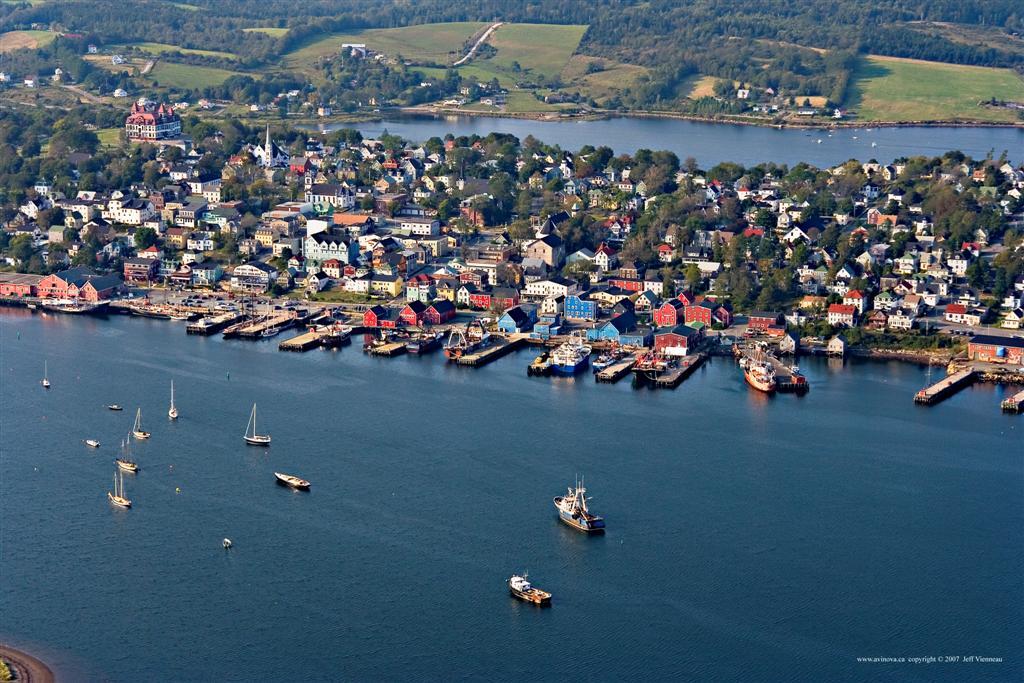
© Jvienneau, CC BY-SA 3.0 Resized from original. (This derivative is under the same CC BY-SA license.)
World Heritage Research
Discover scientific research and academic studies that deepen our understanding of Old Town Lunenburg from its history and significance to its conservation, management, and contemporary challenges.
-
Heritage Law and Symbolic Politics in Canada: Image Supersedes Protection under the Heritage Railway Stations Protection Act
This study reveals that Canada's Heritage Railway Stations Protection Act functions more as symbolic legislation than effective preservation policy. Despite its intent to protect railway stations, the Act lacks strong regulatory teeth and instead creates an illusion of government action and public engagement. The research highlights how emotional appeals, legal complexities, and imbalanced political power between heritage advocates and railway companies undermine real-world protection efforts. By challenging the dominance of discourse analysis in critical heritage studies, this work emphasizes the need to assess heritage law's practical impacts alongside its symbolic dimensions. A case study approach was employed, drawing on insights from Old Town Lunenburg World Heritage Site, where Senior Planner Hilary Grant's expertise was leveraged. The findings underscore the gap between heritage recognition and tangible conservation outcomes.
Grant, H. (2023). Heritage Law and Symbolic Politics in Canada: Image Supersedes Protection under the Heritage Railway Stations Protection Act. Heritage & Society, 18(1), 20–36. https://doi.org/10.1080/2159032x.2023.2266802
View Publication Record | Read Publication -
Cost Benefit Analysis of UNESCO World Heritage Site Designation in Nova Scotia
UNESCO World Heritage (WH) designation can significantly boost visitor spending, but its economic viability depends on visitation levels and rising costs. A cost-benefit analysis of Old Town Lunenburg, a WH site since 1995, revealed a 6.2% increase in Nova Scotia's tourism revenue post-designation. The study projected similar proportional benefits for Grand Pré National Historic Site, which is seeking WH status. However, the escalating costs of designation pose challenges, particularly for smaller-scale attractions. The research highlights that while WH recognition can drive economic growth, its long-term sustainability requires careful consideration of visitation impacts and financial burdens.
Kayahan, B., & VanBlarcom, B. (2013). Cost Benefit Analysis of UNESCO World Heritage Site Designation in Nova Scotia. Review of Economic Analysis, 4(2), 247–273. https://doi.org/10.15353/rea.v4i2.1386
View Publication Record | Read Publication