World Heritage Identification Number: 676
World Heritage since: 1993
Category: Cultural Heritage
WHE Type: Historic Cities & Urban Areas
Transboundary Heritage: No
Endangered Heritage: No
Country: 🇲🇽 Mexico
Continent: Americas
UNESCO World Region: Latin America and the Caribbean
Map
The Historic Centre of Zacatecas: A Gem of Colonial Architecture in North-Central Mexico
The Historic Centre of Zacatecas, located in the heart of the Mexican state bearing the same name, stands as a testament to the rich history and cultural heritage of the region. Founded in 1546 following the discovery of a significant silver deposit, this city quickly rose to prominence as one of the most important mining centers in New Spain.
More to come…UNESCO Description of the World Heritage Site
Founded in 1546 after the discovery of a rich silver lode, Zacatecas reached the height of its prosperity in the 16th and 17th centuries. Built on the steep slopes of a narrow valley, the town has breathtaking views and there are many old buildings, both religious and civil. The cathedral, built between 1730 and 1760, dominates the centre of the town. It is notable for its harmonious design and the Baroque profusion of its façades, where European and indigenous decorative elements are found side by side.
UNESCO Justification of the World Heritage Site
Criterion (ii) : Zacatecas was one of the principal centres of silver mining from the early Spanish period until the 20th century and its architecture and layout reflect its economic importance and the resultant cultural flourishing which influenced developments in these fields in central and North America.
Criterion (iv) : Zacatecas is an outstanding example of a European colonial settlement that is perfectly adapted to the constraints imposed by the topography of a metalliferous mountain range.
Encyclopedia Record: Zacatecas (city)
Zacatecas is the principal city within the municipality in Mexico of the same name, and the capital of the state of Zacatecas. Located in north-central Mexico, the city had its start as a Spanish mining camp in the mid-16th century. Native Americans had already known about the area's rich deposits of silver and other minerals. Due to the wealth that the mines provided, Zacatecas quickly became one of the most important mining cities in New Spain. The area saw battles during the turbulent 19th century, but the next major event was the Battle of Zacatecas during the Mexican Revolution when Francisco Villa captured the town, an event still celebrated every anniversary. Today, the colonial part of the city is a World Heritage Site, due to the Baroque and other structures built during its mining days. Mining still remains an important industry. The name Zacatecas is derived from the Zacateco people and has its roots in Nahuatl. The name means "people of the grasslands".Additional Site Details
Area: 207.72 hectares
Number of Components: 1
(iv) — Outstanding example of a type of building or landscape
Coordinates: 22.775484 , -102.573531
Image
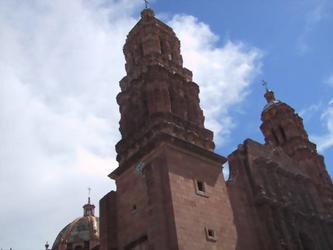
© Evan Prodromou at en.wikipedia, CC BY-SA 3.0 Resized from original. (This derivative is under the same CC BY-SA license.)
World Heritage Research
Discover scientific research and academic studies that deepen our understanding of Historic Centre of Zacatecas from its history and significance to its conservation, management, and contemporary challenges.
-
The genesis of the Price Revolution in Europe (15th–17th centuries)
The Price Revolution in Europe, spanning the 15th to 17th centuries, was not solely driven by the influx of American gold and silver but was primarily shaped by internal factors. These included demographic growth, social transformations, reorientation of trade routes, and expansion of European silver and copper mining. While precious metals from the Americas had a catalytic effect, prolonging inflationary processes, the phenomenon originated from broader structural changes in market relations. The study reveals that Spain experienced slower inflation compared to other European countries, challenging traditional interpretations. The research analyzes the chronological framework and geographical scope of the Price Revolution within the emerging capitalist world-system, highlighting its global impact on both monetary and real economic factors.
Honcharenko, A. V. (2026). The genesis of the Price Revolution in Europe (15th–17th centuries). Sumy Historical and Archival Journal, (46), 83. https://doi.org/10.21272/shaj.2026.i46.p.83
View Publication Record | Read Publication -
Geografía de las violencias en destinos turísticos: Acapulco, Guadalajara y Zacatecas
Tourism has become a cornerstone of Mexico's economy, driving revenue and employment while reshaping urban landscapes. However, its growth is intertwined with regional violence tied to criminal groups, which has differentially impacted destinations like Acapulco, Guadalajara, and Zacatecas. These cities exemplify the complex interplay between space, violence, and tourism, presenting unique yet shared challenges that mold their economic trajectories. The study employs a geographical approach to analyze how structural factors beyond economics influence tourism development, highlighting the need for nuanced strategies to address these interconnected issues.
Colmenares López, M. G. (2025). Geografía de las violencias en destinos turísticos: Acapulco, Guadalajara y Zacatecas. Geografía de Las Violencias. Espacio, Inseguridad Y Economía En El México Contemporáneo, 103–128. https://doi.org/10.61728/ae20253943
View Publication Record | Read Publication -
El Cerro “la Bufa” del Centro Histórico de Zacatecas como espacio público patrimonial
The Cerro 'la Bufa' in Zacatecas, Mexico, stands out as a unique heritage public space due to its distinctive landscape and historical significance. This study reveals that the site serves as a symbolic and identitary landmark, hosting pivotal events such as the Battle of Zacatecas during the Mexican Revolution. It also functions as a central gathering place for both locals and visitors. The research employed a two-phase methodology: an initial analysis of historical and conceptual frameworks, followed by an assessment of the relationship between actors and the natural-patrimonial environment. Findings underscore 'la Bufa's' role in urban memory and its potential to be conceptualized as a heritage public space, distinct from other Latin American cities.
Santibáñez Coronado, A. L. (2025). The Hill “la Bufa” in the Historic Center of Zacatecas as a heritage publicspace. Gremium, 12(27). https://doi.org/10.56039/rgn27a03
View Publication Record | Read Publication -
Transformaciones socioespaciales de la vivienda a partir del uso turístico en centros históricos: Zacatecas, México
A study on the Historic Centre of Zacatecas reveals significant socio-spatial transformations driven by the rise of tourist-oriented housing, particularly Airbnb listings. The research highlights how collaborative economy models are reshaping urban dynamics in this UNESCO-recognized city, impacting its architectural heritage and social fabric. Using mixed methods—including web scraping, spatial mapping, field observations, and interviews—the study maps Airbnb's distribution and assesses its broader societal effects. Findings underscore the complex interplay between tourism-driven housing growth and the preservation of historical urban landscapes in mid-sized Mexican cities.
Ramos Jiménez, L. S., & De La Barrera Medina, M. S. (2025). Transformaciones socioespaciales de la vivienda a partir del uso turístico en centros históricos: Zacatecas, México. Legado de Arquitectura Y Diseño, 20(37). https://doi.org/10.36677/legado.v20i37.23115
View Publication Record | Read Publication -
Architecture at Historic Centre of Zacatecas: Foreign Influences along the Porfiriato (1877-1911)
The architecture of Zacatecas' Historic Centre, a UNESCO World Heritage Site since 1993, exhibits significant foreign influences beyond the traditional Spanish colonial style that dominated Mexican cities. This study identifies and analyzes these diverse architectural influences present in public and private buildings constructed or extensively remodeled between 1877 and 1911 during the Porfiriato period. By focusing on this understudied aspect, the research reveals a rich tapestry of foreign design elements that enrich the city's urban landscape, offering new insights into its architectural evolution.
del Rocio Gaytan, I. (2024). Architecture at Historic Centre of Zacatecas: Foreign Influences along the Porfiriato (1877-1911). International Journal of Science and Research (IJSR), 13(1), 836–855. https://doi.org/10.21275/sr24111235236
View Publication Record | Read Publication -
Violencias: impactos diferenciados en turistas y residentes en la ciudad de Zacatecas-Guadalupe, México (1986-2020)
In Zacatecas-Guadalupe, Mexico, tourist arrivals and economic benefits from tourism remained resilient despite rising criminal violence (1986–2020), while residents—particularly those with higher purchasing power—responded through spatial self-segregation. Nonlinear regression models revealed that crimes like drug dealing and threats did not significantly deter tourists or shrink the tourism economy, suggesting targeted public security measures effectively shielded visitors. Conversely, unprotected residents adopted avoidance strategies, with wealthier groups adapting more successfully. This study highlights starkly divergent impacts of organized crime on transient versus local populations in a UNESCO-listed heritage city.
González Hernández, G. M. (2024). Violencias: impactos diferenciados en turistas y residentes en la ciudad de Zacatecas-Guadalupe, México (1986-2020). Turismo Y Sociedad, 35, 175–203. https://doi.org/10.18601/01207555.n35.08
View Publication Record | Read Publication -
Análisis de vulnerabilidades y amenazas del patrimonio y paisaje urbano en las centralidades históricas de Zacatecas, México, y Córdoba, Argentina
Despite their recognition as UNESCO World Heritage Sites, the historic centers of Zacatecas (Mexico) and Córdoba (Argentina) face contrasting threats to their urban landscapes. Zacatecas is vulnerable due to its settlement over unstable mining grounds, while Córdoba's heritage is at risk from modern architectural projects disrupting its historic Jesuit block. The study identified no cultural vulnerabilities in either site, emphasizing the resilience of their historical legacies. Using a three-stage methodology—analyzing heritage characteristics, vulnerability types, and threats—the research applied Wilches-Chaux’s theoretical framework for vulnerabilities and field-based risk assessment tools to map hazards. Findings highlight the need for targeted conservation strategies to mitigate these distinct but critical risks.
Santibáñez Coronado, A. L., & Reséndiz Vázquez, A. (2024). Análisis de vulnerabilidades y amenazas del patrimonio y paisaje urbano en las centralidades históricas de Zacatecas, México, y Córdoba, Argentina. Revista de Estudios Latinoamericanos Sobre Reducción Del Riesgo de Desastres REDER, 8(2), 33. https://doi.org/10.55467/reder.v8i2.156
View Publication Record | Read Publication