World Heritage Identification Number: 1209
World Heritage since: 2006
Category: Cultural Heritage
WHE Type: Agriculture Landscapes, Parks & Gardens
Transboundary Heritage: No
Endangered Heritage: No
Country: 🇲🇽 Mexico
Continent: Americas
UNESCO World Region: Latin America and the Caribbean
Map
Exploring the Agave Landscape and Ancient Industrial Facilities of Tequila: A Cultural UNESCO World Heritage Site
The Agave Landscape and Ancient Industrial Facilities of Tequila, inscribed as a UNESCO World Heritage Site in 2006, offers a unique blend of natural beauty, cultural heritage, and industrial tradition that reflects the rich history and national identity of Mexico. This expansive 35,019-hectare site, nestled between the foothills of the Tequila Volcano and the deep valley of the Rio Grande River, is a testament to the longstanding relationship between humans and the blue agave plant.
More to come…UNESCO Description of the World Heritage Site
The 34,658 ha site, between the foothills of the Tequila Volcano and the deep valley of the Rio Grande River, is part of an expansive landscape of blue agave, shaped by the culture of the plant used since the 16th century to produce tequila spirit and for at least 2,000 years to make fermented drinks and cloth. Within the landscape are working distilleries reflecting the growth in the international consumption of tequila in the 19th and 20th centuries. Today, the agave culture is seen as part of national identity. The area encloses a living, working landscape of blue agave fields and the urban settlements of Tequila, Arenal, and Amatitan with large distilleries where the agave ‘pineapple' is fermented and distilled. The property is also a testimony to the Teuchitlan cultures which shaped the Tequila area from AD 200-900, notably through the creation of terraces for agriculture, housing, temples, ceremonial mounds and ball courts.
UNESCO Justification of the World Heritage Site
Criterion (ii): The cultivation of agave and its distillation have produced a distinctive landscape within which are a collection of fine haciendas and distilleries that reflect both the fusion of pre-Hispanic traditions of fermenting mescal juice with the European distillation processes and of local and imported technologies, both European and American.
Criterion (iv): The collection of haciendas and distilleries, in many cases complete with their equipment and reflecting the growth of tequila distillation over the past two hundred and fifty years, are together an outstanding example of distinct architectural complexes which illustrate the fusion of technologies and cultures.
Criterion (v): The agave landscape exemplified the continuous link between ancient Mesoamerican culture of the agave and today, as well as the contours process of cultivation since the 17th century when large scale plantations were created and distilleries first started production of tequila. The overall landscape of fields, distilleries, haciendas and towns is an outstanding example of a traditional human settlement and land-use which is representative of a specific culture that developed in Tequila.
Criterion (vi): The Tequila landscape has generated literary works, films, music, art and dance, all celebrating the links between Mexico and tequila and its heartland in Jalisco. The Tequila landscape is thus strongly associated with perceptions of cultural significances far beyond its boundaries.
Encyclopedia Record: Agave Landscape and Ancient Industrial Facilities of Tequila
The Agave Landscape and Ancient Industrial Facilities of Tequila is a cultural UNESCO World Heritage Site in Mexico. The 35,019-hectare site is part of an expansive landscape of blue agave, shaped by the culture of the plant used since the 16th century to produce the spirit known as tequila and for at least two millennia to make fermented drinks and cloth. Within the landscape are working distilleries reflecting the growth in the consumption of tequila in the 19th and 20th centuries. Today, this agave culture is seen as part of Mexican national identity. The Tequila landscape has contributed to many works of art such as film, music, dance, and paintings.Additional Site Details
Area: 35,018.85 hectares
Number of Components: 2
(iv) — Outstanding example of a type of building or landscape
(v) — Outstanding example of traditional human settlement
(vi) — Directly associated with events or living traditions
Coordinates: 20.8630555555 , -103.7786111111
Image
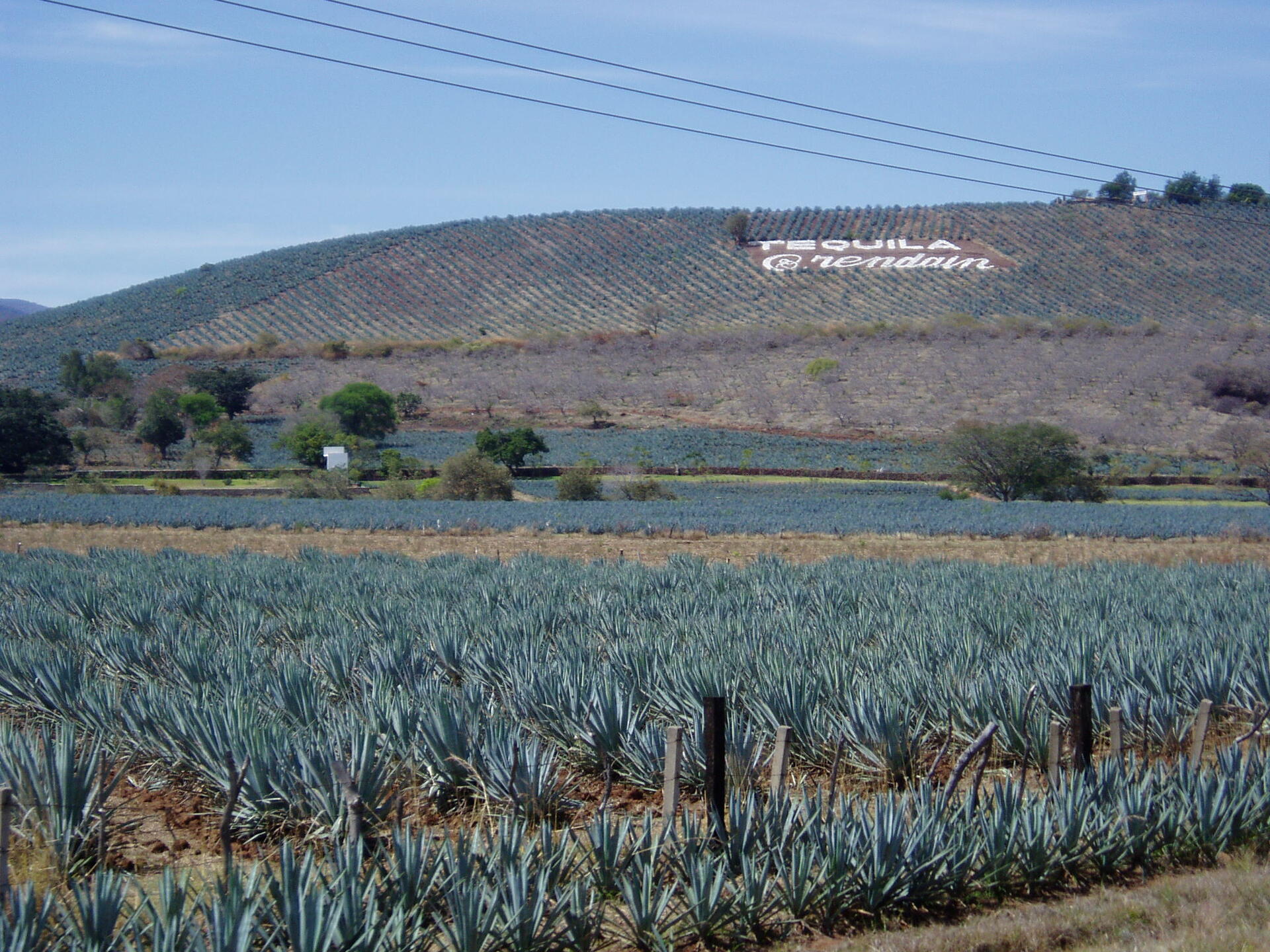
© My friend was the photographer; this image was uploaded under the GFDL with his permission., CC BY-SA 3.0 Resized from original. (This derivative is under the same CC BY-SA license.)