World Heritage Identification Number: 355
World Heritage since: 1986
Category: Natural Heritage
WHE Type: Protected Areas & National Parks
Transboundary Heritage: No
Endangered Heritage: No
Country: 🇧🇷 Brazil
Continent: Americas
UNESCO World Region: Latin America and the Caribbean
Map
Iguaçu National Park: A Natural Wonder of South America
Iguaçu National Park, located in the state of Paraná, Brazil, is a testament to the breathtaking beauty and biodiversity that can be found within South America's vast landscapes. Established in 1939, this expansive protected area spans an impressive 185,262.5 hectares. The park's boundaries encompass a diverse array of ecosystems, from dense rainforests teeming with unique flora and fauna to the thunderous roar of one of the world's most awe-inspiring waterfalls.
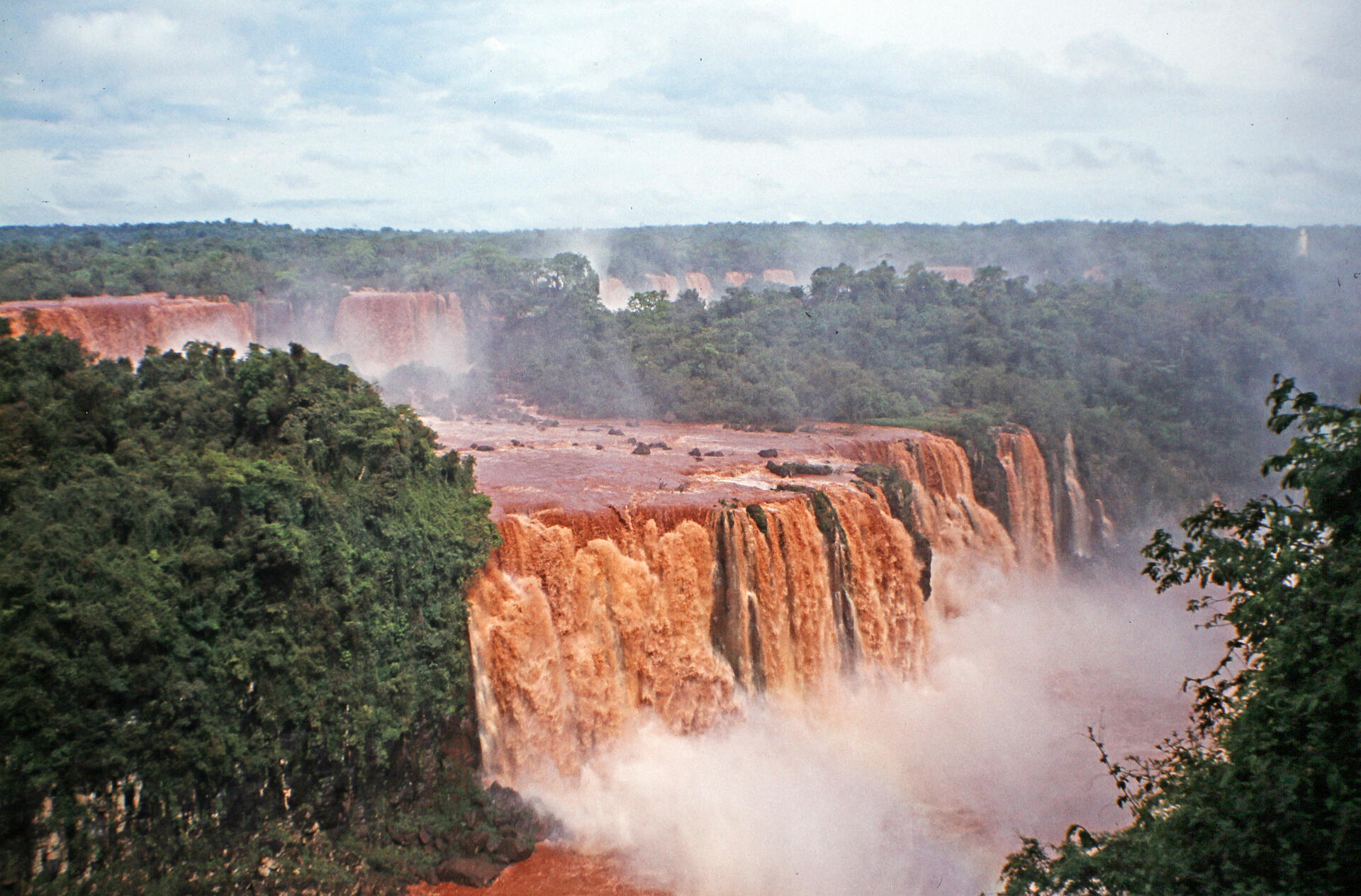
The park shares its namesake attraction, the Iguazu Falls, with Iguazú National Park in Argentina. With a height of up to 82 meters, the falls are among the tallest in the world, and their combined width of 2,700 meters makes them one of the widest. The sheer volume of water that flows over the falls creates a spectacle unlike any other, with clouds of mist rising high into the sky and rainbows arcing across the landscape.The falls are formed by the Iguazu River as it plunges into the Iguazu Gorge, creating a series of cascades that stretch for nearly 3 kilometers.
In addition to the falls themselves, Iguaçu National Park is home to a rich and diverse ecosystem. The park is home to numerous rare and endangered species, including the giant otter, jaguar, giant anteater, tapir, and howler monkeys. These animals, along with countless others, have adapted to the unique conditions of the park and play crucial roles in maintaining the delicate balance of its ecosystem. The park's lush vegetation, nourished by the constant mist produced by the falls, provides vital habitat for these animals and supports over 2,000 species of plants, making it a vital center of biodiversity.
The Iguaçu National Park is also of great cultural significance. The indigenous Guaraní people have lived in the region for centuries, and their history and traditions continue to be an integral part of the park's identity. Visitors to the park can learn about the Guaraní way of life through various cultural programs and exhibitions, gaining a deeper understanding of the rich tapestry of human history that has unfolded within the park's boundaries.
In recognition of its outstanding natural beauty and importance to global biodiversity, Iguaçu National Park was designated a UNESCO World Heritage Site in 1986. Today, the park is managed by the Chico Mendes Institute for Biodiversity Conservation (ICMBio), which works tirelessly to preserve and protect the park's unique ecosystems and the myriad species that call them home. Through its efforts, Iguaçu National Park continues to serve as a shining example of what can be achieved when conservation and preservation are prioritized.
To wrap it up, Iguaçu National Park stands as a testament to the breathtaking beauty and biodiversity that can be found within South America's vast landscapes. Its awe-inspiring waterfalls, rich ecosystems, and vibrant cultural heritage make it a must-visit destination for anyone seeking to experience the wonders of nature and the richness of human history. As we continue to face challenges related to climate change and habitat loss, it is more important than ever to support initiatives like those undertaken by Iguaçu National Park, ensuring that these natural treasures are preserved for future generations to enjoy.
UNESCO Description of the World Heritage Site
The park shares with Iguazú National Park in Argentina one of the world’s largest and most impressive waterfalls, extending over some 2,700 m. It is home to many rare and endangered species of flora and fauna, among them the giant otter and the giant anteater. The clouds of spray produced by the waterfall are conducive to the growth of lush vegetation.
UNESCO Justification of the World Heritage Site
Criterion (vii): Iguaçu National Park and its sister World Heritage property Iguazú National Park in Argentina conserve one of the largest and most spectacular waterfalls in the world, comprised of a system of numerous cascades and rapids nearly three kilometers wide within the setting of a lush and diverse sub-tropical broadleaf forest. The permanent water cloud from the cataracts forms an impressive scene that surrounds the forested islands and riverbanks resulting in a visually stunning and constantly changing interface between land and water.
Criterion (x): Iguaçu National Park forms with the contiguous Iguazú National Park in Argentina one of the largest protected remnants of the paranaense subtropical forest, belonging to the interior Atlantic Forest. The rich biodiversity includes some endangered and vulnerable species such as the Jaguar (Panthera onca), the Ocelot (Leopardus tigrinus), the Puma (Puma concolor), the Margay (Leopardus wiedii), the Jaguarondi (Puma yagouaroundi), the Harpy eagle (Harpia harpyja), the giant otter (Pteronura brasiliensis), the black-fronted piping guan (Aburria jacutinga), the Tapir (Tapirus terrestris), the Bush dog (Speothos venaticus), the Pygmy brocket (Mazama nana), the Giant anteater (Myrmecophaga tridactyla), the Monjolo or Surubim of the Iguaçu (Steindachneridion sp), the Piracanjuba (Brycon orbignyanus) and the Fasciated tiger heron (Tigrisoma fasciatum).
Encyclopedia Record: Iguaçu National Park
Iguaçu National Park is a national park in Paraná State, Brazil. It comprises a total area of 185,262.5 hectares and a length of about 420 kilometers (260 mi), 300 kilometers (190 mi) of which are natural borders by bodies of water and the Argentine and Brazilian sides together comprise around 260,000 hectares. Iguaçu National Park was created by federal decree nr. 1035 of 10 January 1939 and became a UNESCO World Heritage Site in 1986. The park is managed by Chico Mendes Institute for Biodiversity Conservation (ICMBio).Additional Site Details
Area: 169,695.9 hectares
Number of Components: 1
(x) — Contains most important habitats for biodiversity
Coordinates: -25.4481472222 , -53.8001444444
IUCN World Heritage Outlook
The 2025 Conservation Outlook on Iguaçu National Park reports the following assessment:
Source: International Union for Conservation of Nature (IUCN) · View assessment
Image
© W. Bulach, CC BY-SA 4.0 Resized from original. (This derivative is under the same CC BY-SA license.)
World Heritage Research
Discover scientific research and academic studies that deepen our understanding of Iguaçu National Park from its history and significance to its conservation, management, and contemporary challenges.
-
A new species of Characidium (Characiformes: Crenuchidae) from the Iguaçu National Park, Rio Iguaçu basin, Paraná, Brazil
Researchers have identified a new species of Characidium fish within the Iguaçu National Park, Brazil. This discovery was supported by both morphological and molecular analyses, including multiple species delimitation methods, which confirmed its distinctiveness from known congeners. The new species is characterized by the absence of vertical bars or spots along its body, a scaled isthmus and adipose fin, scales below the lateral line, and a thin dark midlateral stripe. While it shares a reticulated color pattern with C. xanthopterum, genetic distance analysis revealed only 4.2% divergence, indicating it is a distinct species. Phylogenetic studies further showed that this new species is closely related to C. itarare from the Paranapanema river basin. Despite being found within a protected area, its limited distribution to just two creeks raises significant concerns for its long-term conservation.
Stabile, B. H. M., dos Reis, R. B., de Oliveira, A. V., & da Graça, W. J. (2025). A new species of
View Publication Record | Read PublicationCharacidium (Characiformes: Crenuchidae) from the Iguaçu National Park, Rio Iguaçu basin, Paraná, Brazil. Journal of Fish Biology, 107(2), 454–465. Portico. https://doi.org/10.1111/jfb.70035 -
Amphibians of the largest inland Atlantic Forest fragment, Iguaçu National Park, Paraná State, southern Brazil
Iguaçu National Park, the largest inland fragment of the Atlantic Forest and a UNESCO Natural Heritage Site, harbors 31 amphibian species, including two first records for Paraná State. The study reveals that while the park's anuran assemblage shares strong similarity with Argentina's Iguazú National Park—sharing 24 species—the distinct vegetation types (Semideciduous Seasonal Forest and Mixed Ombrophilous Forest) shape unique local distributions, with some species exclusive to each type. This highlights the importance of both parks in conserving regional biodiversity despite their proximity. The research combined field sampling of adults and tadpoles from 21 water bodies with historical records, uncovering a reproductive diversity comparable to other Atlantic Forest regions.
da Rosa, E. A., Lingnau, R., & Garey, M. V. (2025). Amphibians of the largest inland Atlantic Forest fragment, Iguaçu National Park, Paraná State, southern Brazil. ZooKeys, 1264, 109–128. https://doi.org/10.3897/zookeys.1264.164796
View Publication Record | Read Publication -
Floristic inventory of Melastomataceae of the Iguaçu National Park, Paraná, Brazil
A floristic inventory of the Melastomataceae family within Iguaçu National Park, Brazil, reveals 17 species across four genera, with nine new records for the park. The study highlights significant diversity, including six endemic species to Brazil, four restricted to the southern and southeastern regions. Notably, Miconia leaeichleri was documented for the first time in western Paraná, suggesting under-explored biodiversity in this region. The research sampled three areas over ten months, distinguishing between Seasonal Semideciduous Forest (SSF) and Mixed Ombrophilous Forest (MOF), uncovering distinct species distributions: seven species were common to both forest types, while six and four were exclusive to MOF and SSF, respectively. This inventory underscores the ecological importance of Melastomataceae, particularly as pioneers and zoochoric species vital for Atlantic Forest regeneration.
Wink, J. G., Goldenberg, R., Lima, L. C. P., Conceição, L. H. S. d. M., Caxambu, M. G., & Temponi, L. G. (2024). Floristic inventory of Melastomataceae of the Iguaçu National Park, Paraná, Brazil. Rodriguésia, 75. https://doi.org/10.1590/2175-7860202475019
View Publication Record | Read Publication -
Taxonomic synopsis of Plantaginaceae and Scrophulariaceae (Lamiales) in Iguazú and Iguaçu National Parks (Argentina and Brazil)
A taxonomic synopsis of Plantaginaceae and Scrophulariaceae (Lamiales) in Iguazú and Iguaçu National Parks reveals 13 species across seven genera, significantly advancing the understanding of herbaceous and shrubby flora in this Atlantic Forest hotspot. The study documents Stemodia with three species, while Bacopa, Buddleja, Mecardonia, and Scoparia each contribute two, alongside single-species representations from Plantago and Veronica. This research addresses a critical gap in botanical knowledge for the Southern Cone, providing identification keys, illustrations, and ecological insights that are essential for biodiversity management and conservation planning.
Hentz Júnior, E. J., Scatigna, A. V., Temponi, L. G., Caxambu, M. G., & Lima, L. C. P. (2024). Taxonomic synopsis of Plantaginaceae and Scrophulariaceae (Lamiales) in Iguazú and Iguaçu National Parks (Argentina and Brazil). Rodriguésia, 75. https://doi.org/10.1590/2175-7860202475049
View Publication Record | Read Publication -
Orchidaceae in Iguaçu National Park, Paraná, Brazil
Iguaçu National Park, a significant remnant of the Atlantic Forest in Paraná, Brazil, harbors 65 orchid species across 41 genera, with Gomesa and Acianthera being the most prevalent. This study highlights that Epidendroideae subfamily dominates the park's orchid flora, accounting for 78% of the total richness. Notably, 31 new records were documented, including five species endemic to Brazil and one to Paraná. The research also reveals distinct species distributions between Mixed Ombrophilous Forest (29 exclusive species) and Semideciduous Seasonal Forest (20 exclusive species), with 16 species shared across both phytophysiognomies. Among the orchids, epiphytic habits are most common (39 species), followed by terricolous (15 species). This comprehensive inventory underscores Iguaçu National Park's ecological significance and the importance of floristic studies in cataloging its diverse flora.
Zubek, H., Curtivo, L. B., Pessoa, E. M., Caxambu, M. G., Dettke, G. A., Temponi, L. G., & Silva, S. M. (2024). Orchidaceae in Iguaçu National Park, Paraná, Brazil. Rodriguésia, 75. https://doi.org/10.1590/2175-7860202475064
View Publication Record | Read Publication -
Economic risks of environmental setbacks in Brazil’s Iguaçu National Park
A proposed road through Brazil’s Iguaçu National Park would fragment the park and undermine its ecological and economic value. Contrary to local claims, research shows that closing the Caminho-do-Colono road in 2017 did not harm the regional economy, while reopening it would offer no environmental or economic benefits—favoring small interest groups over collective well-being. The study evaluates scenarios where the park’s native vegetation and payments for environmental services support certain municipalities, demonstrating that maintaining its integrity is crucial for sustainable development. Using pre- and post-closure economic data, the analysis reveals that legislative attempts to downgrade protection are legally infeasible and counterproductive.
Prasniewski, V. M., Szinwelski, N., Brocardo, C. R., Fearnside, P. M., & Sobral-Souza, T. (2024). Economic risks of environmental setbacks in Brazil’s Iguaçu National Park. Environmental Conservation, 51(3), 227–235. https://doi.org/10.1017/s0376892924000201
View Publication Record | Read Publication -
Co-infection by multiple vector-borne agents in wild ring-tailed coatis (Nasua nasua) from Iguaçu National Park, southern Brazil
A high prevalence of co-infections by multiple vector-borne agents (VBAs) was detected in wild ring-tailed coatis (Nasua nasua) from Iguaçu National Park, southern Brazil. The study found that 85.7% of the coatis were positive for hemotropic Mycoplasma sp., with notable co-infections involving Bartonella machadoae (24.5%), Anaplasma sp. closely related to 'Candidatus Anaplasma brasiliensis' (14.3%), and Hepatozoon procyonis (6%). The most common co-infections were between hemotropic Mycoplasma sp. and Bartonella sp. (18.3%) or Anaplasma sp. (12.2%), while 4% of the animals presented co-infections by three VBAs. This study expands the host specificity range of B. machadoae, previously isolated only from rodents, highlighting the need for further surveillance due to the unknown zoonotic potential and transmission routes of these agents.
Perles, L., Moraes, M. F., Xavier da Silva, M., Vieira, R. F. C., Machado, R. Z., Lux Hoppe, E. G., & André, M. R. (2023). Co-infection by multiple vector-borne agents in wild ring-tailed coatis (Nasua nasua) from Iguaçu National Park, southern Brazil. Scientific Reports, 13(1). https://doi.org/10.1038/s41598-023-29090-1
View Publication Record | Read Publication