World Heritage Identification Number: 597
World Heritage since: 1993
Category: Cultural Heritage
WHE Type: Religious Sites & Sacred Architecture
Transboundary Heritage: No
Endangered Heritage: No
Country: 🇷🇴 Romania
Continent: Europe
UNESCO World Region: Europe and North America
Map
Masterpiece of the Brancovan Style: The Monastery of Horezu
The Monastery of Horezu, located in the picturesque town of Horezu in Walachia, Romania, stands as a testament to the architectural prowess and artistic vision of Prince Constantine Brancovan. Inscribed as a UNESCO World Heritage Site in 1993, this remarkable structure embodies the essence of the Brancovan style, a unique and authentic Romanian artistic movement.
More to come…UNESCO Description of the World Heritage Site
Founded in 1690 by Prince Constantine Brancovan, the monastery of Horezu, in Walachia, is a masterpiece of the 'Brancovan' style. It is known for its architectural purity and balance, the richness of its sculptural detail, the treatment of its religious compositions, its votive portraits and its painted decorative works. The school of mural and icon painting established at the monastery in the 18th century was famous throughout the Balkan region.
Encyclopedia Record: Horezu Monastery
The Horezu Monastery or Hurezi Monastery was founded in 1690 by Prince Constantin Brâncoveanu in the town of Horezu, Wallachia, Romania. It is considered to be a masterpiece of "Brâncovenesc style", known for its architectural purity and balance, the richness of its sculpted detail, its treatment of religious compositions, its votive portraits, and its painted decorative works.The Brâncovenesc style, which can be found at several other churches and monasteries in Wallachia, is the only true and original Romanian style and is called "Brancoveanu art" by the name of the ruler who, in a period of constant battles between the world powers of that time, put cultural development of the country above everything and made it the goal of his life.Additional Site Details
Area: 22.48 hectares
Number of Components: 1
Coordinates: 45.1697222222 , 24.0072222222
Image
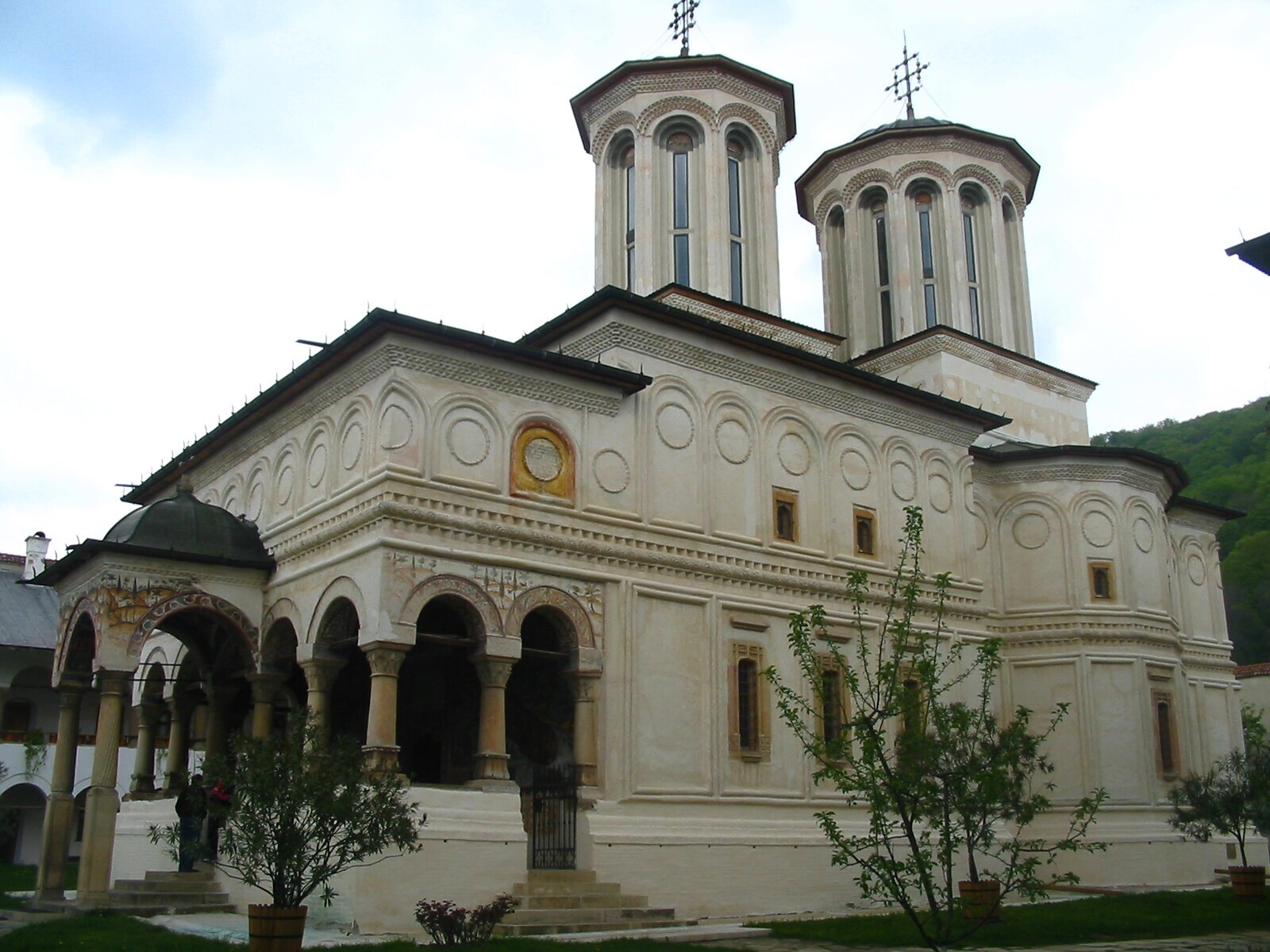
© Cristian Chirita, CC BY-SA 3.0 Resized from original. (This derivative is under the same CC BY-SA license.)
World Heritage Research
Discover scientific research and academic studies that deepen our understanding of Monastery of Horezu from its history and significance to its conservation, management, and contemporary challenges.
-
Project “Easter Triptych”
The 'Easter Triptych' project, spanning six annual editions (2018–2023), successfully integrated religious and cultural traditions into a multifaceted artistic and educational initiative. It highlighted the preservation of Romanian customs, beliefs, and craftsmanship through performances, exhibitions, and collaborations with institutions such as the Romanian National Opera Iași and UNESCO-affiliated museums. The project's reach extended internationally, fostering cross-cultural dialogue in Austria and the Republic of Moldova. A notable outcome was the CD 'Easter Triptych,' encapsulating its artistic contributions.
Naie, L. (2022). 4. Project “Easter Triptych”. Review of Artistic Education, 23(1), 34–39. https://doi.org/10.2478/rae-2022-0004
View Publication Record | Read Publication -
The Albeşti Limestone: a geoheritage and cultural heritage in Romania
Eocene limestones from Albeşti village, Romania, known as the Albeşti Limestone/Stone, have been identified as both a significant geoheritage and cultural heritage resource. This rock, extracted locally, has been used for centuries in constructing notable buildings, including the UNESCO World Heritage Site Horezu Monastery. The study integrates published and unpublished data with field surveys to highlight its dual role: as a protected natural reserve (Albeşti Nummulitic Limestone Nature Reserve) and a heritage stone of national importance. Findings emphasize its potential for heritage preservation, geoeducation, and geotourism development.
Ilinca, V., Milu, V., Peligrad, S., & Gheuca, I. (2022). The Albeşti Limestone: a geoheritage and cultural heritage in Romania. Journal of Maps, 19(1). https://doi.org/10.1080/17445647.2022.2135465
View Publication Record | Read Publication -
Sustainable Strategies for Promoting the Horezu Pottery and the Cultural Landscape of Horezu, Romania
Horezu pottery, recognized as part of Romania's immaterial cultural patrimony since 2012, faces limited promotion despite its widespread presence in handicraft stores. This study proposes sustainable strategies to enhance the visibility and appreciation of Horezu pottery while preserving its cultural significance. It highlights the need for comprehensive promotion, including information on geographical context, historical background, artistic evolution, decorative motifs, and local gastronomy traditions. The research aims to balance increased tourism with sustainability, ensuring that the pottery's unique heritage is both accessible and protected. By integrating these elements, the study offers a model for sustainable cultural promotion that can be applied to other UNESCO World Heritage Sites.
Maria Bica, S., & Roxana Florescu, E. (2017). Sustainable Strategies for Promoting the Horezu Pottery and the Cultural Landscape of Horezu, Romania. Civil Engineering and Architecture, 5(4), 134–140. https://doi.org/10.13189/cea.2017.050402
View Publication Record | Read Publication