World Heritage Identification Number: 95
World Heritage since: 1979
Category: Cultural Heritage
WHE Type: Historic Cities & Urban Areas
Transboundary Heritage: No
Endangered Heritage: No
Country: 🇭🇷 Croatia
Continent: Europe
UNESCO World Region: Europe and North America
Map
The Old City of Dubrovnik: A Pearl of the Adriatic
The Old City of Dubrovnik, located on the Dalmatian coast, is a captivating testament to the rich history and cultural heritage of Croatia. This enchanting city, historically known as Ragusa, has been recognized as a World Heritage Site by UNESCO since 1979, earning the moniker "the Pearl of the Adriatic."
Dubrovnik's prominence dates back to the 13th century when it emerged as a significant Mediterranean sea power. Despite suffering severe damage from an earthquake in 1667, the city successfully preserved its architectural treasures, including Gothic, Renaissance, and Baroque churches, monasteries, palaces, and fountains. These structures serve as a vivid reminder of Dubrovnik's historical significance and artistic achievements.
One of the most striking features of the Old City is its remarkable fortifications. The city's defensive walls, which stretch for approximately 2 kilometers, have stood the test of time, providing protection against various invasions throughout history. The walls, adorned with towers and gates, offer visitors a unique perspective of the city and its surrounding landscapes.
In addition to the main city walls, Dubrovnik’s defensive system includes several important detached forts, notably Fort Revelin, which protected the eastern land approach, and Fort Lovrijenac, dramatically situated on a rocky promontory outside the western walls. Together with the walls, towers, and bastions, these structures formed a highly effective and integrated system of defense.
Among the architectural landmarks of the Old City, the Church of St. Blaise holds a place of special significance. Dedicated to Dubrovnik’s patron saint, the church was built in the early 18th century in the Baroque style and stands prominently in the city’s main square. While modest in size, it remains a central symbol of the city’s religious and civic identity.
Another important monument is the Franciscan Monastery, which houses one of the oldest continuously operating pharmacies in Europe, founded in 1317. The monastery complex also includes a notable cloister, library, and collection of historical artifacts, highlighting Dubrovnik’s long tradition of scholarship and medicine.
The Old City is also home to significant secular monuments, including the Rector’s Palace, the former seat of government of the Republic of Ragusa, and the Sponza Palace, a Gothic-Renaissance building that served commercial and administrative functions. Both structures are among the most important architectural and historical landmarks of Dubrovnik.
In the 1990s, Dubrovnik faced another period of turmoil during armed conflict. The city suffered extensive damage, but a large-scale international restoration effort—supported by UNESCO—helped repair much of its historic fabric. During this period, Dubrovnik was placed on the UNESCO List of World Heritage in Danger from 1991 to 1998.
Today, the Old City continues to attract tourists from around the world, who come to marvel at its well-preserved medieval architecture and fortifications. Aside from its historical and cultural attractions, Dubrovnik offers visitors a wealth of experiences. From strolling along the picturesque Stradun street to taking a cable car to Mount Srđ for panoramic views of the Old City and the Adriatic coastline, Dubrovnik seamlessly blends cultural depth with natural beauty.
Overall, the Old City of Dubrovnik is a shining example of the rich history and cultural heritage found in Croatia. Its well-preserved medieval architecture, fortifications, and charming streets make it a must-visit destination for anyone interested in exploring the wonders of the Mediterranean.
UNESCO Description of the World Heritage Site
The 'Pearl of the Adriatic', situated on the Dalmatian coast, became an important Mediterranean sea power from the 13th century onwards. Although severely damaged by an earthquake in 1667, Dubrovnik managed to preserve its beautiful Gothic, Renaissance and Baroque churches, monasteries, palaces and fountains. Damaged again in the 1990s by armed conflict, it is now the focus of a major restoration programme co-ordinated by UNESCO.
Encyclopedia Record: Dubrovnik
Dubrovnik, historically known as Ragusa, is a city in southern Dalmatia, Croatia, by the Adriatic Sea. It is one of the most prominent tourist destinations in the Mediterranean, a seaport and the centre of the Dubrovnik-Neretva County. In 2021, its total population was 41,562. Recognizing its outstanding medieval architecture and fortifications, UNESCO inscribed the Old City of Dubrovnik as a World Heritage Site in 1979.Additional Site Details
Area: 96.7 hectares
Number of Components: 2
(iii) — Unique or exceptional testimony to a cultural tradition
(iv) — Outstanding example of a type of building or landscape
Coordinates: 42.6414211111 , 18.1088611111
Image
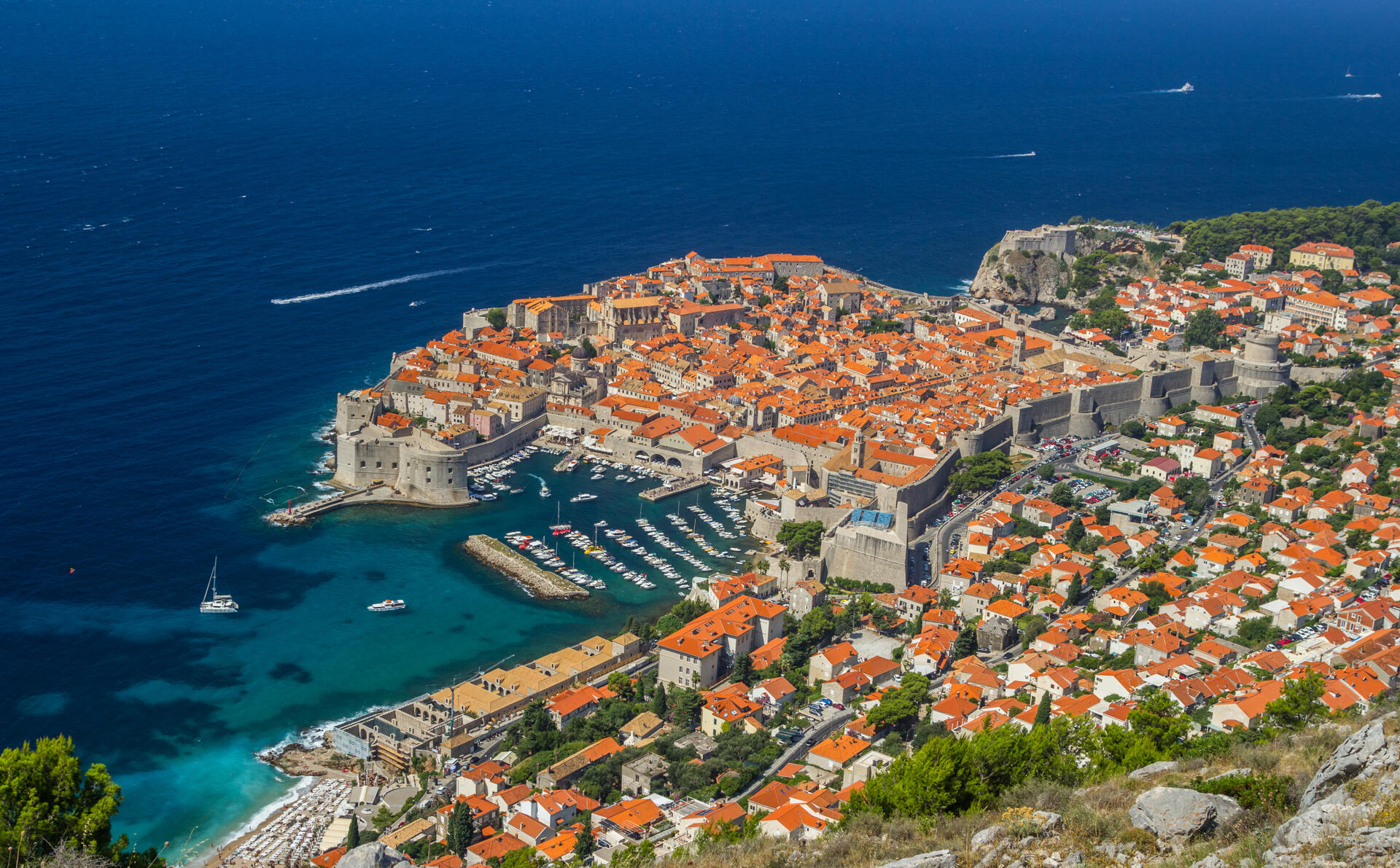
© Zysko serhii, CC BY-SA 4.0 Resized from original. (This derivative is under the same CC BY-SA license.)