World Heritage Identification Number: 100
World Heritage since: 1980
Category: Natural Heritage
WHE Type: Protected Areas & National Parks
Transboundary Heritage: No
Endangered Heritage: No
Country: 🇲🇪 Montenegro
Continent: Europe
UNESCO World Region: Europe and North America
Map
Durmitor National Park: A Natural Gem in the Heart of the Dinaric Alps
Durmitor National Park, situated in the northwestern region of Montenegro, is a testament to the breathtaking beauty and geological diversity of the Dinaric Alps. Inscribed as a UNESCO World Heritage Site in 1980, this protected area spans over 390 square kilometers and offers visitors a unique blend of rugged landscapes, pristine wilderness, and rich biodiversity.
More to come…UNESCO Description of the World Heritage Site
This breathtaking national park was formed by glaciers and is traversed by rivers and underground streams. Along the Tara river canyon, which has the deepest gorges in Europe, the dense pine forests are interspersed with clear lakes and harbour a wide range of endemic flora.
UNESCO Justification of the World Heritage Site
Criterion (vii): Durmitor National Park's exceptional scenic beauty has been shaped by glaciers and rivers. The alpine meadows on plateaus and smooth hills are set against the stark backdrop of the numerous high and rugged peaks. The dense forests and the glacial lakes add to the scenic diversity and appeal. The most dramatic elements of the spectacular mountain landscape are the deep river canyons, most notably the famous Tara River Gorge, Europe's deepest gorge and one of very few unaffected by dams and roads. Even the underground offers stunning natural beauty in the form of numerous caves, most notably the “Ice Cave”, with its impressive ice stalactites and stalagmites.
Criterion (viii): Durmitor National Park harbours a wealth of geological and geomorphological features of major scientific interest which have been shaping the landscape, such as the many remarkable Karst phenomena. The dominant geological features are very thick, often savagely contorted limestone formations of the Middle and Upper Triassic, Upper Jurassic and Upper Cretaceous though more recent rocks are also present. One particularity is the so-called Durmitor Flysch, a term used for tectonic layers inclined at an angle of 90 degrees in the Durmitor Massif. The sheer walls of the many canyons, and in particular, those of the spectacular Tara River Gorge of more than sixty kilometres, are not only fundamental landscape features of the Park but also expose magnificent rock formations. Less known but no less fascinating is the underground world of the property. It includes Montenegro's deepest cave and subterranean rivers draining some of the glacial lakes. In particular, the “Ice Cave” is a visually stunning and a rare relict of past glaciation.
Criterion (x): The diverse mountain landscape encompasses altitudinal zones ranging from only 450 to more than 2,500 metres above sea level and a broad array of ecosystems and habitats. Among these are rocky peaks, forests, alpine meadows, lakes, rivers, canyons and caves which include underground freshwater systems. Of particular importance is an old-growth forest of European Black Pine, where 400 year-old specimens can reach heights above 50 metres. Many of the roughly 700 vascular plant species are floristically of alpine and Sub-Mediterranean origin, including a rich karstic and calcareous grassland flora with many rare and endemic species. Overall, 37 plant species are reported to be endemic to the wider area and six specifically to Durmitor. Among the large mammals are predators like Brown Bear, Grey Wolf, European Wild Cat and River Otter. Some 130 bird species include birds of prey, such as Golden and Short-toed Eagle, Honey Buzzard and Peregrine Falcon but also Capercaillie and Black Grouse. The endangered Danube Salmon, under heavy pressure from overuse and dam construction elsewhere in its natural habitat, continues to live in the rivers of the park.
Encyclopedia Record: Durmitor
Durmitor is a massif located in northwestern Montenegro. It is part of the Dinaric Alps. Its highest peak, Bobotov Kuk, reaches a height of 2,523 meters (8,278 ft).Additional Site Details
Area: 32,100 hectares
Number of Components: 1
(viii) — Outstanding example representing major earth stages
(x) — Contains most important habitats for biodiversity
Coordinates: 43.133 , 19.0166
IUCN World Heritage Outlook
The 2025 Conservation Outlook on Durmitor National Park reports the following assessment:
Source: International Union for Conservation of Nature (IUCN) · View assessment
Image
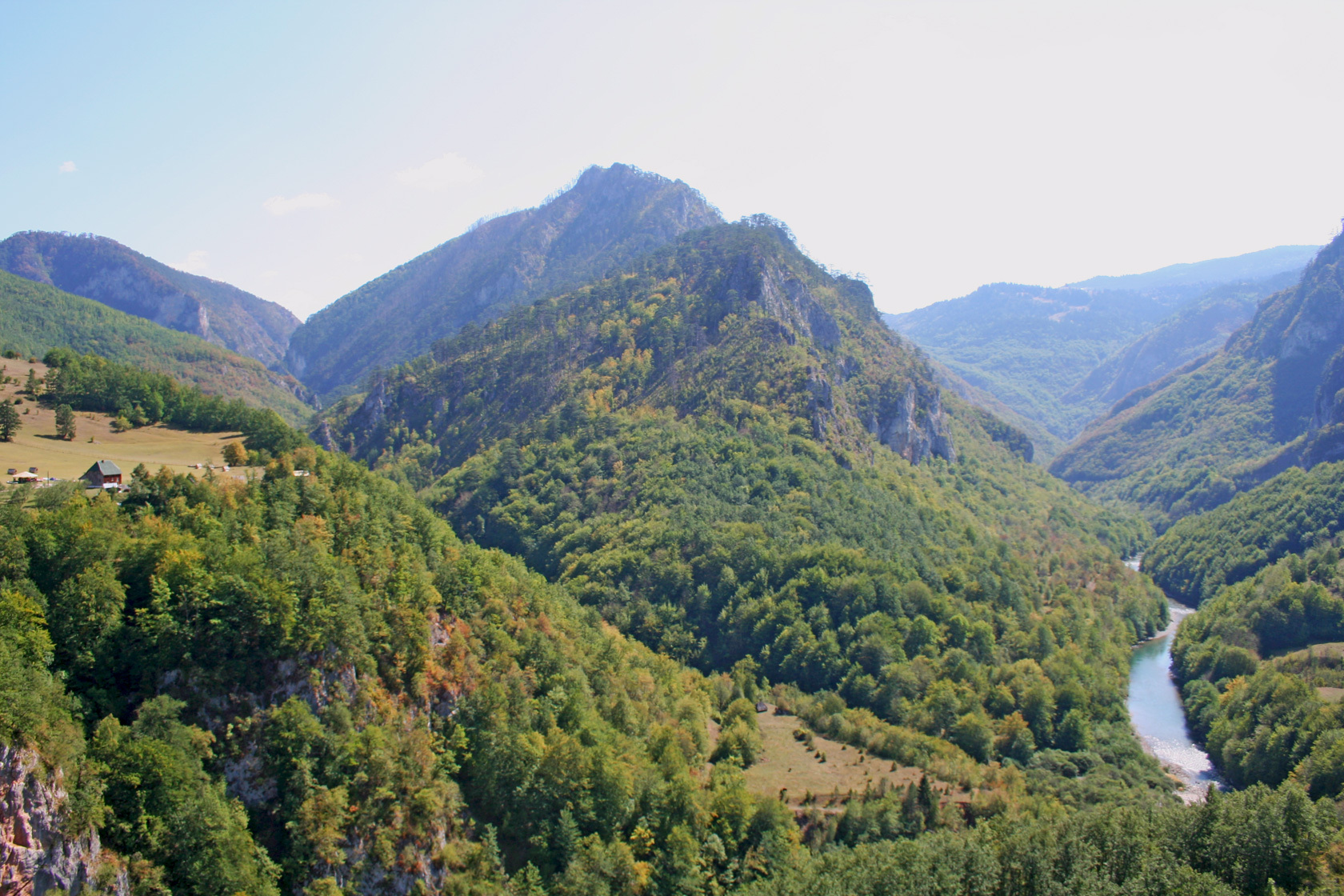
© Michael Tyler, CC BY-SA 2.0 Resized from original. (This derivative is under the same CC BY-SA license.)
World Heritage Research
Discover scientific research and academic studies that deepen our understanding of Durmitor National Park from its history and significance to its conservation, management, and contemporary challenges.
-
Exploring Local Attitudes Towards Sustainable Tourism Development and Community Resilience in Skadar Lake and Durmitor National Parks, Montenegro: A Socio-Demographic Analysis
Residents of Durmitor National Park exhibit more pronounced perceptions of both positive and negative tourism impacts compared to those in Skadar Lake National Park, while the latter show greater enthusiasm for tourism promotion. Socio-demographic factors, particularly education and age, significantly shape these attitudes. The study used questionnaire data analyzed via regression analysis, ANOVA, and Pearson’s correlation, ensuring robust statistical validity. These findings highlight the need for tailored tourism development strategies that address local community needs and perceptions in both parks.
Manojlović, B., Cvetković, V. M., Renner, R., Grozdanić, G., & Perosevic, N. (2025). Exploring Local Attitudes Towards Sustainable Tourism Development and Community Resilience in Skadar Lake and Durmitor National Parks, Montenegro: A Socio-Demographic Analysis. https://doi.org/10.20944/preprints202502.1663.v1
View Publication Record | Read Publication -
The Influence of Socio-Demographic Factors on Local Attitudes Towards Sustainable Tourism Development in Skadar Lake and Durmitor National Parks, Montenegro
Residents of Durmitor National Park exhibit more balanced attitudes toward tourism's impacts compared to those in Skadar Lake National Park, with higher ratings for both positive and negative aspects. Conversely, Skadar Lake residents show greater enthusiasm for tourism promotion and engagement. Socio-demographic factors, particularly education and age, significantly influence these perceptions. The study employed questionnaire data analyzed through multiple regression, ANOVA, and Pearson’s correlation, ensuring robust statistical validity. These findings highlight the need to tailor sustainable tourism development strategies to local communities’ specific needs and attitudes in both parks.
Manojlović, B., Cvetković, V. M., Renner, R., Grozdanić, G., & Perošević, N. (2025). The Influence of Socio-Demographic Factors on Local Attitudes Towards Sustainable Tourism Development in Skadar Lake and Durmitor National Parks, Montenegro. Sustainability, 17(7), 3200. https://doi.org/10.3390/su17073200
View Publication Record | Read Publication -
Application of Public Relations Strategies and Tactics in Promoting the Sustainable Development of Durmitor National Park
Strategic public relations can significantly enhance the sustainable development of Durmitor National Park, Montenegro. The study identifies key promotional messages and target audiences for mountain tourism while comparing local practices with global standards. Using SWOT analysis and comparative methods, it reveals that leveraging advanced promotional tactics—such as those employed in Europe—can overcome current limitations in communication and positioning. The research suggests tailored strategies to maximize the park's tourism potential, offering actionable insights for stakeholder organizations (OSJ) to improve media engagement and long-term conservation efforts.
Stijepović, D. (2024). APPLICATION OF PUBLIC RELATIONS STRATEGIES AND TACTICS IN PROMOTING THE SUSTAINABLE DEVELOPMENT OF DURMITOR NATIONAL PARK. International Scientific Journal Monte, 9(1). Internet Archive. https://doi.org/10.33807/monte.20243089
View Publication Record | Read Publication -
A Combined Stochastic–Analytical Method for the Assessment of Climate Change Impact on Spring Discharge
Climate change is projected to intensify the extremes of spring discharge in karstic aquifers, with increasing peak discharges and decreasing baseflow discharges throughout the 21st century. A novel combined stochastic–analytical modeling methodology was developed to predict these changes using regional climate model (RCM) projections from the EURO-CORDEX ensemble, bias-corrected against historical data. Applied to the Bukovica spring catchment in Durmitor National Park, Montenegro, the model revealed that both moderate and pessimistic CO2 emission scenarios (RCP 45 and RCP 85) would exacerbate flood and drought conditions by the end of the century. While annual predicted flood days showed variability depending on the scenario, drought days exhibited a periodic pattern with increasing severity over time, occurring every 5 to 7 years. This methodology offers a promising tool for studying karst aquifers under climate change scenarios.
Kovács, A., & Stevanović, Z. (2023). A Combined Stochastic–Analytical Method for the Assessment of Climate Change Impact on Spring Discharge. Water, 15(4), 629. https://doi.org/10.3390/w15040629
View Publication Record | Read Publication -
Hydraena (s.str.) dinarica, new species (Coleoptera: Hydraenidae) along with further records of Hydraena spp. from Durmitor National Park, Montenegro and comments on the DNA barcoding problem with the genus
Researchers discovered and described a new species of long-palped water beetle, Hydraena dinarica, within Durmitor National Park, Montenegro. This finding was achieved through a collaborative expedition involving citizen scientists, students, and taxonomists, who collected specimens from diverse aquatic habitats across the park using fine-meshed nets and manual substrate checks. The study integrated morphological species delimitation with mitochondrial DNA (mtDNA) sequencing, primarily conducted in the field via the MinION-based ONTrack pipeline, to validate the new species and compare it to closely related congeners within the H. saga/H. emarginata complex. Additionally, five other Hydraena species were recorded near Durmitor National Park, including the first DNA barcodes for two endemic or regionally significant species: H. biltoni (endemic to Montenegro) and H. morio. The study also highlighted challenges in DNA barcoding due to low or zero sequence divergence among recently diverged Hydraena species, providing insights into the genetic complexity of this genus.
Freitag, H., de Vries, R., Paterno, M., Maestri, S., Delledonne, M., Thompson, C., Lamed, H., Lambert, R., Fox, M., Gonzalez, M., Delocado, E., Sabordo, M., Pangantihon, C., & Njunjić, I. (2021). Hydraena (s.str.) dinarica, new species (Coleoptera: Hydraenidae) along with further records of Hydraena spp. from Durmitor National Park, Montenegro and comments on the DNA barcoding problem with the genus. Biodiversity Data Journal, 9. https://doi.org/10.3897/bdj.9.e59892
View Publication Record | Read Publication -
Destination branding: a case study of national parks in Montenegro
Montenegro's national parks, including Durmitor National Park, hold significant potential for diversifying tourism offerings beyond traditional forms. A study reveals that strategic destination branding can enhance the development of these parks by integrating market research, identity and image creation, and continuous evaluation. The approach emphasizes the importance of a cohesive branding strategy that spans from initial planning to long-term monitoring, ensuring alignment with global tourism trends. This method is particularly relevant for national parks, which are increasingly recognized as key destinations for various forms of tourism, including recreational, water-based, and winter sports. The findings highlight the need for a systematic approach to branding to maximize the economic and cultural benefits of Montenegro's natural heritage.
Janković, M., & Bokić, M. (2016). Destination branding: a case study of national parks in Montenegro. Proceedings of the Singidunum International Tourism Conference - Sitcon 2016, 187–191. https://doi.org/10.15308/sitcon-2016-187-191
View Publication Record | Read Publication -
Phenotypic Diversity and Landscape Genetics ofEristalis tenaxin a Spatially Heterogeneous Environment, Durmitor Mountain (Montenegro)
A study on the hoverfly Eristalis tenax in Durmitor National Park, Montenegro, reveals that landscape heterogeneity does not significantly impact its population structure or gene flow. Analysis of allele frequencies at allozyme loci, wing traits (size and shape), and abdominal color patterns across eight diverse locations—ranging from deciduous forests to alpine meadows—showed weak genetic differentiation and phenotypic similarity among samples. Bayesian clustering and FST estimates confirmed a lack of population structure, suggesting that E. tenax thrives in a more or less continuous habitat due to its strong dispersal capacity. These findings imply that the species may facilitate gene flow among isolated plant populations across the region, offering insights into its role in maintaining biodiversity.
Francuski, L., Ludoški, J., & Milankov, V. (2013). Phenotypic Diversity and Landscape Genetics ofEristalis tenaxin a Spatially Heterogeneous Environment, Durmitor Mountain (Montenegro). Annales Zoologici Fennici, 50(5), 262–278. https://doi.org/10.5735/085.050.0502
View Publication Record | Read Publication -
Distribution of Buxbaumia viridis (Moug. ex Lam. et DC.) Brid. ex Moug. et Nestl. (Bryophyta) in Montenegro
A notable discovery of the moss species Buxbaumia viridis in Montenegro reveals its distribution across 14 high-elevation sites, primarily in the northern and northeastern regions, with elevations exceeding 1300 meters above sea level. Remarkably, Durmitor National Park hosts a significant population at Crno jezero lake, where sporophytes are found on approximately 50 tree trunks. This study contributes valuable insights into the distribution and abundance of this moss species in Montenegro, highlighting its ecological significance within protected areas.
Dragićević, S., Papp, B., & Erzberger, P. (2012). Distribution of Buxbaumia viridis (Moug. ex Lam. et DC.) Brid. ex Moug. et Nestl. (Bryophyta) in Montenegro. Acta Botanica Croatica, 71(2), 365–370. https://doi.org/10.2478/v10184-011-0066-1
View Publication Record | Read Publication -
Soil organic carbon storage in moutain grasslands of the Lake Plateau at Mt. Durmitor in Montenegro
Researchers estimate that alpine grasslands on the Lake Plateau of Durmitor National Park, Montenegro, store approximately 560,414.86 tons of soil organic carbon (SOC) in the top 40 cm of leptosol soils, equivalent to an average density of 15.27 kg per square meter. This study highlights significant variability in SOC storage, driven by local-scale factors such as soil moisture, clay and silt content, and mean annual temperature. These variables collectively explain about 51% of the variation in SOC density across 28 soil profiles. The findings underscore the importance of microclimatic and edaphic conditions in determining carbon storage potential in high-altitude mountain ecosystems.
Kadovic, R., Belanovic, S., Obratov-Petkovic, D., Bjedov, I., Perovic, V., Andjelic, M., Knezevic, M., & Rankovic, N. (2012). Soil organic carbon storage in moutain grasslands of the Lake Plateau at Mt. Durmitor in Montenegro. Bulletin of the Faculty of Forestry, (106), 113–128. https://doi.org/10.2298/gsf1206113k
View Publication Record | Read Publication