World Heritage Identification Number: 401
World Heritage since: 1987
Category: Cultural Heritage
WHE Type: Buildings & Architectural Ensembles
Transboundary Heritage: No
Endangered Heritage: No
Country: 🇭🇺 Hungary
Continent: Europe
UNESCO World Region: Europe and North America
Map
Preserving Tradition: A Journey Through the Old Village of Hollókő and its Surroundings
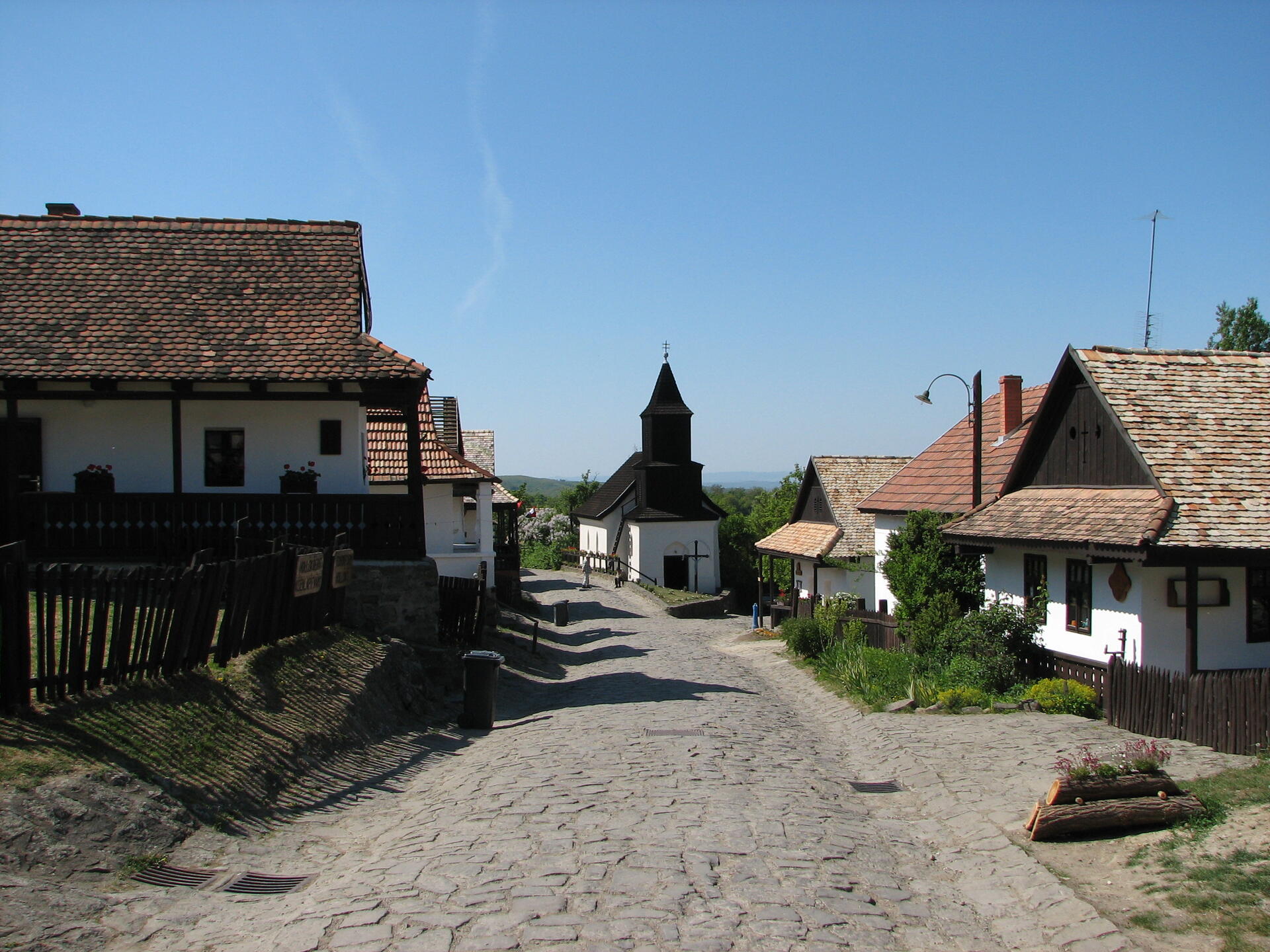
The Old Village of Hollókő and its Surroundings, nestled in the picturesque landscape of northern Hungary, stands as a testament to the enduring spirit of tradition and cultural preservation. Inscribed as a UNESCO World Heritage Site in 1987, this remarkable settlement offers a unique glimpse into rural life before the agricultural revolution of the 20th century.
More to come…UNESCO Description of the World Heritage Site
Hollokö is an outstanding example of a deliberately preserved traditional settlement. This village, which developed mainly during the 17th and 18th centuries, is a living example of rural life before the agricultural revolution of the 20th century.
UNESCO Justification of the World Heritage Site
Criterion (v): The Old Village of Hollókő is an outstanding example of a deliberately preserved traditional settlement, representative of a culture that has become vulnerable under the impact of irreversible change. This village, which developed mainly during the 18th and 19th centuries, not only represents the Palócz subgroup within the Hungarian nation but also bears witness, for the whole of Central Europe, to the traditional forms of rural life which were generally abolished by the agricultural revolution in the 20th century.
Encyclopedia Record: Hollókő
Hollókő is a village in northern Hungary, located in Nógrád County. The village, which was constructed in the 13th century and developed in the 18th and 19th centuries, is a well-preserved ethnographic village of the Palóc people, with traditional wooden architecture and layout of buildings, farms, and orchards. Because of its exceptional preservation and testimony to rural life before the arrival of modern farming practices, the village was inscribed as a UNESCO World Heritage Site in 1987. Its name means "Raven-stone" in Hungarian.Additional Site Details
Area: 144.5 hectares
Number of Components: 1
Coordinates: 47.99444 , 19.52917
World Heritage Research
Discover scientific research and academic studies that deepen our understanding of Old Village of Hollókő and its Surroundings from its history and significance to its conservation, management, and contemporary challenges.
-
A hollókői lakosság véleménye és részvételi aktivitása a helyi turizmusban
A decline in local community engagement with tourism in Hollókő, despite its status as a UNESCO World Heritage Site, has been identified. Between 2015 and 2023, while the majority of residents still view tourism as the village's primary livelihood, actual participation—particularly in local businesses and events—significantly decreased. Factors such as the COVID-19 pandemic and rising inflation exacerbated risk aversion and diminished business expectations. The study underscores the urgent need for stronger community involvement to foster sustainable local tourism. This research employs a longitudinal approach, analyzing perceptions and engagement trends over eight years using quantitative data.
Kovács, C. J. (2025). Local community perceptions and engagement with tourism in Hollókő. Acta Regionis Rurum, 19, 105–115. https://doi.org/10.21408/arr.7160
View Publication Record | Read Publication -
A hollókői örökség fenntarthatósági dilemmái: alternatív turisztikai fejlesztés botanikai értékek mentén
Hollókő's UNESCO-listed Old Village faces sustainability challenges that necessitate alternative tourism development approaches. The study identifies botanical values as potential keys to shifting towards more sustainable, low-impact tourism models while preserving the site's unique cultural heritage and landscape harmony. By focusing on the region's botanical assets, researchers propose a strategy that could balance conservation efforts with economic growth, offering a viable path for maintaining Hollókő's living village character and traditional architecture without compromising its ecological integrity.
Nagy, J. G., & Nagyné Molnár, M. (2025). The sustainability dilemmas of Hollókő’s heritage: alternative tourism development based on botanical values. Acta Regionis Rurum, 19, 117–125. https://doi.org/10.21408/arr.7161
View Publication Record | Read Publication -
Hollókő dilemmái: „kötelező” hagyomány és/vagy üzleti érdek?
Hollókő's study reveals a tension between obligatory tradition and business interests, shaping the village's development trajectory. The research highlights how local communities navigate these dual pressures while maintaining cultural heritage. Using a mixed-methods approach—document analysis, public databases, surveys, and interviews with civil society representatives—the study maps community dynamics, development projects, and future perceptions. It underscores the pivotal role of civil organizations in fostering cohesion but also identifies challenges in balancing tradition with economic growth, offering insights into sustainable heritage management for UNESCO World Heritage Sites.
Gerencsér, I. (2025). Hollókő’s dilemmas: ‘obligatory’ tradition and/or business interest? Acta Regionis Rurum, 19, 89–104. https://doi.org/10.21408/arr.7159
View Publication Record | Read Publication -
Hollókői trendek, avagy a faluszemináriumi kutatóműhely 2015-ös és 2023-as kutatásainak összegzése
A comparative analysis of two comprehensive social and economic surveys conducted by the Village Seminar Research Workshop in 2015 and 2023 reveals key trends and challenges shaping the transformation of Hollókő, a renowned UNESCO World Heritage Site. Once an isolated village with minimal administrative presence, Hollókő has undergone significant development, emerging as a prominent tourist destination. The study highlights its transition from obscurity to cultural significance, marked by changes in infrastructure, tourism, and community dynamics. By synthesizing data from both surveys, researchers identified patterns of growth, such as increased visitor numbers and economic diversification, alongside persistent issues like rural depopulation and resource management. This synthesis offers a nuanced understanding of Hollókő's evolution over nearly a decade, providing insights into the factors driving its success while addressing ongoing challenges.
Nagyné Molnár, M. (2025). Trends in Hollókő: a summary of the village seminar research workshop’s 2015 and 2023 studies. Acta Regionis Rurum, 19, 165–173. https://doi.org/10.21408/arr.7164
View Publication Record | Read Publication -
Munkaerőpiaci helyzetkép – A gazdasági élet sajátosságai Hollókőn
Hollókő, Hungary's sole village designated as a UNESCO World Heritage Site, exhibits unique labor market and economic dynamics. By 2022, its employment rate neared that of Nógrád County, while a 'daytime population exchange' emerged, driven by commuters working both within and outside the village. This phenomenon, alongside primary research on local economic factors and public perception, provides a comprehensive view of Hollókő's distinctive economic landscape. The study combines secondary census data analysis with direct surveys to uncover these trends.
Lőrinc, B. (2025). Labour market situation – The characteristics of economic life in Hollókő. Acta Regionis Rurum, 19, 45–58. https://doi.org/10.21408/arr.7157
View Publication Record | Read Publication -
Társadalmi helyzetkép Hollókőn a népszámlálási statisztikák alapján
Hollókő's population has shown distinct demographic trends, including changes in ethnic and religious composition, age structure, family status, education levels, and economic activity. These findings, derived from a comprehensive analysis of census data, provide a detailed snapshot of the village's social dynamics compared to broader Nógrád County trends. The study, conducted by researchers at the MRTT Rural Seminar Research Unit in 2023, employed descriptive and foundational methods to examine these aspects, offering valuable insights into the everyday life and societal structure of this UNESCO World Heritage site.
Lőrinc, B. (2025). The social condition in Hollókő on the basis of census statistics. Acta Regionis Rurum, 19, 17–28. https://doi.org/10.21408/arr.7154
View Publication Record | Read Publication -
Értékek és örökség Hollókőn
Hollókő's cultural heritage, encompassing both tangible and intangible elements, plays a pivotal role in the sustainable development of rural areas. While cultural tourism offers economic benefits by leveraging this heritage as a global attraction, its massification poses risks to the site's authenticity, condition, and value. The study reveals that the increasing tourist influx can degrade the heritage's integrity, disrupt local tranquility, and threaten long-term sustainability. Through surveys and interviews with key stakeholders, the research maps Hollókő's heritage history—its exploration, preservation, and tourism utilization—across different eras, reflecting societal processes. It also assesses the current state of the site, highlighting both its global visibility as a UNESCO World Heritage Site and the challenges arising from its elevated status.
Bálint, C. (2025). Values and heritage in Hollókő. Acta Regionis Rurum, 19, 59–88. https://doi.org/10.21408/arr.7158
View Publication Record | Read Publication -
Út az örökségturizmusig: faluszemináriumi kutatások Hollókőn
Research on Hollókő, a renowned Hungarian village and UNESCO World Heritage Site, reveals the complex interplay between societal transformations and economic shifts in rural areas. This study stands out for its comprehensive approach, integrating layered social and economic analyses to map the village's evolution. Unlike other studies focusing on specific aspects of Hollókő, this research provides a holistic view by tracking long-term changes through repeated site visits since 2015. The methodology combines problem-oriented inquiry with intricate analytical techniques, offering valuable insights into the dynamics shaping rural heritage sites like Hollókő.
Nagyné Molnár, M. (2025). Path to heritage tourism: village seminar research in Hollókő. Acta Regionis Rurum, 19, 5–15. https://doi.org/10.21408/arr.7153
View Publication Record | Read Publication -
Hollókő: a harmadik dosszié
A critical reassessment of Hollókő's World Heritage nomination reveals a disconnect between the presented narrative and actual societal processes. The study, based on prior research, challenges the idealized portrayal submitted to the World Heritage Committee, exposing discrepancies that persist in the site's heritage management. This analysis highlights the tension between promotional claims and real-world dynamics, offering insights into the complexities of heritage conservation.
Kovács, D. (2022). Hollókő: a harmadik dosszié. Történelem – Társadalom – Vidék : Jubileumi Tanulmánykötet II., 189–217. https://doi.org/10.35511/978-963-334-430-9-kovacs
View Publication Record | Read Publication