World Heritage Identification Number: 823
World Heritage since: 1997
Category: Cultural Heritage
WHE Type: Buildings & Architectural Ensembles
Transboundary Heritage: No
Endangered Heritage: No
Country: 🇮🇹 Italy
Continent: Europe
UNESCO World Region: Europe and North America
Map
The Residences of the Royal House of Savoy: A Grandiose Legacy of the Savoy Dynasty
The Residences of the Royal House of Savoy, inscribed as a UNESCO World Heritage Site in 1997, offer a captivating glimpse into the grandeur and influence of the Savoy dynasty that ruled the Kingdom of Sardinia, later known as the Kingdom of Italy, for over four centuries. This architectural ensemble, spanning across Turin and the Metropolitan City of Turin in Piedmont, Italy, is a testament to the power, wealth, and artistic vision of the Savoy rulers.
More to come…UNESCO Description of the World Heritage Site
When Emmanuel-Philibert, Duke of Savoy, moved his capital to Turin in 1562, he began a vast series of building projects (continued by his successors) to demonstrate the power of the ruling house. This outstanding complex of buildings, designed and embellished by the leading architects and artists of the time, radiates out into the surrounding countryside from the Royal Palace in the 'Command Area' of Turin to include many country residences and hunting lodges.
UNESCO Justification of the World Heritage Site
Criterion (i): The Residences of the Royal House of Savoy provides outstanding testimony to the exuberant genius of Baroque and Late Baroque art and architecture, constructed over many decades by outstanding architects, including Ascanio Vitozzi, Benedetto Alfieri, Amedeo di Castellamonte, Guarino Guarini and Filippo Juvarra.
Criterion (ii): The monumental architecture and town-planning of the Residences of the Royal House of Savoy reflect the interchange of human values across Europe during the ‘Baroque episode’ of the 17th and 18th centuries which led to an immense work of creation and homogenization, ornamentation and improvement.
Criterion (iv): The Residences of the Royal House of Savoy is an outstanding example of the strategies and styles of the Baroque, a monumental architectural ensemble illustrating the prevailing doctrine of absolute monarchy in material terms.
Criterion (v): The Residences of the Royal House of Savoy constitute a dynastic heritage that is both complex and unitary being a true symbiosis between culture and nature through its mastery of urban space and its planning of vast tracts of countryside to create a concentric authoritarian organization with Turin at its centre.
Encyclopedia Record: Residences of the Royal House of Savoy
The Residences of the Royal House of Savoy are a group of buildings in Turin and the Metropolitan City of Turin, in Piedmont, northern Italy. It was added to the UNESCO World Heritage Sites list in 1997.Additional Site Details
Area: 370.82 hectares
Number of Components: 14
(ii) — Significant interchange of human values
(iv) — Outstanding example of a type of building or landscape
(v) — Outstanding example of traditional human settlement
Coordinates: 45.07253 , 7.68572
Image
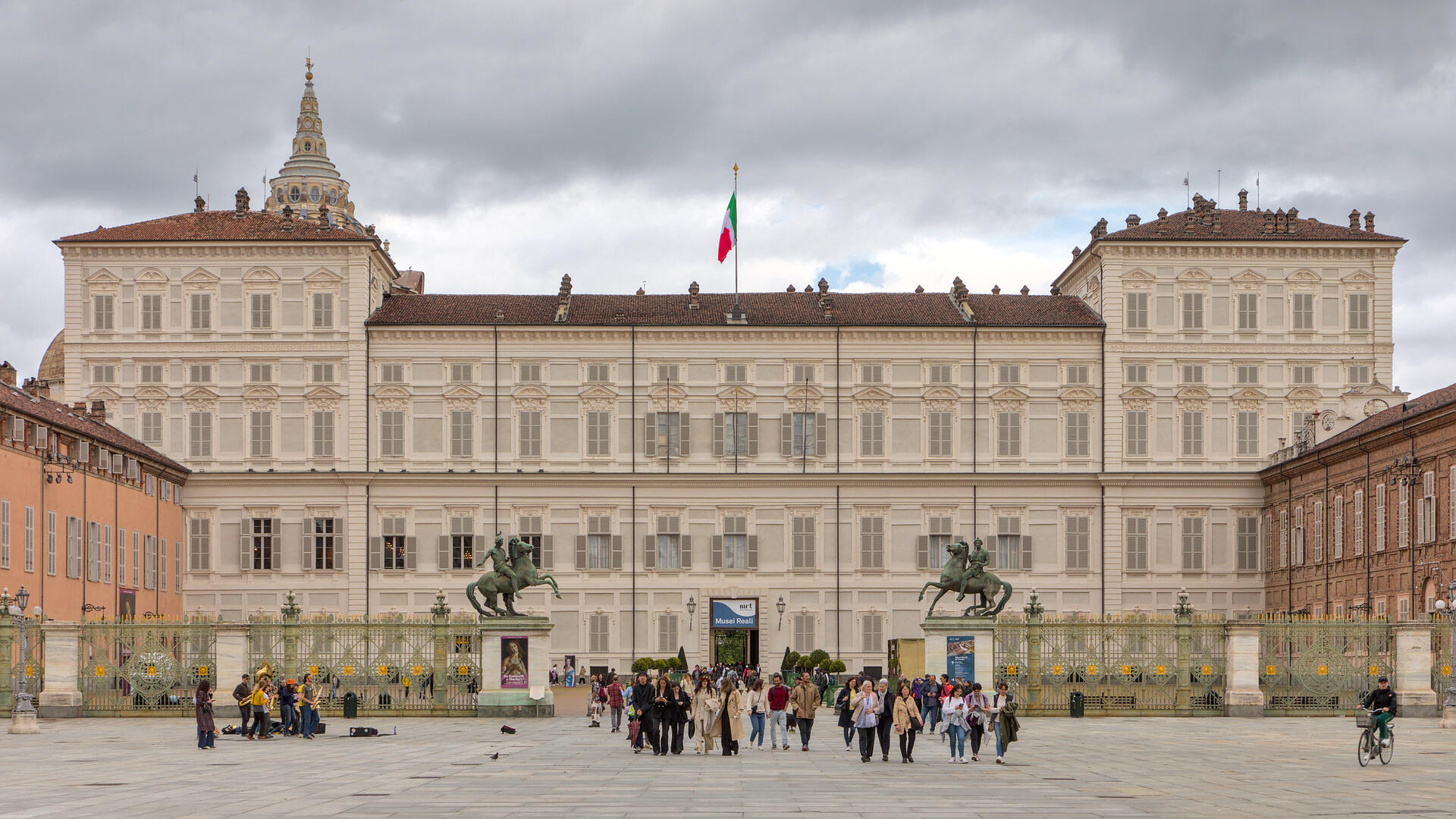
© Benjamin Smith, CC BY-SA 4.0 Resized from original. (This derivative is under the same CC BY-SA license.)
World Heritage Research
Discover scientific research and academic studies that deepen our understanding of Residences of the Royal House of Savoy from its history and significance to its conservation, management, and contemporary challenges.
-
Proposal of indicator-based dashboard for identifying value components and impacts generated by preventive and planned conservation processes. The system of maisons de plaisance within the Residences of Royal House of Savoy
A novel indicator-based dashboard is proposed to assess the value components and impacts of preventive and planned conservation strategies for UNESCO World Heritage Sites, specifically focusing on the Residences of the Royal House of Savoy. This tool systematically evaluates heterogeneous impacts—including economic, environmental, cultural, and social dimensions—at multiple scales, providing a preliminary yet comprehensive framework for measuring potential benefits and return on investment. The study highlights the importance of participatory governance models, which actively engage beneficiaries, local communities, and Third Sector institutions in decision-making processes, ensuring long-term sustainability. By integrating qualitative and quantitative indicators, this approach aligns with emerging regulatory frameworks that emphasize non-financial metrics alongside traditional economic valuations.
Coscia, C., Beltramo, G., & Naretto, M. (2026). Proposal of indicator-based dashboard for identifying value components and impacts generated by preventive and planned conservation processes. The system of maisons de plaisance within the Residences of Royal House of Savoy. Valori E Valutazioni, 39, 21–44. https://doi.org/10.48264/vvsiev-20263903
View Publication Record | Read Publication -
Strumenti digitali per i percorsi di visita della Palazzina di Caccia di Stupinigi: Residenza Sabauda e Museo dell'Ammobiliamento
A digital platform, 'Collezioni in Ordine,' has been developed to enhance visitor engagement at the Stupinigi Hunting Lodge, a UNESCO-listed Savoy Residence and Italy's first Furniture Museum. This tool integrates historical inventories, restoration data, and augmented reality (AR) to provide immersive experiences that distinguish between the lodge's courtly history and its museum function. By leveraging QR codes and AR totems, visitors can explore the evolution of rooms across different periods, access multilingual conservation insights, and engage with interactive narratives about the residence's protagonists. The platform also connects with digital archives from the 'La Venaria Reale' Conservation and Restoration Centre, ensuring universal accessibility to scientific data through easy-to-read translations. This approach resolves longstanding challenges in cataloging and public engagement while setting a precedent for integrating advanced digital tools in heritage conservation.
De Blasi, S. (2026). Strumenti digitali per i percorsi di visita della Palazzina di Caccia di Stupinigi: Residenza Sabauda e Museo dell'Ammobiliamento. Zenodo. https://doi.org/10.5281/ZENODO.20443659
View Publication Record | Read Publication -
Recolonization dynamics of lichens after biocidal treatments: A limitation in the spreading of water-based solutions beneath thalli as species-specific influencing factor
Lichen recolonization on heritage surfaces, particularly for species with low propagule dispersal potential, begins immediately after biocidal treatments, challenging the assumption that these interventions fully devitalize lichens. Research on marble balustrades from two UNESCO World Heritage Sites in Italy revealed that water-based biocides may not penetrate deeply enough beneath lichen thalli to affect their hyphal structures, leaving viable remnants that rapidly restart recolonization. This finding suggests a species-specific resilience linked to the depth of hyphal penetration and substrate properties, which could explain the frequent recurrence of Megasporaceae and Verrucariaceae on recently cleaned surfaces. The study used marble blocks to simulate biocide spread, confirming that lichen cover influences water absorption but does not prevent some hydrophobic volumes beneath thalli from acting as refuges for lichen survival.
Cicardi, M., Matteucci, E., Rao-Torres, G., Canepa, M. C., Castelli, D., Ferrando, S., Antonietti, S., Piqué, F., & Favero-Longo, S. E. (2025). Recolonization dynamics of lichens after biocidal treatments: A limitation in the spreading of water-based solutions beneath thalli as species-specific influencing factor. Journal of Cultural Heritage, 73, 454–464. https://doi.org/10.1016/j.culher.2025.04.005
View Publication Record | Read Publication -
Spazi in attesa nelle Residenze Sabaude, Patrimonio Mondiale dal 1997. Previsioni di restauro e messa a sistema nell’obiettivo della sostenibilità culturale
Balancing conservation and innovation is critical for the sustainable restoration of UNESCO World Heritage Sites, as demonstrated by ongoing projects at the Residences of the Royal House of Savoy in Piedmont. Since their inclusion on the World Heritage List in 1997, these monumental sites—comprising architecture, gardens, and parks—have faced challenges in addressing unresolved spaces while preserving cultural significance. Research highlights the need for high-quality interventions that align with institutional protection goals and adapt to evolving cultural demands, particularly during challenging historical periods. Projects at Aglié, Govone, and Racconigi Residences illustrate this balance, emphasizing systematic restoration strategies that ensure both authenticity and contemporary relevance.
Naretto, M. (2023). Spazi in attesa nelle Residenze Sabaude, Patrimonio Mondiale dal 1997. Previsioni di restauro e messa a sistema nell’obiettivo della sostenibilità culturale. Restauro Archeologico, 30(1). https://doi.org/10.36253/rar-14332
View Publication Record | Read Publication -
The Residences of the Royal House of Savoy, a Serial Site in the World Heritage List since 1997 in Piedmont
The Residences of the Royal House of Savoy, a UNESCO World Heritage Site since 1997, represent a significant cultural asset in Piedmont, Italy. These Baroque-era palaces document the architectural and artistic heritage of the region but faced neglect after the abolition of the Italian monarchy in 1946. Restoration efforts, notably the major overhaul of Venaria Reale (1998-2007), have preserved this heritage. The current challenge is to valorize these sites through coordinated management, addressing the complexities of multiple institutions involved. A 2017 consortium recasting aims to unify policies, enhance visibility, and promote tourism, marking a step toward more effective preservation and promotion.
Cornaglia, P. (2023). Резиденції королівського дому Савойя, об’єкт у Списку Всесвітньої спадщини ЮНЕСКО з 1997 року в П’ємонті. Історико-Політичні Проблеми Сучасного Світу, (47), 47–60. https://doi.org/10.31861/mhpi2023.47.47-60
View Publication Record | Read Publication -
Feeling home, promoting home
Effective tourist development in urban regeneration hinges on strategic urban policies, community engagement, and cultural heritage education. The study identifies the inscription of Turin's Residences of the Royal House of Savoy on UNESCO's World Heritage List (1997) and its hosting of the 2006 Winter Olympics as pivotal milestones that propelled the city's transformation into an international tourist destination. Through a comparative analysis of three districts—Porta Palazzo, Mirafiori Nord, and Barriera di Milano—the research categorizes factors such as urban history, demographic composition, and economic situation to assess their impact on regeneration outcomes. Additionally, the author's involvement in Atelier Héritage, an urban workshop for children in Barriera di Milano, provides a unique lens to study grassroots urban practices. The findings underscore that sustainable tourist development requires a multifaceted approach, balancing policy-driven initiatives with community participation and heritage education.
Guerra, M. (2021). Feeling home, promoting home. Tourism Dynamics in Everyday Places, 98–115. https://doi.org/10.4324/9781003138600-8
View Publication Record | Read Publication -
An Application of the A’WOT Analysis for the Management of Cultural Heritage Assets: The Case of the Historical Farmhouses in the Aglié Castle (Turin)
A novel multi-criteria decision approach, the A’WOT analysis, demonstrates significant potential for guiding adaptive reuse strategies of abandoned cultural heritage assets. Applied to four historical farmhouses within the Aglié Castle estate—a UNESCO-listed Residence of the Royal House of Savoy—the study identifies robust frameworks to balance preservation with economic and cultural valorization. By addressing conflicting criteria from diverse stakeholders, this method supports informed investment decisions that foster both historical integrity and sustainable development. The findings underscore the effectiveness of structured multi-criteria analyses in resolving trade-offs between symbolic value retention and economically viable reuse, offering a scalable model for managing similar heritage assets globally.
Bottero, M., D’Alpaos, C., & Marello, A. (2020). An Application of the A’WOT Analysis for the Management of Cultural Heritage Assets: The Case of the Historical Farmhouses in the Aglié Castle (Turin). Sustainability, 12(3), 1071. https://doi.org/10.3390/su12031071
View Publication Record | Read Publication