World Heritage Identification Number: 1037
World Heritage since: 2001
Category: Natural Heritage
WHE Type: Protected Areas & National Parks
Transboundary Heritage: No
Endangered Heritage: No
Country: 🇨🇭 Switzerland
Continent: Europe
UNESCO World Region: Europe and North America
Map
Swiss Alps Jungfrau-Aletsch: A World Heritage Landscape of Ice and Peaks
The Swiss Alps Jungfrau-Aletsch, inscribed as a UNESCO World Heritage Site in 2001, represents the breathtaking beauty and geological significance of the High Alps. Spanning over 82,400 hectares across the cantons of Bern and Valais, this expansive protected area offers a unique insight into the formation of mountains, glaciers, and the ongoing effects of climate change.
Geographically, the Swiss Alps Jungfrau-Aletsch encompasses the northern walls of iconic peaks such as the Jungfrau and the Eiger, as well as the Finsteraarhorn—the site's highest peak at 4,274 meters —, while hosting the largest continuous glaciated area in the Alps, which includes the renowned Aletsch Glacier. This vast ice mass stretches roughly 20–23 kilometers, making it the longest glacier in the Alps and one of the largest in western Europe.
The Aletsch Glacier system is fed by several tributary glaciers that converge near the vast ice basin of Konkordiaplatz, where multiple ice flows merge into a single dominant glacier stream. From this central accumulation zone, the ice gradually descends through deep valleys, shaped over time by continuous movement and erosion of the surrounding rock. The sheer scale and structure of this glacial system make it one of the most important natural laboratories for studying active glacial dynamics in the Alps.
The site's outstanding universal value lies not only in its stunning landscapes but also in the wealth of information it provides about the formation of mountains and glaciers. The High Alps region, where the Jungfrau-Aletsch is situated, serves as an exceptional example of the process that shaped the Alps millions of years ago. The intricate interplay between tectonic forces, erosion, and glaciation has resulted in the creation of towering peaks, deep valleys, and vast glacial systems.
Moreover, the Swiss Alps Jungfrau-Aletsch offers a vivid illustration of the ongoing impact of climate change on these delicate ecosystems. As global temperatures rise, glaciers worldwide are receding at an alarming rate. The retreat of glaciers within the Jungfrau-Aletsch site has led to significant changes in the local environment, triggering successional stages in vegetation patterns. These shifts offer valuable insights into the ecological and biological processes associated with glacier retreat.
The region also contains a clear sequence of altitudinal ecological zones that reflect the dramatic changes in climate and terrain with elevation. Broadleaf forests and alpine meadows dominate the lower valleys, transitioning into sparse vegetation adapted to harsh alpine conditions at higher elevations, before giving way to permanent ice and rock in the highest zones. This vertical gradient creates a rich diversity of habitats and makes the area an important refuge for species adapted to cold and high-altitude environments.
In addition to its scientific importance, the Swiss Alps Jungfrau-Aletsch holds cultural significance as well. Throughout history, the region has inspired artists, writers, mountaineers, and travellers alike. The dramatic landscapes have been immortalized in countless works of art and literature, while the challenges posed by steep slopes and harsh conditions have attracted climbers since the early days of alpinism. Beyond recreation, the lower valleys and meadows reflect centuries of traditional alpine pastoralism, where local communities have practiced seasonal cattle grazing and cheese-making.
Human interaction with the region is also strongly defined by engineering and scientific exploration. The Jungfraujoch railway station, accessed via the historic Jungfrau Railway, brings visitors and researchers into the high alpine environment at over 3,400 metres above sea level. This unique infrastructure has made the site a major center for climate and glaciological research, allowing continuous monitoring of atmospheric conditions, ice movement, and long-term environmental change directly within the heart of the High Alps.
Today, the Swiss Alps Jungfrau-Aletsch continues to captivate visitors from around the world, who come to marvel at its awe-inspiring vistas, explore its diverse ecosystems, and experience the thrill of conquering its majestic peaks. As a UNESCO World Heritage Site, this remarkable region ensures the preservation of its natural wonders for future generations to study and appreciate.
UNESCO Description of the World Heritage Site
The extension of the natural World Heritage property of Jungfrau - Aletsch - Bietschhorn (first inscribed in 2001), expands the site to the east and west, bringing its surface area up to 82,400 ha., up from 53,900. The site provides an outstanding example of the formation of the High Alps, including the most glaciated part of the mountain range and the largest glacier in Eurasia. It features a wide diversity of ecosystems, including successional stages due particularly to the retreat of glaciers resulting from climate change. The site is of outstanding universal value both for its beauty and for the wealth of information it contains about the formation of mountains and glaciers, as well as ongoing climate change. It is also invaluable in terms of the ecological and biological processes it illustrates, notably through plan succession. Its impressive landscape has played an important role in European art, literature, mountaineering and alpine tourism.
UNESCO Justification of the World Heritage Site
Criterion (vii): The impressive landscape within the property has played an important role in European art, literature, mountaineering and alpine tourism. The area is globally recognised as one of the most spectacular mountain regions to visit and its aesthetics have attracted an international following. The impressive north wall of the High Alps, centred on the Eiger, Mönch and Jungfrau peaks, is a superlative scenic feature, complemented on the southern side of the Alpine divide by spectacular peaks and a valley system which supports the two longest glaciers in western Eurasia.
Criterion (viii): The property provides an outstanding example of the formation of the High Alps resulting from uplift and compression which began 20-40 million years ago. Within an altitude range from 809 m to 4,274 m, the region displays 400 million-year-old crystalline rocks thrust over younger carbonate rocks due to the northward drift of the African tectonic plate. Added to the dramatic record of the processes of mountain building is a great abundance and diversity of geomorphological features such as U-shaped glacial valleys, cirques, horn peaks, valley glaciers and moraines. This most glaciated part of the Alps contains the Aletsch glacier, the largest and longest in Europe, which is of significant scientific interest in the context of glacial history and ongoing processes, particularly related to climate change.
Criterion (ix): Within its altitudinal range and its dry southern/wet northern exposures, the property provides a wide range of alpine and sub-alpine habitats. On the two main substrates of crystalline and carbonate rocks, a variety of ecosystems have evolved without significant human intervention. Superb examples of plant succession exist, including the distinctive upper and lower tree-line of the Aletsch forest. The global phenomenon of climatic change is particularly well-illustrated in the region, as reflected in the varying rates of retreat of the different glaciers, providing new substrates for plant colonization. The property is well managed, with a management strategy and plan in place which have been developed through an exemplary participatory process. Almost all of the property is under some form of legal protection. Key management issues include the potential impact from climate change, the management of tourism, and the need to ensure effective coordination of management responsibility between federal, cantonal and communal levels of government.
Encyclopedia Record: Jungfrau-Aletsch protected area
The Jungfrau-Aletsch protected area is located in south-western Switzerland between the cantons of Bern and Valais. It is a mountainous region in the easternmost side of the Bernese Alps, containing the northern wall of Jungfrau and Eiger, and the largest glaciated area in western Eurasia, comprising the Aletsch Glacier. The Jungfrau-Aletsch protected area is the first World Natural Heritage site in the Alps; it was inscribed in 2001.Additional Site Details
Area: 82,400 hectares
Number of Components: 1
(viii) — Outstanding example representing major earth stages
(ix) — Outstanding example representing ecological and biological processes
Coordinates: 46.5 , 8.0333333333
IUCN World Heritage Outlook
The 2025 Conservation Outlook on Swiss Alps Jungfrau-Aletsch reports the following assessment:
Source: International Union for Conservation of Nature (IUCN) · View assessment
Image
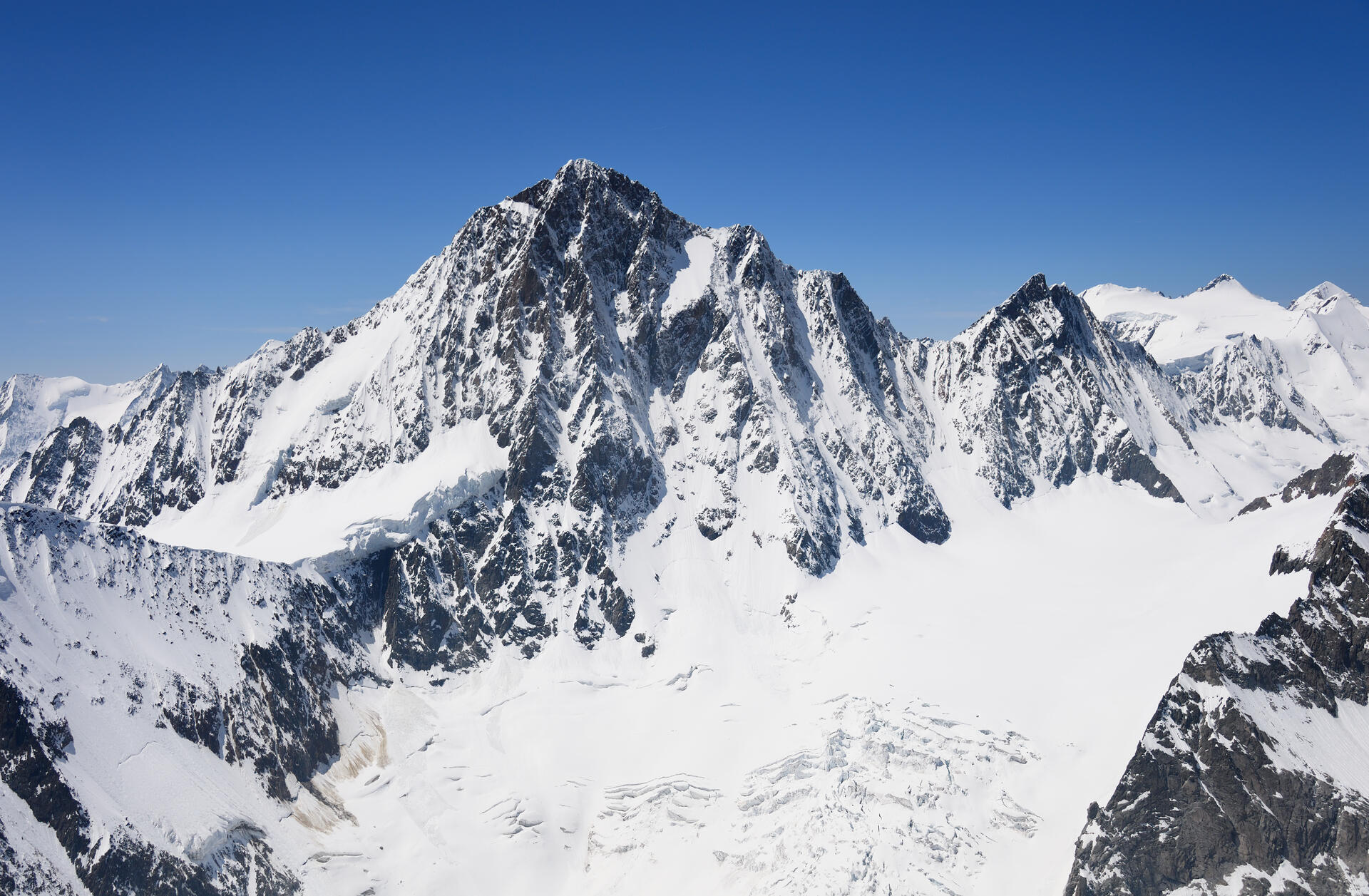
© Carsten Steger, CC BY-SA 4.0 Resized from original. (This derivative is under the same CC BY-SA license.)
World Heritage Research
Discover scientific research and academic studies that deepen our understanding of Swiss Alps Jungfrau-Aletsch from its history and significance to its conservation, management, and contemporary challenges.
-
Conservation of World Heritage glacial landscapes in a changing climate: The Swiss Alps Jungfrau-Aletsch case
Glacial landscapes inscribed as UNESCO World Heritage Sites, such as those in the Swiss Alps Jungfrau-Aletsch, face significant threats from climate change due to rapid glacier retreat. This study reveals that the Outstanding Universal Value (OUV) of these sites—particularly their aesthetic and geoheritage values—could be diminished or altered if glaciers disappear entirely. Using a Past-Present-Future framework, researchers analyzed two sites within Jungfrau-Aletsch: the Great Aletsch Glacier and the Upper Lauterbrunnen Valley. They found that while current glaciological processes contribute to geoheritage value (criterion viii), inherited glacial landforms will gain prominence in a post-glacial future. However, these landforms are fragile and non-renewable, necessitating their protection. Additionally, the aesthetic appeal of glacial landscapes may decline, suggesting a potential shift from glacier tourism toward geotourism to emphasize landscape evolution understanding.
Bussard, J., & Reynard, E. (2025). Conservation of World Heritage glacial landscapes in a changing climate: The Swiss Alps Jungfrau-Aletsch case. https://doi.org/10.5194/egusphere-egu24-16650
View Publication Record | Read Publication -
The disintermediation role of social media to manage and monitor visitor flows in heritage sites
Social media plays a pivotal disintermediating role in managing and monitoring visitor flows at UNESCO World Heritage Sites, offering a sustainable tourism model that balances preservation with accessibility. Research analyzing social media data from sites like the Swiss Alps Jungfrau-Aletsch, Rhaetian Railway, Venice, and the Tuscan Islands revealed its potential to enhance awareness of heritage values while mitigating overtourism impacts. The study, conducted between 2019 and 2020, demonstrated how platforms can facilitate real-time monitoring of visitor behavior, tourism promotion, hospitality services, and governance—key components of a 'heritage stewardship destination' approach. A proposed Social Media Action Planning framework aims to guide heritage managers in leveraging these tools for sustainable tourism communication.
Ruoss, E., & Sormaz, A. (2022). The disintermediation role of social media to manage and monitor visitor flows in heritage sites. Handbook on Heritage, Sustainable Tourism and Digital Media. https://doi.org/10.4337/9781788970082.00034
View Publication Record | Read Publication -
Glacier Movement Prediction through Computer Vision and Satellite Imagery
A novel approach using computer vision and high-resolution satellite imagery demonstrates high accuracy in predicting glacier movement, offering valuable insights into the evolution of ice coverage. Researchers applied a dense optical flow algorithm to time-series images of the Jungfrau-Aletsch-Bietschhorn (JAB) glacier in the Swiss Alps, successfully extracting motion vectors that closely matched observed values. This method, utilizing Normalized Difference Snow Index (NDSI), proves efficient for monitoring glacial changes, particularly under the increasing pressures of climate change. The study highlights the potential of satellite-based techniques to provide precise and timely data on glacier dynamics, aiding in broader environmental assessments.
Vonica, M.-M., Ancuta, A., & Frincu, M. (2021). Glacier Movement Prediction through Computer Vision and Satellite Imagery. 2021 23rd International Symposium on Symbolic and Numeric Algorithms for Scientific Computing (SYNASC), 113–120. https://doi.org/10.1109/synasc54541.2021.00029
View Publication Record | Read Publication -
The UNESCO World Heritage Swiss Alps Jungfrau-Aletsch – protecting the cultural landscape by preserving the traditional irrigation system in the Upper Valais
Traditional irrigation systems within the UNESCO World Heritage Swiss Alps Jungfrau-Aletsch (SAJA) are critical to maintaining biodiversity and cultural landscapes, yet they face decline due to agricultural changes. The Great Aletsch Glacier and iconic peaks of Eiger, Mönch, and Jungfrau form a unique natural and cultural landscape, but traditional irrigation techniques—essential for meadows and vineyards—are being replaced by modern sprinkler systems or abandoned. To address this, the project 'Preservation of Traditional Irrigation in the Upper Valais' identified at-risk areas and engaged local stakeholders to develop solutions. Proposed strategies include financial compensation, volunteer platforms, institutionalization, education, awareness campaigns, and the establishment of an Expert Commission for irrigation landscapes. These measures aim to safeguard both ecological diversity and cultural heritage in this high-altitude region.
Oehler, J. (2021). The UNESCO World Heritage Swiss Alps Jungfrau-Aletsch – protecting the cultural landscape by preserving the traditional irrigation system in the Upper Valais. Eco.Mont (Journal on Protected Mountain Areas Research), 14(1), 33–37. https://doi.org/10.1553/eco.mont-14-1s33
View Publication Record | Read Publication -
Traditionelle Bewässerung – ein Kulturerbe mit Zukunft?
Traditional irrigation systems in the Swiss Alps Jungfrau-Aletsch have sustained water supply in arid valleys for centuries while shaping a culturally and ecologically rich landscape. These systems, characterized by communal management models, continue to serve as a blueprint for sustainable water use today. However, they face significant challenges that threaten their long-term viability. The study highlights the dual role of these irrigation practices—preserving biodiversity and historical architecture while adapting to modern demands. It underscores the need for innovative strategies to ensure the survival of this cultural heritage in the face of environmental pressures.
Bär, Roger, & Liechti, Karina. (2020). Traditionelle Bewässerung – ein Kulturerbe mit Zukunft? University of Bern. https://doi.org/10.48350/151563
View Publication Record | Read Publication -
Hidden diversity in European bees: Andrena amieti sp. n., a new Alpine bee species related to Andrena bicolor (Fabricius, 1775) (Hymenoptera, Apoidea, Andrenidae)
A new Alpine bee species, Andrena amieti, has been identified within the UNESCO World Heritage Site 'Swiss Alps Jungfrau-Aletsch', revealing hidden diversity among European bees. Phylogenetic analysis of genetic and morphological data confirmed its distinct status alongside three other closely related species: A.montana and A.allosa. The study found that A.amieti is bivoltine, with spring and summer generations exhibiting different pollen host preferences—spring being polylectic while the summer generation favors Campanulaceae. Additionally, two divergent mitochondrial lineages coexist in sympatry within this species, suggesting potential cryptic diversity. The research also resurrected A.croatica as a valid species and elevated A.pileata to species rank, proposing that such hidden diversity may be widespread in southern European Andrena (Euandrena). An identification key for central European members of the subgenus Euandrena was provided.
Praz, C., Müller, A., & Genoud, D. (2019). Hidden diversity in European bees: Andrena amieti sp. n., a new Alpine bee species related to Andrena bicolor (Fabricius, 1775) (Hymenoptera, Apoidea, Andrenidae). Alpine Entomology, 3, 11–38. https://doi.org/10.3897/alpento.3.29675
View Publication Record | Read Publication -
First measurement of ice‐bedrock interface of alpine glaciers by cosmic muon radiography
Scientists have successfully applied cosmic muon radiography to map the bedrock topography beneath alpine glaciers for the first time, revealing critical insights into glacial erosion mechanisms. Using emulsion film detectors installed along the Jungfrau railway tunnel in the Swiss Alps, researchers measured the ice-bedrock interface under Aletsch Glacier, uncovering a NE-SW striking bedrock that dips at 45° ± 5°, extending up to 50 meters below the surface. This innovative approach, leveraging cosmic ray muons, offers unprecedented precision in studying glacial geology and promises to advance our understanding of how glaciers shape underlying landscapes.
Nishiyama, R., Ariga, A., Ariga, T., Käser, S., Lechmann, A., Mair, D., Scampoli, P., Vladymyrov, M., Ereditato, A., & Schlunegger, F. (2017). First measurement of ice‐bedrock interface of alpine glaciers by cosmic muon radiography. Geophysical Research Letters, 44(12), 6244–6251. Portico. https://doi.org/10.1002/2017gl073599
View Publication Record | Read Publication -
Managing a World Heritage Site – Potentials and Limitations of Transdisciplinary Approaches
Transdisciplinary approaches offer significant potential for balancing conservation and economic development in UNESCO World Heritage Sites, but their effectiveness is threatened by inherent power dynamics. A study on the Swiss Alps Jungfrau-Aletsch World Heritage Site highlights that while such collaborative frameworks foster mutual learning among diverse stakeholders, the benefits are often undermined by power struggles within participatory processes. The research re-examines three key challenges in transdisciplinary settings: stakeholder integration, perceptions and positions, and negotiability and implementation, demonstrating both the promise and limitations of this method for sustainable management.
Wallner-Schwab, Astrid Susanne, Schüpbach, Ursula, & Wiesmann, Urs Martin. (2024). Managing a World Heritage Site – Potentials and Limitations of Transdisciplinary Approaches. University of Bern. https://doi.org/10.7892/BORIS.36566
View Publication Record | Read Publication -
Sustainable regional development: Reconciling global and local dynamics and stakes in the Swiss Alps
Sustainable development in the Swiss Alps Jungfrau-Aletsch World Heritage Site (WHS) hinges on local and regional dynamics, not global or national frameworks. Research reveals that while tourism drives economic growth, achieving sustainability requires balancing diverse interests through quality dialogue. Unlike traditional political or administrative units, this WHS crosses boundaries, complicating governance. Studies using population data, employment indicators, and stakeholder interviews found that local solutions are essential, as broader policies often lack specificity. The global WHS label alone does not guarantee sustainability; success depends on tailored regional strategies.
Sommer, Rosmarie, Wallner-Schwab, Astrid Susanne, Wiesmann, Urs Martin, Hurni, Hans, & Wiesmann, Urs. (2025). Sustainable regional development: Reconciling global and local dynamics and stakes in the Swiss Alps. University of Bern. https://doi.org/10.7892/BORIS.5997
View Publication Record | Read Publication