World Heritage Identification Number: 1455
World Heritage since: 2015
Category: Cultural Heritage
WHE Type: Archaeological Sites
Transboundary Heritage: No
Endangered Heritage: No
Country: 🇮🇷 Iran (Islamic Republic of)
Continent: Asia
UNESCO World Region: Asia and the Pacific
Map
Susa: An Archaeological Treasure Trove in Southwestern Iran
Susa, located in the south-west of Iran, is a remarkable archaeological site that offers a unique glimpse into the rich cultural history of the region. Inscribed as a UNESCO World Heritage Site in 2015, this ancient city, nestled in the lower Zagros Mountains, has been a significant center of civilization for over 4,500 years.
More to come…UNESCO Description of the World Heritage Site
Located in the south-west of Iran, in the lower Zagros Mountains, the property encompasses a group of archaeological mounds rising on the eastern side of the Shavur River, as well as Ardeshir’s palace, on the opposite bank of the river. The excavated architectural monuments include administrative, residential and palatial structures. Susa contains several layers of superimposed urban settlements in a continuous succession from the late 5th millennium BCE until the 13th century CE. The site bears exceptional testimony to the Elamite, Persian and Parthian cultural traditions, which have largely disappeared.
UNESCO Justification of the World Heritage Site
Criterion (i): Susa stands as one of the few ancient sites in the Middle East where two major social and cultural developments took place: the development of the early state, and urbanization. Susa is among the few sites in the Middle East where the dynamics and processes that led to these monumental human achievements has been documented, and still holds a huge body of important tangible evidence to understand better the early and mature stages of social, cultural and economic complexity. In its long history, Susa contributed to the development of urban planning and architectural design. The royal ensemble of the Palace of Darius and Apadana, with its tall hypostyle hall and porticos, lofty stone columns and gigantic capitals and column bases, and the orthostatic and ceramic wall decorations, together represent an innovative contribution to the creation of a new expression, characteristic of the Achaemenid Empire.
Criterion (ii): The proto-urban and urban site of Susa bears testimony, from the late 5th millennium BCE to the first millennium CE, to important interchanges of influences, resulting from ancient trade connections and cultural exchanges between different civilizations, namely the Mesopotamian and Elamite. Susa has been identified as the focal point of interaction and intersection between the nomadic and sedentary cultures. It played a key role in creating and expanding technological knowledge, and artistic, architectural and town planning concepts in the region. Through its sustained interaction with nearby regions, archaeological and architectural materials discovered at Susa exhibit a variety of styles and forms, shedding light on an international ancient city that both influenced and was imitated by its neighbours.
Criterion (iii): The remains of the ancient city of Susa bear exceptional testimony to successive ancient civilizations during more than six millennia, as well as having been the capital city of the Elamite and Achaemenid Empires. It contains 27 layers of superimposed urban settlements in a continuous succession from the late 5th millennium BCE until the 13th century CE. Susa is on the most ancient of the sites, where the processes of urbanization crystallized in the late 5th millennium BC. A decade of scientific excavations from 1968 to 1978, and philological works at Susa, also documented the development and changing character of this early urban centre throughout the millennia.
Criterion (iv): Susa is an outstanding and rare example of a type of urban settlement representing the beginnings of urban development in the proto-Elamite and Elamite periods, from the late fifth millennium BCE. Furthermore, from the sixth century BCE, as the administrative capital city of the Achaemenid Empire, Susa contributed to the creation of a new prototype of ceremonial architecture, which became a characteristic feature of the Iranian Plateau and its neighbouring lands.
Encyclopedia Record: Susa
Susa was an ancient city in the lower Zagros Mountains about 250 km (160 mi) east of the Tigris, between the Karkheh and Dez Rivers in Iran. One of the most important cities of the Ancient Near East, Susa served as the capital of Elam and the winter capital of the Achaemenid Empire, and remained a strategic centre during the Parthian and Sasanian periods.Additional Site Details
Area: 350 hectares
Number of Components: 2
(ii) — Significant interchange of human values
(iii) — Unique or exceptional testimony to a cultural tradition
(iv) — Outstanding example of a type of building or landscape
Coordinates: 32.1894444444 , 48.2561111111
Image
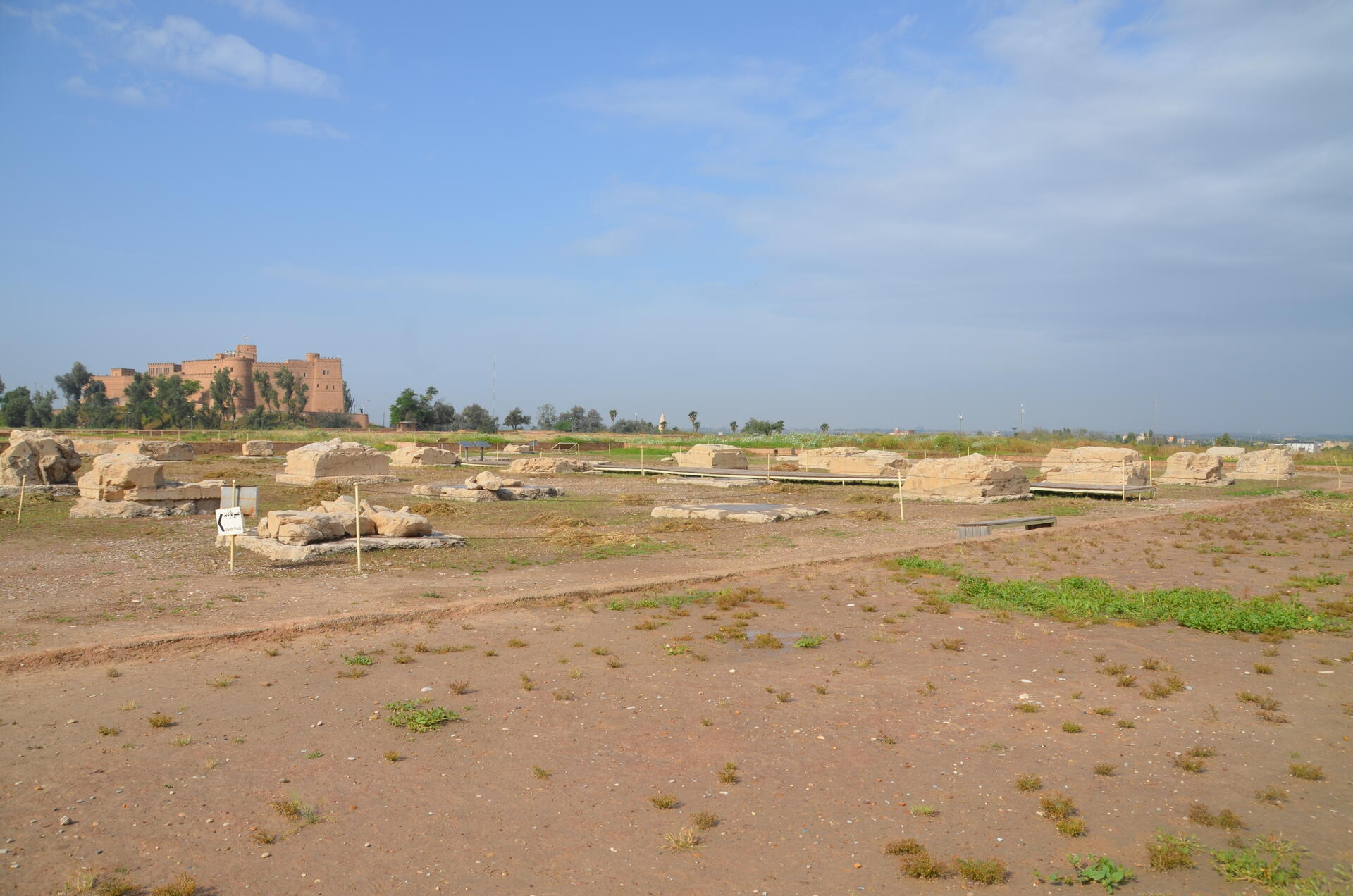
© Carole Raddato from Frankfurt, Germany, CC BY-SA 2.0 Resized from original. (This derivative is under the same CC BY-SA license.)
World Heritage Research
Discover scientific research and academic studies that deepen our understanding of Susa from its history and significance to its conservation, management, and contemporary challenges.
-
Scribal Training in Old Babylonian Susa
Scribal education in Old Babylonian Susa reveals significant adaptations of the Mesopotamian curriculum to fit the local linguistic environment, despite the overwhelming influence of Mesopotamian schooling. While Elamite language played almost no role in this scholastic context, the sequence of scribal training stages remained clearly traceable. The study of Susa's educational corpus uncovered many features of its unique curriculum, demonstrating that Mesopotamian models were not blindly adopted but tailored to local needs.
Malayeri, M. (2013). Scribal Training in Old Babylonian Susa. Susa and Elam. Archaeological, Philological, Historical and Geographical Perspectives, 365–375. https://doi.org/10.1163/9789004207417_022
View Publication Record | Read Publication