World Heritage Identification Number: 1267
World Heritage since: 2008
Category: Natural Heritage
WHE Type: Natural Landscapes & Geographic Features
Transboundary Heritage: No
Endangered Heritage: No
Country: 🇮🇸 Iceland
Continent: Europe
UNESCO World Region: Europe and North America
Map
Surtsey: A Volcanic Island Laboratory
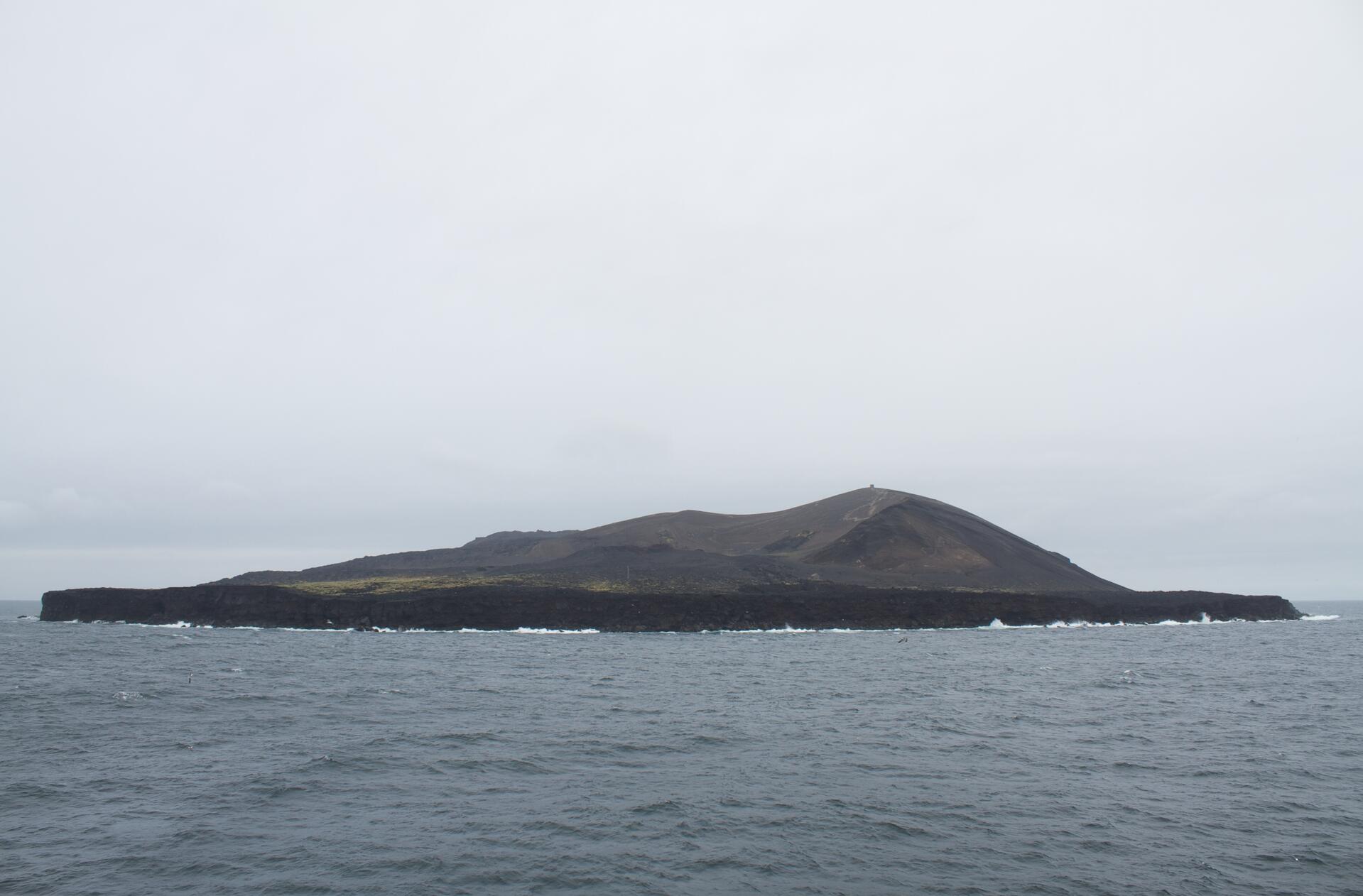
Surtsey, a volcanic island situated approximately 32 kilometers from the south coast of Iceland, offers a unique insight into the natural processes that govern the formation and colonization of new land. Inscribed as a UNESCO World Heritage Site in 2008, Surtsey stands as a pristine natural laboratory, protected from human interference and providing valuable long-term data on the evolution and colonization of ecosystems over time.
The island's genesis can be traced back to a series of volcanic eruptions that occurred between 1963 and 1967. The eruption began beneath the sea, at a depth of approximately 130 meters, and the new island first emerged above the ocean surface on November 15, 1963, following the initial underwater activity. The eruption continued until June 5, 1967, culminating in an island covering approximately 2.65 square kilometers (1.0 square mile). However, due to ongoing wave erosion, the island's size has gradually decreased since then. The highest point of the island reaches 155 meters (509 feet) above sea level.
Surtsey's isolation from human influence has allowed it to serve as a rich study ground for scientists interested in understanding the colonization process of new land by flora and fauna. Scientists began studying the island in 1964 and observed the arrival of seeds carried by ocean currents, followed by the appearance of molds, bacteria, and fungi. In 1965, the first vascular plant was observed on the island, with the number reaching ten species by the end of the first decade. By 2004, this number had grown to 60 vascular plant species, accompanied by 75 bryophytes, 71 lichens, and 24 fungi.
Surtsey was legally protected from its birth, with strict restrictions on access established while the volcanic eruption was still continuing. This protection was intended to prevent human activity from disturbing the natural processes taking place on the young island, including the accidental introduction of seeds and other organisms. This protection remains in place today: Surtsey is closed to the public, and going ashore or diving near the island is prohibited except for approved scientific research and related activities. This strict control of access has been fundamental to Surtsey's value as a natural laboratory, allowing scientists to observe ecological succession with minimal human interference.
Research has shown that seabirds play an important role in the development of volcanic island ecosystems by transferring nutrients from the sea to land, accelerating plant colonization, soil formation, and biodiversity. On Surtsey, the establishment of seabird colonies, particularly gulls, helped create nutrient-rich habitats in which dense grasslands developed, with higher species richness, diversity, biomass, and soil carbon than in low-impact areas.
The avian population on Surtsey is significant. According to UNESCO's records, 89 species of birds had been recorded on the island, 57 of which breed elsewhere in Iceland. The island has also supported a diverse community of invertebrates, with 335 species recorded in the UNESCO-era inventory. These figures demonstrate Surtsey's ability to support an increasingly complex biological community despite its relatively young age.
In addition to its role as a natural laboratory, Surtsey holds considerable scientific and historical significance. Its formation during the 20th century provided scientists with the rare opportunity to observe, almost from the beginning, the geological and ecological processes involved in the development of a new island. The island's strict protection since its formation has helped preserve this exceptional scientific record and ensures that researchers can continue to study natural colonization and ecological succession with minimal human disturbance.
Today, Surtsey stands as a remarkable example of nature's resilience and adaptability. Its status as a UNESCO World Heritage Site, under criterion (ix) for ongoing biological and ecological processes, underscores the importance of preserving such unique ecosystems for scientific research and future generations. As we continue to learn from Surtsey, we gain a deeper understanding of the relationship between geology, ecology, and time that shapes the natural world.
UNESCO Description of the World Heritage Site
Surtsey, a volcanic island approximately 32 km from the south coast of Iceland, is a new island formed by volcanic eruptions that took place from 1963 to 1967. It is all the more outstanding for having been protected since its birth, providing the world with a pristine natural laboratory. Free from human interference, Surtsey has been producing unique long-term information on the colonisation process of new land by plant and animal life. Since they began studying the island in 1964, scientists have observed the arrival of seeds carried by ocean currents, the appearance of moulds, bacteria and fungi, followed in 1965 by the first vascular plant, of which there were 10 species by the end of the first decade. By 2004, they numbered 60 together with 75 bryophytes, 71 lichens and 24 fungi. Eighty-nine species of birds have been recorded on Surtsey, 57 of which breed elsewhere in Iceland. The 141 ha island is also home to 335 species of invertebrates.
UNESCO Justification of the World Heritage Site
Criterion (ix): Ongoing biological and ecological processes: Surtsey was born as a new volcanic island in 1963-67 and since that time has played a major role in studies of succession and colonisation. It has been the site of one of the few long term studies worldwide on primary succession, providing a unique scientific record of the process of colonisation of land by plants, animals and marine organisms. Not only is it geographically isolated, but it has been legally protected from its birth, providing the world with a pristine natural laboratory, free from human interference. Above all, because of its continuing protection, Surtsey will continue to provide invaluable data on biological colonisation long into the future.
Encyclopedia Record: Surtsey
Surtsey is an uninhabited volcanic island located in the Vestmannaeyjar archipelago off the southern coast of Iceland. At 63.303°N 20.605°W Surtsey is the southernmost point of Iceland. It was formed in a volcanic eruption which began 130 metres below sea level, and reached the surface on 14 November 1963. The eruption lasted until 5 June 1967, when the island reached its maximum size of 2.7 km2 (1.0 sq mi). Since then, wave erosion has caused the island to steadily diminish in size: as of 2012, its surface area was 1.3 km2 (0.50 sq mi). The most recent survey (2007) shows the island's maximum elevation at 155 m (509 ft) above sea level.Additional Site Details
Area: 3,370 hectares
Number of Components: 1
Coordinates: 63.3030555556 , -20.6022222222
IUCN World Heritage Outlook
The 2025 Conservation Outlook on Surtsey reports the following assessment:
Source: International Union for Conservation of Nature (IUCN) · View assessment
World Heritage Research
Discover scientific research and academic studies that deepen our understanding of Surtsey from its history and significance to its conservation, management, and contemporary challenges.
-
Continuing subsidence and deformation of the Surtsey volcano, Iceland
Surtsey, a volcanic island formed off Iceland's coast between 1963 and 1967, continues to experience significant subsidence. Since its formation, the island has sunk by approximately 1 meter, with recent GPS surveys (2000–2023) revealing an average subsidence rate of 3.8 mm per year, totaling 9 cm over this period. About two-thirds of this subsidence is attributed to compaction of sedimentary and volcaniclastic material, thermal contraction, and palagonization, while the remaining third is due to the island's loading on the asthenosphere. The study also confirms that Surtsey moves horizontally with the Eurasian plate, providing insights into the dynamic processes shaping volcanic islands.
Sturkell, E., Einarsson, P., Geirsson, H., Hjartardóttir, Á., Islam, T., Moores, J., Lanzi, C., Valsson, G., & Sigmundsson, F. (2025). Continuing subsidence and deformation of the Surtsey volcano, Iceland. Surtsey Research, 16(1), 99–116. https://doi.org/10.33112/surtsey.16.10
View Publication Record | Read Publication -
Flavobacterium aerium sp. nov., a bacterium isolated from the air of the Icelandic volcanic island Surtsey
Researchers have identified and characterized a novel bacterium, Flavobacterium aerium sp. nov., isolated from the air of Surtsey, a volcanic island in Iceland designated as a UNESCO World Heritage Site. This discovery was made using a polyphasic taxonomic approach, which included phylogenetic analysis based on 16S rRNA gene sequences, fatty acid profiling, and genomic sequencing. The bacterium, designated strain 19SA41, exhibits unique morphological and physiological traits, such as pale yellow-pigmented colonies, optimal growth at 22 °C and pH 7.5, and a genome with a G+C content of 33.2 mol%. Phylogenetic analysis revealed that F. aerium is most closely related to Flavobacterium xinjiangense, with a sequence similarity of 96.52%, supporting its classification as a novel species. This finding contributes to the understanding of microbial diversity in extreme environments and underscores the significance of UNESCO World Heritage Sites for scientific research.
Daussin, A., Vannier, P., Ménager, M., Mater, É., & Marteinsson, V. Þ. (2025). Flavobacterium aerium sp. nov., a bacterium isolated from the air of the Icelandic volcanic island Surtsey. International Journal of Systematic and Evolutionary Microbiology, 75(1). https://doi.org/10.1099/ijsem.0.006647
View Publication Record | Read Publication -
Weather in Surtsey 2020-2024
A new maximum air temperature record of 22.6°C was set on Surtsey, Iceland's southernmost island, on 14 July 2025, breaking the previous record of 18.6°C from 11 July 2023. This study analyzes weather data from 2020 to 2024, highlighting significant variations, including a notably cloudy and cool summer in 2022 and a winter (2022–2023) marked by alternating warm/windy and cold/calm months. The research also identified extreme sea level pressure records of 1050.4 hPa and 932.3 hPa on 28 March 2020 and 15 February 2020, respectively. While temperature and wind data were robust, precipitation measurements faced considerable failures. The study aims to provide insights useful for understanding ecological processes on the island, which serves as a scientific laboratory for flora and fauna development.
Petersen, G. (2025). Weather in Surtsey 2020-2024. Surtsey Research, 16(1), 9–17. https://doi.org/10.33112/surtsey.16.2
View Publication Record | Read Publication -
Sinkholes observed at Vesturbunki, Surtsey
Researchers have identified and monitored sinkholes and fissures along the outer margin of Vesturbunki, one of Surtsey’s tuff cones, revealing a dynamic subsurface process. These features, first observed in 2015, were traced over nearly 500 meters and showed variability in their presence across multiple field visits (2017, 2019, 2025). The study suggests that these sinkholes are likely driven by a combination of island-wide subsidence, local compaction of volcanogenic material, and possibly triggered by seismicity. Surface temperature monitoring between 2008 and 2025 indicated Vesturbunki is consistently hotter (up to 100°C) compared to Austurbunki (up to 96°C), with fluctuations linked to subsurface heat flow. Seismic data from 2009–2024 showed low to moderate activity, though hypocenter locations remain uncertain due to sparse station coverage. The findings underscore the need for continued monitoring and installation of a local seismic station on Surtsey to better understand these processes.
Ásbjörnsdóttir, L., Jónasson, K., & Guðmundsdóttir, M. (2025). Sinkholes observed at Vesturbunki, Surtsey. Surtsey Research, 16(1), 93–98. https://doi.org/10.33112/surtsey.16.9
View Publication Record | Read Publication -
Material and mechanical properties of young basalt in drill cores from the oceanic island of Surtsey, Iceland
Drill core samples from Surtsey, an oceanic island formed by eruptions between 1963 and 1967, reveal significant variability in the material and mechanical properties of young basalt deposits. These properties vary across subaerial, submarine, and subseafloor environments, with connected porosity ranging from 42% to 21%, permeability spanning six orders of magnitude, and uniaxial compressive strength varying between 10–70 MPa. Synchrotron X-ray microdiffraction analyses combined with geochemical data show that the initial alteration of fresh glass and incipient consolidation of a fine-ash matrix play crucial roles in modifying these properties. The study highlights how diverse cementing microstructures influence the physical characteristics of pyroclastic deposits, providing critical reference parameters for geophysical studies and understanding the stability and survival of oceanic islands over time.
Jackson, M. D., Heap, M. J., Vola, G., Ardit, M., Rhodes, J. M., Peterson, J. G., Tamura, N., & Gudmundsson, M. T. (2024). Material and mechanical properties of young basalt in drill cores from the oceanic island of Surtsey, Iceland. Geological Society of America Bulletin, 136(9-10), 3527–3552. https://doi.org/10.1130/b37037.1
View Publication Record | Read Publication -
Internal structure of the volcanic island of Surtsey and surroundings: Constraints from a dense aeromagnetic survey
A dense aeromagnetic survey of Surtsey, a young volcanic island off Iceland's south coast, reveals that the island lacks significant basaltic intrusions within its five vents, suggesting magma fragmentation dominated submarine eruptions from the onset. The study, using 2D spectral analysis and Euler deconvolution, identified a small magnetic anomaly over the submarine edifice of Surtla, hinting at preserved dykes during weak or moderate explosive activity in 1963–1964. Additionally, a 10–20 m thick pillow lava field, extending ~1 km south of Surtsey, was detected, indicating channelized intrusive flow during early effusive eruptions in May–July 1964. The survey also found indications of magnetized volcanic rocks predating the Surtsey eruption beneath Jólnir, an ephemeral island.
Sayyadi, S., Gudmundsson, M. T., White, J. D. L., Jónsson, T., Brown, M. C., & Jackson, M. D. (2024). Internal structure of the volcanic island of Surtsey and surroundings: Constraints from a dense aeromagnetic survey. Journal of Volcanology and Geothermal Research, 451, 108096. https://doi.org/10.1016/j.jvolgeores.2024.108096
View Publication Record | Read Publication -
Comparison of Atmospheric and Lithospheric Culturable Bacterial Communities from Two Dissimilar Active Volcanic Sites, Surtsey Island and Fimmvörðuháls Mountain in Iceland
A comparative analysis of atmospheric and lithospheric bacterial communities at two distinct Icelandic volcanic sites—Surtsey Island and Fimmvörðuháls Mountain—revealed significant differences, with Surtsey's air hosting unique microbial populations. Using MALDI Biotyper analysis and 16S rRNA gene sequencing, researchers identified 72 species across 40 genera, including potential new species, predominantly from the Proteobacteria and Actinobacteria phyla. Back trajectory analysis suggested that 85% of isolates originated locally, while 15% traveled long distances. Taxonomic proportions mirrored the sites' environmental characteristics, offering insights into microbial dispersal dynamics in volcanic ecosystems.
Daussin, A., Vannier, P., Ménager, M., Daboussy, L., Šantl-Temkiv, T., Cockell, C., & Marteinsson, V. Þ. (2023). Comparison of Atmospheric and Lithospheric Culturable Bacterial Communities from Two Dissimilar Active Volcanic Sites, Surtsey Island and Fimmvörðuháls Mountain in Iceland. Microorganisms, 11(3), 665. https://doi.org/10.3390/microorganisms11030665
View Publication Record | Read Publication