World Heritage Identification Number: 1506
World Heritage since: 2016
Category: Cultural Heritage
WHE Type: Buildings & Architectural Ensembles
Transboundary Heritage: No
Endangered Heritage: No
Country: 🇮🇷 Iran (Islamic Republic of)
Continent: Asia
UNESCO World Region: Asia and the Pacific
Map
The Persian Qanat: An Ancient Irrigation System in Arid Regions
The Persian Qanat, inscribed as a UNESCO World Heritage Site in 2016, is an ingenious irrigation system that has been supporting agriculture and permanent settlements in the arid regions of Iran for centuries. This ancient technology, which originated around 3,000 years ago, continues to play a vital role in the region's water supply and agricultural productivity.
More to come…UNESCO Description of the World Heritage Site
Throughout the arid regions of Iran, agricultural and permanent settlements are supported by the ancient qanat system of tapping alluvial aquifers at the heads of valleys and conducting the water along underground tunnels by gravity, often over many kilometres. The eleven qanats representing this system include rest areas for workers, water reservoirs and watermills. The traditional communal management system still in place allows equitable and sustainable water sharing and distribution. The qanats provide exceptional testimony to cultural traditions and civilizations in desert areas with an arid climate.
UNESCO Justification of the World Heritage Site
Criterion (iii): The Persian Qanat system is an exceptional testimony to the tradition of providing water to arid regions to support settlements. The technological and communal achievements of the qanats play a vital role of qanat in the formation of various civilisations. Its crucial importance for the larger arid region is expressed in the name of the desert plateau of Iran which is called “Qanat Civilisation”. Dispersion of primary settlements on alluvial fans of the inner plateau and deserts of Iran is immediately related with the distribution pattern of qanat system across the country. The system also presents an exceptional living cultural tradition of communal management of water resources.
Criterion (iv): The Persian Qanat system is an outstanding example of a technological ensemble illustrating significant stages in the history of human occupation of arid and semi-arid regions. Based on complex calculations and exceptional architectural qualities, water was collected and transported by mere gravity over long distances and these transport systems were maintained over centuries and, at times, millennia. The qanat system enabled settlements and agriculture but also inspired the creation of a desert-specific style of architecture and landscape involving not only the qanats themselves, but their associated structures, such as water reservoirs, mills, irrigation systems, and gardens.
Encyclopedia Record: Qanat
A qanāt or kārīz (کَارِیز) is a water supply system that was developed in ancient Iran for the purpose of transporting usable water to the surface from an aquifer or a well through an underground aqueduct. Originating approximately 3,000 years ago, its function is essentially the same across the Middle East and North Africa, but it is known by a variety of regional names beyond today's Iran, including: kārēz in Afghanistan and Pakistan; foggāra in Algeria; khettāra in Algeria and Morocco; the daoudi-type falaj in Oman and the United Arab Emirates; and ʿuyūn in Saudi Arabia. In addition to those in Iran, the largest extant and functional qanats are located in Afghanistan, Xinjiang in China, Oman, and Pakistan.Additional Site Details
Area: 19,057 hectares
Number of Components: 11
(iv) — Outstanding example of a type of building or landscape
Coordinates: 34.29 , 58.6544444444
Image
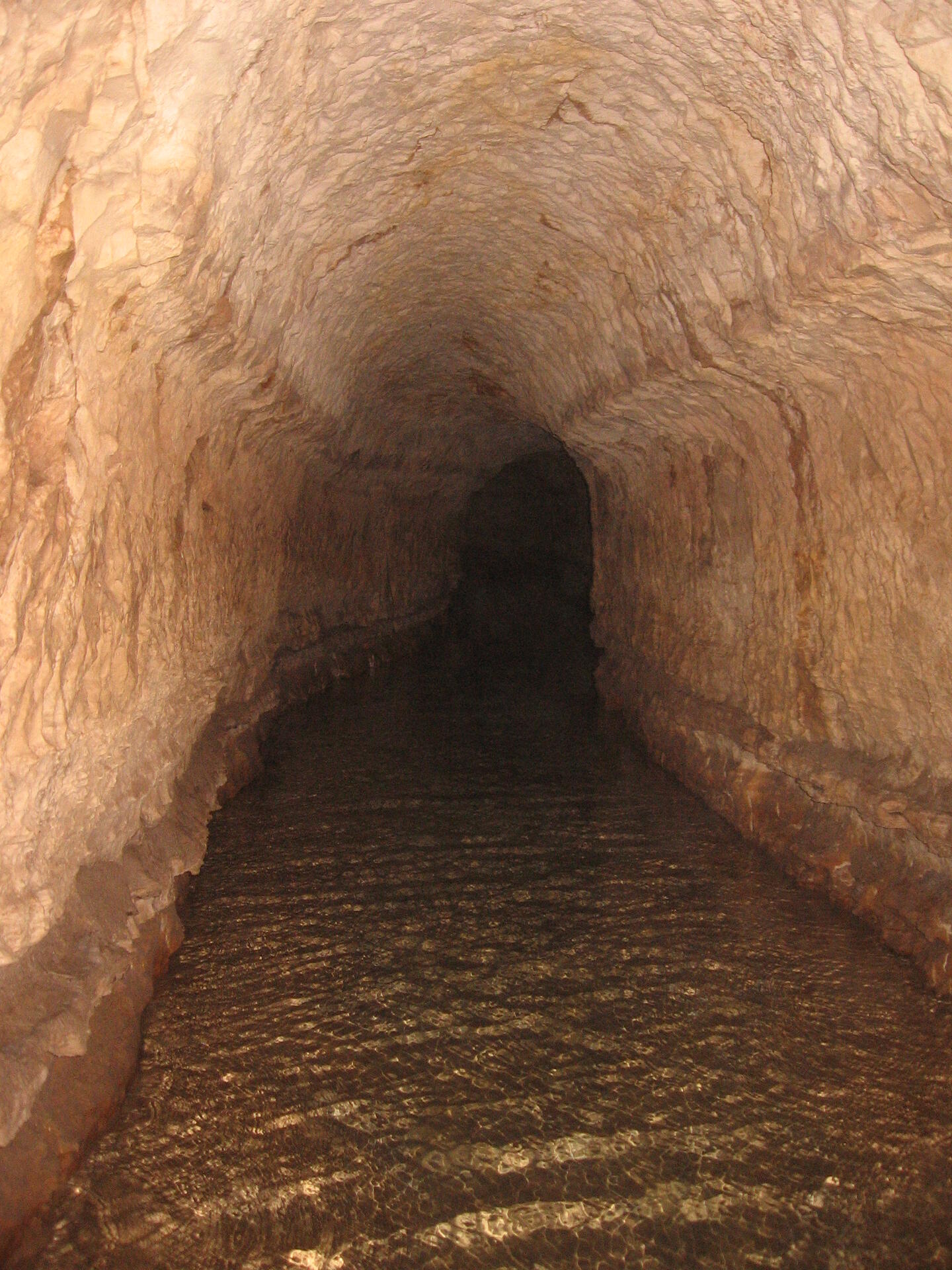
© Pafnutius, CC BY-SA 3.0 Resized from original. (This derivative is under the same CC BY-SA license.)
World Heritage Research
Discover scientific research and academic studies that deepen our understanding of The Persian Qanat from its history and significance to its conservation, management, and contemporary challenges.
-
From Ancient Hydraulic Engineering to Megaherbivore-Mediated Pedogenesis: A Comparative Analysis of Desert Agricultural Techniques Across Civilizations and Contemporary Large Herbivore Ecosystem Restoration
A groundbreaking comparison reveals that ancient desert agricultural techniques and modern large herbivore reintroduction share surprising parallels in ecological restoration. The study finds that both approaches—ranging from Persian qanat systems to Nabatean runoff agriculture, Hohokam canals, Andean terraces, Egyptian basin irrigation, and Sahelian zaï pits—accelerated soil formation (pedogenesis) and hydrological recovery through similar mechanisms. Recent empirical data (2020–2026) show that reintroducing megaherbivores, such as elephants or bison, mimics the effects of ancient human-engineered systems by enhancing water retention and soil fertility. The research synthesizes archaeological, hydrological, and pedological data to propose a novel framework for desert restoration, leveraging both historical precedents and contemporary ecosystem engineering.
Revista, Z. (2026). From Ancient Hydraulic Engineering to Megaherbivore-Mediated Pedogenesis: A Comparative Analysis of Desert Agricultural Techniques Across Civilizations and Contemporary Large Herbivore Ecosystem Restoration. Zenodo. https://doi.org/10.5281/ZENODO.18285621
View Publication Record | Read Publication -
SANDPUTER: An Integrated Desert-Native Computing Architecture Combining Crystalline Substrate Processors, In-Situ Sand-Based Thermal Management, and Persian-Derived Passive Cooling Infrastructure
SANDPUTER introduces a groundbreaking, closed-loop distributed computing architecture tailored for arid environments, leveraging local silicon dioxide substrates for semiconductor fabrication, thermal management, and waste heat recovery. This integrated system combines crystalline spherical processors with Persian-derived passive cooling techniques—such as qanat channels, badgir windcatchers, and yakhchal cold storage—to create a geographically-integrated solution. While individual components are based on existing technologies, the novelty lies in their synergistic combination, offering significant advantages: eliminating geographic decoupling penalties associated with semiconductor manufacturing, reducing data center water consumption by 91-98%, achieving power usage effectiveness (PUE) comparable to immersion cooling, and enabling waste heat recovery at high temperatures. Designed for deployment in Middle Eastern and North African regions—where data center capacity is projected to grow substantially—SANDPUTER represents a defensive publication under CC-BY-SA 4.0 to safeguard this concept in the global commons.
Saeid, G. (2026). SANDPUTER: An Integrated Desert-Native Computing Architecture Combining Crystalline Substrate Processors, In-Situ Sand-Based Thermal Management, and Persian-Derived Passive Cooling Infrastructure. Zenodo. https://doi.org/10.5281/ZENODO.21233673
View Publication Record | Read Publication -
Qanats: Ancient Innovations Nurturing Sustainable Futures in Water Management
Qanats, ancient water management systems originating on the arid Persian Plateau over three millennia ago, demonstrate remarkable sustainability by channeling water from aquifers through gravity-driven sub-horizontal tunnels. Unlike modern methods, qanats prevent over-extraction and maintain a balanced flow according to aquifer levels, offering a blueprint for sustainable water resource management. This study highlights their adaptability across diverse environments, cultural significance, and potential to address contemporary water challenges. By analyzing the geographical spread, historical evolution, and enduring relevance of qanats, researchers uncover timeless lessons that could revolutionize modern water systems worldwide.
Boselli, V. A., Borroni, M., Kassout, J., Houssni, M., Kettouch, A., & Cristoforetti, S. (2025). Qanats: Ancient Innovations Nurturing Sustainable Futures in Water Management. Blue Papers, 4(1). https://doi.org/10.58981/bluepapers.2025.1.05
View Publication Record | Read Publication -
Urban Design Frameworks: From Traditional Paradigms to Contemporary Landscape and Ecological Approaches
Contemporary urban design frameworks that integrate ecological principles and sustainability are more effective than traditional paradigms in creating livable and resilient cities. This study highlights the shift from spatial order-focused models, such as modernism and New Urbanism, to landscape urbanism, green infrastructure, and ecological design, which treat natural systems as integral components of urban form. It demonstrates how smart materials, intelligent systems, and data-driven analysis enhance adaptability, multifunctionality, and resilience in sustainable architecture. The research further illustrates that traditional Persian practices like qanats and gardens align with modern ecological principles, advocating for a synthesis of form, function, and ecology in urban planning.
Shahsavar, F. (2025). Urban Design Frameworks: From Traditional Paradigms to Contemporary Landscape and Ecological Approaches. Journal of Design Studio, 7(1). https://doi.org/10.46474/jds.1711871
View Publication Record | Read Publication -
UNESCO Water Structures: Heritage, Innovation and Sustainable Use
Ancient water structures, such as Roman aqueducts and Persian qanats, exemplify the ingenuity of past civilizations in engineering and resource management. Recognized by UNESCO for their cultural, historical, and technical significance, these systems—particularly the Persian qanat—demonstrate sustainable principles that remain relevant today. This study examines a selection of these structures to highlight their adaptive reuse and integration into modern environments, though it acknowledges limitations due to its focus on specific ancient examples.
Nováková, L. (2024). UNESCO Water Structures: Heritage, Innovation and Sustainable Use. Culture. Society. Economy. Politics, 4(2), 27–45. https://doi.org/10.2478/csep-2024-0009
View Publication Record | Read Publication -
Economics Of Hydraulics:, Persian Qanats And Roman Aqueducts
Ancient water management systems, such as Persian qanats and Roman aqueducts, were shaped by governance models that adapted to societal needs and environmental challenges. These systems served both functional purposes and as symbols of power. The study reveals diverse approaches to water infrastructure across Persia, the Roman Empire, and medieval Europe, highlighting how cultural contexts influenced engineering solutions and governance strategies.
Hirzel, T., & Solca, A. (2024). Economics Of Hydraulics:, Persian Qanats And Roman Aqueducts. المجلة الدولية للأداء الاقتصادي, 55. https://doi.org/10.54241/2065-007-002-004
View Publication Record | Read Publication -
Developing Sustainable Behaviors for Underground Heritage Tourism Management: The Case of Persian Qanats, a UNESCO World Heritage Property
A sustainable behavior model for managing underground heritage tourism at Persian Qanats, UNESCO World Heritage Sites, has been developed to ensure their long-term preservation. The study, involving 22 experts and managers, employed content and thematic analysis to shape the behavior of tourists, officials, and locals, fostering territorial collaboration and social capital. This approach aims to protect these ancient aqueduct systems, which have sustained arid regions in Iran for over 3000 years, by providing a guideline for effective management practices.
Mousazadeh, H., Ghorbani, A., Azadi, H., Almani, F. A., Zangiabadi, A., Zhu, K., & Dávid, L. D. (2023). Developing Sustainable Behaviors for Underground Heritage Tourism Management: The Case of Persian Qanats, a UNESCO World Heritage Property. Land, 12(4), 808. https://doi.org/10.3390/land12040808
View Publication Record | Read Publication