World Heritage Identification Number: 1372
World Heritage since: 2011
Category: Cultural Heritage
WHE Type: Agriculture Landscapes, Parks & Gardens
Transboundary Heritage: No
Endangered Heritage: No
Country: 🇮🇷 Iran (Islamic Republic of)
Continent: Asia
UNESCO World Region: Asia and the Pacific
Map
The Persian Garden: A Timeless Symphony of Nature and Architecture
The Persian Garden, officially recognized by UNESCO as a World Heritage Site since 2011, represents a unique blend of nature, architecture, and cultural heritage that has left an indelible mark on garden design across continents. This article delves into the history, characteristics, and influence of these iconic gardens that trace their origins back to the Achaemenid Empire (6th century BC).
More to come…UNESCO Description of the World Heritage Site
The property includes nine gardens in as many provinces. They exemplify the diversity of Persian garden designs that evolved and adapted to different climate conditions while retaining principles that have their roots in the times of Cyrus the Great, 6th century BC. Always divided into four sectors, with water playing an important role for both irrigation and ornamentation, the Persian garden was conceived to symbolize Eden and the four Zoroastrian elements of sky, earth, water and plants. These gardens, dating back to different periods since the 6th century BC, also feature buildings, pavilions and walls, as well as sophisticated irrigation systems. They have influenced the art of garden design as far as India and Spain.
UNESCO Justification of the World Heritage Site
Criterion (i): The Persian Garden represents a masterpiece of human creative genius. The design of the Persian Garden, based on the right angle and geometrical proportions, is often divided into four sections known as Chahar Bagh (Four Gardens). The creation of the Persian Garden was made possible due to intelligent and innovative engineering solutions and a sophisticated water-management system, as well as the appropriate choice of flora and its location in the garden layout. Indeed, the Persian Garden has been associated with the idea of earthly Paradise, forming a stark contrast to its desert setting.
Criterion (ii): The Persian Garden exhibits an important interchange of human values, having been the principal reference for the development of garden design in Western Asia, Arab countries, and even Europe. It is the geometry and symmetry of the architecture, together with the complex water management system, that seem to have influenced design in all these gardens. The word Paradise entered European languages from the Persian root word Pardis, which was the name of a beautiful garden enclosed behind walls.
Criterion (iii): The Persian Garden bears exceptional, and even unique, testimony to the cultural traditions that have evolved in Iran and the Middle East over some two and a half millennia. Throughout its evolution, the Persian Garden has had a role in various cultural and social aspects of society, becoming a central feature in private residences, palaces and public buildings, as well as in ensembles associated with benevolent or religious institutions, such as tombs, park layouts, palace gardens, Meidans, etc.
Criterion (iv): The Persian Garden is an outstanding example of a type of garden design achieved by utilising natural and human elements and integrating significant achievements of Persian culture into a physical and symbolic-artistic expression in harmony with nature. Indeed, the Persian Garden has become a prototype for the geometrically-designed garden layout, diffused across the world.
Criterion (vi): The Persian Garden is directly associated with cultural developments of Outstanding Universal Value. These include literary works and poetry for example by Sa'di, Hafez and Ferdowsi. The Persian Garden is also the principal source of inspiration for the Persian carpet and textile design, miniature painting, music, architectural ornaments, etc. In the Avesta, the ancient holy book of the Zoroastrians, the Persian Garden and its sacred plants are praised as one of the four natural elements (earth, heavens, water, and plants). The Chahar Bagh is a reflection of the mythical perception of nature, and the cosmic order in the eyes of the ancient Iranian peoples.
Encyclopedia Record: Persian gardens
In garden design, Persian garden or Iranian garden is a style of "landscape" garden which emerged in the Achaemenid Empire. Nine historical gardens, all of them in Iran, have been inscribed in UNESCO's World Heritage Sites as The Persian Garden since 2011.Additional Site Details
Area: 716.35 hectares
Number of Components: 9
(ii) — Significant interchange of human values
(iii) — Unique or exceptional testimony to a cultural tradition
(iv) — Outstanding example of a type of building or landscape
(vi) — Directly associated with events or living traditions
Coordinates: 30.1666666667 , 53.1666666667
Image
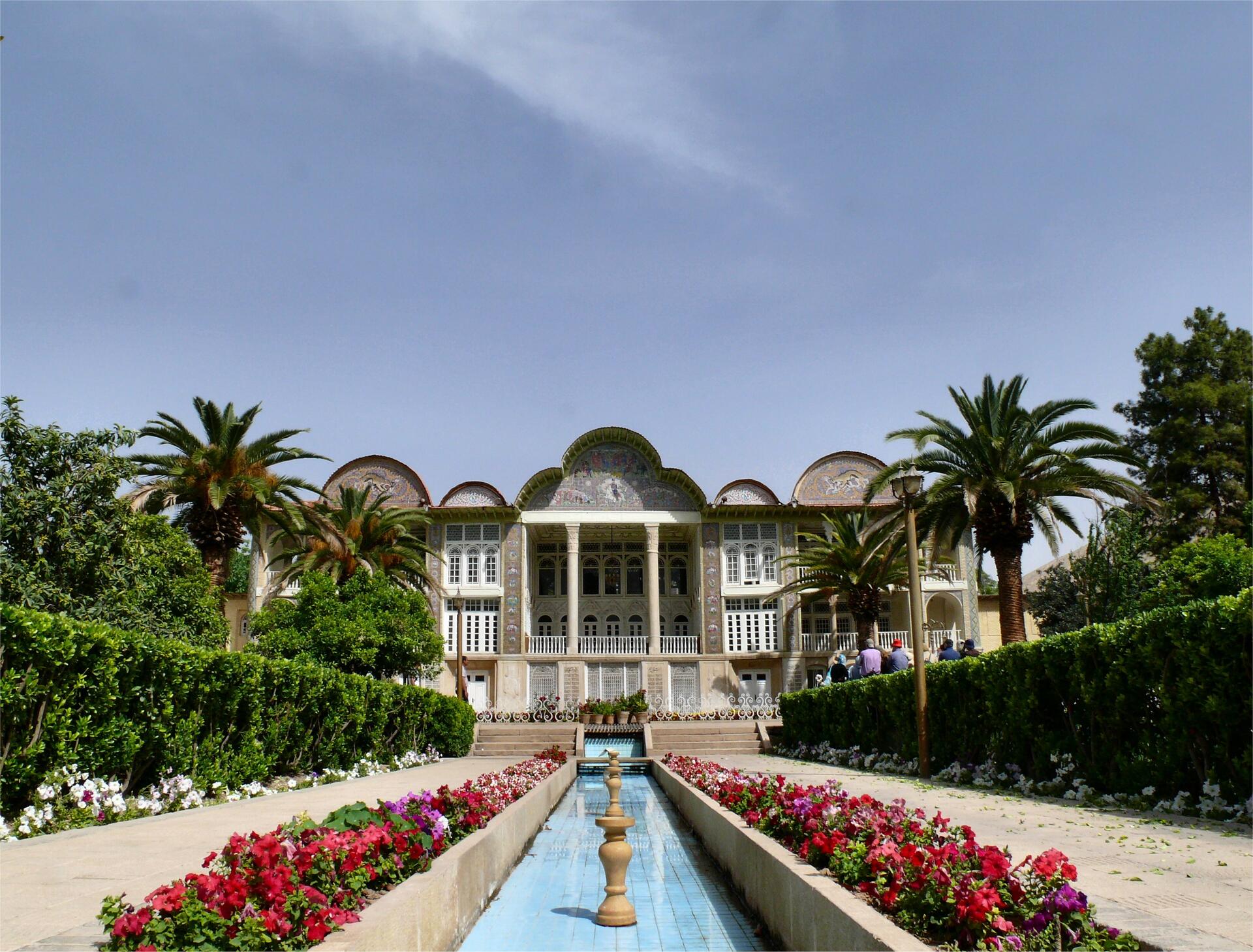
© dynamosquito from France, CC BY-SA 2.0 Resized from original. (This derivative is under the same CC BY-SA license.)
World Heritage Research
Discover scientific research and academic studies that deepen our understanding of The Persian Garden from its history and significance to its conservation, management, and contemporary challenges.
-
Socio-Cultural Appropriateness of the Use of Historic Persian Gardens for Modern Urban Edible Gardens
Historic Persian Gardens, renowned for their aesthetic and cultural significance, demonstrate remarkable potential as models for modern urban edible gardens. Research indicates that integrating elements of formal landscape design, non-edible decorative plants, and traditional artwork can enhance attractiveness while maintaining functionality. A key finding is the suitability of these gardens for food production when productive units with edible plants are separated from public areas by central meeting spots populated with aesthetic plants. This separation allows for gardening activities without disturbing visitors' experiences. The study, conducted through field studies in six recognized Persian Gardens across four provinces of Iran using qualitative analysis, underscores the multifunctionality and health-promoting qualities of these gardens, offering practical implications for sustainable urban planning and landscape architecture.
Amani-Beni, M., Xie, G., Yang, Q., Russo, A., & Khalilnezhad, M. R. (2021). Socio-Cultural Appropriateness of the Use of Historic Persian Gardens for Modern Urban Edible Gardens. Land, 11(1), 38. https://doi.org/10.3390/land11010038
View Publication Record | Read Publication -
The Role of Water in Persian Gardens
Persian gardens, epitomized by UNESCO World Heritage Sites like The Persian Garden, embody water as more than a functional element—it is a profound metaphor and artistic expression deeply intertwined with human culture. Water serves as an interface between architecture and emotion, symbolizing life while adhering to physical laws that govern its behavior. This study reveals that water’s role extends beyond sustenance; it is a creative force shaping residential complexes and reflecting the architectural spirit of Persian design. By analyzing historical resources and employing a descriptive-analytical method, researchers uncovered water’s hidden influence on human perception and architecture, demonstrating its paradoxical nature as both a source of life and a catalyst for artistic innovation.
Mahdi Nejad, J.-e.-D., Azemati, H., Zarghami, E., & Abad, A. S. H. (2017). The Role of Water in Persian Gardens. Open Journal of Ecology, 07(01), 41–54. https://doi.org/10.4236/oje.2017.71004
View Publication Record | Read Publication -
Persian Garden, Cultural Sustainability and Environmental Design Case Study Shazdeh Garden
Ancient Persian gardens, such as Shazdeh Garden, demonstrate how cultural design can harmonize with nature to improve living conditions and restore barren lands sustainably. These gardens achieve balance by integrating greenery with architectural structures, creating serene yet functional spaces that enhance human well-being while preserving environmental integrity. The study highlights the potential for such designs to inspire modern solutions for harsh environments, blending aesthetic beauty with practical sustainability. By examining traditional Persian garden principles, researchers aim to develop innovative approaches that promote cultural sustainability alongside ecological conservation.
Abbas, M. Y., Nafisi, N., & Nafisi, S. (2016). Persian Garden, Cultural Sustainability and Environmental Design Case Study Shazdeh Garden. Procedia - Social and Behavioral Sciences, 222, 510–517. https://doi.org/10.1016/j.sbspro.2016.05.142
View Publication Record | Read Publication -
Persian Gardens: Meanings, Symbolism, and Design
Persian gardens, evolved over centuries within the Persian Empire, are not merely geometric structures but rich repositories of cultural symbolism and architectural meaning. These gardens incorporate design elements such as water, trees, and pavilions, each carrying specific significance tied to societal beliefs and values. The study reveals that Persian garden design embodies principles like hierarchy, symmetry, centrality, rhythm, and harmony, reflecting a sophisticated interplay between geometric structure and irrigation systems. Additionally, the research explores the philosophical underpinnings of these symbols, demonstrating how they serve as a medium for transmitting national identity and cultural heritage to future generations.
Mahmoudi Farahani, L., Motamed, B., & Jamei, E. (2016). Persian Gardens: Meanings, Symbolism, and Design. Landscape Online, 46, 1–19. https://doi.org/10.3097/lo.201646
View Publication Record | Read Publication -
Persian Gardens and Pavilions: Reflections in History, Poetry and the Arts
Scholarly interest in Persian gardens surged following David Stronach's 1967 excavation at Pasargadae, revealing intricate connections between these gardens and Persian history, poetry, and the arts. This study synthesizes historical and archaeological evidence to illustrate how Persian gardens served as symbolic spaces reflecting cultural values, royal power, and artistic expression. By analyzing architectural features, textual sources, and artistic representations, the research demonstrates that these gardens were not merely ornamental but integral to Persian identity and heritage. The approach combines archival research with interdisciplinary analysis, offering new insights into the multifaceted significance of Persian gardens in UNESCO World Heritage Sites.
Mahdizadeh, S. (2015). Persian Gardens and Pavilions: Reflections in History, Poetry and the Arts. Landscape Research, 40(4), 515–516. https://doi.org/10.1080/01426397.2015.1023513
View Publication Record | Read Publication -
Sustainable Cities and the Contribution of Historical Urban Green Spaces: A Case Study of Historical Persian Gardens
Historical Persian gardens emerge as vital components for urban sustainability, enhancing citizens' well-being and fostering community cohesion. Unlike generic urban green spaces, these heritage sites offer multifaceted benefits, including psychological relief, social congregation, and economic activation, while maintaining cultural identity and emotional resonance. A case study of actively used historical Persian gardens demonstrates their potential to address urban dwelling challenges by strengthening place attachment and accommodating diverse social functions. The research highlights their role as a cohesive municipal resource, integrating cities' fabric and contributing to environmental sustainability.
Rostami, R., Lamit, H., Khoshnava, S., Rostami, R., & Rosley, M. (2015). Sustainable Cities and the Contribution of Historical Urban Green Spaces: A Case Study of Historical Persian Gardens. Sustainability, 7(10), 13290–13316. https://doi.org/10.3390/su71013290
View Publication Record | Read Publication -
The Role of Belief and Religion in Creation of Persian Garden
Persian gardens embody the profound Iranian cultural ideal of harmony between nature and humanity, rooted in deep religious and spiritual beliefs. These gardens serve as tangible representations of paradise, reflecting a universal vision that transcends mere physical beauty, blending historical, religious, and poetic elements into an idealized natural environment. Unlike Western literary depictions, Persian gardens symbolize the sublimation of reality through lush landscapes, flowers, and poetic imagery, creating a spiritual connection to nature. The study highlights how these gardens have evolved over centuries as both physical spaces and inner metaphors, integrating customs, poetry, and spiritual traditions into their design and significance.
Nafisi, N., Yusoff Abbas, M., & Nafisi, S. (2015). The Role of Belief and Religion in Creation of Persian Garden. Journal of Architectural Engineering Technology, 04(03). https://doi.org/10.4172/2168-9717.1000153
View Publication Record | Read Publication -
Geopolitics of Tabula Rasa: Persian Garden and the Idea of City
Persian gardens, traditionally symbols of ordered landscapes and royal leisure, are revealed as fundamental spatial devices that establish sovereign power over territory. In the harsh Iranian plateau, these gardens functioned as micro-cosmic 'camps,' providing essential conditions for life to flourish within a 'tabula rasa' landscape. This study demonstrates how Persian gardens blurred distinctions between various forms of life, creating an 'ideal life' where kings represented divine authority and cities embodied paradise. By analyzing the geopolitical implications of these gardens, the research challenges conventional interpretations, emphasizing their role in shaping urban landscapes and political structures.
Khosravi, H. (2014). GEOPOLITICS OF TABULA RASA: PERSIAN GARDEN AND THE IDEA OF CITY. Journal of Architecture and Urbanism, 38(1), 39–53. https://doi.org/10.3846/20297955.2014.897017
View Publication Record | Read Publication -
Persian Gardens and Pavilions
Persian gardens and pavilions, integral to Persianate garden design since the Achaemenid era (6th century BC), have been highlighted for their historical, literary, and artistic significance, particularly their role in representing paradise. Mohammad Gharipour's work emphasizes the pavilion's overlooked importance in Iranian architectural studies by analyzing its evolution from pre-Islamic gardens to Qur'anic symbolism. The study explores depictions in religious texts like Aban Yasht and Persian poetry, revealing both literal and metaphorical values. Gharipour's approach combines historical context with literary analysis, offering a comprehensive understanding of the pavilion's cultural and architectural significance.
Gharipour, M. (2013). Persian Gardens and Pavilions. https://doi.org/10.5040/9780755693580
View Publication Record | Read Publication -
Fossil pollen reveals the secrets of the Royal Persian Garden at Ramat Rahel, Jerusalem
Fossil pollen analysis has unveiled the composition of the Royal Persian Garden at Ramat Rahel, Jerusalem, dating back to the fifth to fourth centuries BCE. This groundbreaking research, using a unique method to extract fossil pollen from ancient plaster, identified exotic trees such as citron (Citrus medica), cedar, birch, and Persian walnut, marking their earliest appearance in the southern Levant. The study suggests these imported species were likely used to display the power of the imperial Persian administration. Additionally, native fruit trees and ornamentals like fig, grape, olive, willow, poplar, myrtle, and water lily were also found. This discovery opens new avenues for studying the symbolic role of flora in palatial gardens and the proliferation of plants across geographical areas.
Langgut, D., Gadot, Y., Porat, N., & Lipschits, O. (2013). Fossil pollen reveals the secrets of the Royal Persian Garden at Ramat Rahel, Jerusalem. Palynology, 37(1), 115–129. https://doi.org/10.1080/01916122.2012.736418
View Publication Record | Read Publication -
Persian Gardens and Landscapes
Persian gardens represent a remarkable feat of ancient engineering and cultural ingenuity, showcasing how resourcefulness and advanced water management transformed arid landscapes into lush paradises. The study by Faghih and Sadeghy (2012) reveals the synergy between climate, resources, and place in shaping Persian garden typologies, with a particular focus on the central kiosk—a key architectural element within enclosed gardens. Through historical analysis, the research traces the evolution of these gardens, highlighting their adaptive strategies for water sourcing, irrigation, and environmental integration. This work underscores the enduring legacy of Persian gardens as both practical solutions to harsh conditions and symbols of cultural sophistication.
Faghih, N., & Sadeghy, A. (2012). Persian Gardens and Landscapes. Architectural Design, 82(3), 38–51. Portico. https://doi.org/10.1002/ad.1403
View Publication Record | Read Publication -
Unity in Restoring: A Study on Healing Attributes of Persian Garden
Persian gardens inherently possess restorative attributes that mentally refresh visitors, even when not explicitly designed for such purposes. This study reveals that these gardens, through their intuitive connection with nature, alleviate mental fatigue and stress, offering a sense of restoration akin to purpose-built restorative environments. The research explores whether Persian garden design principles can be applied universally to create similar therapeutic spaces. By analyzing visitor experiences, it demonstrates the profound interplay between human perception and spatial design in fostering mental well-being.
Ramyar, R. (2012). UNITY IN RESTORING: A STUDY ON HEALING ATTRIBUTES OF PERSIAN GARDEN. Journal of Islamic Architecture, 1(4). https://doi.org/10.18860/jia.v1i4.1775
View Publication Record | Read Publication -
Review Of The Characteristics Of Mahan Garden:One Type Of Persian Gardens
Persian gardens, rooted in Iran's cultural imagination of paradise, exemplify ingenious landscaping adapted to arid climates. A study analyzing Mahan Prince Garden reveals that elements like soil, water, plants, and layout coalesce into a distinct Persian garden style. The research employs descriptive analysis, drawing from examples, documents, and library studies, to highlight how these gardens balance aesthetic beauty with practical sustainability in water-scarce regions. This approach underscores the significance of Persian horticultural artistry in transforming harsh environments into lush, symbolic landscapes.
Tajaddini, L. (2011). Review Of The Characteristics Of Mahan Garden:One Type Of Persian Gardens. Zenodo. https://doi.org/10.5281/ZENODO.1070767
View Publication Record | Read Publication