World Heritage Identification Number: 1544
World Heritage since: 2017
Category: Cultural Heritage
WHE Type: Historic Cities & Urban Areas
Transboundary Heritage: No
Endangered Heritage: No
Country: 🇮🇷 Iran (Islamic Republic of)
Continent: Asia
UNESCO World Region: Asia and the Pacific
Map
The Historic City of Yazd: A Desert Oasis on the Spice and Silk Routes
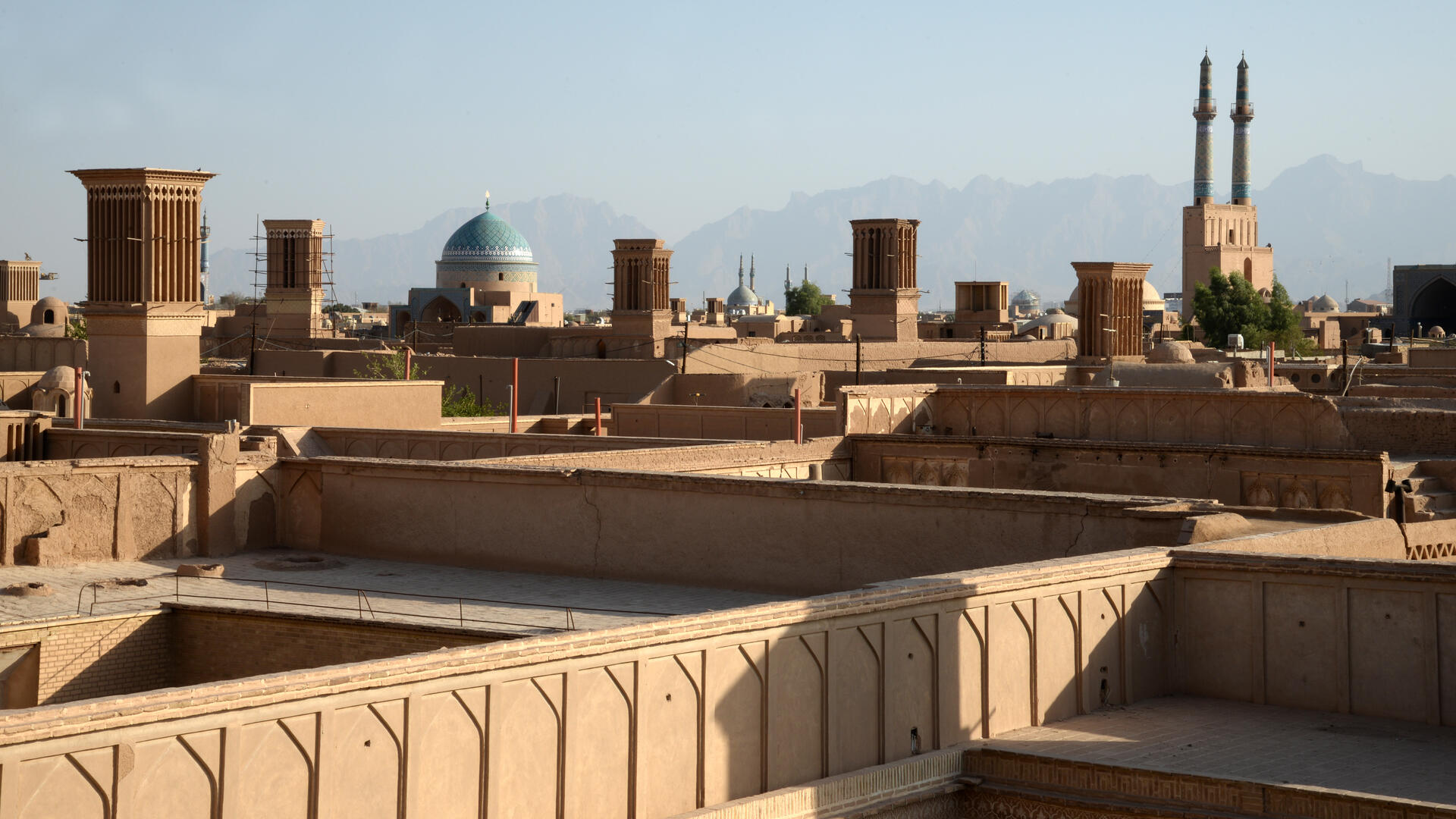
The Historic City of Yazd, located in the heart of the Iranian plateau, stands as a testament to human ingenuity and resilience in harsh desert environments. Inscribed as a UNESCO World Heritage Site in 2017, this ancient city offers a unique blend of architectural, cultural, and historical treasures that have survived the test of time.
More to come…UNESCO Description of the World Heritage Site
The City of Yazd is located in the middle of the Iranian plateau, 270 km southeast of Isfahan, close to the Spice and Silk Roads. It bears living testimony to the use of limited resources for survival in the desert. Water is supplied to the city through a qanat system developed to draw underground water. The earthen architecture of Yazd has escaped the modernization that destroyed many traditional earthen towns, retaining its traditional districts, the qanat system, traditional houses, bazars, hammams, mosques, synagogues, Zoroastrian temples and the historic garden of Dolat-abad.
UNESCO Justification of the World Heritage Site
Criterion (iii): The historic city of Yazd bears witness to an exceptionally elaborate construction system in earthen architecture and the adaptation of the ways of living to hostile environment for several millennia. Yazd is associated with the continuity of traditions that cover social organization. These include Waqf (endowment) benefitting public buildings, such as water cisterns, mosques, hammams, qanats, etc. as well as developed intangible and multi-cultural, commercial and handicrafts traditions, as one of the richest cities of the world entirely built of earthen material, a quality which contributes to the creation of an environment-friendly microclimate. It reflects diverse cultures related to various religions in the city including Islam, Judaism and Zoroastrianism, which are still living peacefully together and having a combination of buildings including houses, mosques, fire temples, synagogues, mausoleums, hammams, water cisterns, madrasehs, bazaars, etc. as it can be seen in their traditional crafts and festivities.
Criterion (v): Yazd is an outstanding example of a traditional human settlement which is representative of the interaction of man and nature in a desert environment that results from the optimal use and clever management of the limited resources that are available in such an arid setting by the qanat system and the use of earth in constructing buildings with sunken courtyards and underground spaces. Besides creating pleasant micro-climate, it uses minimum amounts of materials, which provides inspiration for new architecture facing the sustainability challenges today.
Encyclopedia Record: Yazd
Yazd is a city in the Central District of Yazd County, Yazd province, Iran, serving as capital of the province, the county, and the district. At the 2016 census, its population was 529,673. Since 2017, the historical city of Yazd is recognized as a World Heritage Site by UNESCO.Additional Site Details
Area: 195.67 hectares
Number of Components: 3
(v) — Outstanding example of traditional human settlement
Coordinates: 31.9013888889 , 54.3691666667
Image
©
World Heritage Research
Discover scientific research and academic studies that deepen our understanding of Historic City of Yazd from its history and significance to its conservation, management, and contemporary challenges.
-
Climate-adaptive thermal behaviour of Howzkhaneh passive cooling systems under diverse climatic conditions
Howzkhaneh passive cooling systems, featuring indoor central pools and natural ventilation, can reduce indoor temperatures by 21–23 °C under extreme outdoor conditions (38–44 °C) without external power, maintaining thermal comfort (22–27 °C) in arid and semi-arid climates. A computational study across Yazd, Tabriz, and Shiraz demonstrated their effectiveness in handling cooling loads of 14–16 kW while raising humidity to near-saturation levels (90–100%). The findings highlight the system's potential for retrofitting heritage buildings and guiding sustainable design in hot climates.
Adibi, T., Neghabi, M., Ahmed, S. F., Ebadi, R., Azad, A. K., & Alotaibi, H. (2026). Climate-adaptive thermal behaviour of Howzkhaneh passive cooling systems under diverse climatic conditions. Case Studies in Thermal Engineering, 79, 107766. https://doi.org/10.1016/j.csite.2026.107766
View Publication Record | Read Publication -
Timeless urban design: the 15-Minute City and Yazd’s historic Fahadan neighborhood
Yazd’s historic Fahadan neighborhood embodies the principles of the 15-Minute City, demonstrating that traditional urban design can achieve modern sustainability goals. A GIS-based analysis revealed a compact, mixed-use morphology where 78.53% of residential areas are within a 5-minute walk of shops and 67.74% near green spaces, with proximity to religious and cultural amenities universally accessible in under 5 minutes. While educational and healthcare services showed lower accessibility—with some areas exceeding the 15-minute threshold—the findings highlight how traditional Iranian urbanism integrates climate-responsive, socially cohesive design without relying on modern infrastructure. This challenges the notion that the 15-Minute City is a contemporary innovation, instead positioning it as a timeless, context-sensitive approach to urban living.
Mozaffaree Pour, N., & Moayedfar, S. (2026). Timeless urban design: the 15-Minute City and Yazd’s historic Fahadan neighborhood. Journal of Urbanism: International Research on Placemaking and Urban Sustainability, 1–25. https://doi.org/10.1080/17549175.2026.2636762
View Publication Record | Read Publication -
The Impact of Traditional Iranian Architecture on Citizens’ Quality of Life:Examining the Relationship between Space, Culture, and Social Well-Being(A Case Study of Yazd, Kashan, and Tehran)
Traditional Iranian architecture, with its intelligent integration of climate, culture, and indigenous technologies, significantly enhances citizens' quality of life. A study involving 120 residents from historic neighborhoods in Yazd, Kashan, and modern Tehran found that elements like central courtyards, natural materials, human-scale proportions, and introverted layouts foster psychological security, social interactions, and climatic comfort. These findings suggest that reinterpreting traditional architectural principles can address contemporary urban challenges while promoting sustainability, cultural continuity, and resilience. The research used a descriptive-analytical survey approach to analyze perceived outcomes, offering actionable insights for policymakers and designers.
Khameh, M., & Vafaei Rad, M. (2026). The Impact of Traditional Iranian Architecture on Citizens’ Quality of Life:Examining the Relationship between Space, Culture, and Social Well-Being(A Case Study of Yazd, Kashan, and Tehran). The Journal of Landscape Architecture and Garden Design, 2(1), 112–131. https://doi.org/10.61838/lagdj.20
View Publication Record | Read Publication -
Spatial Analysis of Access to Pharmacies and Medical Diagnostic Laboratories Using Geographic Information System (GIS): A Case Study of Yazd City
A spatial analysis of Yazd City reveals significant inequities in access to pharmacies and medical diagnostic laboratories, with concentrations of diagnostic labs in low-density historic districts and a surplus of pharmacies relative to population needs. Using GIS techniques—including Hot Spot Analysis, Thiessen Polygon, Two-Step Floating Catchment Area (2SFCA), and Nearest Neighbor Distance (NND)—researchers mapped 57 diagnostic laboratories and pharmacies against population distribution, exposing random rather than demand-driven distributions. While District 2’s pharmacy supply aligns with population density, the historic district shows an oversupply, highlighting spatial disparities that urban planning must address to promote equitable healthcare access.
Najaf Abadi, E. S., Amirfakhriyan, M., Ameri, H., & Ranjbar, M. (2026). Spatial Analysis of Access to Pharmacies and Medical Diagnostic Laboratories Using Geographic Information System (GIS): A Case Study of Yazd City. Evidence Based Health Policy, Management and Economics. https://doi.org/10.18502/jebhpme.v9i3.21675
View Publication Record | Read Publication -
Urban regeneration of industrial heritage cities: A comparative study of textile manufacturing in Łódź (Poland) and Yazd (Iran)
A comparative analysis of urban regeneration processes in Łódź, Poland, and Yazd, Iran reveals distinct strategies for revitalizing textile manufacturing heritage, shaped by their unique political, cultural, and socio-economic contexts. The study synthesizes findings from six doctoral papers to highlight the values associated with industrial heritage and the role of post-industrial functions in urban management. Through semi-structured interviews, fieldwork, and observational analyses, it evaluates spatial integration principles under the Historic Urban Landscape framework while critically assessing how heritage is represented and interpreted. This research offers transferable strategies for policymakers, urban planners, and heritage managers to promote equitable, culturally informed, and sustainable urban transformation in industrial districts.
Dehghan Pour Farashah, M. (2026). Urban regeneration of industrial heritage cities: A comparative study of textile manufacturing in Łódź (Poland) and Yazd (Iran). European Spatial Research and Policy, 33(1), 103–135. https://doi.org/10.18778/1231-1952.33.1.08
View Publication Record | Read Publication -
Developing a localized resilience assessment framework for historical districts: A case study of Yazd, Iran
A localized resilience assessment framework for historical districts, applied to Yazd, Iran—a UNESCO World Heritage site—reveals that social dimensions and housing infrastructure are the most critical factors for urban resilience. This study adapted and downscaled indicators from established DROP and BRIC models, evaluating seven key dimensions across 17 criteria using advanced multi-criteria decision-making methods like Delphi, Fuzzy DEMATEL, Fuzzy ANP, and VIKOR. The analysis identified specific districts with lower adaptability, highlighting the need for targeted interventions to enhance resilience in culturally significant urban areas. These findings offer a robust, context-specific approach for policymakers and urban planners.
Moayedfar, S., Mohebbi, H., Mozaffaree Pour, N., & Sharifi, A. (2025). Developing a localized resilience assessment framework for historical districts: A case study of Yazd, Iran. Plos One, 20(2), e0317088. https://doi.org/10.1371/journal.pone.0317088
View Publication Record | Read Publication -
Exploring the Sustainability in a Rural Area of the World Heritage City of Yazd During the COVID-19 Pandemic
A surviving eco-lodge in Yazd, Irandemonstrated resilience during the COVID-19 pandemic through sustainable innovations that could serve as a model for similar rural tourism ventures. The study found that strategies such as collaborating with local entrepreneurs, promoting handicraft sales via social media, organizing creative events for children, and partnering with universities and NGOs helped the eco-lodge maintain financial stability and community support amid the pandemic's economic disruptions. The research employed qualitative methods, including a semi-structured interview with the lodge owner and analysis of his operational data, to assess sustainability practices in adaptive reuse of traditional architecture. This case highlights the potential for rural heritage sites to thrive through innovative, community-centered approaches even during global crises.
Pour Farashah, M. D., Aslani, E., & Ansarisadrabadi, A. (2025). Exploring the Sustainability in a Rural Area of the World Heritage City of Yazd During the COVID-19 Pandemic. World Heritage and Tourism Innovation, 5–15. https://doi.org/10.26493/978-961-293-417-0.5-15
View Publication Record | Read Publication