World Heritage Identification Number: 1564
World Heritage since: 2023
Category: Cultural Heritage
WHE Type: Protected Areas & National Parks
Transboundary Heritage: No
Endangered Heritage: No
Country: 🇨🇦 Canada
Continent: Americas
UNESCO World Region: Europe and North America
Map
Tr’ondëk-Klondike: A Microcosm of Colonial Impact on Indigenous Cultures
Tr’ondëk-Klondike, inscribed as a UNESCO World Heritage Site in 2023, is a unique cultural landscape located in the sub-arctic region of Northwest Canada. Situated within the traditional territory of the Tr’ondëk Hwëch’in First Nation, this site offers a rich tapestry of archaeological and historical evidence that illuminates the profound transformations wrought by the Klondike Gold Rush at the turn of the 20th century.
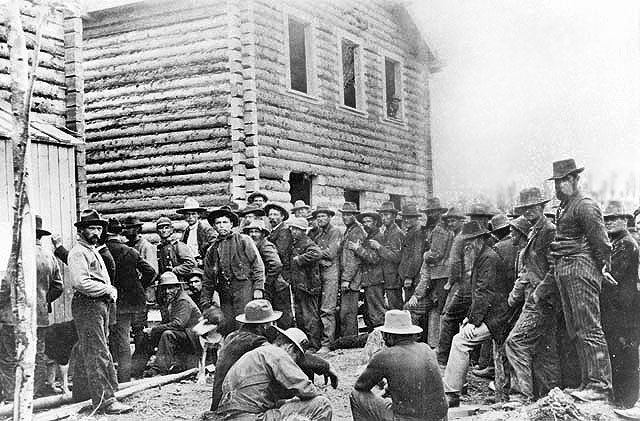
The Klondike Gold Rush, which occurred between 1896 and 1899, was a mass migration of approximately 100,000 prospectors to the Klondike region of Yukon. The discovery of gold by local miners on August 16, 1896, set off a frenzy when news of the find reached Seattle and San Francisco the following year, triggering a stampede of prospectors. Although some individuals struck it rich, the vast majority returned home empty-handed. The Klondike Gold Rush has since been immortalized in films, literature, and photography.
Tr’ondëk-Klondike serves as a microcosm of the far-reaching effects of the Gold Rush on indigenous cultures. The site encompasses various locations that bear witness to exchanges between the indigenous population and the incoming colonizers. These interactions ranged from trade to conflict, and they significantly altered the social, economic, and political fabric of the region.
Dawson City, founded in 1897, became the epicenter of the rush. While it grew into a bustling frontier town, the influx of outsiders led to the marginalization of Indigenous culture. Historically, the city's infrastructure was built atop vital traditional lands. For example, while the First Nation utilized ancient travel routes for trade, the newcomers established the Overland Trail to facilitate colonial movement and communication.
Another significant site within Tr’ondëk-Klondike is Bonanza Creek, where gold was first discovered. This location provides insight into the initial stages of the Gold Rush and the strategies employed by the indigenous population to capitalize on the sudden influx of wealth. The Tr’ondëk Hwëch’in, who had long-standing relationships with newcomers through trade and alliances, leveraged these connections to their advantage. They provided essential services, such as guiding prospectors through treacherous terrain, and some even participated in mining ventures.
While the Tr’ondëk Hwëch’in were resourceful, their role was primarily as providers of essential services rather than partners in mining ventures. They served as guides, riverboat pilots, and suppliers of wood and meat. However, colonial laws and the sheer volume of prospectors led to the seizure of their lands and the forced relocation of the community to Moosehide Village, located a few kilometers downriver from Dawson.
The arrival of the colonizers also brought further hardship and upheaval. The Gold Rush led to the forced displacement of many indigenous communities, as their lands were seized for mining operations and settlements. Additionally, the introduction of diseases, alcohol, and firearms took a devastating toll on the indigenous population.
Amidst overwhelming adversity, the Tr’ondëk Hwëch’in demonstrated remarkable resilience and adaptability in the face of colonial expansion. They continued to practice their traditional ways of life while integrating elements of the newcomers' culture into their own. For example, they adopted Western clothing and tools, but maintained their spiritual beliefs and practices.
As of 2025, the Tr’ondëk-Klondike site is managed through a partnership between the Tr’ondëk Hwëch’in government, Parks Canada, and the Yukon government. A major 2025 management plan update ensures that the site continues to prioritize Indigenous perspectives over the previously mining-centric narratives.
In conclusion, Tr’ondëk-Klondike stands as a poignant testament to the complex interplay between indigenous cultures and colonial forces during the Klondike Gold Rush. By preserving and showcasing the archaeological and historical remnants of this period, the site offers valuable insights into the ways in which indigenous peoples navigated and survived the tumultuous changes brought about by the Gold Rush. As a UNESCO World Heritage Site, Tr’ondëk-Klondike serves as a vital reminder of the enduring strength and resilience of indigenous cultures in the face of adversity.
UNESCO Description of the World Heritage Site
Located along the Yukon River in the sub-arctic region of Northwest Canada, Tr’ondëk-Klondike lies within the homeland of the Tr’ondëk Hwëch’in First Nation. It contains archaeological and historic sources that reflect Indigenous people’s adaptation to unprecedented changes caused by the Klondike Gold Rush at the end of the 19th century. The series illustrates different aspects of the colonization of this area, including sites of exchange between the Indigenous population and the colonists, and sites demonstrating the Tr’ondëk Hwëch’in’s adaptations to colonial presence.UNESCO Justification of the World Heritage Site
Criterion (iv): Tr’ondëk-Klondike includes archaeological immovable remains, built structures and settlement patterns that illustrate the dramatic encounter triggered by the feverish search for precious metals between the Indigenous population and outsiders in a sub-arctic region, the colonial affirmation of the latter over the lands, resources and people, and the Indigenous people’s response to these events, in the late 19th century. Tr’ondëk-Klondike stands out as a very rare occurrence and provides remarkable evidence of growing colonial influence within a concentrated timeframe – from the construction of the first commercial fur-trading post at Fort Reliance in 1874, to the Klondike Gold Rush of 1896-1898, and, ultimately, the consolidation of colonial authority by 1908.
Encyclopedia Record: Klondike Gold Rush
The Klondike Gold Rush was a migration by an estimated 100,000 prospectors to the Klondike region of Yukon in northwestern Canada, between 1896 and 1898. Gold was discovered there by local miners on August 16, 1896; when news reached Seattle and San Francisco the following year, it triggered a stampede of prospectors. Some became wealthy, but the majority went in vain. It has been immortalized in films, literature, and photographs.Additional Site Details
Area: 334.54 hectares
Number of Components: 8
Coordinates: 64.0503472222 , -139.4399472222
World Heritage Research
Discover scientific research and academic studies that deepen our understanding of Tr’ondëk-Klondike from its history and significance to its conservation, management, and contemporary challenges.
-
The Tr’ondëk Hwëch’in and the Great Upheaval: Mining, Colonialism, and Environmental Change in the Klondike, 1890-1940
Gold mining during the Klondike Gold Rush (1890–1940) initiated long-term systemic alienation of the Tr’ondëk Hwëch’in from their traditional lands and resources, driven by both environmental degradation and colonial bureaucratic interventions. The study reveals that placer and dredge mining not only transformed the Klondike landscape but also disrupted Indigenous resource access through state-imposed land-use policies that prioritized colonial practices over local traditions. While colonial administration was often contested among external authorities, Indigenous Yukoners actively resisted displacement and challenged imposed changes, shaping the complex dynamics of colonization in the region. This work highlights the dual impact of mining—physical environmental alteration and bureaucratic marginalization—as key drivers of Indigenous displacement.
Green, H. (2018). The Tr’ondëk Hwëch’in and the Great Upheaval: Mining, Colonialism, and Environmental Change in the Klondike, 1890-1940 [University of Alberta Library]. https://doi.org/10.7939/R3DN40B80
View Publication Record | Read Publication -
Our land is our voice: First Nation heritage-making in the Tr’ondëk/Klondike
First Nations communities, such as the Tr'ondëk Hwëch'in of northwestern Canada, have employed heritage-making strategies to assert territorial sovereignty and preserve cultural identity amid settler colonialism. This study highlights how the Tr'ondëk Hwëch'in, through treaty advocacy, cultural expression, and support for residential school survivors, have resisted Western heritage narratives while adapting their own traditions. The research demonstrates that continuous heritage-making enables Indigenous communities to navigate modernity while maintaining autonomy and identity. Approaches included analyzing historical records, interviews, and cultural instruments developed by the community.
Neufeld, D. (2016). Our land is our voice: First Nation heritage-making in the Tr’ondëk/Klondike. International Journal of Heritage Studies, 22(7), 568–581. https://doi.org/10.1080/13527258.2016.1182051
View Publication Record | Read Publication